





Oriental Camphor Wood Chest
An oriental camphor wood chest brings dense, fragrant timber and robust construction into a room, serving as both practical storage and a striking focal point.
Oriental Camphor Wood Chest
When you search for an oriental camphor wood chest, you encounter sturdy blanket boxes, storage trunks, and coffers designed for utility and transport. These pieces primarily date from the nineteenth century through the early twentieth century, spanning periods such as the Victorian era and the Art Deco movement.
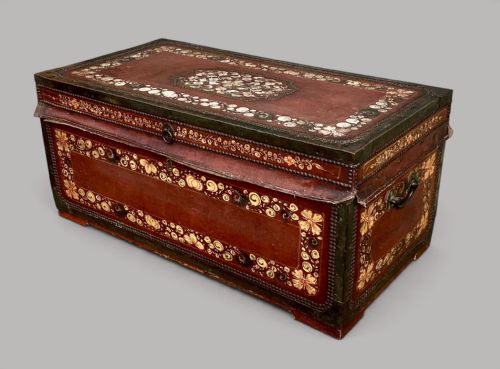
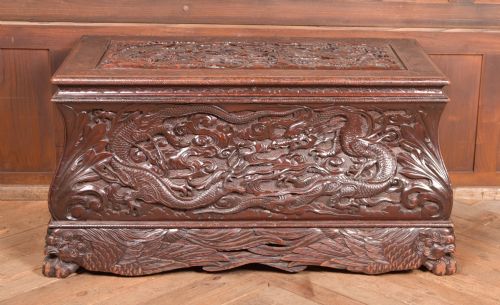
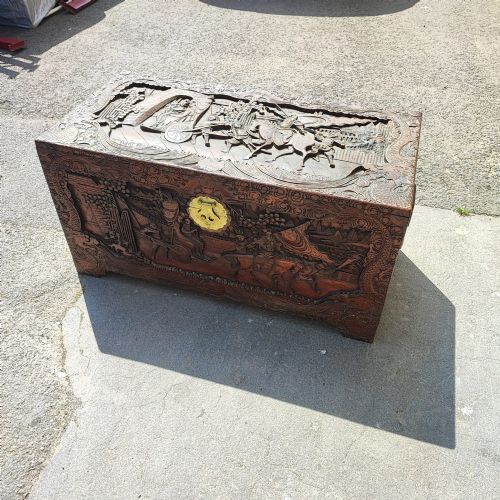
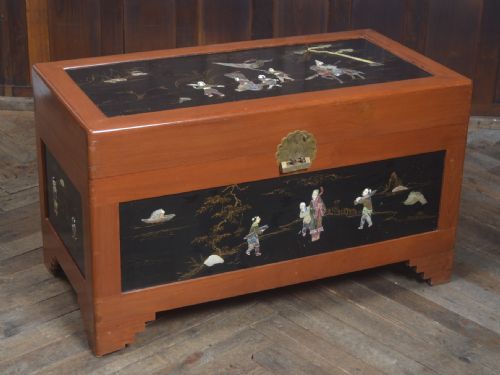
The items here reflect traditional Chinese craftsmanship and Chinese export trade styles, often categorised as campaign furniture or luggage trunks. You will find examples ranging from heavily carved surfaces featuring dragons to plain leather-covered or brass-bound forms.
Forms vary from standard blanket boxes to low coffer tables suited for modern living spaces. The consistent element across these variations remains the use of aromatic camphor timber housed within traditional chest proportions.
What varies in quality
Quality differences lie in the depth and crispness of the hand-carved ornamentation, where deeply articulated dragon motifs and intricate foliage demonstrate superior artisan skill. Plain or leather-covered trade trunks derive their distinction from the precision of their brass binding and the integrity of their original hardware.
The thickness of the camphor timber and the preservation of the natural aromatic properties also distinguish finer examples. Furthermore, the presence of original painted decoration or limed oak integration elevates specific pieces above standard utility boxes.
Oriental Camphor Wood Chest Retail Price Guide 2026
Typical asking prices for oriental camphor wood chest among the pieces listed under this phrase on Sellingantiques today, from the lower quarter to the upper quarter. They describe what is for sale here now, not the wider market.
The lingering medicinal scent inside these chests has outlasted multiple generations of sea voyages, blanket storage, and living room tea.
The Oriental Camphor Wood Chest Glossary
- Camphor wood
- A dense, aromatic timber prized for its insect-repellent properties and distinctive medicinal scent. It forms the primary structural material for these storage chests.
- Campaign trunk
- Portable furniture designed for military officers or travellers, typically fitted with recessed brass handles and reinforced corners. These pieces were built to endure frequent transit.
- China trade
- Commerce conducted between China and Western nations from the eighteenth to the early twentieth century, producing goods specifically tailored for export markets. This category includes leather-bound and brass-trimmed luggage chests.
- Coffer
- A box or chest used for holding valuables, often distinguished by a hinged lid and solid proportions. Many antique examples now function as coffee tables in contemporary interiors.
- Polychrome
- Decorated in multiple colours, frequently applied as painted highlights over wood or leather surfaces. This technique adds visual depth to export chests.
Oriental Camphor Wood Chest: Frequently Asked Questions
What is an oriental camphor wood chest?
An oriental camphor wood chest is a traditional storage trunk made from fragrant camphor timber, often featuring hand-carved motifs or brass reinforcement. These pieces originated primarily in China for domestic use and export during the nineteenth and early twentieth centuries.
Buyers encounter various forms, including blanket boxes, campaign luggage, and coffee table conversions. The natural aroma of the wood historically protected stored textiles from insects.
How do I use a camphor chest at home?
These chests function effectively as end-of-bed blanket boxes, living room storage solutions, or decorative coffee tables. Their deep interiors accommodate bulky linens, winter woollens, and household items.
Pronounced brass hardware and carved panels allow the pieces to anchor a room visually. They integrate well into both traditional and contemporary interiors.
How do I tell different periods apart?
Nineteenth-century examples frequently exhibit heavy hand-carving or utilitarian brass-bound campaign styling associated with the China trade. Early twentieth-century pieces occasionally incorporate transitional design elements, such as Art Deco limed oak.
Construction methods and hardware styles provide clear chronological indicators. Hand-forged or heavy brass mountings typically signal nineteenth-century origin.
Why do these chests smell so strong?
Camphor wood naturally contains volatile oils that produce a powerful, medicinal fragrance designed to deter moths and silverfish. This scent permeates the timber fibres and remains active over generations.
Proper ventilation inside a room gradually softens the aroma without removing the protective qualities. The fragrance serves as an authentic indicator of genuine camphor timber.