
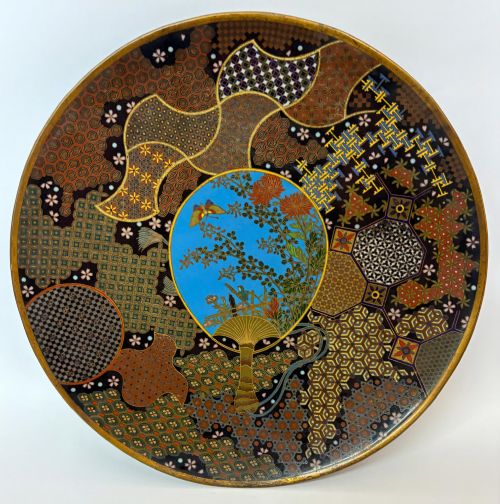


Oriental Brass Plate Display
Oriental brass plate display pieces bring intricate metalwork and vibrant enamel into the home, offering striking focal points for a room.
Oriental Brass Plate Display
When you search for oriental brass plate display items, you encounter large chargers, decorative plates, and wall plaques originating from Japan and China. These metal and enamel works span the eighteenth, nineteenth, and early twentieth centuries, capturing the craftsmanship of the Edo, Meiji, and Qing periods.
You are most likely to meet Japanese cloisonne enamel chargers featuring natural motifs such as birds, fish, dragons, and landscapes. These pieces combine heavy brass or bronze foundations with delicate wirework and colourful vitreous enamel, often accompanied by carved hardwood stands for tabletop presentation.
Materials and Construction
Artisans formed the foundation of each charger using brass, bronze, or copper, shaping the metal into wide, shallow circles designed for display. These metal bases provided a sturdy canvas capable of supporting heavy surface decoration.
The distinctive surface patterns rely on cloisonne enamel techniques, where thin metal wires are soldered onto the base to create cellular compartments. Artisans filled these tiny sections with coloured enamel pastes before firing the piece in a kiln and polishing the surface smooth.
Object types recorded across these listings include decorative chargers, table gongs, and display plaques alongside carved stands.
Assessing Quality and Execution
The fineness of the wirework dictates much of the visual sophistication, with tighter and more complex cellular patterns demanding greater skill from the metalsmith. Finer compartments allow for intricate pictorial details, such as the feathers of an ibis or the scales of a leaping koi.
The clarity and depth of the enamel fields distinguish standard production from exceptional works. Superior examples maintain uniform colour saturation and smooth, glossy finishes across large expanses without pitting or clouding in the fired glass.
The Oriental Brass Plate Display Glossary
- Cloisonne
- An ancient decorative metalwork technique where fine wires form raised barriers on a metal surface to hold coloured enamel pastes. This method creates a stained-glass effect upon firing.
- Charger
- A large ornamental plate traditionally used for ceremonial display rather than dining. These substantial vessels showcase elaborate pictorial designs across their wide centres.
- Edo Period
- A historical Japanese era spanning from sixteen hundred and three to eighteen hundred and sixty-eight, noted for cultural growth and refined craftsmanship. Pieces from this time demonstrate early mastery of metal arts.
- Meiji Period
- The era in Japanese history lasting from eighteen hundred and sixty-eight to nineteen hundred and twelve, characterised by the opening of trade and exceptional decorative exports. Enamel work reached technical peaks during these decades.
- Qing Dynasty
- The final imperial dynasty of China, ruling from sixteen hundred and forty-four to nineteen hundred and eleven. Metalwork from this period often incorporates traditional symbols and rich patination.
Oriental Brass Plate Display: Frequently Asked Questions
How were these decorative plates originally used?
These large chargers and plaques served primarily as decorative centerpieces in wealthy households and reception rooms. They were positioned on specially carved wooden stands or mounted on walls to showcase the owner's taste and appreciation for fine metalwork.
Unlike everyday tableware, their elaborate enamel surfaces and delicate wire borders made them unsuitable for food service. Instead, they functioned as pure art objects designed to catch the light and display intricate pictorial scenes.
How do I safely display an antique charger?
Displaying these heavy brass and enamel pieces requires secure mounting hardware or sturdy hardwood display stands designed to take considerable weight. Ensure the plaque rests evenly so that pressure is distributed across the base rather than a single wire point.
Keep the metalwork away from direct sunlight to protect the coloured enamel from thermal stress and fading over time. Gentle dusting with a soft, dry cloth is sufficient for routine maintenance without risking the polished surface.
How can I tell Japanese and Chinese pieces apart?
Japanese pieces from the Meiji era frequently feature meticulous, pictorial cloisonne work depicting natural subjects like Mount Fuji, leaping koi, and specific birds with extraordinary fine wire detail. The metal foundations are often finished to a smooth, flawless gloss.
Chinese export pieces from the Qing period tend to employ heavier brass or bronze foundations with bolder decorative motifs and distinctive patination. Their construction often emphasises robust metal forms alongside traditional symbolic imagery.
What does the presence of a hardwood stand indicate?
Original hardwood stands were custom-carved to support the specific curvature and weight of individual chargers during tabletop exhibition. They allow the plate to stand upright securely without needing wall attachment.
Finding a piece accompanied by its period stand suggests the item was valued as a complete decorative ensemble. The quality of the wood carving often matches the craftsmanship of the metal plate itself.