



Asian Carved Wood Screen
An asian carved wood screen divides a room or frames a table with intricate relief work.
Asian Carved Wood Screen
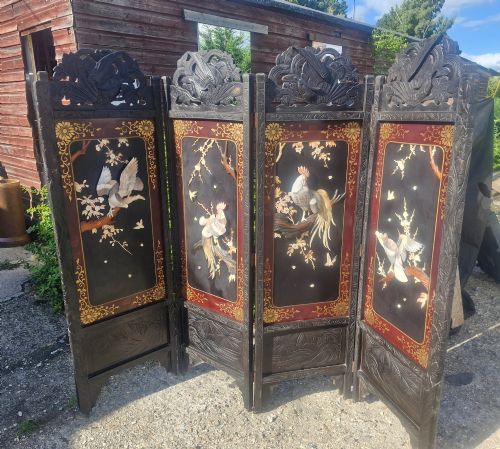
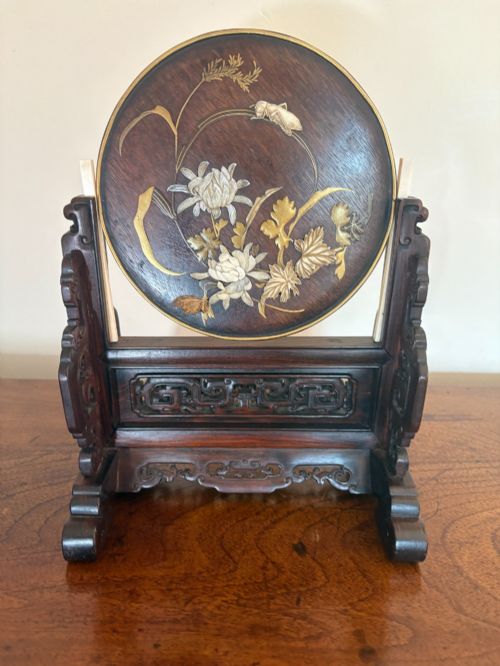
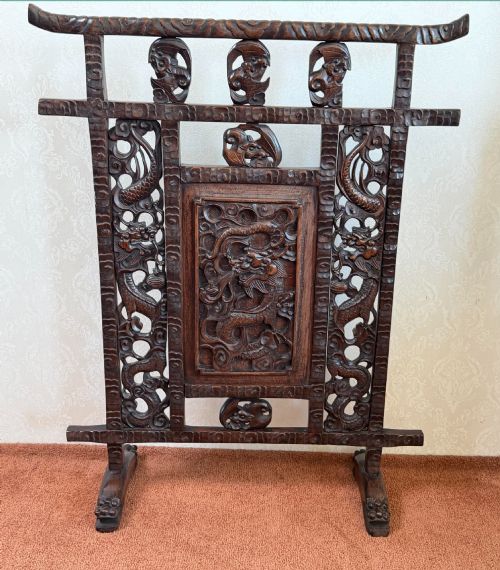
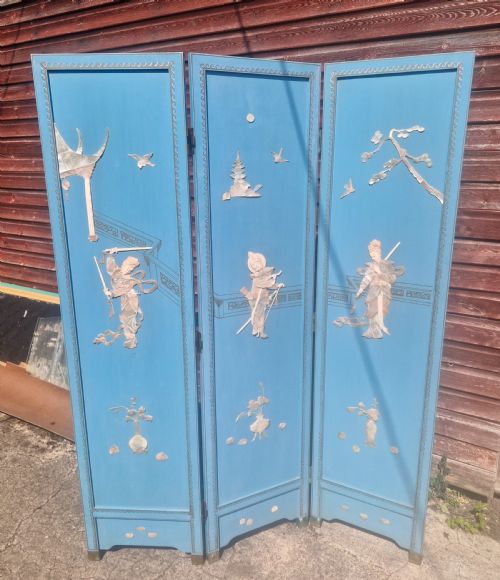
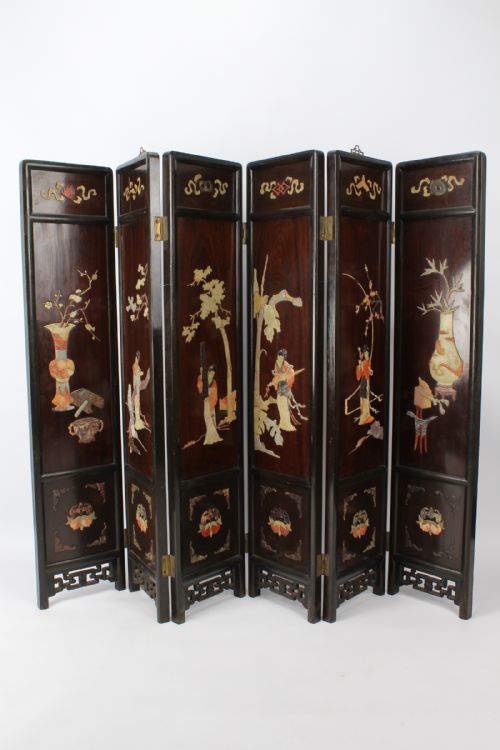
An asian carved wood screen comes in several distinct forms, ranging from large folding room dividers and three-fold dressing screens to small table screens and fire screens. The listings here present diverse examples created across the nineteenth and twentieth centuries.
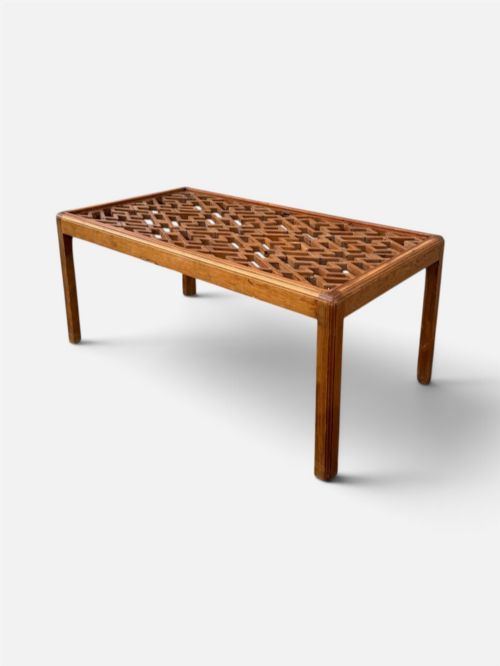
Buyers encounter objects originating from Chinese, Japanese, and Burmese traditions, spanning periods such as the Qing Dynasty and the Meiji Period. Many pieces incorporate decorative panels, wall plaques, and even converted coffee tables alongside traditional folding formats.
The materials and aesthetic influences vary widely among these items, encompassing Chinoiserie styles, Anglo-Indian elements, and traditional East Asian craftsmanship. Each piece offers a specific functional purpose, whether standing on the floor to partition space or resting on a desk.
Materials and construction methods
Makers utilised dense hardwood, lacquer, and plain wood as the primary structural foundations for these items, applying deep relief carving to shape intricate motifs. Artisans enhanced these wooden surfaces with inlaid bone, mother-of-pearl, and brass details.
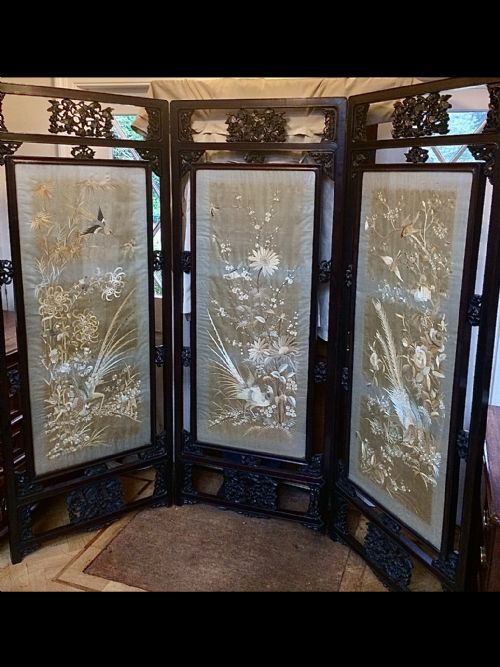
Many folding and table screens integrate delicate elements such as silk, silk cotton, and glass panels within the carved wooden framework. Lacquering techniques provided a durable, glossy finish, while specialised joinery secured the multi-panel hinges and fitted stands.
One unexpected screen doubles as a Victorian photographic prop, helping subjects look dramatically windswept.
Distinctions in construction and design
The depth and clarity of the carving separate standard items from superior examples, particularly where figures and dragon motifs are rendered with distinct dimensionality. The precision of the joinery in multi-fold frames and the stability of fitted stands indicate the original maker's skill.
The integration of secondary materials such as bone inlay, mother-of-pearl, and painted silk panels dictates the overall refinement of a screen. Pieces featuring well-preserved lacquer and harmonious proportions display a higher degree of execution than simpler, plain wooden variants.
The Asian Carved Wood Screen Glossary
- Table Screen
- A small decorative screen designed to stand on a desk, table, or cabinet rather than partition a room. These items often feature intricate wooden stands and detailed carved panels.
- Shibayama
- A Japanese decorative technique involving the inlay of precious materials such as bone, ivory, shell, and coral into a wooden or lacquered surface to create pictorial scenes.
- Qing Dynasty
- The final imperial dynasty of China, lasting from the mid-seventeenth century until the early twentieth century. Pieces from this era often feature traditional motifs and dense hardwood construction.
- Meiji Period
- An era in Japanese history spanning the late nineteenth and early twentieth centuries, known for exceptional craftsmanship in metalwork, lacquer, and carved wood.
- Chinoiserie
- A Western stylistic tradition reflecting European interpretations of Chinese and East Asian artistic motifs. This style frequently appears in decorative panels and furnishings.
Asian Carved Wood Screen: Frequently Asked Questions
How are table screens used?
Table screens serve as decorative tabletop ornaments rather than functional room dividers. They provide a focal point on desks or cabinets.
Many examples feature intricate stands and detailed carving, designed to be appreciated close up.
What materials make up these screens?
Construction relies heavily on dense hardwoods and lacquered wood surfaces. Artisans frequently added bone, mother-of-pearl, and silk panels.
Some variations also incorporate glass, brass, and silk cotton elements within the wooden framework.
Are these screens used as room dividers?
Larger multi-fold formats function traditionally as room dividers or dressing screens. They stand independently to partition interior spaces.
Smaller variants, such as fire screens or wall plaques, serve purely decorative roles.
How do I identify the period?
Dating relies on stylistic markers associated with specific eras like the Qing Dynasty or Meiji Period. Construction techniques and material choices also offer clues.
Documentation or distinct regional characteristics help narrow down the production decade.