



Oriental Blue White Platter
An oriental blue white platter brings together cobalt pigment and porcelain across centuries of Chinese and Japanese potting traditions.
Oriental Blue White Platter
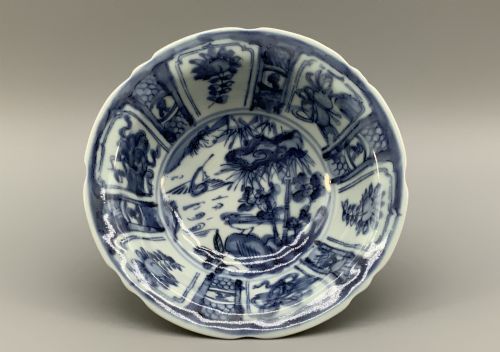
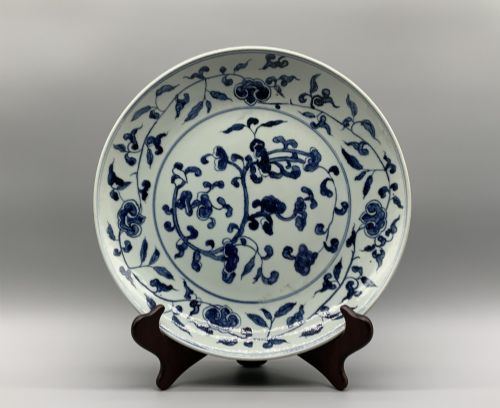
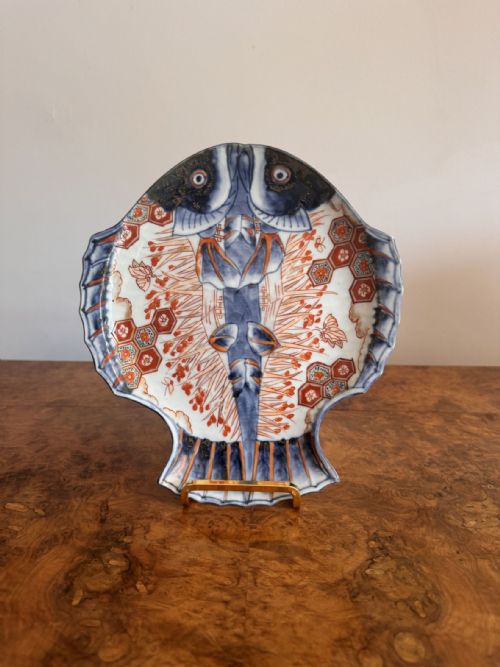
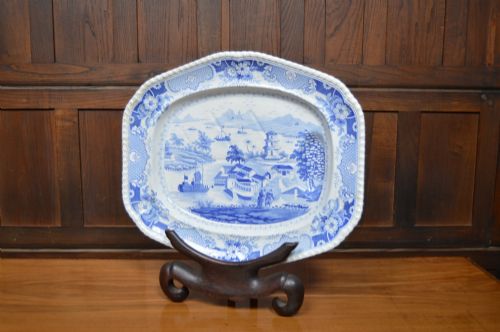
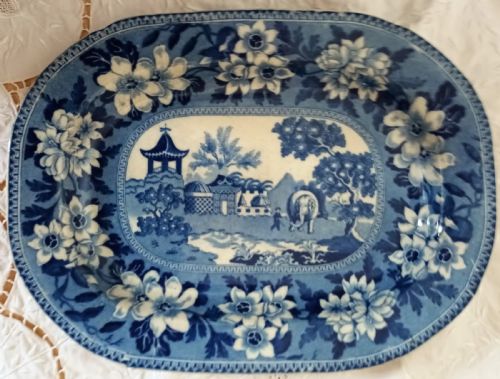
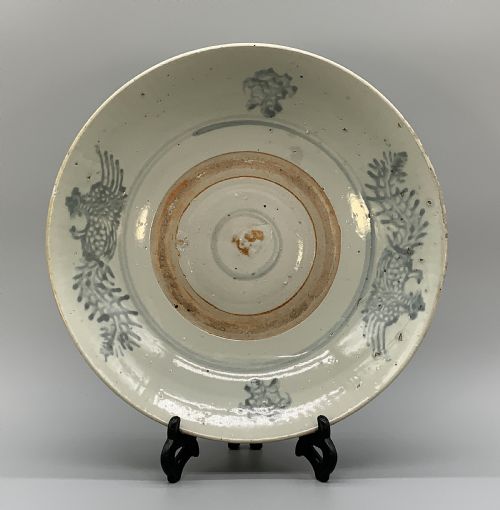
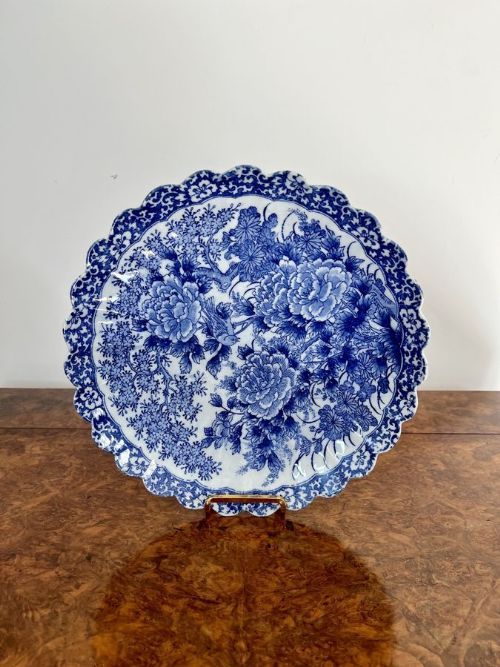
Buyers seeking an oriental blue white platter encounter large chargers, serving dishes, and plates originating from Chinese dynasties and Japanese kilns. The selection spans the seventeenth century through to the Victorian era and nineteen hundred, capturing diverse forms such as scalloped edges, fish shapes, and lobed bowls.
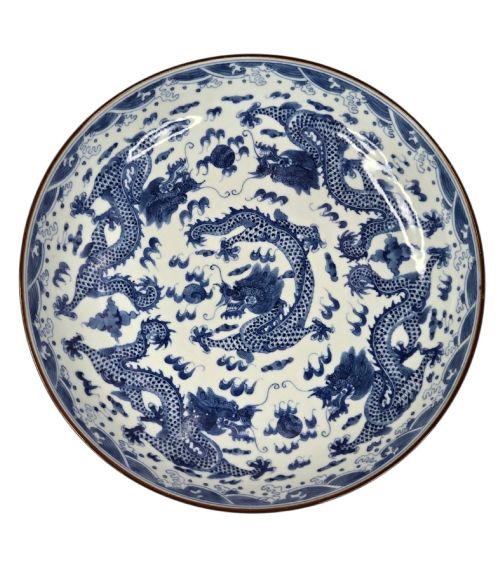
Chinese pieces often date to the Kangxi and Ming periods, utilising imperial motifs like dragons and floral designs with cobalt underglaze. Japanese examples heavily represent Arita and Imari traditions from the Meiji period and earlier, showing distinct hand-painted artistry.
English transferware platters with patterns like elephant and zebra themes also appear alongside Asian porcelain, reflecting the broad interpretation of the style in Georgian and Victorian times.
Materials and production methods
Potters utilised fine porcelain and earthenware bodies, applying cobalt pigment and cobalt glaze beneath a clear ceramic glaze. The pieces underwent high-temperature firing to fuse the cobalt underglaze into a durable blue design against a white background.
Enamel colours were occasionally added over the glaze, particularly in Japanese Imari styles, introducing contrasting red and gold accents to the blue and white foundation.
Listings span multiple centuries, uniting Chinese Kangxi and Ming dynasties with Japanese Arita kilns and English Georgian transferware.
Judging quality in blue and white ceramics
Quality rests upon the clarity of the cobalt underglaze painting and the precision of the moulding or throwing of the porcelain body. Superior pieces display crisp brushwork, controlled bleeding of the pigment, and well-balanced compositions across large chargers and serving dishes.
The sophistication of the glaze and the intricacy of motifs, such as five-clawed dragons or detailed koi carp, separate standard production wares from exceptional examples of Chinese and Japanese export art.
John Rogers and Son
The Oriental Blue White Platter Glossary
- Imari
- A style of Japanese porcelain decorated in underglaze blue, iron red, and gold. It originated in Arita and became popular for export during the Edo period.
- Underglaze
- A method of decorating pottery where pigments are applied to the unfired body before glazing and firing. This protects the design beneath a glossy ceramic layer.
- Charger
- A large decorative plate or serving dish used historically for ceremonial display or dining. They measure significantly wider than standard dinner plates.
- Transferware
- Pottery decorated by applying a printed design from an engraved copper plate onto the ceramic surface using a tissue paper transfer. This technique dominated English production in the Georgian and Victorian periods.
- Swatow Ware
- A category of Chinese export ceramics produced in Guangdong province during the late Ming dynasty. These sturdy chargers and bowls typically feature freely painted cobalt designs.
Oriental Blue White Platter: Frequently Asked Questions
How do I date a blue and white charger?
Dating relies on stylistic clues, potting characteristics, and period marks on the base. Chinese pieces often reference imperial reigns like Kangxi, while Japanese items connect to the Meiji period or Edo eras.
English transferware platters from the Georgian or Victorian periods usually feature specific maker names and pattern titles stamped into the pottery body.
What is the difference between Arita and Imari porcelain?
Arita refers to the Japanese town where the porcelain was produced, encompassing various styles of blue and white ceramics. Imari is a specific subset of Arita ware characterised by the addition of iron red and gilt enamel over the glaze.
Many pieces listed as Imari retain the core blue and white palette alongside these secondary accent colours.
Can I use these antique platters for serving food?
While these pieces originated as serving platters or chargers, older porcelain and earthenware require careful handling. Modern dishwashers and microwaves should be avoided to protect the historic glaze and cobalt pigments.
Displaying them on plate stands or wall mounts preserves the fragile ceramic body from accidental chips.
Why do some Chinese platters have four or six character marks?
Imperial and export Chinese wares frequently feature reign marks on the reverse to honour earlier emperors, such as Kangxi. These marks indicate the stylistic period of the design rather than necessarily proving the exact year of manufacture.
Expert examination of the porcelain body and cobalt tone helps confirm the true age of the dish.