



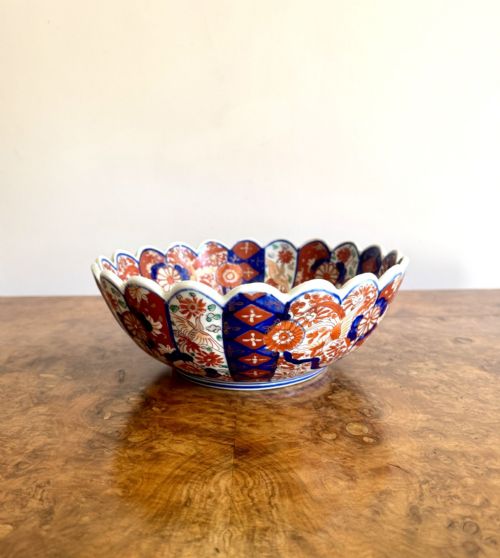
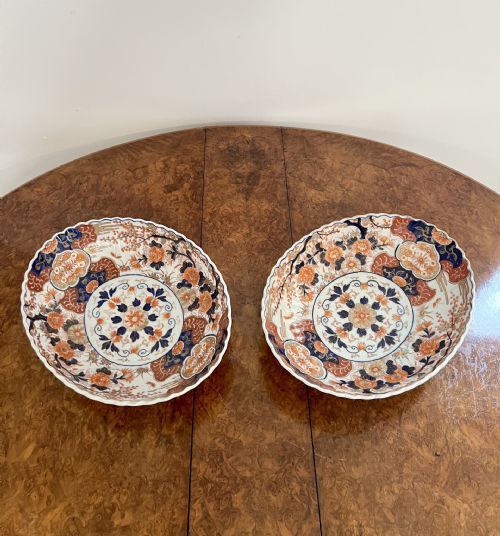


Orange Imari Porcelain Bowls
These orange imari porcelain bowls bring rich palettes and intricate patterns to a table, offering a striking display of historic ceramic art.

Orange Imari Porcelain Bowls
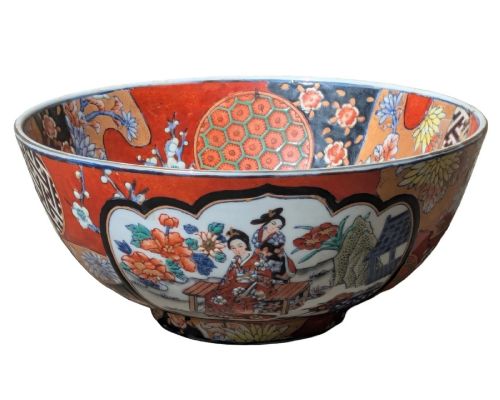
When you search for orange imari porcelain bowls, you encounter a distinct cross-cultural design lineage spanning Japanese Edo and Meiji periods alongside English interpretations from the Georgian and Victorian eras. The core of what is available leans heavily toward Japanese production from around 1900, alongside 18th-century pieces and English ironstone or bone china adaptations.
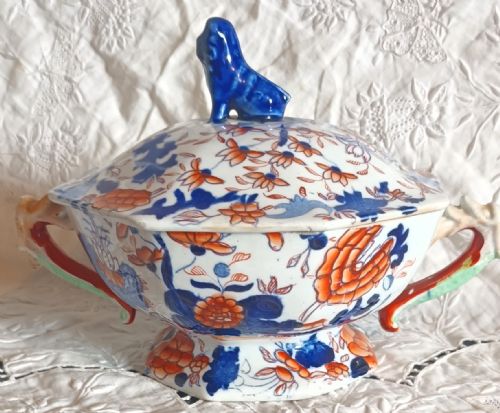
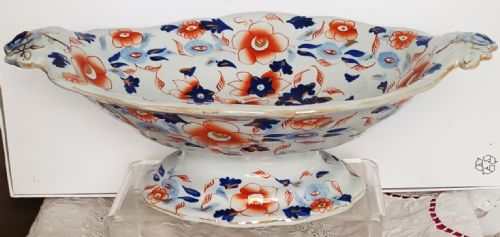
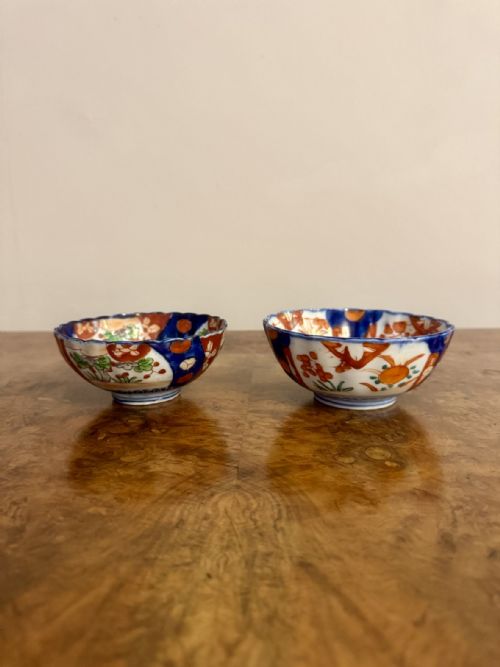
Forms stretch beyond simple vessels to include footed comports, large jardinieres, shaped dishes, and tea service sugar bowls. The Japanese examples often feature scalloped edges or hexagonal shapes, while English makers like Mason's, Minton, and Royal Crown Derby translate the palette into ironstone and bone china.
The aesthetic relies on a strong visual impact achieved through contrasting tones and panelled designs. Buyers select these pieces to anchor a room with centuries of ceramic tradition, utilising them as centrepieces, display dishes, or functional table elements.
Materials and production
The foundation of these pieces rests on hard-paste porcelain, ironstone, or bone china, shaped on the wheel or pressed into moulds to create bowls, plates, and jardinieres. Potters applied an initial white glaze before adding underglaze blue and vibrant overglaze enamel colours.
Gold leaf and gilt detailing frequently highlight the painted scenes, applied by hand to accent borders, floral motifs, and geometric panels. Firing in kilns fixed the cobalt blue beneath the glaze while subsequent lower-temperature firings set the iron-red enamel and gold leaf on top.
Markers of distinction
Quality in these ceramics rests on the precision of the brushwork and the complexity of the compartmentalised enamel painting. Superior pieces display crisp cobalt blues beneath the glaze and deeply saturated iron-red pigments paired with lavish, intact gold leaf highlights across scalloped or shaped rims.
The finesse of the ceramic body itself separates standard production from exceptional examples, seen in the thinness of the porcelain wall or the weight and crisp moulding of ironstone comports and jardinieres. Well-preserved enamel colours showing minimal rubbing elevate the standing of a bowl or dish significantly.
Mason's Ironstone·Royal Crown Derby·Flight Barr And Barr·Minton
The Orange Imari Porcelain Bowls Glossary
- Imari
- A style of Japanese porcelain originating from the port of Arita, traditionally characterised by a palette of underglaze blue, iron-red, and gilt. European factories subsequently copied these distinctive colourways.
- Ironstone
- A heavy, durable type of earthenware patented in England during the 19th century to imitate oriental porcelain. It provides a sturdy body for richly coloured patterns.
- Comport
- A raised decorative dish or bowl used traditionally for serving fruit or sweets at the table. These often feature footed bases and elaborate handles.
- Jardinire
- A large ornamental pot or bowl designed to hold potted plants or flowers. In this tradition, they carry expansive wrap-around enamel and gilt decoration.
- Enamel
- Opaque glass-like pigments applied over the fired glaze and fixed in a second, lower-temperature kiln. It provides the bright orange and red tones characteristic of these wares.
Orange Imari Porcelain Bowls: Frequently Asked Questions
How do I date an imari bowl?
Dating relies on stylistic markers, ceramic bodies, and provenance notes, moving from 18th-century Japanese and Chinese export pieces through to Meiji period production and 19th-century English adaptations.
English pieces often carry factory marks on the base, whereas Japanese wares from the Meiji period or earlier rely on stylistic shifts in the iron-red and cobalt blue painting.
Can I use these bowls daily?
Most antique bowls featuring overglaze enamel and gold leaf require gentle handling and are best reserved for display or light decorative use rather than heavy daily dining.
Hand washing in warm water without abrasive detergents preserves the delicate iron-red enamel and gilt highlights against fading.
What is the difference between Japanese and English imari?
Japanese imari generally utilises true porcelain bodies with hand-painted underglaze blue and overglaze iron-red and gold, rooted in Edo and Meiji period traditions.
English imari, produced by factories like Royal Crown Derby and Mason's, often uses bone china or ironstone to reinterpret the classic Japanese palette for European tastes.
Why do some bowls have scalloped edges?
Scalloping mimics organic forms like flower petals or shells, adding textural interest to the rim of a display dish or bowl.
This technique requires careful hand-moulding or cutting before firing, often paired with precise gilt edging to frame the central painted panels.