




Orange Geometric Wool Rug
An orange geometric wool rug brings striking tribal pattern and warm earthy tones straight to a floor.
Orange Geometric Wool Rug
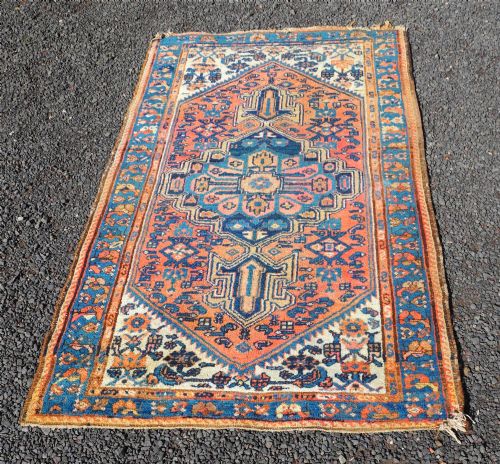
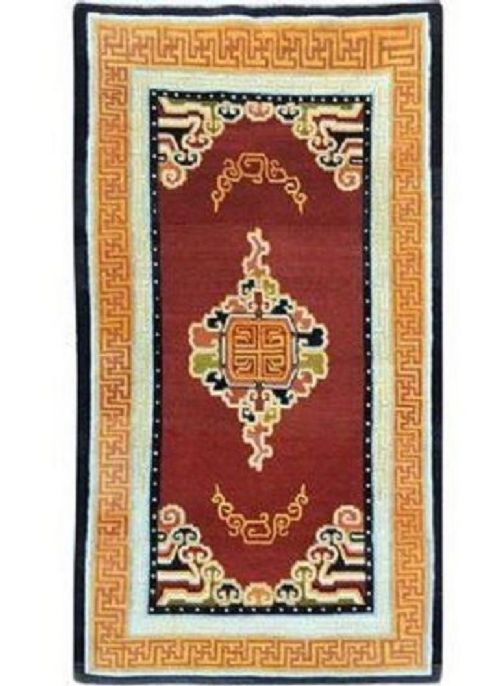
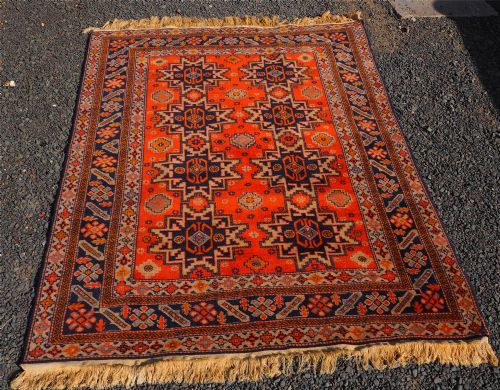
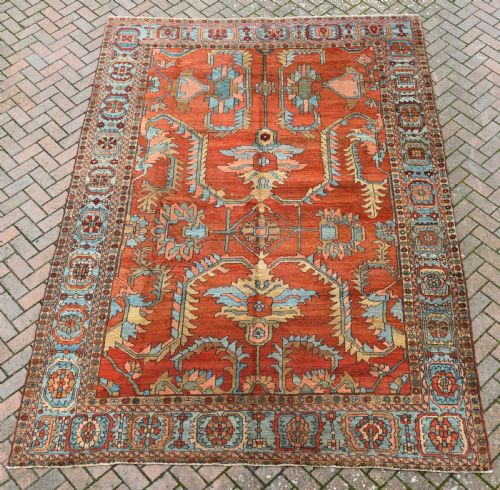
When you search for an orange geometric wool rug, you are looking at handwoven tribal and village carpets from Persia, Anatolia, Afghanistan, the Caucasus and Tibet, dating from the late nineteenth century up to 1930. These pieces bring together bold angular motifs, earthy dyes and resilient pile or flatweave structures that define traditional nomadic weaving.
On this page, you are most likely to meet vintage and antique tribal pieces including Persian Hamadan, Qashqai, Baluch and Afshar examples, alongside Turkish kelims and Tibetan rugs. Their striking geometric layouts and rich colour palettes make them enduring choices for modern and traditional interiors alike.
Materials and construction
These rugs are built from natural wool, sometimes worked alongside cotton for foundations, harvested and spun by hand in village and tribal workshops. The weavers knot or weave the pile and flatweave structures tightly, ensuring the textiles withstand generations of daily use.
The characteristic colourways rely on traditional dyeing methods using natural materials, yielding rich warm tones that soften gracefully over decades. The combination of sturdy wool fibres and secure hand-knotting or flatweaving creates flexible, durable floor coverings.
Listings feature wool and cotton rugs spanning the late nineteenth century through to 1930, originating from Persian, Anatolian, Afghan, Caucasian and Tibetan traditions.
Judging quality in tribal rugs
Quality rests in the precision of the tribal geometry and the depth and stability of the wool. Tighter knot density and finer spinning give certain pieces a firmer handle and sharper pattern definition.
The character of the natural dye palette also separates individual pieces. Mellow, even tones and balanced regional designs command attention, reflecting the skill of the weaver and the quality of the fleece.
The Orange Geometric Wool Rug Glossary
- Kilim
- A flatwoven carpet or rug made without a pile, produced across Anatolia, Persia and Central Asia. These textiles feature sharp geometric patterns created by interlocking the warp and weft threads.
- Pile
- The upright yarn loops or cut ends that form the soft surface of a knotted rug. It provides cushioning and protects the structural foundation underneath.
- Warp
- The vertical threads stretched tightly on the loom before weaving begins. They form the skeleton of the rug and often show as fringes at either end.
- Weft
- The horizontal threads passed through the warp to hold the knots or flatweave structure in place. Beating the weft down firmly creates a dense, durable textile.
Orange Geometric Wool Rug: Frequently Asked Questions
How do I care for an antique wool rug?
Vacuum gently without a rotating brush roll to keep dust from settling into the wool pile. Rotate the rug periodically to ensure even wear across high-traffic areas.
Keep the rug away from direct, harsh sunlight to protect the natural dyes. Professional cleaning should be handled by specialists experienced in antique textiles rather than standard carpet cleaners.
Where were these tribal rugs made?
The pieces originate from traditional weaving regions including Persia, Anatolia, Afghanistan, the Caucasus and Tibet. Nomadic and village weavers produced them using local materials and traditional designs passed down through generations.
Specific provenances include regions like Hamadan, Khorassan, Sistan, Malatya and Ushak. Each area developed distinct regional motifs and colour palettes that help identify their origin.
Are these rugs suitable for busy hallways?
Many of these pieces, particularly runner formats and sturdy village rugs, were built to handle daily foot traffic. Natural wool contains lanolin, which helps the fibres resist dirt and wear.
Using a quality rug underlay will prevent slipping and provide extra cushioning beneath the feet. This protects the vintage foundation from excessive friction against hard flooring.
How can I tell the age of a rug?
Age is judged by examining the materials, dye types, knotting technique and regional style markers. Subtle variations in the wool and the softening of colours over time point to decades of history.
Structural details such as handmade selvages and natural wear patterns offer further clues. Comparing regional motifs helps narrow down the period of production.