

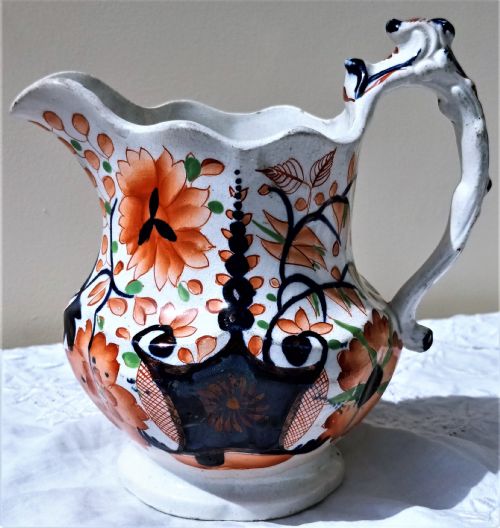


Orange Ceramic Milk Pitcher
These orange ceramic milk pitcher examples bring bright nineteenth-century earthenware and ironstone into daily use, offering rich historic colour and bold painted patterns.
Orange Ceramic Milk Pitcher
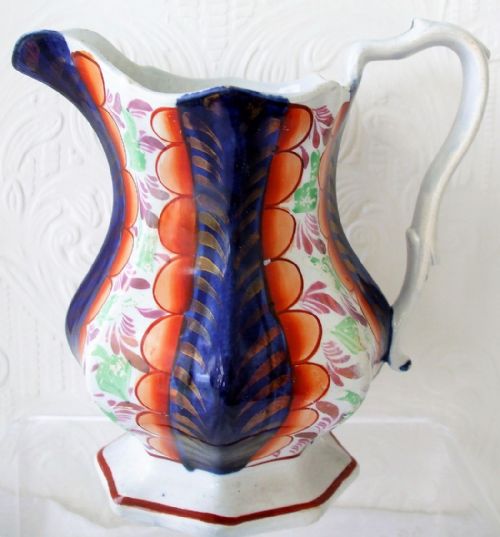
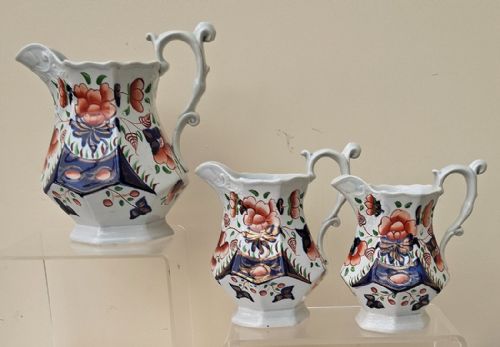
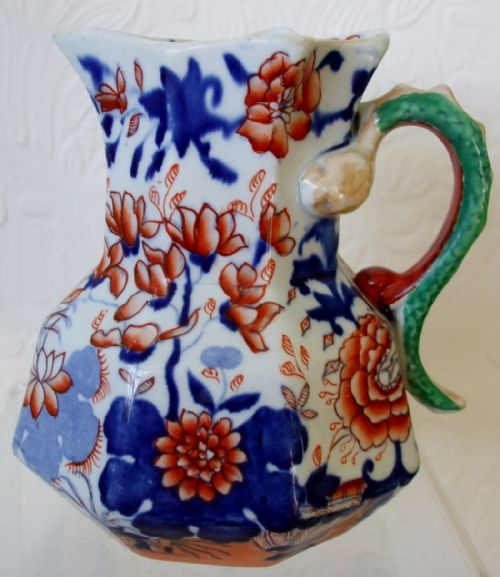
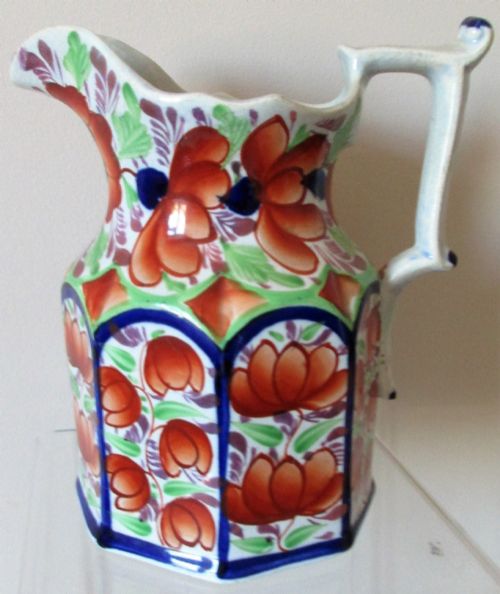
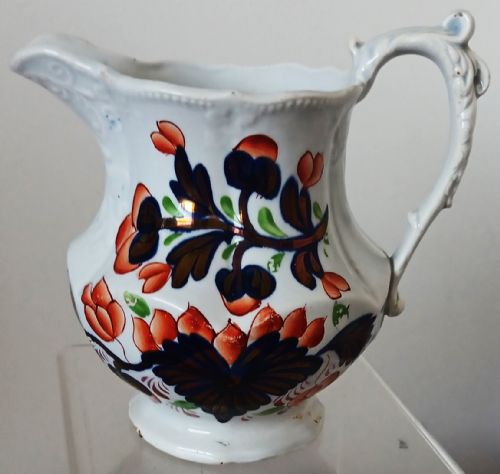
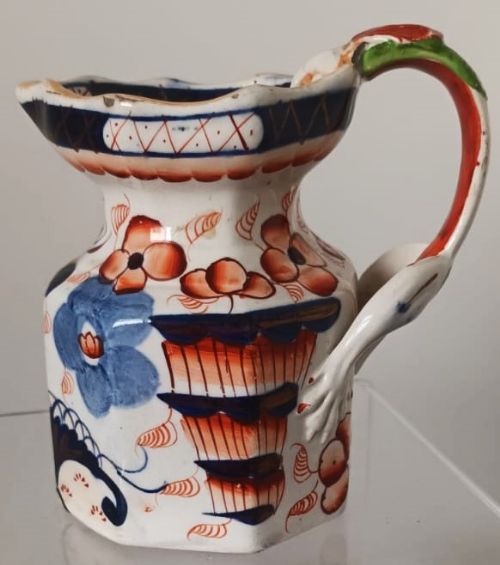
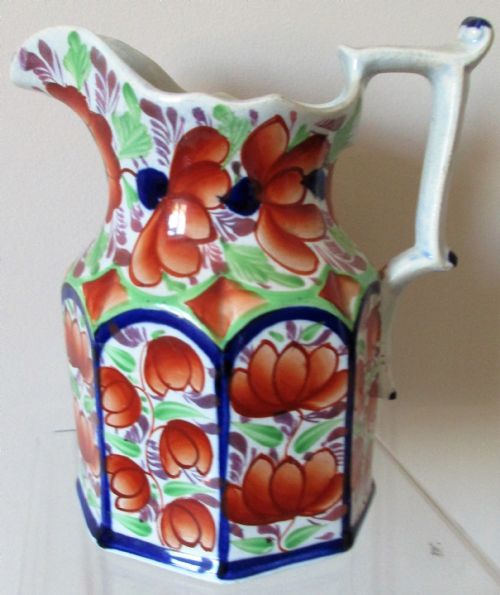
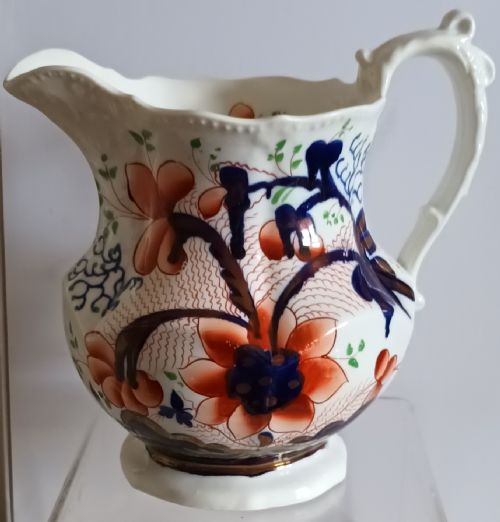
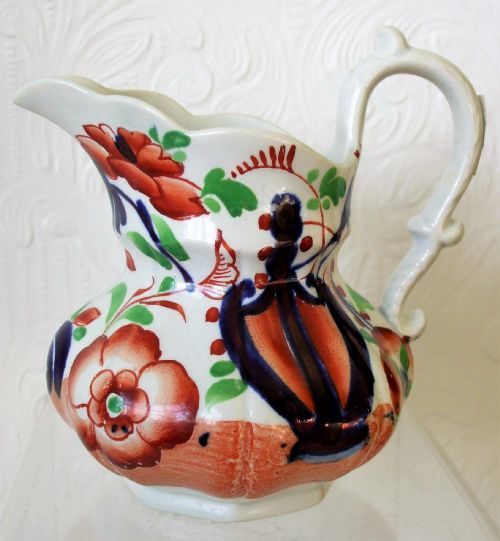
The most common form you will meet on this page is the handled jug or pitcher, often decorated with named patterns like Glamorgan, Cambrian Rose, Gwent, Grape, Pagoda, Bethesda, Aberaeron, Harlech, and Conwy.
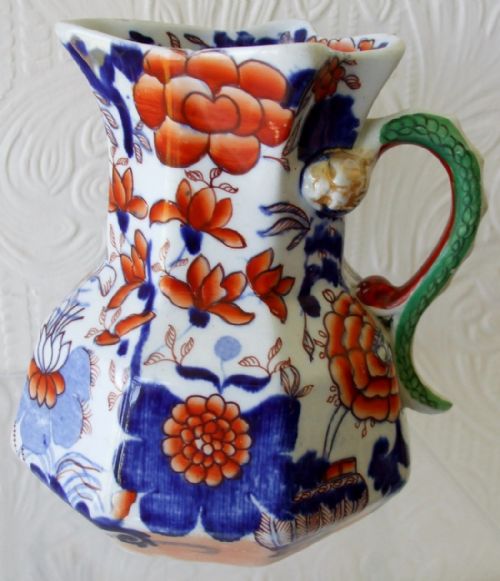
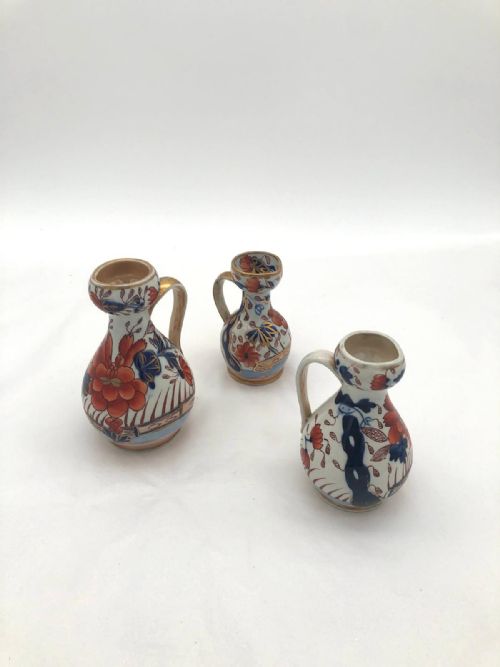
These items span Georgian and Victorian styles, including Victorian folk art and distinct moulded shapes such as the Hydra jug and pouch jug. They serve as both functional milk containers and decorative vessels.
Materials and methods
Makers shaped these pitchers from earthenware and ironstone bodies, utilising durable ceramic pastes suited for daily household utility. Potters formed the distinct vessel shapes, including serpentine hydra handles and pouch bodies, using traditional moulding and throwing techniques.
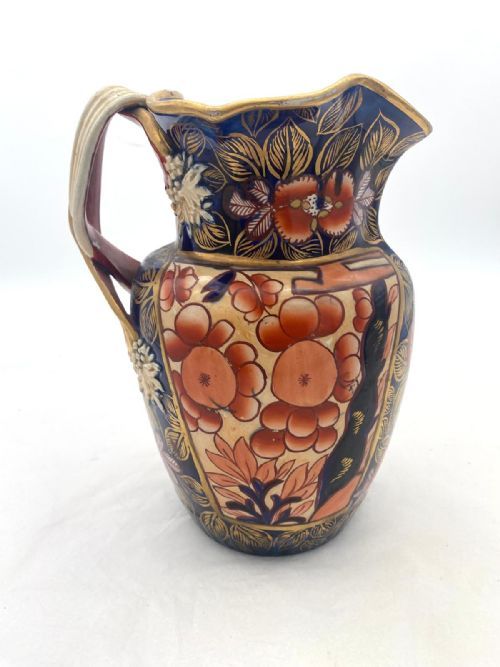
Surface decoration relies on applied glazes, enamel colours, and metallic lustre treatments such as copper lustre. Painters applied vibrant orange and complementary enamel pigments by hand to create the characteristic patterned motifs seen across the Gaudy Welsh and Mason's ranges.
Orange Ceramic Milk Pitcher Retail Price Guide 2026
Typical asking prices for orange ceramic milk pitcher among the pieces listed under this phrase on Sellingantiques today, from the lower quarter to the upper quarter. They describe what is for sale here now, not the wider market.
Nineteenth-century potters gave these spirited jugs evocative pattern names like Pagoda and Cambrian Rose to brighten everyday breakfast tables.
Distinctions in quality
The division between standard production ware and superior examples rests upon the crispness of the moulded form and the precision of the hand-painted enamel work. Pieces featuring complex moulded elements like the Hydra snake handle require higher skill in both the potting and the glazing.
Richer visual depth comes from the careful application of metallic lustre glazes alongside bright orange and secondary enamel pigments. The clarity of named patterns, from intricate pagoda scenes to floral sprays, defines the execution level of the finished ceramic.
Mason's
The Orange Ceramic Milk Pitcher Glossary
- Ironstone
- A patented type of heavy earthenware developed in the nineteenth century to provide a durable, stone-like alternative to porcelain. It takes glazes and enamels securely.
- Gaudy Welsh
- A style of colourful pottery made in the nineteenth century, characterised by bright enamel palettes often incorporating orange, cobalt blue, and copper lustre.
- Hydra jug
- A specific jug form featuring a serpent-shaped handle attached to an octagonal or rounded body, frequently produced in ironstone.
- Copper lustre
- A metallic glaze technique that produces a reflective, copper-coloured sheen over earthenware surfaces. It adds warm metallic highlights to patterned ceramics.
- Pouch jug
- A vessel featuring an expanded, bulbous body shape designed to hold generous volumes of liquid. This form provides a stable base for everyday pouring.
Orange Ceramic Milk Pitcher: Frequently Asked Questions
What is an orange ceramic milk pitcher used for?
These vessels were historically utilised at the table for serving milk or cream during meals.
Today, buyers frequently use them as decorative display items or as functional flower vases.
How do I date an orange ceramic milk pitcher?
Dating relies on identifying the underlying ceramic body, such as heavy ironstone versus softer earthenware, and recognising period-specific styles.
Nineteenth-century pieces often display characteristic Gaudy Welsh patterns or distinct maker markers associated with Georgian and Victorian production.
Are these pitchers safe for daily use?
While these nineteenth-century vessels were originally made for functional kitchen and table service, age brings sensitivity to historic glazes.
Many collectors prefer to exhibit them as decorative art rather than exposing them to modern dishwashers or acidic liquids.
What is the difference between ironstone and earthenware?
Ironstone is a denser, highly vitrified type of earthenware patented to resist chipping and wear much better than standard pottery bodies.
Both materials form the foundation of these pitchers, but ironstone provides a heavier, more porcelain-like weight.