
Open Mahogany Display Unit
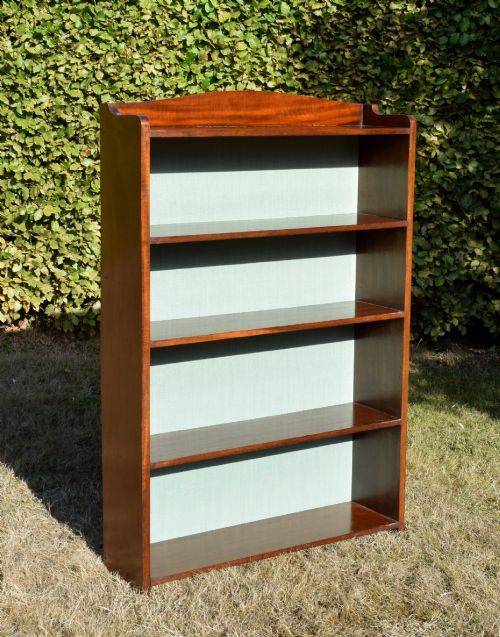
An open mahogany display unit offers accessible shelving for books and objects, combining warm timber tones with architectural presence in any room.
Open Mahogany Display Unit
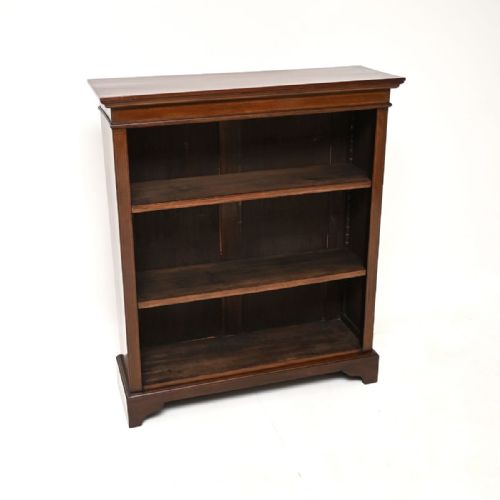
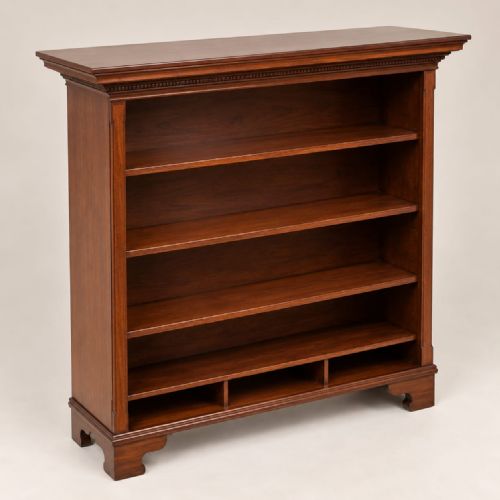
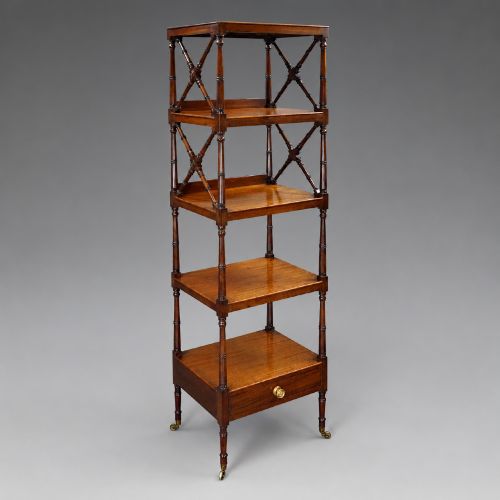
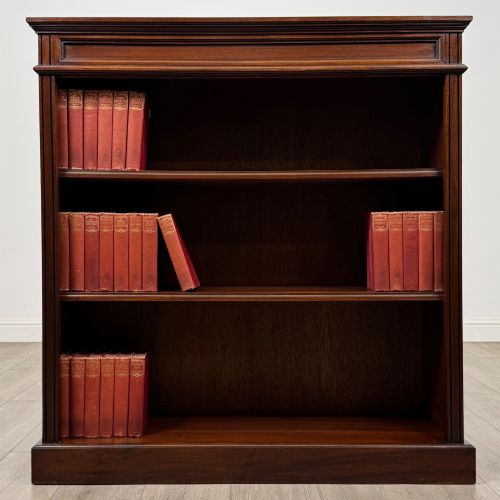
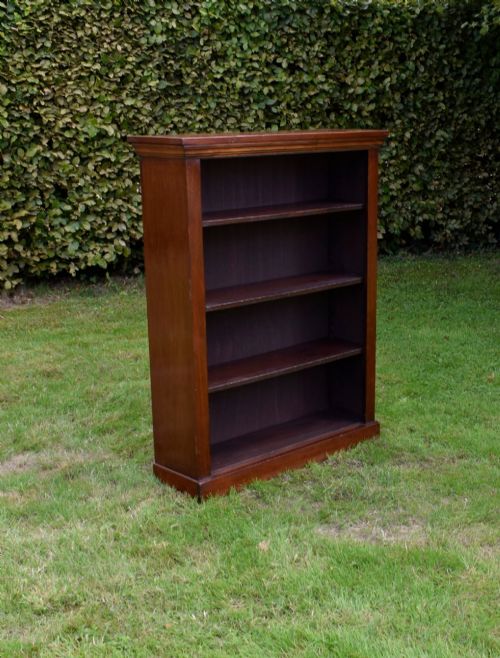
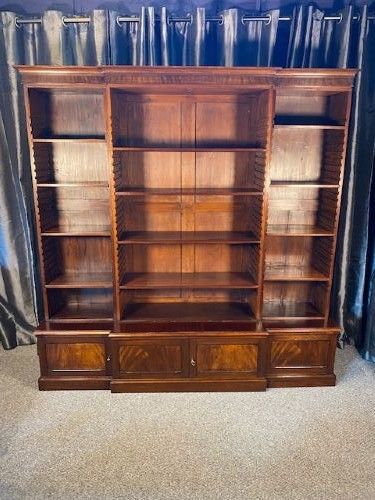
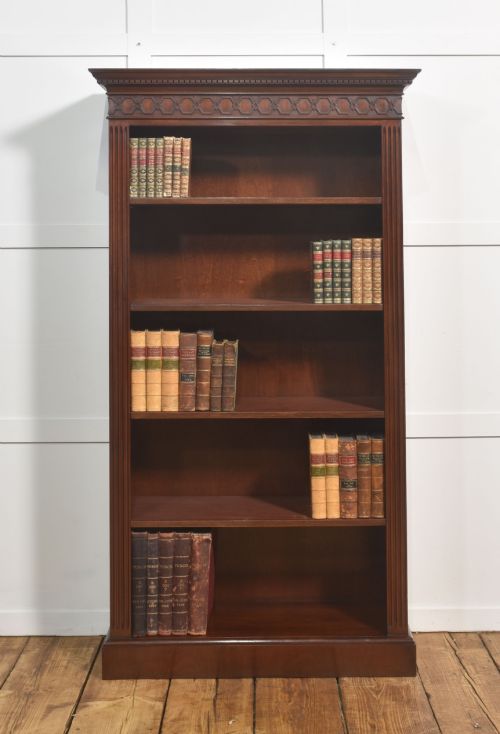
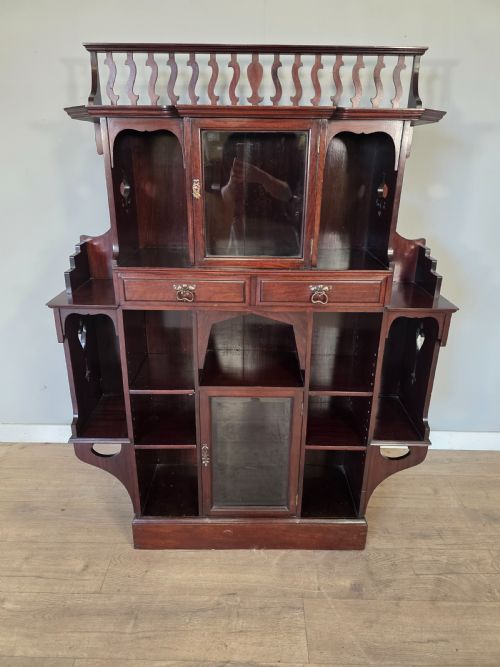
An open mahogany display unit encompasses open bookcases, tiered whatnots, etageres, and corner shelves designed to hold books and decorative pieces without solid cabinet doors. The versions met most frequently on this page date from the Georgian, Victorian, and Edwardian eras, alongside revival pieces from the twentieth century.
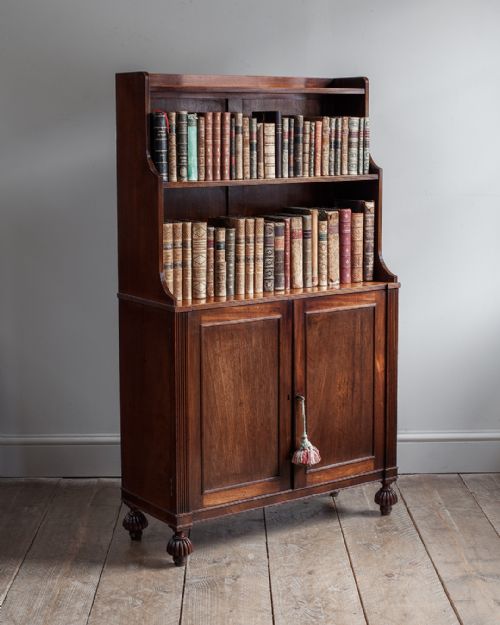
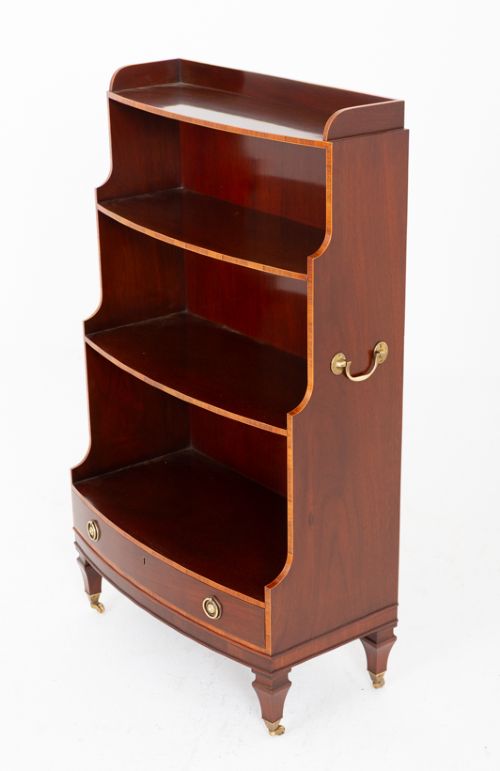
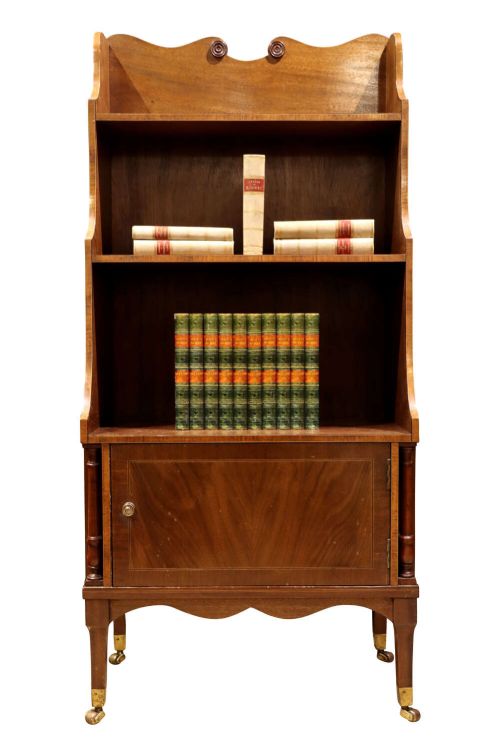
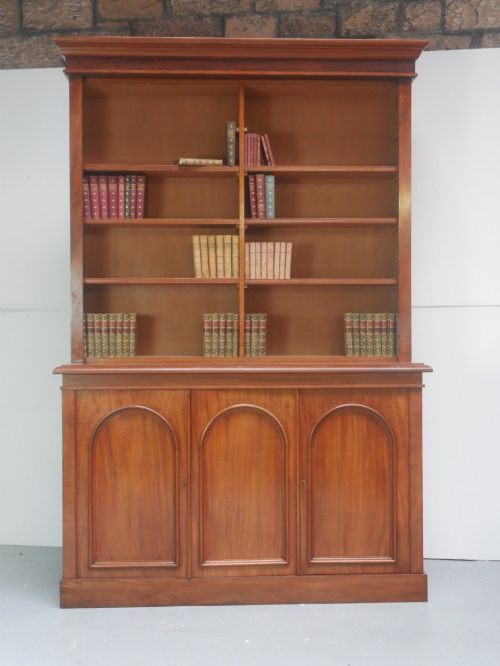
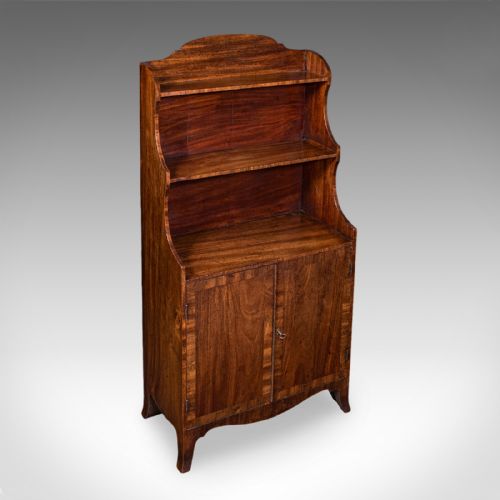
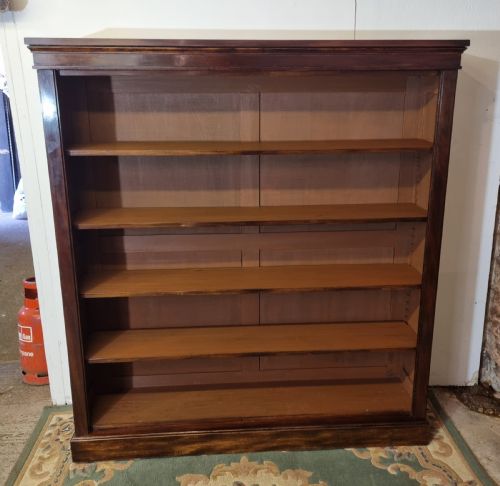
Makers constructed these open display pieces in various formats, ranging from tall library bookcases with adjustable shelves to petite four-tier whatnots and waterfall bookcases that step back toward the wall. Many incorporate lower cupboards, single drawers, or brass castors for mobility, while corner models utilise neglected angles of a room.
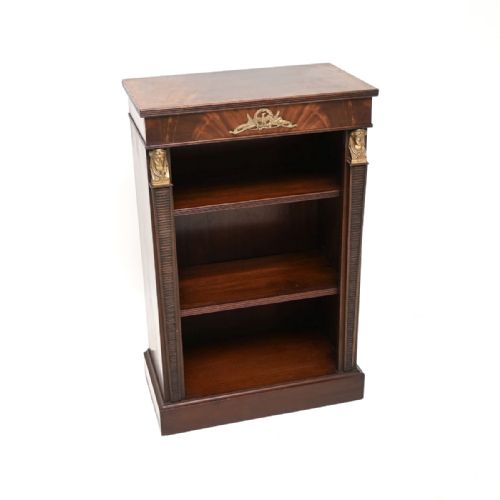
Stylistic influences span simple utilitarian designs to ornate neoclassical and empire interpretations, sometimes incorporating marquetry inlay, satinwood banding, or ormolu mounts. The combination of open shelving and rich timber grain makes these items practical for everyday display while maintaining period character.
Materials and Technique
Cabinetmakers utilised solid mahogany and flame mahogany veneer over secondary timbers, selecting pieces with deep red-brown grain patterns and applying polished finishes that highlighted the natural figure of the wood. Finer examples integrated contrasting satinwood inlay, painted details, or gilt ormolu mounts to accent the structural lines.
Construction methods relied on sturdy joinery for weight-bearing shelves, frequently incorporating adjustable shelf mechanisms supported by wooden racks or brass pins. Brass castors appeared on larger floor-standing whatnots and bookcases to permit easy repositioning across carpets and parquet flooring.
Several pieces arrive equipped with brass castors so your books can follow the sun across the floor.
Indicators of Quality
Quality rests upon the selection of timber figures, such as dense flame mahogany veneer, and the crispness of inlaid satinwood banding rather than plain dark boards. Superior examples display refined proportions, well-defined mouldings, and careful attention to secondary timbers used in internal framing.
Construction integrity distinguishes better pieces through tight joinery, smoothly operating adjustable shelf mechanisms, and original brass hardware or castors. Finer items integrate decorative elements like ormolu mounts or delicate fretwork with precision, ensuring the piece remains stable and balanced under weight.
Edwards and Roberts
The Open Mahogany Display Unit Glossary
- Whatnot
- A freestanding piece of furniture with multiple open tiers for displaying ornaments or books. Originating in the eighteenth century, it gained popularity throughout the Victorian era.
- Waterfall bookcase
- A set of open shelves that progressively recede in depth from bottom to top, creating a tiered profile. This form appeared frequently in the nineteenth century.
- Etagere
- A set of open display shelves intended for ornaments and porcelain. These slender units often featured delicate upright supports and multiple tiers.
- Ormolu
- Gilded bronze mounts applied to furniture for decorative effect. Makers used these cast metal ornaments during the neoclassical and revival periods.
- Satinwood
- A pale, lustrous timber utilised for contrasting stringing and marquetry inlay on darker woods. It added brightness to Edwardian and Georgian cabinetwork.
Open Mahogany Display Unit: Frequently Asked Questions
What is an open mahogany display unit used for?
These pieces provide accessible storage and display surfaces for collections of books, ceramics, and decorative objects. The absence of doors allows for quick retrieval and immediate visibility of the items placed upon the shelves.
They fit easily into sitting rooms, studies, and hallways, utilising vertical wall space or room corners efficiently while adding traditional warmth through their timber construction.
How do I identify a Victorian open bookcase?
Victorian open bookcases typically exhibit heavier proportions, darker mahogany tones, and robust linear construction compared to lighter Georgian or Edwardian equivalents. Many feature adjustable wooden shelving supported by brass studs or wooden ratchets.
Later Victorian versions frequently incorporate decorative satinwood inlay, carved details, or brass castors beneath a plinth base, reflecting the eclectic tastes of the late nineteenth century.
How should I care for mahogany shelving?
Maintain mahogany surfaces by dusting regularly with a soft, dry cloth and avoiding excessive moisture or direct sunlight that can fade the timber. Occasional application of a suitable beeswax polish preserves the lustre of the polished finish.
Check shelf supports periodically, especially on adjustable units, to ensure weight remains evenly distributed across the wooden boards without straining antique fixings.