

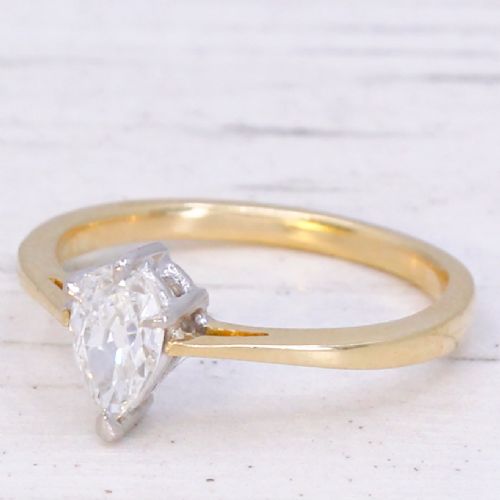
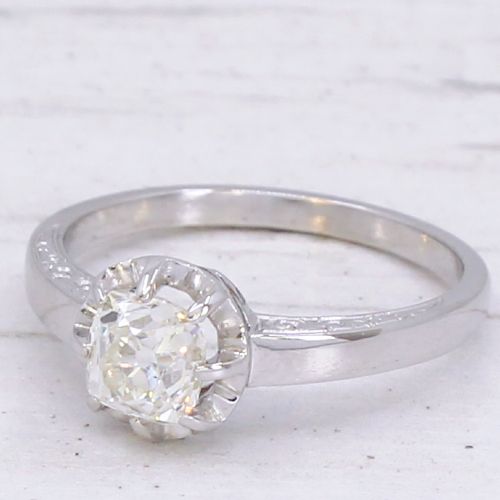
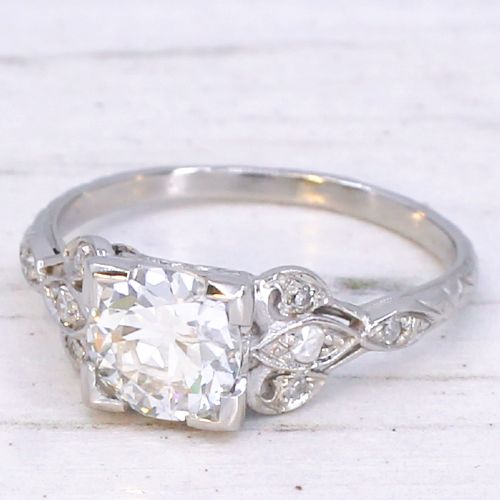
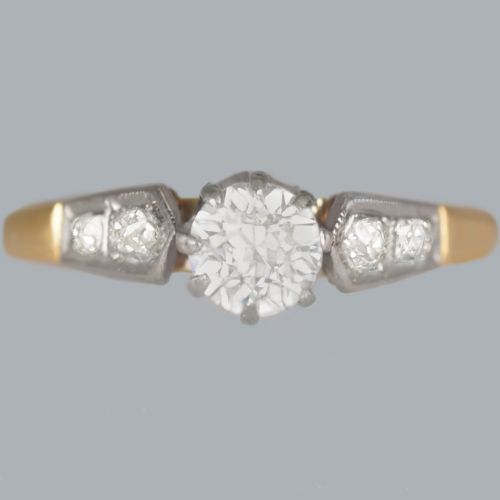
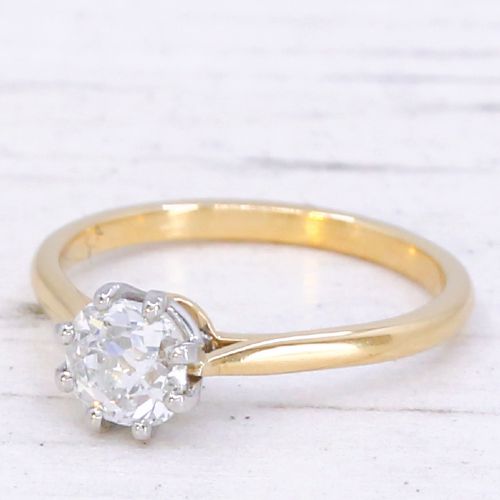
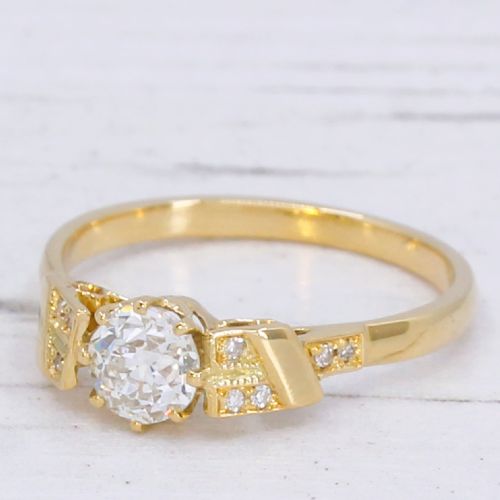
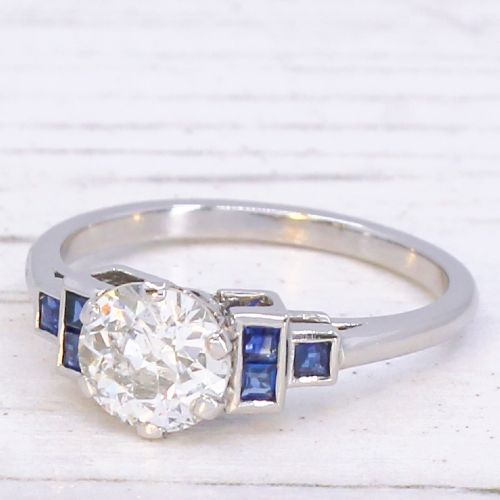
Old Cut Solitaire Ring
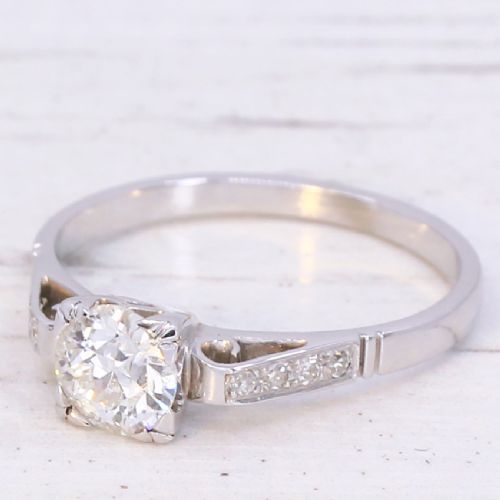
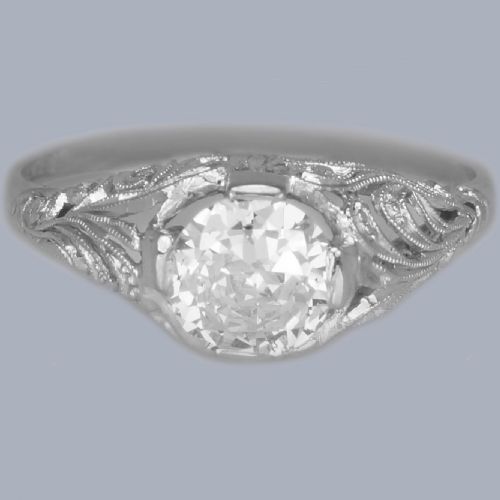
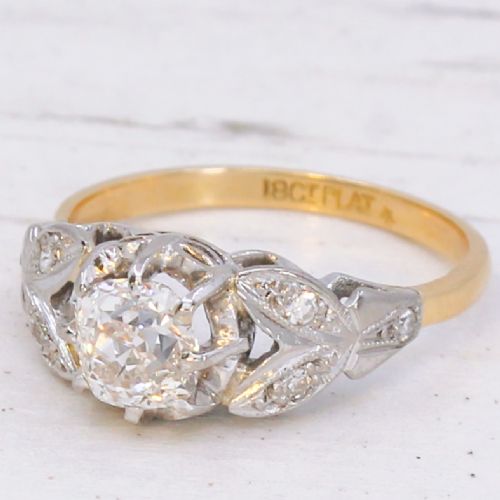
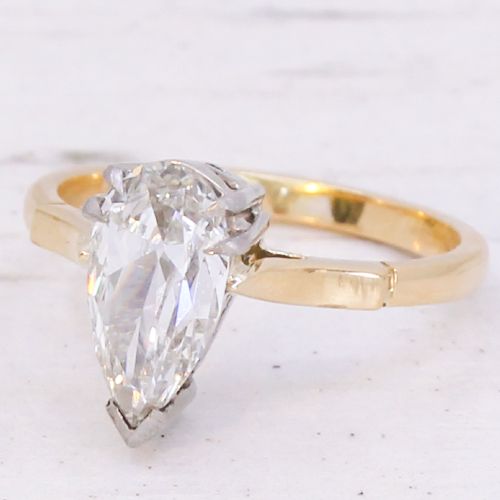
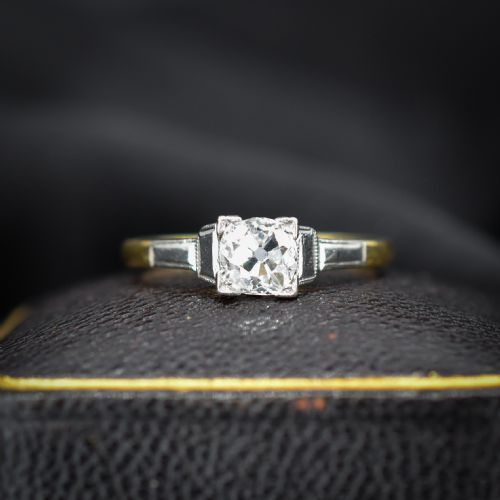
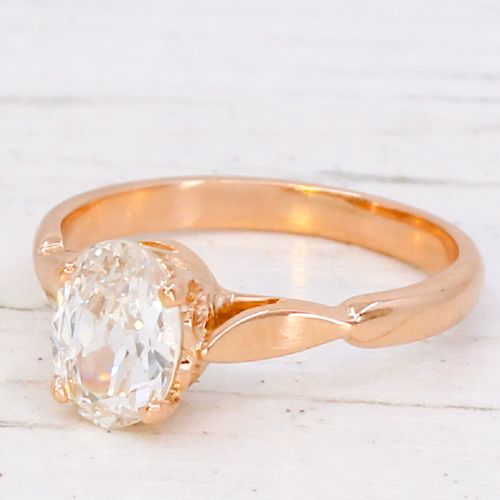
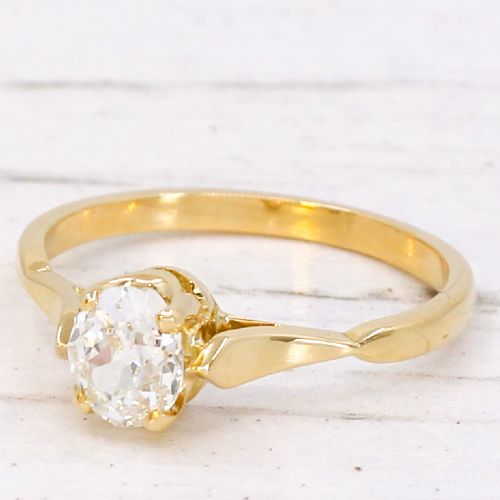
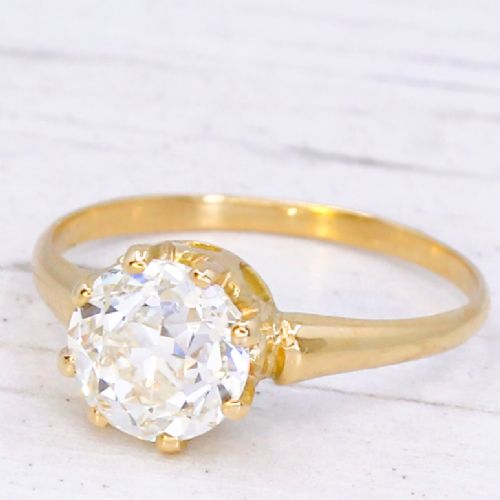
An old cut solitaire ring carries a distinct hand-polished sparkle that belongs to the past, drawing buyers to its unique low-light brilliance.
Old Cut Solitaire Ring
Most examples encountered here span the Victorian, Edwardian, Art Deco, and Mid-Century periods, with the classic diamond in platinum or gold dominating the selection. Alongside diamonds, the evidence records occasional coloured stones including emerald, sapphire, citrine, and amethyst set into gold mounts.
Materials and Construction
Goldsmiths utilised yellow gold, white gold, and platinum to fabricate the bands and settings, often matching the metal choice to the prevailing style of the period. Platinum gained widespread favour during the Edwardian and Art Deco eras for its strength in delicate, lace-like settings.
Stones were shaped entirely by hand before the advent of standardised machinery, resulting in deeper pavilions, smaller tables, and open culets that define the old cut silhouette.
Old Cut Solitaire Ring Retail Price Guide 2026
Typical asking prices for old cut solitaire ring among the pieces listed under this phrase on Sellingantiques today, from the lower quarter to the upper quarter. They describe what is for sale here now, not the wider market.
Some Victorian gypsy rings doubled as secure everyday wear for working hands by sinking the diamond flush into the gold.
Distinctions in Quality
The visual harmony between the hand-cut stone and its metal mount dictates the overall standard, where precise claw work enhances the natural contours of the gem without overwhelming it. Proportional balance ensures the centre stone sits securely while catching light evenly across its irregular facets.
The clarity and original colour grade of the diamond, alongside the integrity of the antique metalwork, set the finest examples apart from standard production. Makers who balanced heavy carat weights with refined gallery design produced pieces that retain their structural and aesthetic character.
The Old Cut Solitaire Ring Glossary
- Solitaire ring
- A ring set with a single gemstone, typically designed to draw full visual attention to the central stone.
- Old European cut
- An early circular diamond cut featuring a small table, heavy crown, and open culet, preceding the modern round brilliant.
- Old mine cut
- A precursor to the modern brilliant cut with a squarish outline, high crown, and deep pavilion, shaped largely by hand.
- Culet
- The small facet at the very bottom of a gemstone, often visible as a tiny open circle in antique stones.
- Gypsy ring
- A style where the gemstone is flush-set directly into the thick metal band, popular during the Victorian period.
Old Cut Solitaire Ring: Frequently Asked Questions
How do I care for an old cut solitaire ring?
Clean your ring gently using warm water, mild soap, and a soft-bristled brush to remove everyday oils from beneath the setting.
Avoid harsh chemical dips and take the ring to a specialist jeweller periodically to check the security of the antique claws.
What periods do these rings come from?
The pieces span from the late nineteenth century through the Victorian, Edwardian, and Art Deco eras, extending into mid-century modern designs.
Each period brings distinct mount styles, ranging from heavy yellow gold gypsy settings to delicate platinum filigree.
Are all solitaire rings diamond?
While diamonds represent the majority of these listings, historical examples also utilise emerald, sapphire, citrine, and amethyst.
Coloured stones offer an alternative aesthetic while maintaining the traditional single-stone layout of the solitaire form.
What makes old cuts different from modern stones?
Older cutting techniques prioritised retaining carat weight and maximising sparkle under candlelight rather than mathematical symmetry.
This yields broader flash patterns, smaller tables, and a warmer visual depth compared to modern machine-cut stones.