

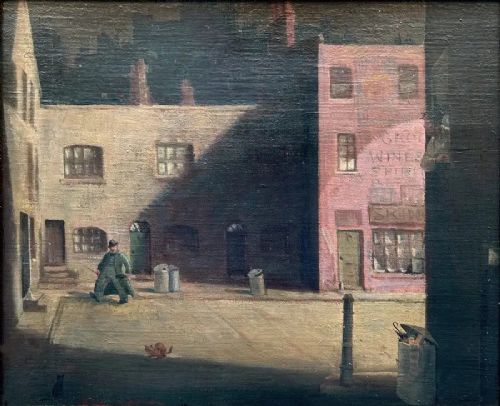
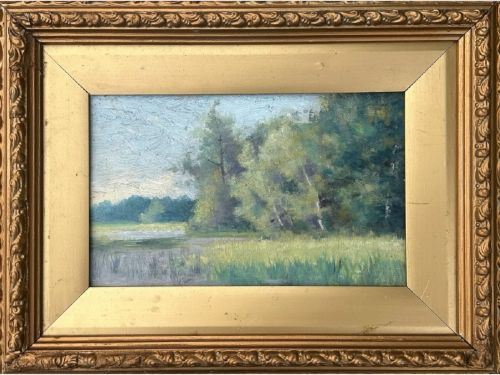
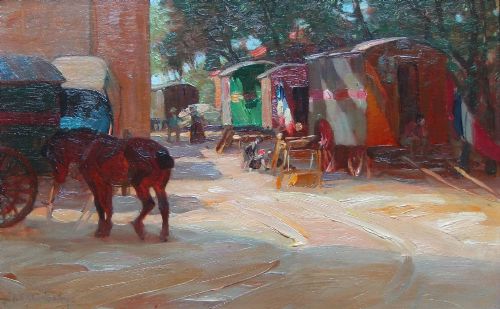


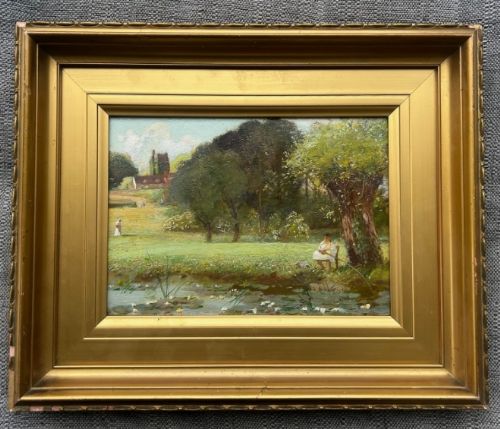


Oil Panel Landscape Artwork
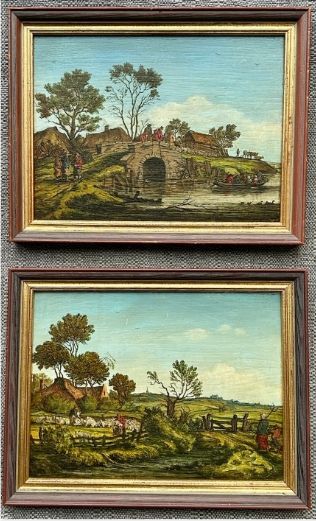
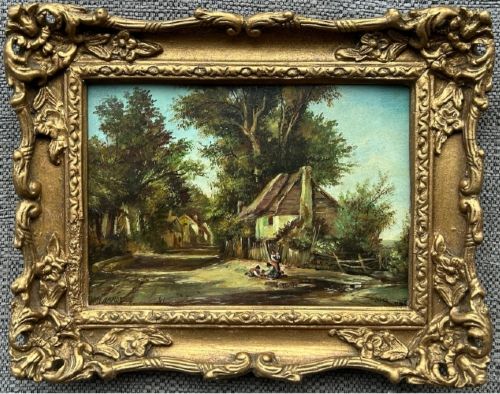
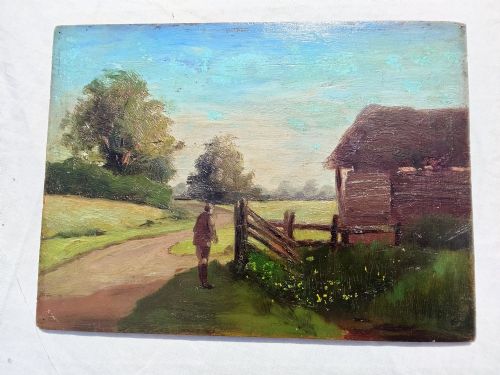
These oil panel landscape artwork selections capture rural scenes and coastal views painted directly onto rigid wooden supports across several centuries.
Oil Panel Landscape Artwork
When searching for an oil panel landscape artwork, collectors encounter portable painted scenes created on wooden boards, oak panels, and wooden supports rather than stretched fabric. These pieces span from the Georgian and Victorian eras through the British Impressionist, Post-Impressionist, and Scottish School movements into the mid-twentieth century.
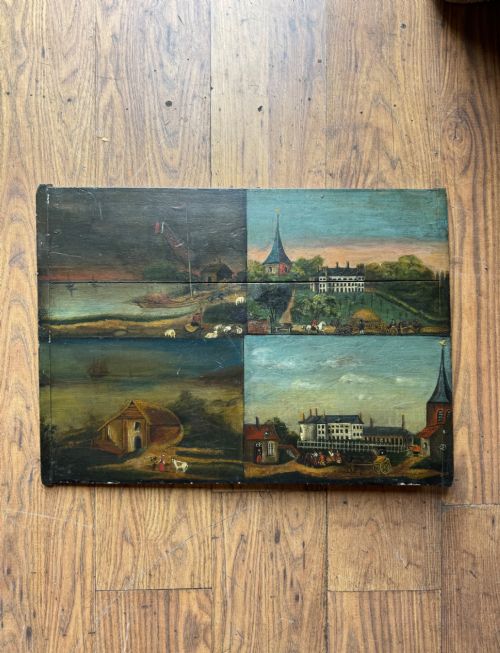
The most common examples on this page are nineteenth-century British and Scottish rural views, featuring highland landscapes with sheep, river fishing scenes, and provincial naive works. Alongside these sit continental European harbour scenes, Flemish styles, and modernist compositions painted on board.
Makers range from named artists such as Tom Campbell, Hubert Wellington, and Florence Hess to regional English and Scottish school pieces created by anonymous hands. Sizes vary from miniature Italian seascapes to larger topographical views, framed in period giltwood or gesso mouldings.
Materials and technique
Artists apply oil paint directly onto rigid wooden substrates, including prepared wooden boards and oak panels, which provide a stable and permanent surface for detailed brushwork. Unlike canvas, these wooden panels resist the flex and slack associated with woven textiles over time.
Makers often incorporate gesso grounds to seal the wood before applying the pigment layers, ensuring the oil medium adheres correctly and retains its colour depth. Many finished works are housed within original giltwood or moulded frames that complement the painting style.
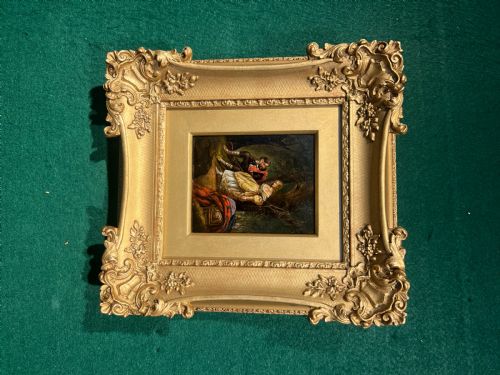
A shy bather and an artist share the board with sheep, musicians, and ruined abbeys.
Assessing quality
Quality rests in the handling of light, brushwork confidence, and the physical integrity of the wooden support rather than the mere age of the piece. Masterful works display assured control of pigment on panel, where every stroke defines atmosphere and topography.
The sophistication of the composition separates provincial naive pieces from accomplished academic or impressionist works. Original framing, clear artist signatures, and well-preserved wooden boards without warping also elevate individual pieces.
Tom Campbell·William Howard Hardy·Maud Raphael Jones·Hubert Wellington·Sir David Murray·Pieter Cornelis Dommersen·Cornelis Van Poelenburgh·Florence Adelina Hess·Paul-Élie Gernez·Fernando Del Basso·Philipp Peter Roos·Jeffrey Pratt·Sam Bough·Kershaw Schofield
The Oil Panel Landscape Artwork Glossary
- Oil paint
- A slow-drying paint made by combining pigment particles with a drying oil, typically linseed oil. This medium allows artists to blend tones smoothly and build rich surface textures on rigid supports.
- Wood panel
- A rigid wooden support used by artists as a substitute for canvas. Oak and other stable timbers provide a smooth, durable base for detailed brushwork.
- Gesso
- A traditional paint mixture consisting of a binder mixed with chalk, gypsum, or pigment. It is applied to wooden panels to prepare a smooth, absorbent surface for oil painting.
- Giltwood
- Wood that has been coated with a thin layer of gold leaf or gold paint. Frames made from this material frequently accompany nineteenth-century fine art.
- British Impressionism
- A painting style developed in late-nineteenth and early-twentieth-century Britain characterised by visible brushstrokes and an emphasis on natural light. Practitioners captured outdoor scenes directly onto portable panels.
Oil Panel Landscape Artwork: Frequently Asked Questions
What is an oil panel landscape artwork?
These pieces are paintings executed with oil-based pigments directly onto rigid wooden boards or panels rather than flexible woven canvas. They capture rural views, river scenes, and coastal topographies.
Artists favoured wooden supports for their portability and stability when painting outdoors or in the studio across the eighteenth, nineteenth, and twentieth centuries.
How do I care for a wood panel painting?
Keep wooden panel artworks away from direct sunlight, damp environments, and rapid temperature fluctuations that cause wood to expand and contract. Stable indoor conditions protect both the timber support and the oil paint layer.
Dust the surface gently with a soft, dry brush and avoid using liquid cleaners or hanging pieces near active heat sources.
How can I tell the period of a panel painting?
Dating relies on examining the construction of the wooden board, the formulation of the gesso ground, and the style of brushwork. Frame design and artist signatures also provide reliable chronological markers.
Twentieth-century pieces often display modernist or impressionist tendencies, whereas nineteenth-century works frequently feature traditional British or Scottish topographical subjects.
Why did artists paint on wood instead of canvas?
Wood panels offered a completely rigid surface that did not require tensioning and resisted the punctures or sagging common to stretched canvas. This made them durable for travel and outdoor sketching.
Many artists valued the smooth tooth of a prepared wooden board for achieving precise detail and rich colour saturation in landscape scenes.