



French Style Swept Frame
A French style swept frame brings theatrical curves and deep mouldings to a canvas, offering the ornate presence that collectors seek for period interiors.
French Style Swept Frame
When you search for a French style swept frame, you encounter decorative surrounds designed to house paintings and mirrors with substantial visual weight. The examples here span from the seventeenth century through to the mid-twentieth century, showing how cabinetmakers and frame makers adapted historic taste.
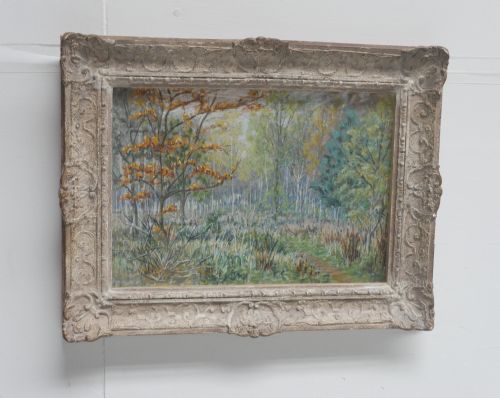
The most common formats on this page are nineteenth-century picture frames and overmantel mirrors that display deep, undulating profiles. These pieces often arrive paired with oil paintings, pastels, or plain glass, reflecting how they functioned both as standalone woodwork and as enclosures for art.
Materials and construction methods
Construction relies upon a wooden carcass shaped to form the characteristic serpentine curves and scrolling corners. Over this wooden base, artisans applied layers of gesso and plaster to build up the intricate relief ornament.
Finishing involved the application of gold leaf or gilt paint to achieve a metallic sheen across the sculpted surface. The combination of carved wood, moulded gesso, and gold leaf gives these frames their distinctive reflective quality under ambient light.
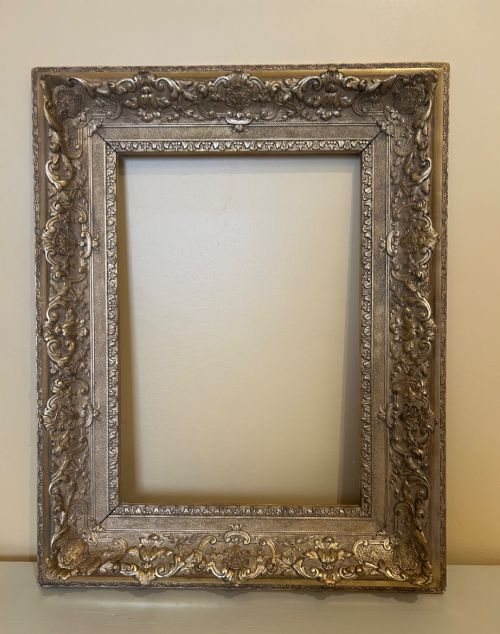
One seventeenth-century piece arrives with no painting attached, offering an empty stage waiting for a new canvas.
Judging quality in swept frames
Quality rests in the crispness of the moulded relief and the depth of the carved wooden substrate beneath the gesso layer. Finer examples retain sharp corners and detailed scrolls that do not appear blurred by heavy, repetitive plaster applications.
The integrity of the gilding and the preservation of the original wood and gesso structure dictate the desirability of a piece. Better specimens show harmonious ageing where the gold leaf has mellowed evenly across the undulating surfaces.
The French Style Swept Frame Glossary
- Swept frame
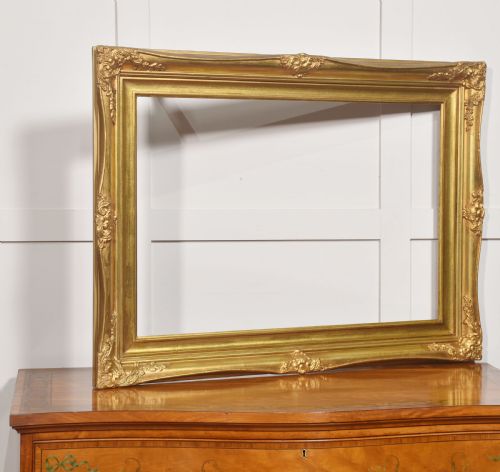
- A picture frame characterised by its undulating, ogee-shaped profile that curves outwards from the rebate towards the outer edge. This design creates a dynamic sense of movement around the artwork.
- Gesso
- A plaster-like mixture applied to a wooden frame substrate to create a smooth surface for gilding. Artisans could carve and model this material while wet to achieve complex decorative relief.
- Giltwood
- Wood that has been covered with a thin layer of gold leaf. It differs from painted gold surfaces by offering a warmer, more luminous metallic reflection.
- Rococo Revival
- A nineteenth-century design movement that revives the asymmetrical C-scrolls, shell motifs, and naturalistic curves of the eighteenth-century French style. Frames from this period display exuberant, flowing ornamentation.
- Montparnasse frame
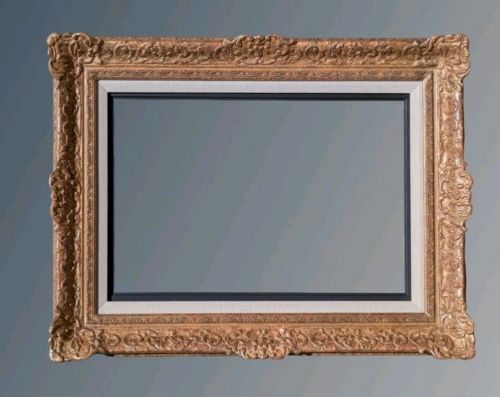
- A twentieth-century style of picture frame associated with artists working in France, typically featuring simpler geometric profiles with subtle stepped or reeded decoration.
French Style Swept Frame: Frequently Asked Questions
What holds a French style swept frame together?
These frames are constructed from joined wooden segments that form the foundational structure. Gesso and plaster layers are then built up over the joints to create the continuous sculpted surface.
Over the centuries, the underlying timber and plaster expand and contract with environmental changes. Careful inspection ensures the mitre joints remain stable and secure.
How do I clean a gilded swept frame?
Dust accumulation should be managed gently using a soft, dry artist's brush to avoid disturbing fragile gesso or flaking gold leaf. Moisture and modern chemical cleaners will damage the delicate gilded surface.
Keeping the frame away from direct heat sources prevents the wood from drying out and cracking the plaster ornament.
How do I date a swept picture frame?
Dating relies upon examining the timber species at the back, the composition of the gesso, and the style of the relief carving. Nineteenth-century interpretations often employ machine-cut timbers and heavier plaster formulations compared to earlier work.
Comparing the moulding profile to known periods like Rococo Revival or Montparnasse helps narrow down the decade of manufacture.