




Oil Painting Young Boy
An oil painting young boy captures the quiet intensity of childhood across centuries of portraiture, offering a glimpse into domestic life and historic costume.
Oil Painting Young Boy
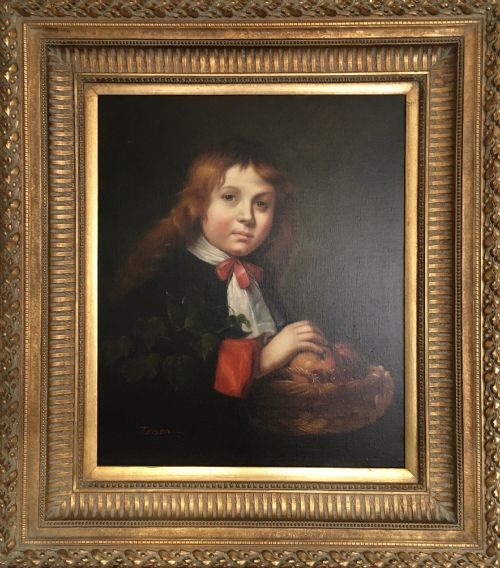
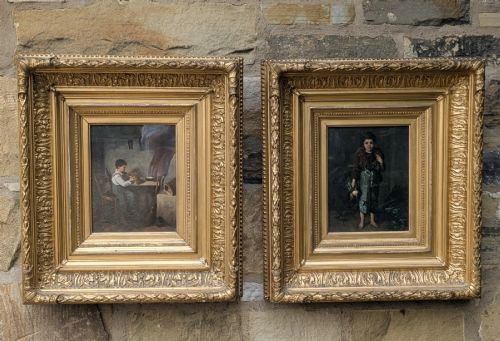
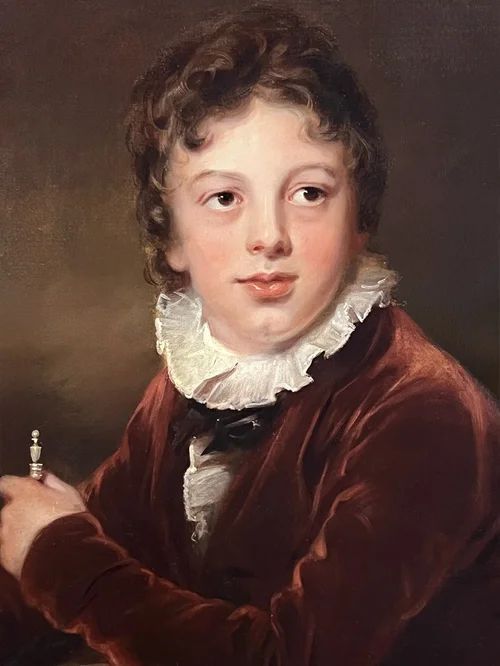
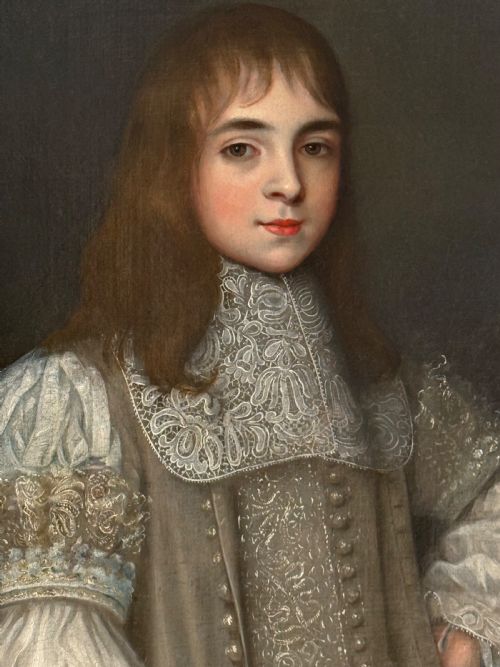
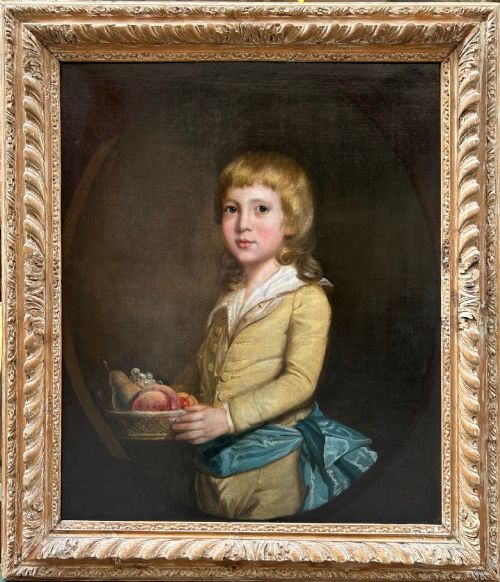
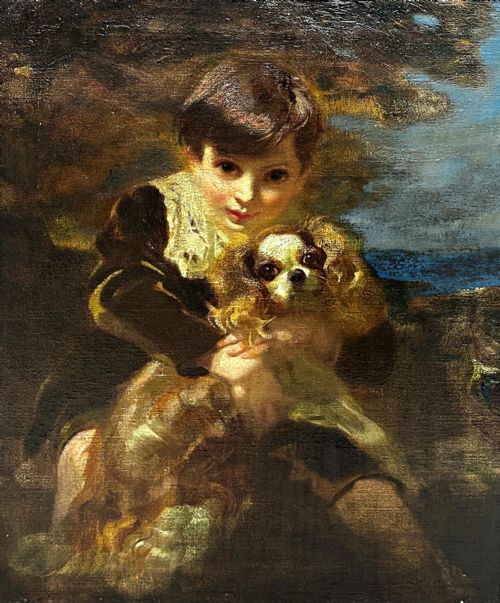
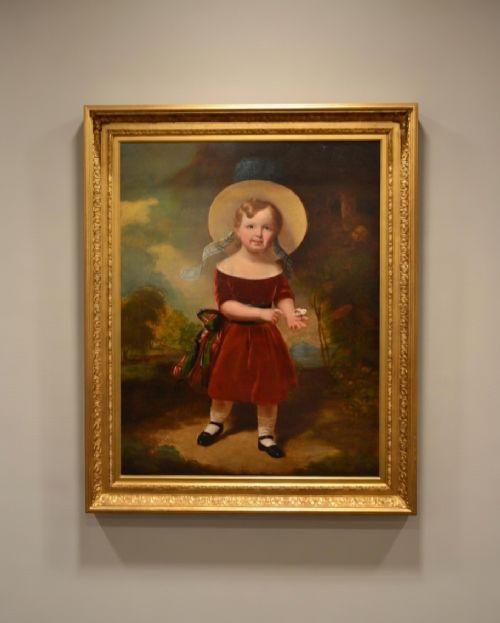
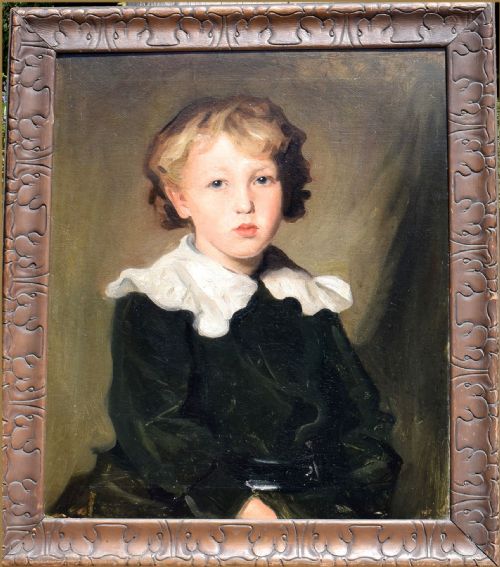
An oil painting young boy typically presents a formal or informal likeness executed on canvas or wood panel, ranging from intimate provincial studies to elaborate commissioned works. The pieces span periods from the seventeenth century through to the mid-twentieth century, encompassing Georgian, Regency, and Mid-Century Modern aesthetics.
Subjects often appear alongside personal possessions, pets, or outdoor elements, such as dogs, birds, spinning tops, and fruit baskets. The most frequent encounters on this page include eighteenth-century canvas portraits and nineteenth-century provincial school depictions.
Formats vary from bust-length compositions to full interior scenes, sometimes housed within period giltwood frames that complement the painting.
Materials and execution
The primary support for these works is woven canvas stretched over a wooden frame, though wooden panels also appear, particularly in earlier or smaller compositions. Artists applied oil paint and oil pigments to build up layers of colour, light, and shadow.
Frames are frequently constructed from wood with gilt ornamentation, providing both structural support and decorative enclosure for the artwork.
Distinctions in craftsmanship
Quality rests in the handling of facial expression, fabric drape, and the naturalism of the sitter's pose, where a skilled hand renders light across skin and clothing with subtlety. The integration of secondary elements, such as animals or accessories, demonstrates the painter's ability to balance a complex composition.
Condition of the pigment and the stability of the canvas or wood support influence the integrity of the piece, alongside the presence of the original or period-appropriate frame.
Margaret Sarah Carpenter·John Michael Wright·Thomas Beach·Philip Mercier·Frank Owen Salisbury·Henry Scott·Edward Bird·William Orpen·John Russell·John Verelst
The Oil Painting Young Boy Glossary
- Canvas
- A heavy woven fabric stretched across a wooden stretcher frame to form the foundation for oil painting. It provides a textured surface that holds oil pigment securely over centuries.
- Giltwood
- Wood carved and coated with a thin layer of gold leaf or gold paint. This material is standard for traditional picture frames housing fine art.
- Provincial school
- Art produced by regional painters working outside major metropolitan centres. These works often display charming individuality rather than academic strictness.
- Panel
- A flat piece of wood used as a rigid support for painting instead of fabric canvas. Panels were common in earlier portraiture and smaller formats.
Oil Painting Young Boy: Frequently Asked Questions
How do I date an oil painting of a boy?
Dating relies on the style of clothing, hair, and any accompanying objects, alongside the construction of the canvas and stretcher frame. Portrait conventions shift noticeably between the seventeenth, eighteenth, and nineteenth centuries.
Examination of the pigments and the style of brushwork also helps narrow down the decade of creation when documentation is absent.
Where should I hang a portrait?
These portraits suit living rooms, studies, or hallways where lighting can be controlled to prevent direct glare on the varnished surface. Placing them at eye level allows the viewer to engage with the subject's gaze.
Avoid positioning works in areas with high humidity or direct sunlight to preserve the oil pigment and wooden frame.
What subjects accompany the sitters?
Children in these portraits frequently hold items reflecting their era or interests, such as spinning tops, maps, books, or fruit baskets. Pets, particularly spaniels and hunting dogs, appear regularly alongside the young subjects.
These additions often provide clues to the family's social standing or interests at the time of the commission.
Are these paintings usually signed?
Many historical portraits, particularly those from provincial schools or earlier centuries, remain unsigned or attributed to a circle of artists rather than bearing a definitive signature. Documentation or family provenance often supplies the attribution.
Works by known academic painters are more likely to feature a signature or contemporary inscription on the reverse of the canvas.