55,132  PAGES BROWSED TODAY PAGES TODAY 192  ANTIQUES UPLOADED TODAY NEW ARRIVALS
ID #SA319293
FOR SALE
£4,500
Email
Save
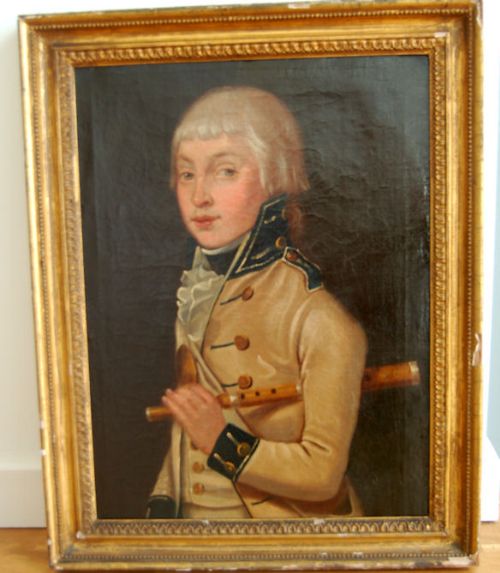
English School 18th Century, Portrait of a Young Fifer in Military Dress Possibly from a Yorkshire Militia Band
Artware Fineart
for sale €5,265     $5,715
£4,500

Artware Fineart

Sellingantiques Verified Since Sep 2008
View Dealers Stock Page
Id #SA319293
PDF SHARE
SAVE

English School 18th Century, Portrait of a Young Fifer in Military Dress Possibly from a Yorkshire Militia Band

19th century
For Sale by Artware Fineart
Description

English School 18th Century, portrait of a Young Fifer in Military Dress possibly from a Yorkshire Militia Band

oil on canvas

21 x 16 in. (54 x 41 cm.)

Master of Music york. Regimental Band Uniforms were traditionally white with the collar, cuffs, lapels, etc in the regimental facing colour. It was, however, not at all unknown for musicians to wear uniforms which were in very different colours to those of the rest of the regiment’s personnel. If they have a connection with a particular location, they are more likely to belong to the Militia regiment/battalion of that area than to the Regulars. Apart from London, cities in Great Britain did not really have their own units, but the various Ridings of Yorkshire certainly each had one or more battalions of Militia troops. I would date these to the mid-1790s.
A fife s a small, high-pitched, transverse flute, that is similar to the piccolo, but louder and shriller due to its narrower bore. The fife originated in medieval Europe and is often used in military and marching bands. Someone who plays the fife is called a fifer. The word fife comes from the German Pfeife, or pipe, which comes from the Latin word pipare.
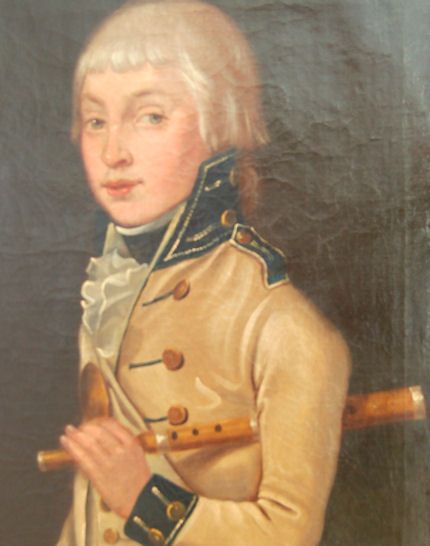
The fife is a simple instrument usually consisting of a tube with 6 finger holes, and diatonically tuned. Some have 10 or 11 holes for added chromatics. The fife also has an embouchure hole, across which the player blows, and a cork or plug inside the tube just above the embouchure hole. Some nineteenth-century fifes had a key pressed by the little finger of the right hand in place of a seventh finger hole.

Fifes are made mostly of wood: grenadilla, rosewood, mopane, pink ivory, cocobolo, boxwood and other dense woods are superior; maple and persimmon are inferior, but often used. Some Caribbean music makes use of bamboo fifes.

Military and marching fifes have metal reinforcing bands around the ends to protect them from damage. These bands are called ferrules. Fifes used in less strenuous conditions sometimes have a lathe-turned, knob-like decoration at the ends for similar reasons. Some fifes are entirely made of metal or plastic. Some modern fifes are of two-piece construction with a sliding tuning joint similar to some recorders.

When played in its upper register, the fife is loud and piercing, yet also extremely small and portable. According to some[which?] reports, a band of fifes and drums can be heard up to 3 miles away over artillery fire. Because of these qualities, European armies from the Renaissance on found it useful for signaling on the battlefield. Armies from Switzerland and southern Germany are known to have used the fife (German: Soldatenpfeife) as early as the 15th century. Swiss and German mercenaries were hired by monarchs throughout Western Europe, and they spread the practice of military fifing. The fife was a standard instrument in European infantries by the 16th century.

During the 17th and 18th centuries, the protocols of the fifes and drums became intricately associated with infantry regiments only. They were never used as signaling instruments by the cavalry or artillery, which used trumpets, kettle drums or both. Each company in an infantry regiment was assigned two fifers and two drummers. When the battalion (5 companies) or regiment (10 companies) was formed up on parade or for movement en masse, these musicians would be detached from the companies to form a "band". This is how the term band first came to refer to a group of musicians.[1] In their individual companies, the signaling duties included orders to fire, retreat, advance, and so forth. By the 18th century the military use of the fife was regulated by armies throughout Europe and its colonies. The rank of Fife Major was introduced, a noncommissioned officer responsible for the regiment's fifers, just as a Drum Major was responsible for the drummers. Books of military regulations included standard fife calls to be used in battle or at camp. During t

Physical Dimensions
Height
62cm (24.41")
Width
49cm (19.29")
Depth
3cm (1.18")
Declaration

Artware Fineart has dated this 18th Century Military Portrait to the 1800s.

Reference Numbers
Sellingantiques Reference
SA319293
Dealers Internal Reference
3681
Description
English School 18th Century, portrait of a Young Fifer in Military Dress possibly from a Yorkshire Militia Band

oil on canvas

21 x 16 in. (54 x 41 cm.)

Master of Music york.

Regimental Band Uniforms were traditionally white with the collar, cuffs, lapels, etc in the regimental facing colour.
Artware Fineart

It was, however, not at all unknown for musicians to wear uniforms which were in very different colours to those of the rest of the regiment’s personnel. If they have a connection with a particular location, they are more likely to belong to the Militia regiment/battalion of that area than to the Regulars. Apart from London, cities in Great Britain did not really have their own units, but the various Ridings of Yorkshire certainly each had one or more battalions of Militia troops. I would date these to the mid-1790s.

fig 1. An 18th-century oil painting depicting a young fifer in a cream military coat with dark blue facings holding a wooden flute.
fig 1. English School 18th Century, Portrait of a Young Fifer in Military Dress Possibly from a Yorkshire Militia Band

A fife s a small, high-pitched, transverse flute, that is similar to the piccolo, but louder and shriller due to its narrower bore. The fife originated in medieval Europe and is often used in military and marching bands. Someone who plays the fife is called a fifer. The word fife comes from the German Pfeife, or pipe, which comes from the Latin word pipare.

fig 2. An 18th-century oil painting depicting a young fifer in a cream military coat with dark blue facings holding a wooden flute.
fig 2. English School 18th Century, Portrait of a Young Fifer in Military Dress Possibly from a Yorkshire Militia Band

The fife is a simple instrument usually consisting of a tube with 6 finger holes, and diatonically tuned. Some have 10 or 11 holes for added chromatics. The fife also has an embouchure hole, across which the player blows, and a cork or plug inside the tube just above the embouchure hole. Some nineteenth-century fifes had a key pressed by the little finger of the right hand in place of a seventh finger hole.

Fifes are made mostly of wood: grenadilla, rosewood, mopane, pink ivory, cocobolo, boxwood and other dense woods are superior; maple and persimmon are inferior, but often used. Some Caribbean music makes use of bamboo fifes.

Military and marching fifes have metal reinforcing bands around the ends to protect them from damage. These bands are called ferrules. Fifes used in less strenuous conditions sometimes have a lathe-turned, knob-like decoration at the ends for similar reasons. Some fifes are entirely made of metal or plastic. Some modern fifes are of two-piece construction with a sliding tuning joint similar to some recorders.

When played in its upper register, the fife is loud and piercing, yet also extremely small and portable. According to some[which?] reports, a band of fifes and drums can be heard up to 3 miles away over artillery fire. Because of these qualities, European armies from the Renaissance on found it useful for signaling on the battlefield. Armies from Switzerland and southern Germany are known to have used the fife (German: Soldatenpfeife) as early as the 15th century. Swiss and German mercenaries were hired by monarchs throughout Western Europe, and they spread the practice of military fifing. The fife was a standard instrument in European infantries by the 16th century.

During the 17th and 18th centuries, the protocols of the fifes and drums became intricately associated with infantry regiments only. They were never used as signaling instruments by the cavalry or artillery, which used trumpets, kettle drums or both. Each company in an infantry regiment was assigned two fifers and two drummers. When the battalion (5 companies) or regiment (10 companies) was formed up on parade or for movement en masse, these musicians would be detached from the companies to form a "band". This is how the term band first came to refer to a group of musicians.[1] In their individual companies, the signaling duties included orders to fire, retreat, advance, and so forth. By the 18th century the military use of the fife was regulated by armies throughout Europe and its colonies. The rank of Fife Major was introduced, a noncommissioned officer responsible for the regiment's fifers, just as a Drum Major was responsible for the drummers. Books of military regulations included standard fife calls to be used in battle or at camp. During t

Height
62cm (24.41")
Width
49cm (19.29")
Depth
3cm (1.18")
Date of Manufacture

Artware Fineart has dated this 18th Century Military Portrait to the 1800s.

Reference Numbers
Sellingantiques Ref
SA319293
Dealers Internal Ref
3681
Artware Fineart
Sellingantiques verified Since Sep 2008
Dealer Profile

You can view the stock and full dealer information on the Artware Fineart Profile Page

PDF SHARE
SAVE
An 18th-century oil painting depicting a young fifer in a cream military coat with dark blue facings holding a wooden flute.
1 / 3
Archive I An 18th-century oil painting depicting a young fifer in a cream military coat with dark blue facings holding a wooden flute.

English School 18th Century, Portrait of a Young Fifer in Military Dress Possibly from a Yorkshire Militia Band

Archive II An 18th-century oil painting depicting a young fifer in a cream military coat with dark blue facings holding a wooden flute. View II
Archive III An 18th-century oil painting depicting a young fifer in a cream military coat with dark blue facings holding a wooden flute. View III
Enlarged Archival View
Telephone 07958 699 645
Location
18 La Gare
51 Surrey Row
London
SE1 0BZ
United Kingdom
Verified Since Sep 2008
Items For Sale 243
Items Sold 223
Artware Fineart
Verified Since Sep 2008
View Dealer Info
Location: 18 La Gare , 51 Surrey Row , London , SE1 0BZ , United Kingdom
Verified
Sep 2008
For Sale
243
Sold
223
An 18th-century oil painting depicting a young fifer in a cream military coat with dark blue facings holding a wooden flute.
English School 18th Century, portrait of a Young Fifer in Military Dress possibly from a Yorkshire Militia Band
Ref: SA319293
An 18th-century oil painting depicting a young fifer in a cream military coat with dark blue facings holding a wooden flute.
Detail View 1
Detail View 2
Archival Detail
Every single antique dealer on our platform is individually approved by our internal team. We verify their professional trade history, ethical standards, and photographic quality to ensure a secure, high-standard buying environment. Upon joining, every dealer agrees to a strict 9-point code of conduct. While issues can occasionally arise, our dealers typically resolve them swiftly and directly with the buyer. In fact, since our founding in 2002, Sellingantiques has only had to step in to help resolve an issue on roughly five occasions—a true testament to the quality of our dealers and their dedication to your happiness.
Our dealers are highly experienced in packing and shipping fragile, high-value antiques. Because you are in direct contact with the dealer, you will be able to easily go through all available shipping and insurance options together to ensure your item arrives safely.
Antiques are the ultimate green purchase. By choosing historical pieces over newly manufactured goods, you completely eliminate the carbon footprint of modern mass production while preserving exceptional, timeless craftsmanship.

English School portraiture from the 18th century is defined by its formal composition, attention to social status, and detailed rendering of period costume. Artists focused heavily on realistic depiction of fabrics, regimental uniforms, and personal attributes of the sitter.

Georgian portraits were primarily executed in oil paints on hand-woven linen or hemp canvas stretched over wooden strainers. Pigments were bound with linseed oil, and coats of natural varnish were applied to protect the paint layer.

Authentic period portraits exhibit natural craquelure across the paint surface, hand-cut wooden stretchers, and signs of age on the back of the raw canvas. Regimental uniforms and military accoutrements should also align accurately with historical military dress records.

A historical oil portrait creates an effective focal point when hung above a mantelpiece or integrated into a gallery wall. Combining classical portraiture with clean-lined modern furniture provides balanced contrast in contemporary spaces.

Keep oil paintings away from direct sunlight, excess heat, and high humidity to prevent cracking and canvas distortion. Dust gently using a soft, dry camel-hair brush, and consult a professional conservator for surface varnish restoration.
items
Add keywords to the filter
Price
£100
£250000
Era
Movements
Material
Origin
Stock Location
Freshness
Online Payments
Categories