
Oil Painting Floral Still Life
An oil painting floral still life brings the quiet depth of nature indoors, captured through centuries of changing artistic technique.
Oil Painting Floral Still Life
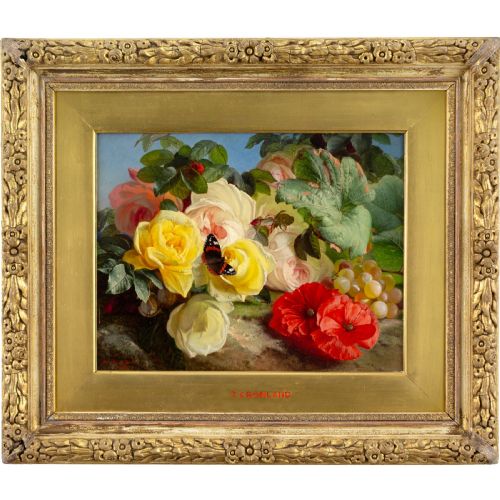
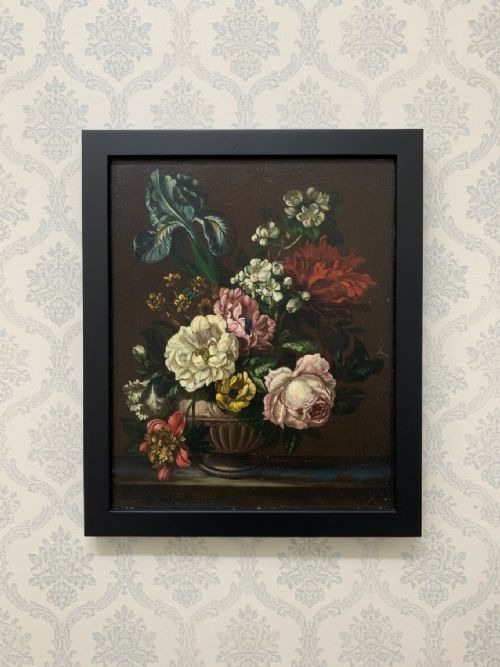
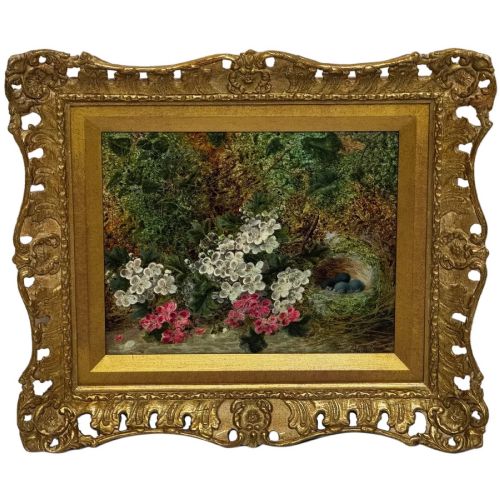
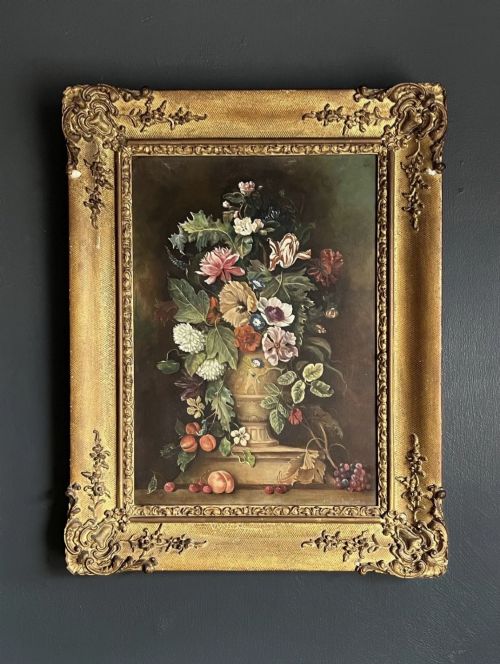
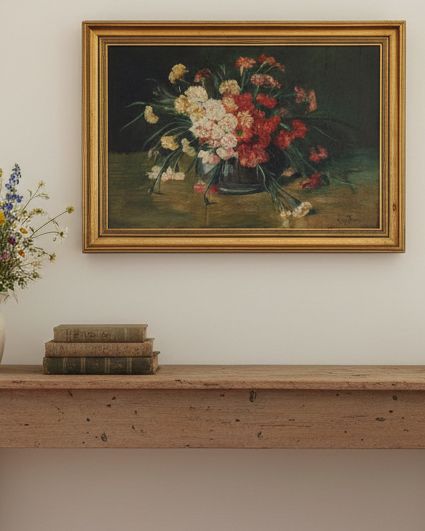
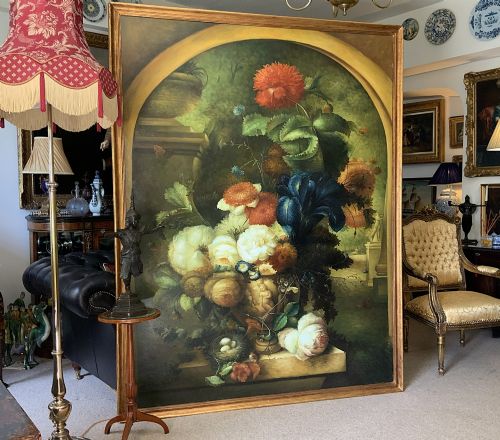
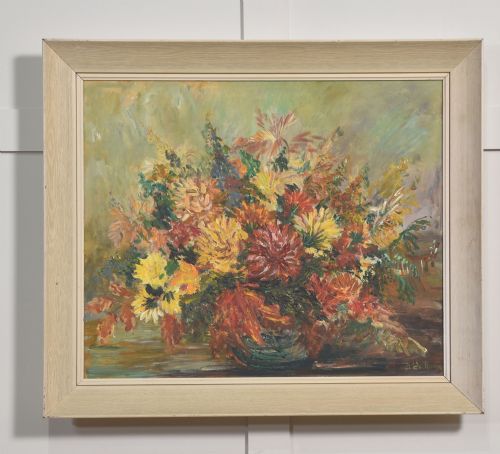
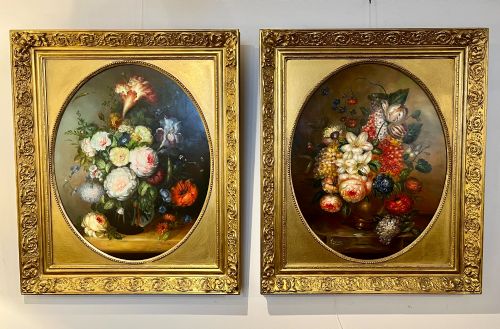
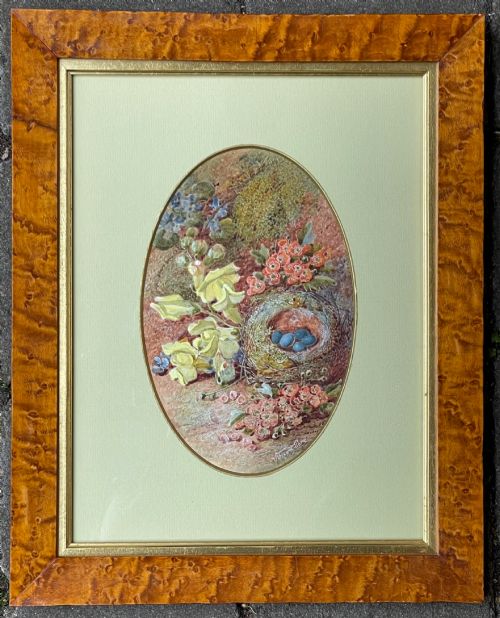
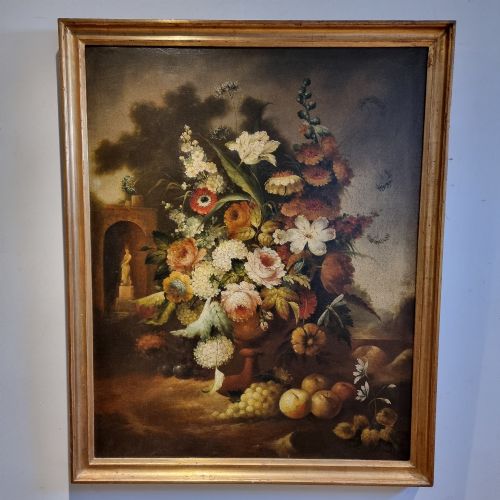
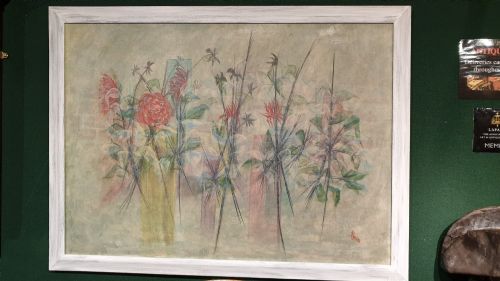
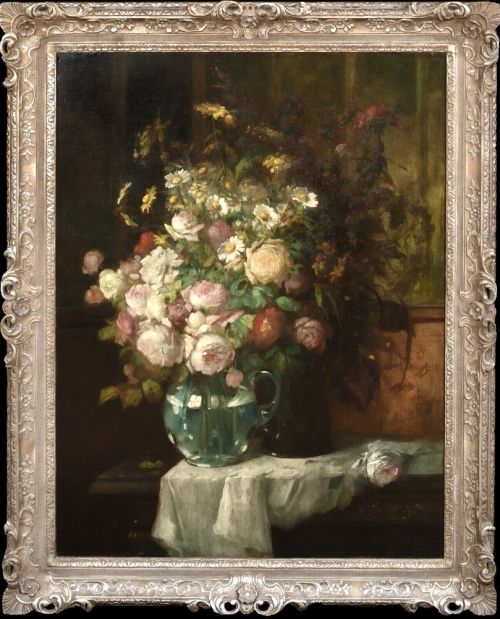
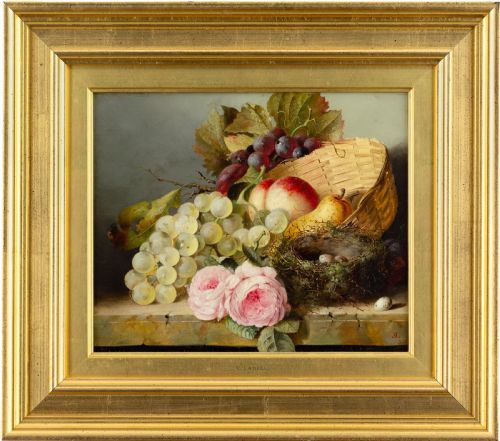
An oil painting floral still life focuses on arrangements of blossoms, foliage, and occasionally fruit or birds' nests rendered in oil media. These works range from seventeenth-century Dutch compositions to mid-century impressionist interpretations.
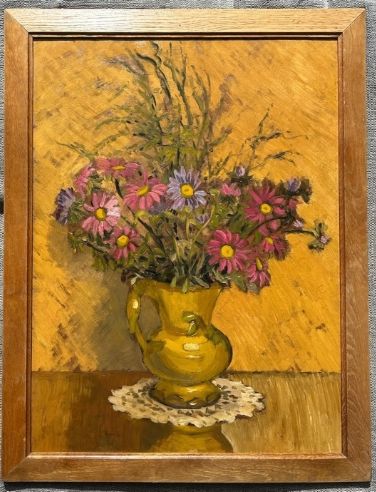
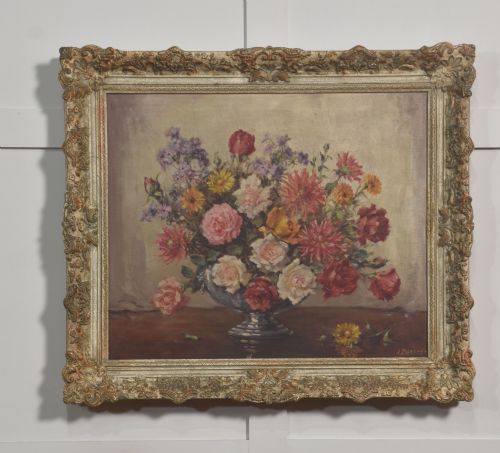
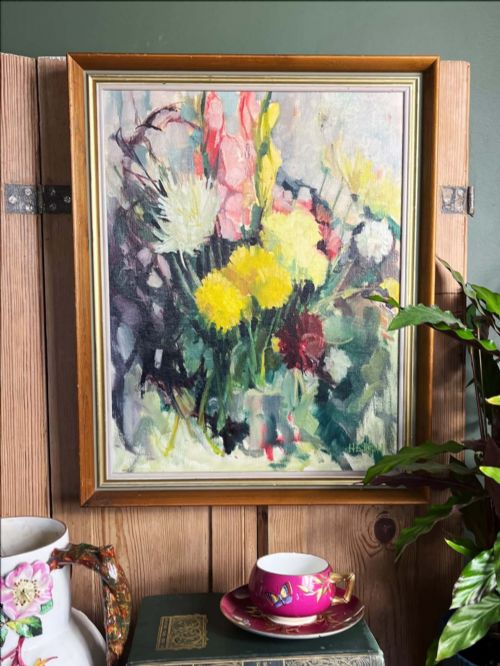
Buyers commonly encounter nineteenth-century canvases, early twentieth-century boards, and mid-century modern variations on this page. The subjects extend from formal bouquets in vases to simple gathered stems in domestic vessels.
How They Were Made
Artists painted primarily with oil pigments applied to woven canvas, prepared wood panels, or rigid board supports. Many compositions feature elaborate frames finished with gold leaf, gilt, or gesso mouldings.
Techniques varied from meticulous glazing seen in seventeenth-century Dutch traditions to the looser, textured brushwork characteristic of impressionist and mid-century modernist schools.
Listings include works executed on canvas, wood panels, and metal panels across periods from the seventeenth century to the mid-twentieth century.
What Varies in Quality
Quality rests upon the artist's command of light, shadow, and natural proportion within the floral arrangement. Masterful handling of pigment creates palpable depth in petals and foliage.
The integrity of the original support, the subtlety of the colour palette, and the harmony between the painting and its period frame distinguish superior examples.
Theude Grönland·Kenneth Cozens·Oliver Clare·Edward Ladell·Gaspar Peeter Verbruggen·Edwin Steele·William Thomas Wood·Owen Bowen·Konstantin Stoitzner·Emma Fordyce MacRae
The Oil Painting Floral Still Life Glossary
- Gesso
- A plaster-like mixture applied to wood or canvas to prepare a smooth surface for painting. It often serves as the base for subsequent gilding on antique frames.
- Impasto
- Paint laid thickly on a surface, standing out from it. This technique gives texture and dimension to floral petals and stems.
- Gilt
- A thin layer of gold applied to wood or gesso surfaces. It provides a reflective border that enhances the colours within the composition.
- Panel
- A flat piece of wood used as a rigid support for painting instead of stretched canvas. Artists frequently utilised panels in earlier centuries.
- Provenance
- The documented history of ownership of a work of art. It establishes authenticity and traces the lineage of the piece.
Oil Painting Floral Still Life: Frequently Asked Questions
What is an oil painting floral still life?
These works are artistic representations of stationary natural subjects, primarily flowers arranged in vases, baskets, or gathered informally. Painters utilise oil-based pigments to capture the delicate textures and colours of petals.
Such pieces reflect the aesthetic priorities of their respective eras, spanning classical Dutch traditions to twentieth-century impressionism.
How should I hang an antique floral painting?
Position the artwork away from direct sunlight and excessive moisture to protect both the canvas and the painted surface. Stable indoor temperatures prevent warping in wooden panels and cracking in older oil paint.
Ensure the wall fixings match the weight of the piece, particularly if the work includes a heavy gilt frame.
How do I identify the period of a still life?
Examine the materials of the support, such as prepared wood panels, stretched canvas, or modern board. Brushwork style and framing techniques also offer reliable indicators of when the piece was created.
Victorian and seventeenth-century works often employ meticulous detail, whereas mid-century examples favour looser impressionist strokes.
Were these paintings used for decoration?
Historical still lifes served primarily as interior ornamentation for domestic spaces, celebrating the ephemeral beauty of nature. Wealthy households commissioned elaborate floral compositions to display refinement and taste.
Over time, the form evolved from formal academic studies to expressive modernist interpretations for everyday homes.