





Oil on Board Seascape
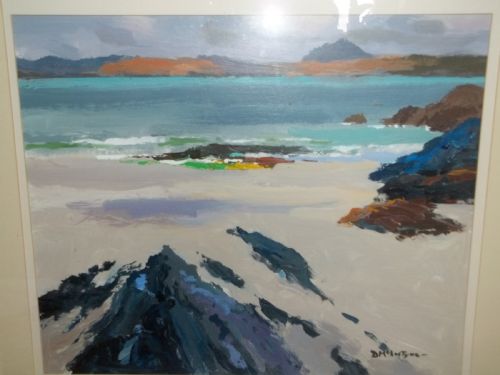
An oil on board seascape captures the movement and light of coastal waters using pigment laid directly onto a rigid wooden support.
Oil on Board Seascape
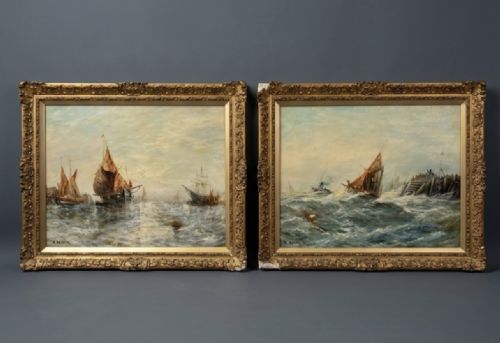
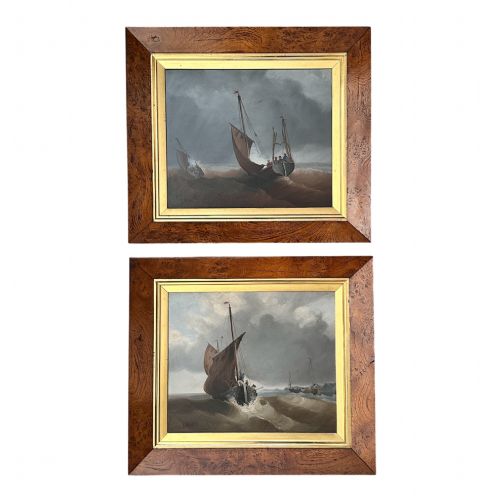
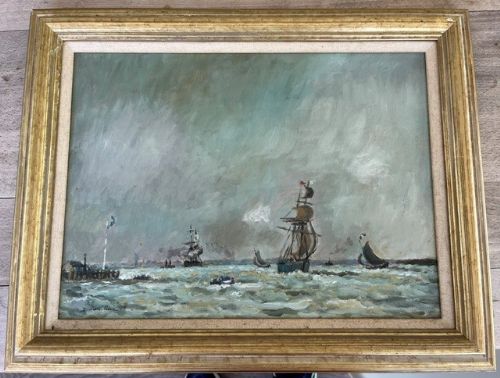
An oil on board seascape presents maritime subjects, coastal harbours and open waters painted directly onto wooden panels. When you search for this phrase, you encounter works spanning from the Victorian period through to mid-century modernism.
The pieces on this page range from small topographical studies of British piers to larger French and Italian coastal views. Painters favoured board for its rigidity, which allowed for rapid outdoor sketching and firm brushwork.
How they were made
Artists applied oil paint directly to prepared wooden boards or artist panels, sometimes utilising textured mediums to build up the surface. Many works retain the visible grain of the wood or the initial pencil underdrawing beneath the pigment.
Framing often involves moulded wood finished with gesso and gilt, providing a robust border that complements the maritime subject matter.
The collection includes topographical coastal views, harbour scenes, and stormy open seas framed in wood and gilt.
What varies in quality
Quality rests upon the artist's handling of light, atmosphere and perspective within the marine environment. Superior works demonstrate a confident command of tone to convey churning seas or hazy coastal sunlight.
The integration of the painted surface with the original period frame also influences the overall character of the piece.
Kenneth Cozens·Erich Mercker·John Moore of Ipswich·John Bell·Walter Holmes·Micheal Matthews·Anthony Graham·William B Dealtry·William Burns·Harold Hope Read·Wm Barker·Ben Maile·Edith E Hoyle·John Falconer Slater·Walter Linsley Meegan·Sam Barnes Robson·T Simpson·Robert Ernest Roe·William Daniel Penny
The Oil on Board Seascape Glossary
- Board
- A rigid flat surface made of wood or pressed material used as a support for painting instead of stretched canvas.
- Gesso
- A plaster-like mixture applied to wood frames or panels to prepare the surface for gilding or painting.
- Gilt
- A thin layer of gold leaf or gold paint applied to the surface of frames to give a metallic sheen.
- Maritime
- Depicting ships, coastal scenes, harbours or the sea as the primary subject matter.
- Impressionism
- A style of painting focusing on the accurate depiction of light and its shifting qualities rather than fine detail.
Oil on Board Seascape: Frequently Asked Questions
What is an oil on board seascape?
An oil on board seascape is a painting executed with oil-based pigments on a rigid wooden panel, featuring marine views such as open water, coastal cliffs, or harbour vessels.
These works offer a durable alternative to canvas, favoured by artists working both in studios and outdoors by the shore.
How do I date an oil painting on board?
Dating relies on stylistic clues, framing techniques, signatures, and any inscriptions or labels found on the reverse of the board.
Victorian pieces often feature heavy gilt frames and detailed academic realism, whereas mid-century examples tend toward looser brushwork and brighter palettes.
How were these paintings displayed?
Most of these works were designed to be framed in wood, often enhanced with gesso and gilt mouldings to protect the edges and complement the domestic interiors of their era.
Smaller boards were frequently mounted in deep frames to create a sense of depth around the coastal subject.
How should I care for an oil on board painting?
Care involves keeping the piece away from direct sunlight and maintaining stable room temperatures to prevent the wooden board from warping or the oil paint from cracking.
Dusting the surface gently with a soft, dry brush preserves the pigment without introducing moisture.