





Oil on Board Maritime
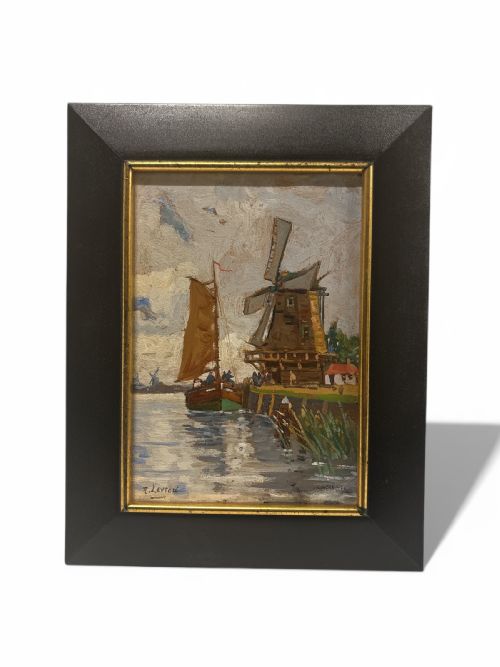
Oil on board maritime paintings capture the pull of the coast, bringing historic harbours and choppy seas directly into a room.
Oil on Board Maritime
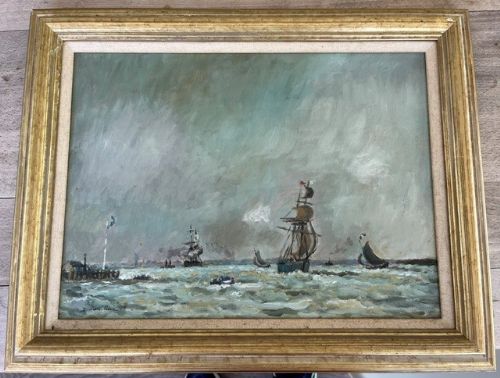
When you search for oil on board maritime, you encounter a focused category of coastal and marine paintings executed directly onto wooden panels or rigid boards rather than stretched canvas. These works range from small, intimate nineteenth-century sketches of ships to mid-century modernist views of harbours and piers.
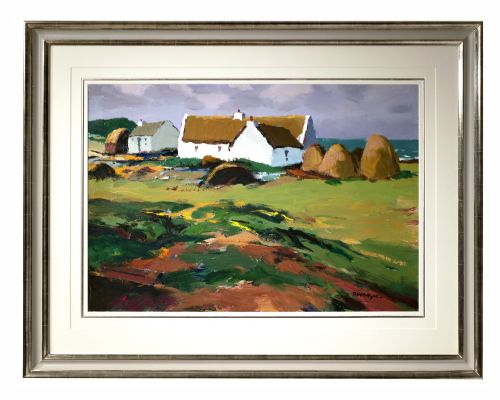
The selections here span multiple periods, from Victorian and Edwardian coastal scenes through to post-war and mid-century British and French interpretations. You are most likely to meet nineteenth-century marine works alongside mid-century pieces featuring impasto textures and simplified coastal forms.
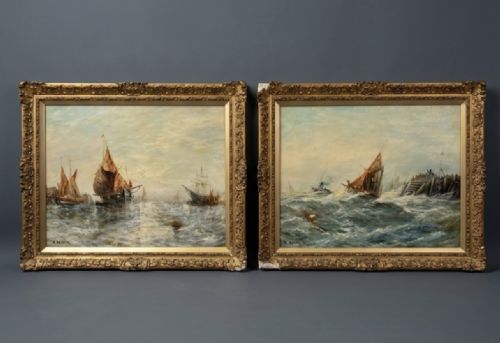
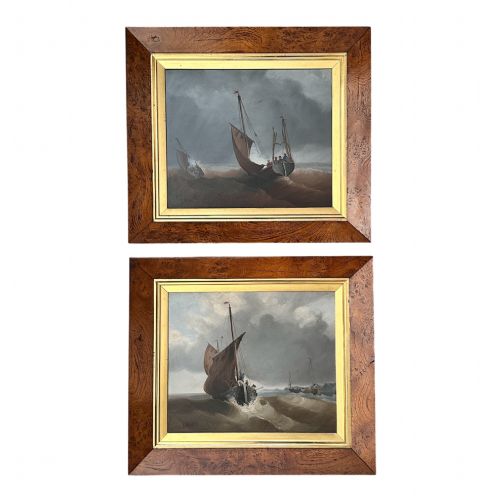
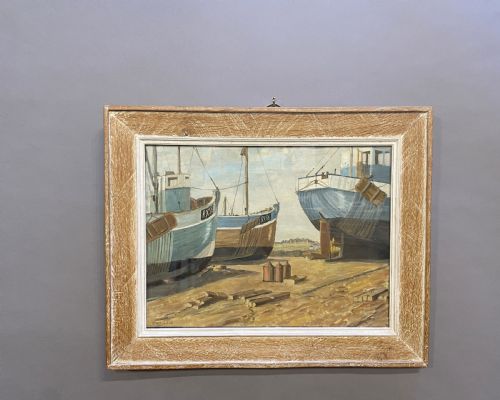
Many of these paintings depict specific local geographies, from Dorset harbours and the Tees to Sorrento and French coastal waters. The subjects include large sail ships, old barges, fishing boats in choppy seas, and quiet boat yards.
Materials and construction
These works utilise oil paint applied to a rigid support of wood or board, providing a stable surface that endured decades of studio and plein-air use. Artists built up the pigment using brushes or palette knives, sometimes creating thick impasto textures that catch the light.
Many pieces retain their period frames, particularly moulded gilt wood settings that complement the maritime subject matter. The combination of oil paint on board within these traditional frames defines the physical presence of the medium.
Listings feature works spanning the nineteenth century through to the 1960s, including Victorian, Edwardian, and mid-century modern examples.
Assessing quality and execution
The distinction between a standard topographical record and a superior piece lies in the handling of light, atmosphere, and movement. Stronger works convey the dynamic weight of choppy seas or the specific atmospheric haze of a coastal harbour through confident, expressive brushwork.
Composition and tonal balance separate casual sketches from resolved artistic statements. A finer painting demonstrates a deliberate command of space and proportion within the tight confines of a board support.
Kenneth Cozens·R Leyton·Donald McIntyre·John Moore of Ipswich·James Fry·James Kyd·John Bell·WALTER HOLMES·Micheal Matthews
The Oil on Board Maritime Glossary
- Oil on Board
- A painting executed with oil-based pigments upon a rigid wooden panel or board rather than fabric canvas. This substrate offers a firm, unyielding surface for the artist.
- Impasto
- Paint applied thickly to a surface, standing out in relief from the board. This technique leaves visible brush or palette knife marks that add physical depth to water and sky.
- Gilt Wood
- Wood carved and covered with a thin layer of gold leaf or metallic gilt. It frequently frames these maritime scenes to enhance their visual weight.
- Marine Art
- Artistic representation of the sea, ships, coastal views, and maritime activities. It encompasses historical vessel portraits as well as atmospheric coastal landscapes.
- Topographical
- Representing specific real-world locations with a degree of geographic accuracy. Many coastal paintings record actual piers, harbours, and towns.
Oil on Board Maritime: Frequently Asked Questions
What is oil on board maritime?
These works are paintings created with oil paint on rigid wooden panels, depicting coastal scenes, ships, and harbours.
They offer a direct window into historical marine environments, captured by artists working outdoors or in studios across different eras.
How should I hang maritime paintings?
Display these pieces away from direct sunlight and excessive moisture to protect the oil paint and wooden board.
Many of these works come in gilt wooden frames that suit traditional or contemporary wall spaces.
How do I tell periods apart?
Nineteenth-century and Victorian works often feature detailed sailing ships and naturalistic palettes, while mid-century pieces show looser impressionist or modernist brushwork.
Examining the framing style and the handling of paint helps indicate whether a piece originates from the Edwardian era or the post-war period.
Were these painted outdoors?
Many coastal and harbour scenes were painted en plein air directly onto portable wooden boards by artists capturing immediate light and weather.
Studio finishing sometimes followed, combining direct observation with established maritime painting traditions.