
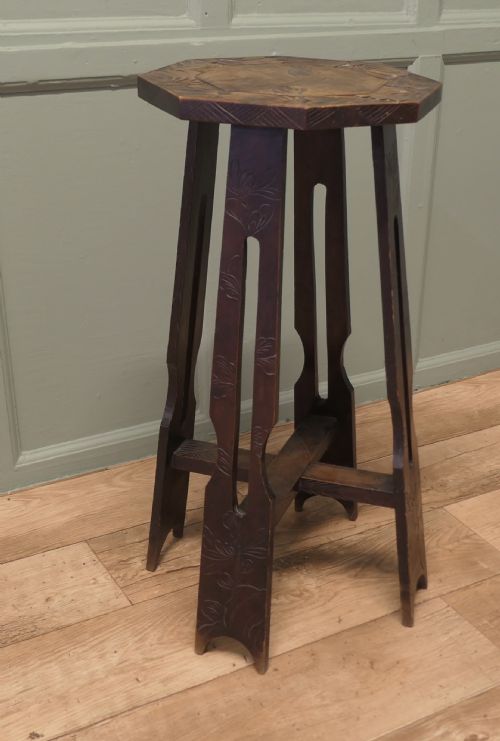
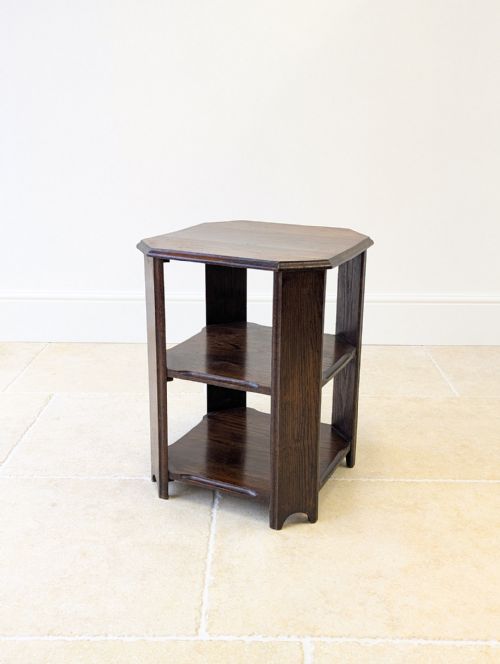
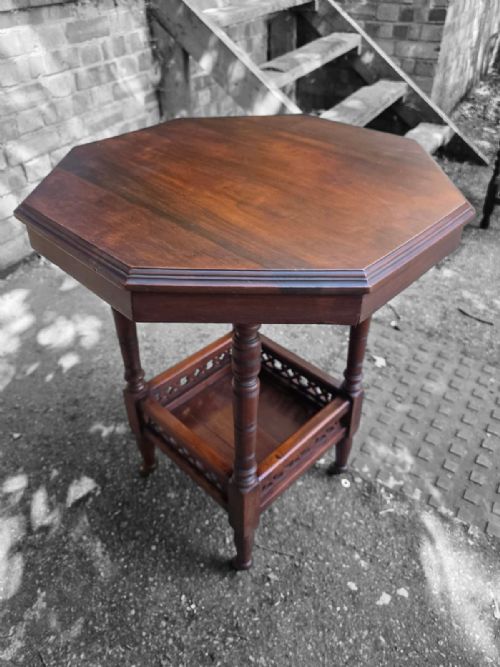
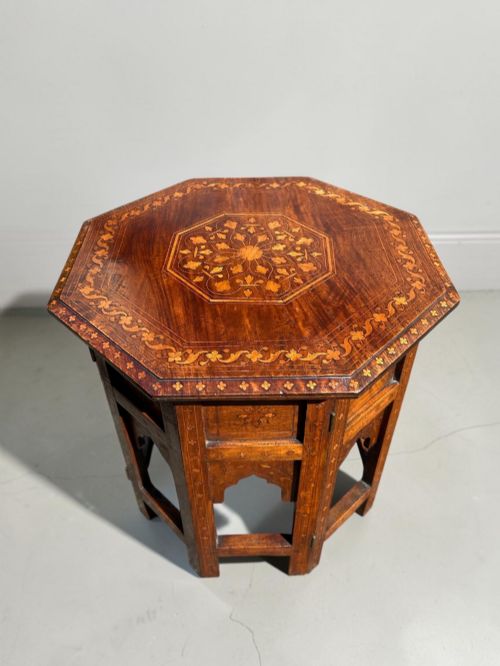
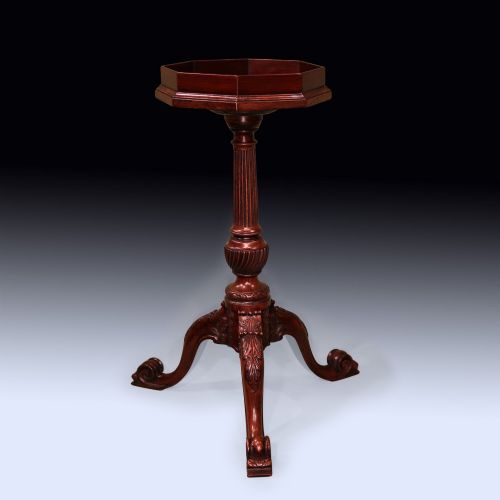


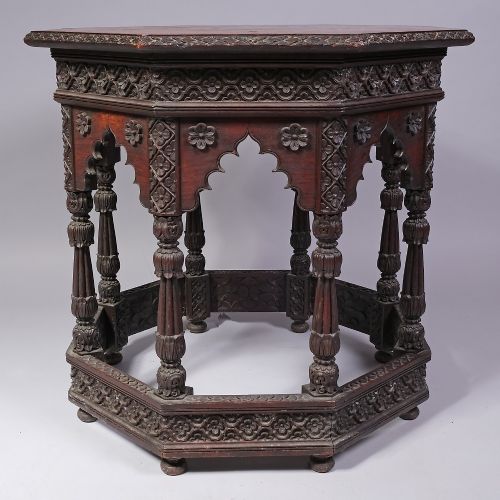

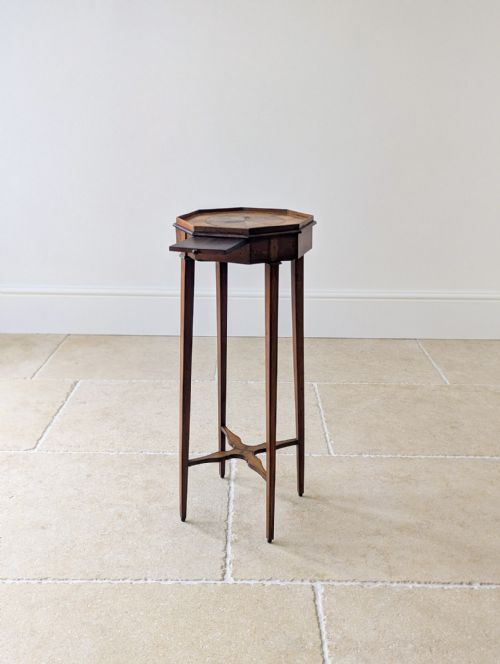
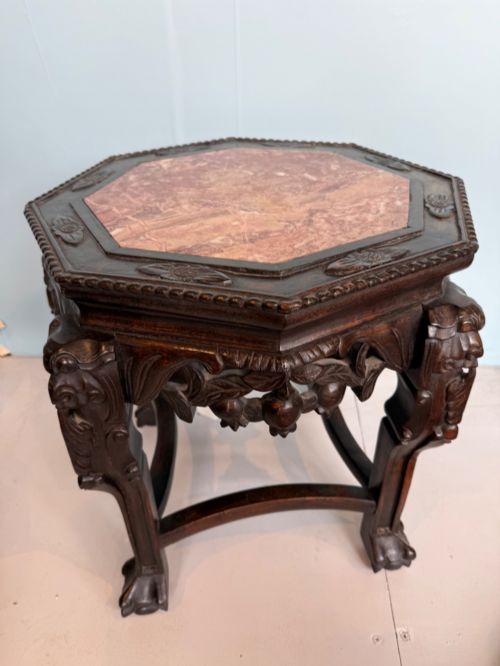

Octagonal Wooden Plant Stand
An octagonal wooden plant stand brings geometric form and warm timber grain into a room to hold a vase or jardinière.
Octagonal Wooden Plant Stand
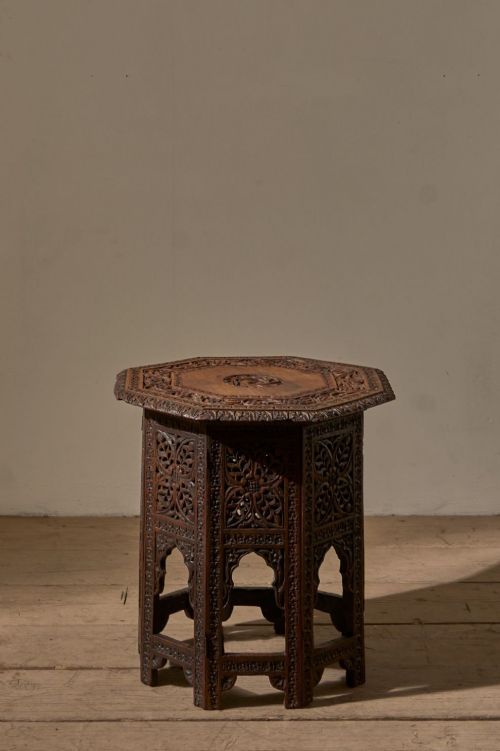
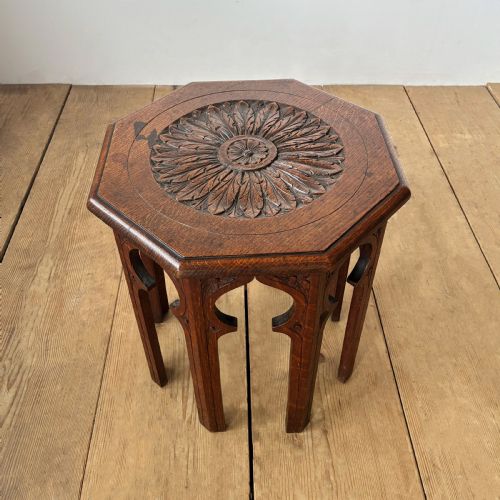
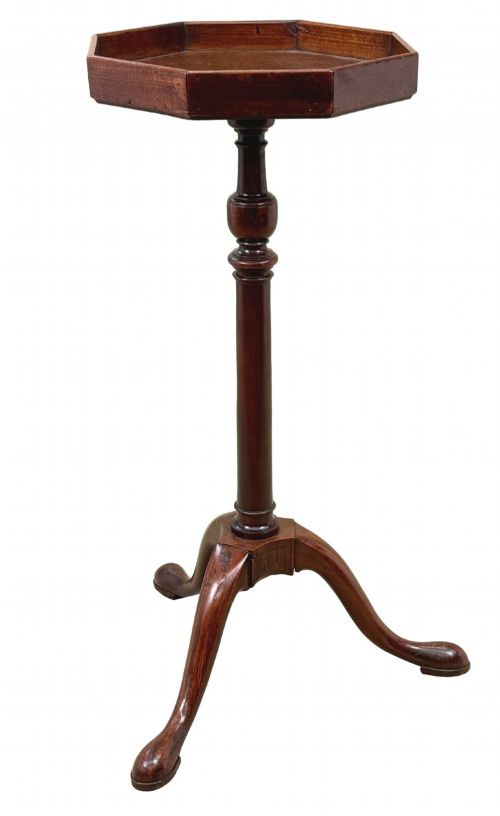
An octagonal wooden plant stand takes many shapes across the periods, appearing alongside occasional tables, kettlestands, torchere candle stands, and pedestals in the listings. These pieces emerge from the Georgian era, through the Victorian period, and into the early twentieth century.
The selection ranges from British furniture in mahogany, walnut, oak, and satinwood to imported regional works such as Anglo-Indian Hoshiarpur tables, Chinese export items, and Moorish styles.
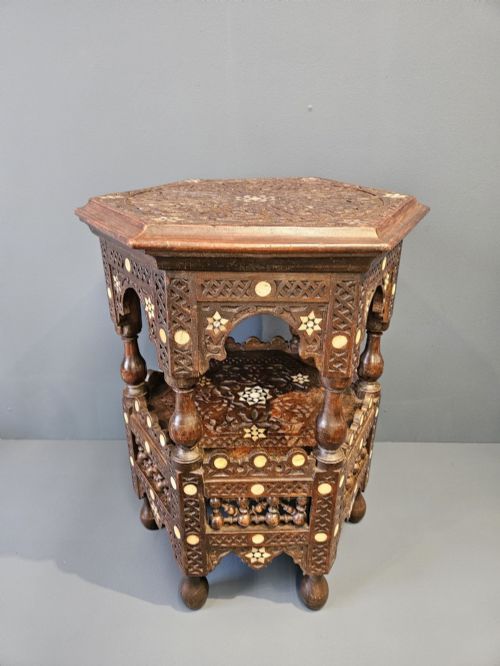
Makers and designers span traditional cabinet makers to firms like Liberty and Co and Shoolbred, alongside regional items featuring bone, brass, copper, and mother-of-pearl inlay.
Materials and construction
Makers rely primarily on hardwoods such as teak, mahogany, walnut, padauk, oak, and sandalwood, shaping them into stable bases for display.
Surface decoration involves detailed hand carving, folding mechanisms, and contrasting inlays of bone, brass, copper, and mother-of-pearl.
Finishes include polished mahogany and satinwood, grain painted pine, and carved relief work characteristic of Anglo-Indian and Chinese export workshops.
Camel tables and elephant tables bring carved zoological forms directly into nineteenth-century occasional furniture design.
Craft and detail
Quality rests on the crispness of the hand carving and the precision of the joinery in the eight-sided top and supporting legs.
Inlaid pieces show distinction through the tightness of fit for brass, bone, or mother-of-pearl elements set into the timber base.
The choice of dense timbers like padauk or well-figured mahogany separates standard utility items from finer workshop pieces.
Liberty and Co·Shoolbred
The Octagonal Wooden Plant Stand Glossary
- Octagonal
- Having eight sides and eight angles. This geometric form gives the top of the stand its distinct symmetrical shape.
- Torchere
- A tall stand designed to support a candle or lamp. These elevated pieces often feature slender columns or carved pedestals.
- Inlay
- A technique where pieces of contrasting material such as bone, brass, or mother-of-pearl are set into the wood surface. This creates decorative patterns across the top or sides.
- Padauk
- A dense tropical hardwood with a reddish hue. It appears frequently in export furniture from the nineteenth century.
- Kettlestand
- A low table designed to hold a heated kettle. These pieces often date from the eighteenth or nineteenth century.
Octagonal Wooden Plant Stand: Frequently Asked Questions
How were these stands used historically?
Historically, these stands held heavy ceramic planters, vases, or lighting in the principal rooms of a house. Their compact footprint allowed them to sit in corners or beside seating.
Some folding versions served multiple functions as portable tea tables or occasional surfaces, particularly those originating from regional export workshops.
How do I style an octagonal stand at home?
Place an octagonal stand in a corner or beside a chair to hold a trailing houseplant, a ceramic bowl, or a reading lamp. The eight-sided geometry breaks up straight lines in a room.
Ensure the weight of the object placed on top matches the stability of the base, particularly with older tripod or folding designs.
How can I tell the period of a stand?
Dating relies on timber selection, construction methods, and decorative motifs characteristic of eras like the Georgian, Victorian, or Arts and Crafts periods. Carving styles and inlay materials offer clues to origin and date.
Regional pieces often display specific regional carving signatures, such as the intricate chip-carving found on Hoshiarpur tables from the late nineteenth century.