
Carved Indian Octagonal Table
A carved indian octagonal table brings intricate geometric craft into a room, offering a versatile surface shaped by colonial-era trade and regional workshops.
Carved Indian Octagonal Table
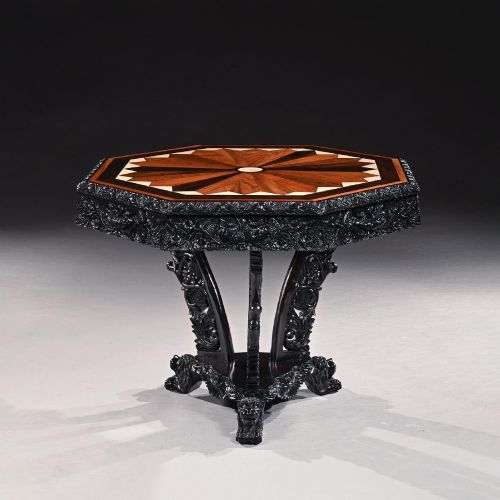
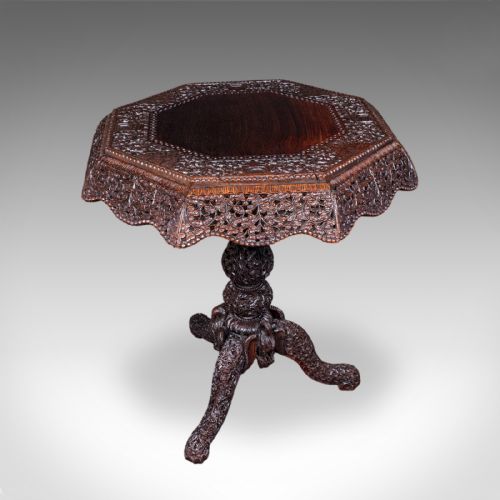
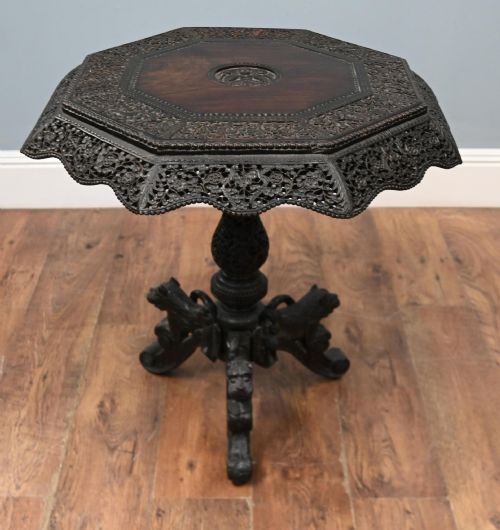
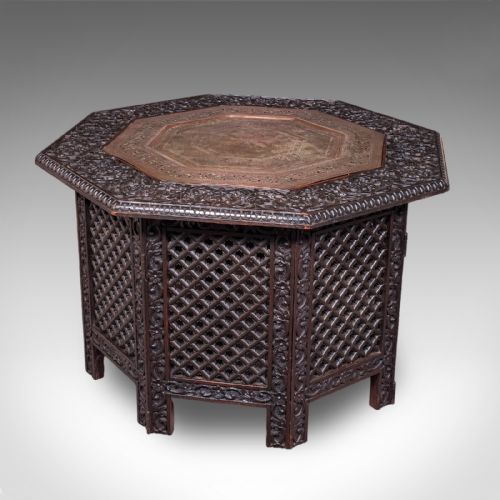
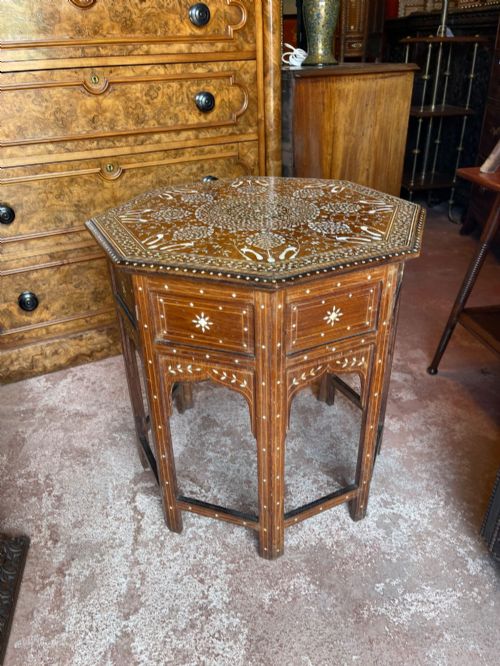
When you search for a carved indian octagonal table, you encounter an array of occasional, side, and lamp tables originating primarily from the nineteenth and early twentieth centuries. These pieces typically combine distinct eight-sided tops with folding or hinged bases, designed for ease of movement and storage.
The most common examples on this page are Anglo-Indian works associated with Hoshiarpur or the Bombay Presidency, alongside Kashmiri and Moorish Revival variants. They function readily as low tables, coffee tables, or display surfaces in modern interiors.
How they were made
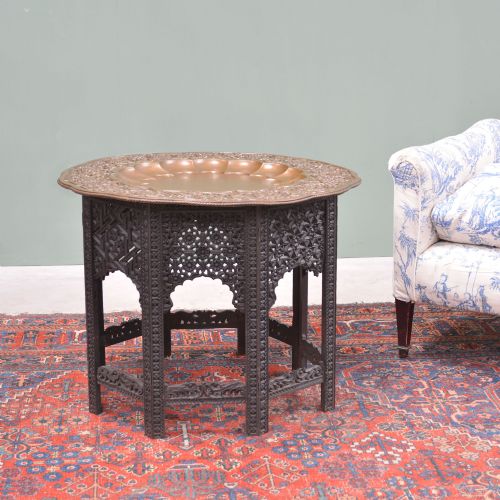
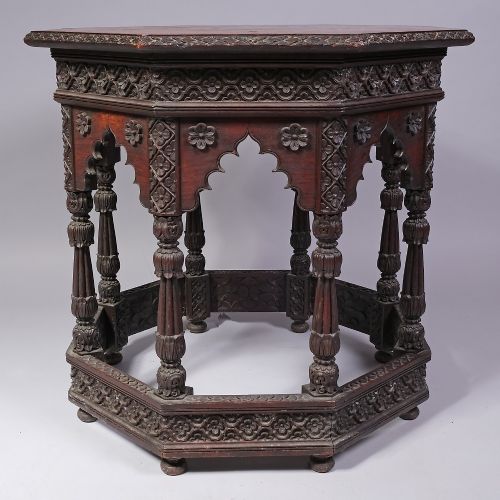
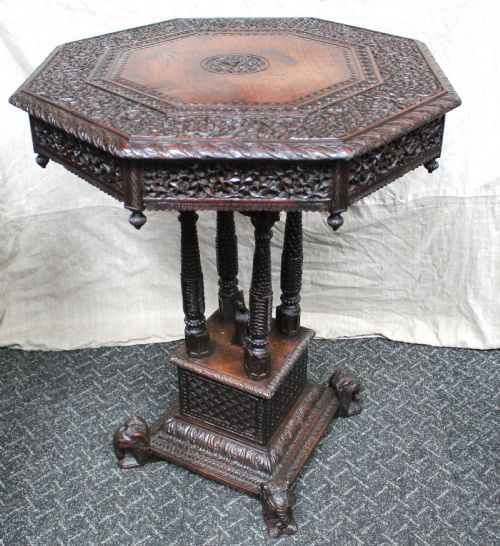
Artisans constructed these tables using dense timbers such as teak, padauk, shisham, and ebony, carved with deep relief floral, foliate, and figurative motifs. Many examples incorporate intricate pierced fretwork across both the tops and the collapsible bases.
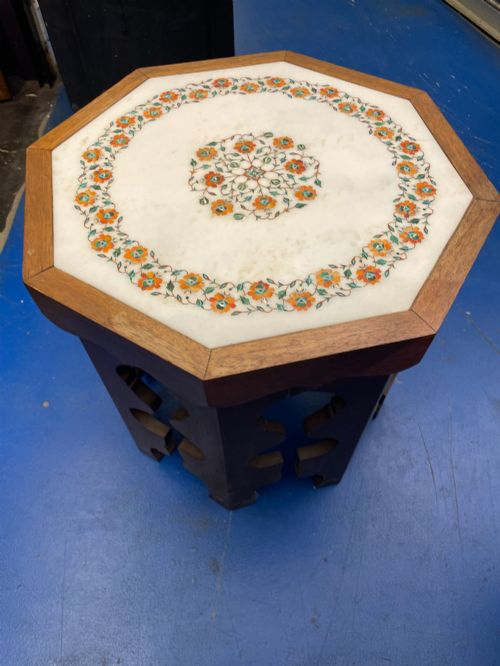
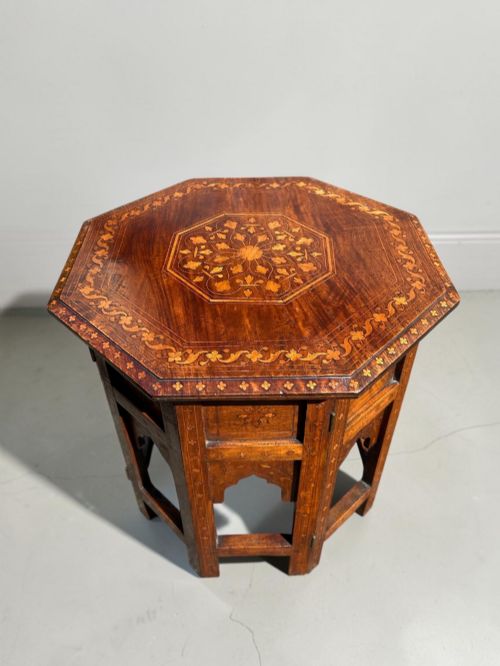
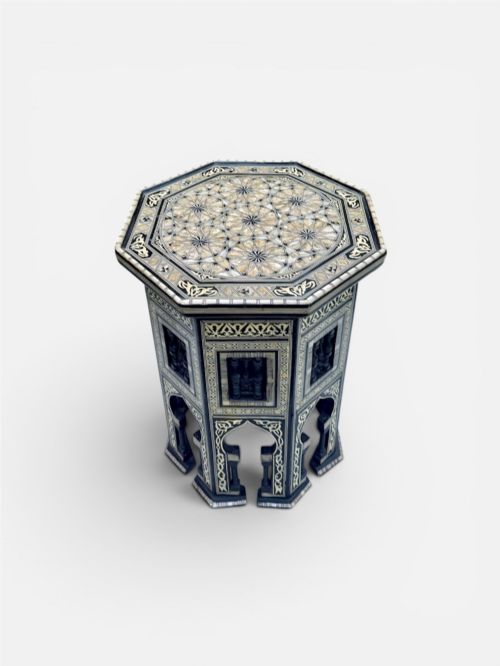
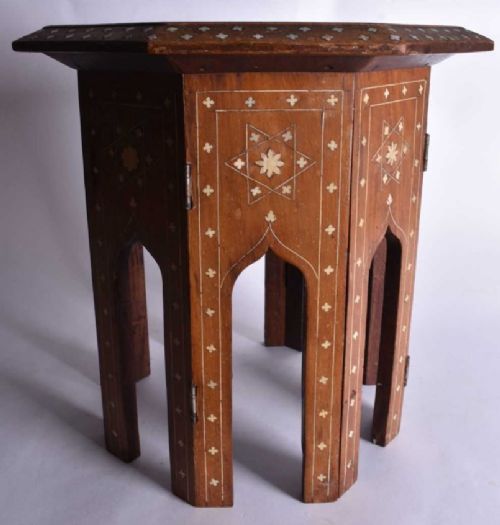
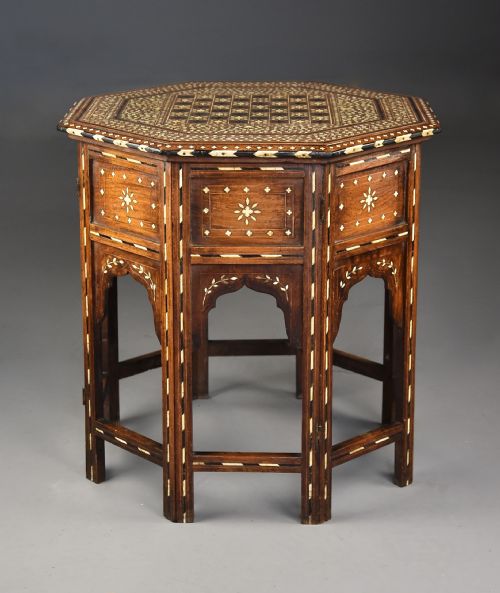
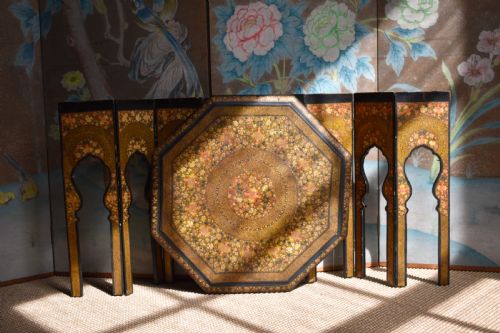
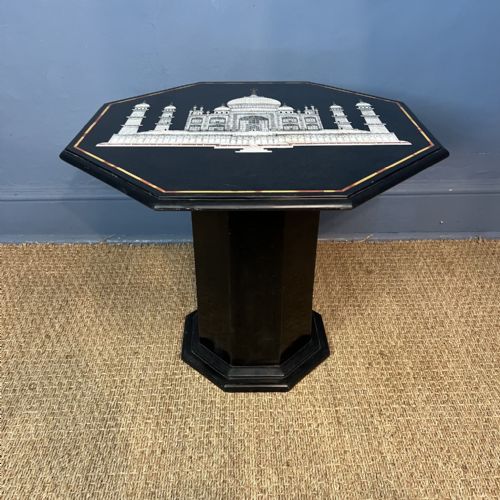
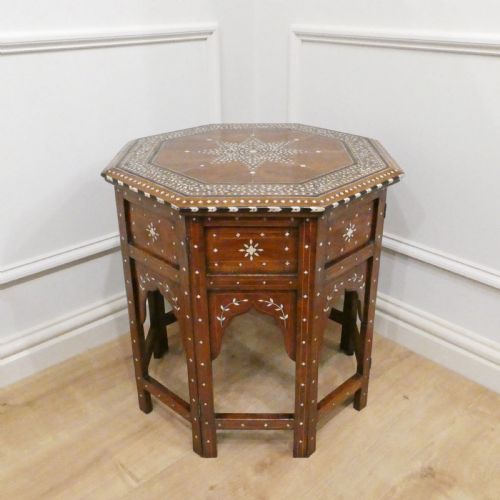
Surface enrichment frequently relies on contrasting materials pressed or pinned into the wood, including brass, copper, bone, and mother-of-pearl inlay. Kashmiri pieces alternatively introduce painted decoration directly onto walnut or softer woods.
Elephants and dragons occasionally participate in the support structure.
What varies in quality
Quality rests on the crispness of the hand-carving and the precision of the joinery in the folding mechanisms. Finer examples display deep, undercut relief work where every leaf and lattice aperture remains sharp and cleanly defined.
The integrity of the inlay further distinguishes the range, with superior pieces maintaining flush, tightly fitted brass, bone, or mother-of-pearl without gaps or excessive filler. The choice of heavier hardwoods like teak and padauk also signals a more substantial build than softer regional alternatives.
The Carved Indian Octagonal Table Glossary
- Hoshiarpur
- A city in Punjab renowned for intricate woodwork and inlay. Tables from this region typically feature dense carving combined with brass, copper, or bone elements.
- Octagonal
- Having eight sides. This specific geometry defines the top profile of these tables and usually dictates an eight-panel folding base.
- Fretwork
- Ornamental perforated carving in wood. This technique creates lace-like patterns that lighten the visual weight of the panels and bases.
- Tray top
- A table top with a raised rim designed to retain small objects. These removable tops often rest upon separate folding stands.
- Inlay
- Material embedded flush into a wooden matrix to form decorative patterns. Common components include metal wire, sheet brass, bone, and shell.
Carved Indian Octagonal Table: Frequently Asked Questions
Where were these tables made?
Production centred on specific regions known for traditional woodworking, most notably Hoshiarpur in the north and the Bombay Presidency on the western coast. Other pieces emerged from Kashmir and regional workshops influenced by Moorish and colonial styles.
Craftsmen in these areas utilised locally available hardwoods to produce portable furniture destined for both domestic use and export to Britain.
How do folding bases work?
The bases typically consist of interlocking wooden panels connected by hinges or ingenious pierced joints that allow the structure to collapse flat. This folding design facilitated easy transport for colonial officers and travellers.
When deployed, the panels lock together securely to support the heavy octagonal top without requiring metal fixings.
Can I use an octagonal table daily?
These pieces serve reliably as lamp tables, side surfaces, or low coffee tables in contemporary rooms. Their compact footprints and folding utility make them adaptable to various living spaces.
Care should be taken to protect delicate inlay and carved edges from moisture and heavy impacts during everyday use.
What is an elephant table?
An elephant table is a regional variant from the Bombay Presidency featuring carved supports shaped like elephants. These figures are integrated into the lower structure of the table alongside traditional geometric fretwork.
Such decorative elements reflect the specific aesthetic preferences of nineteenth-century Anglo-Indian colonial design.