
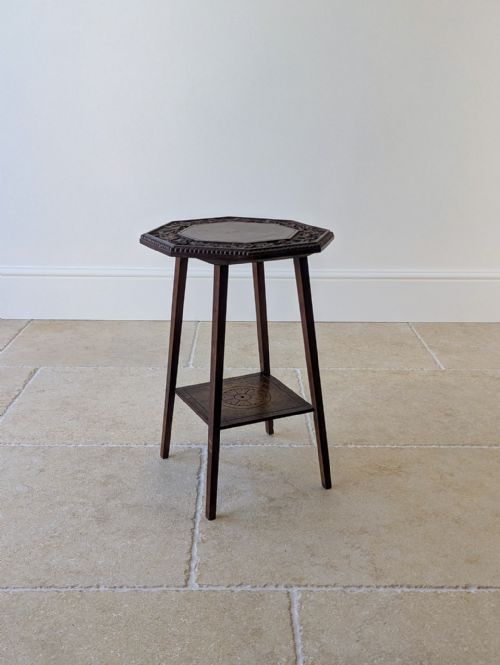
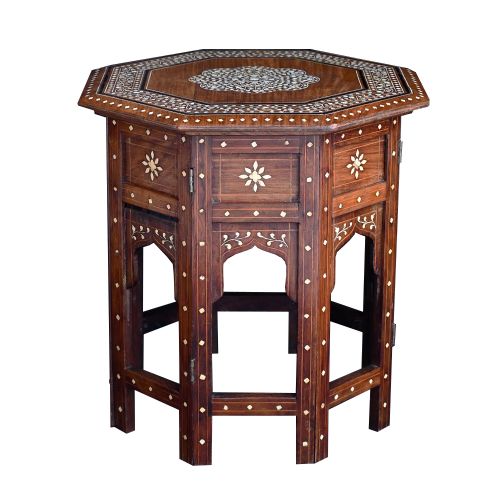
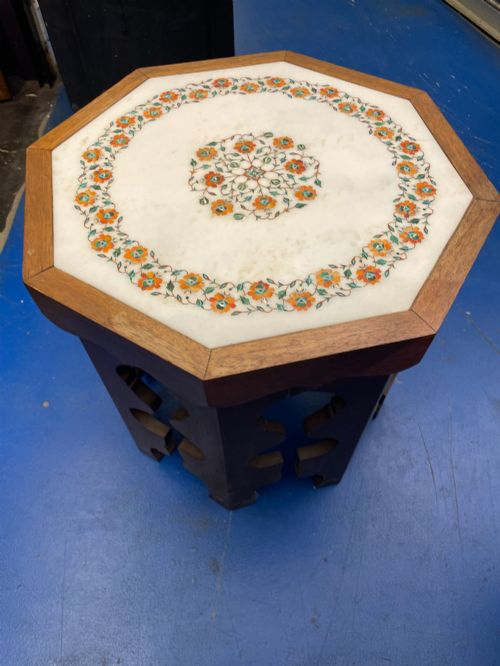
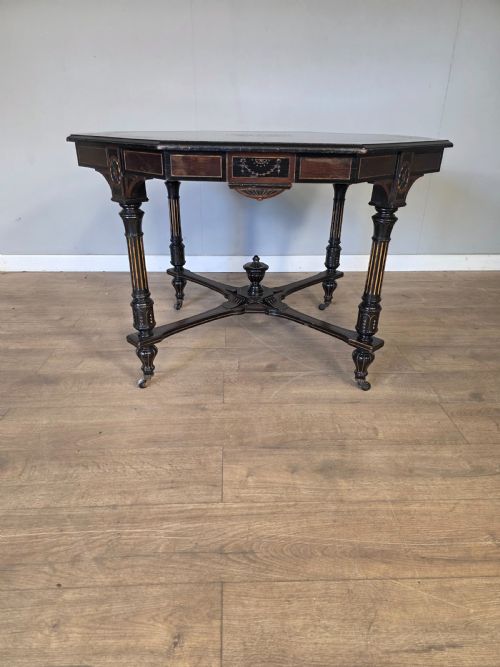
Octagonal Wood Table
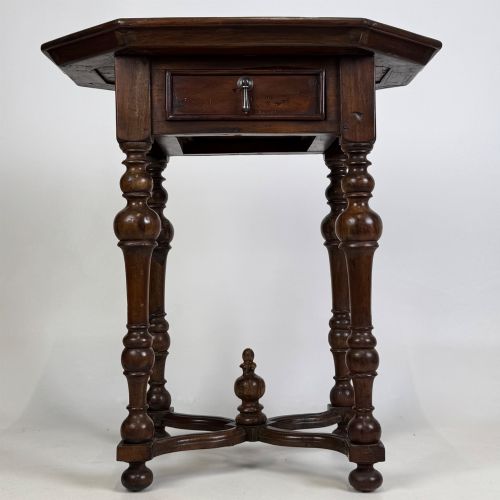
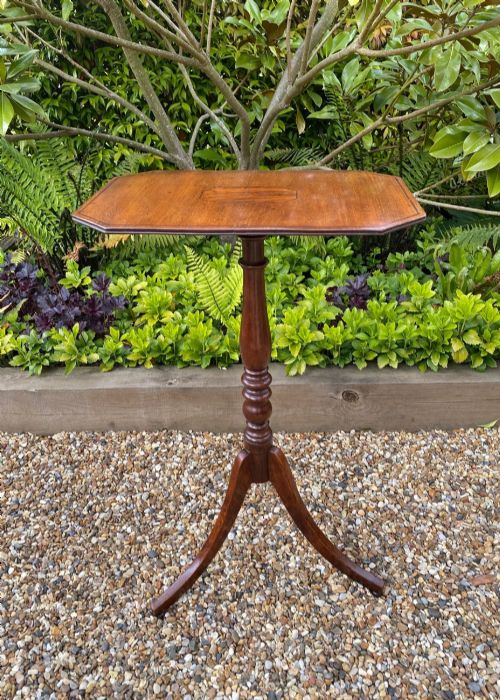
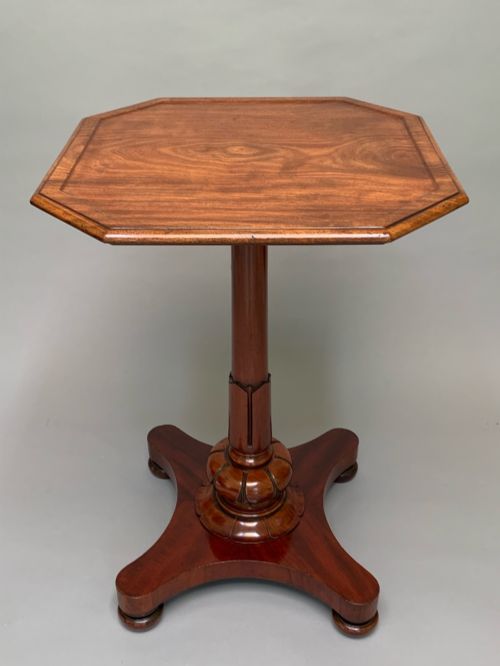
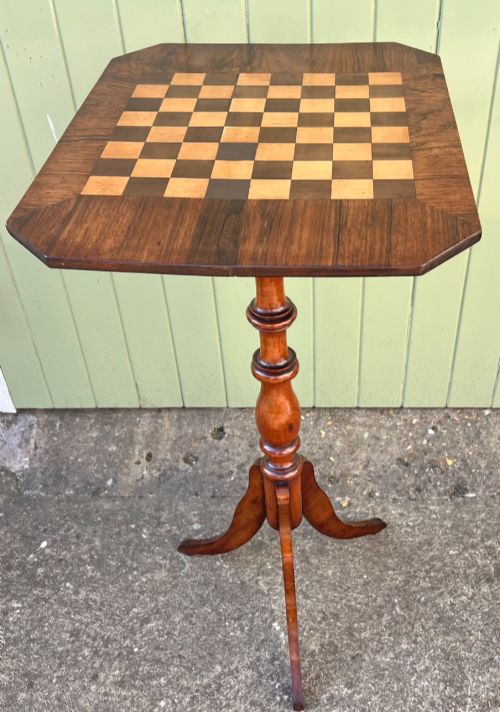
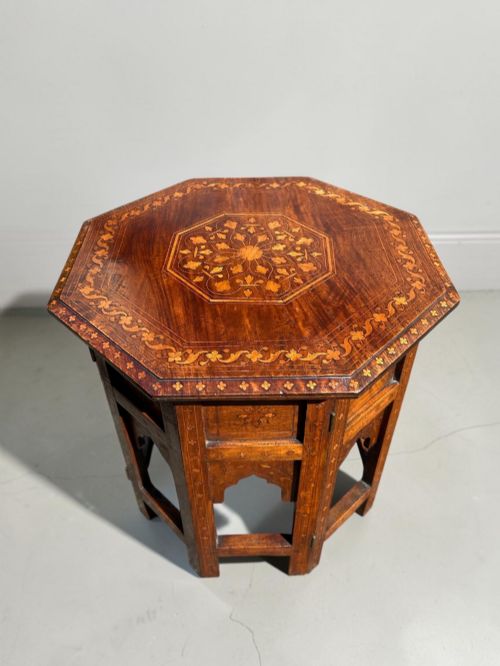
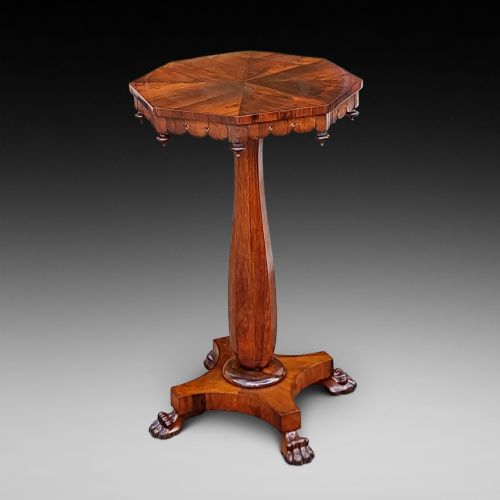
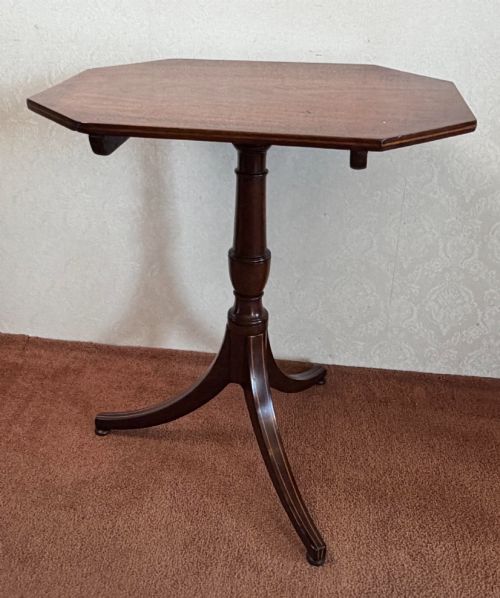
An octagonal wood table brings geometric interest and surface utility to a room, appearing in forms from Georgian tripod wine stands to intricately inlaid Anglo-Indian folding designs.
Octagonal Wood Table
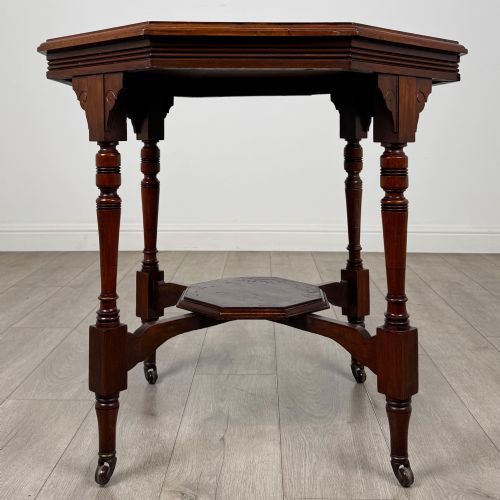
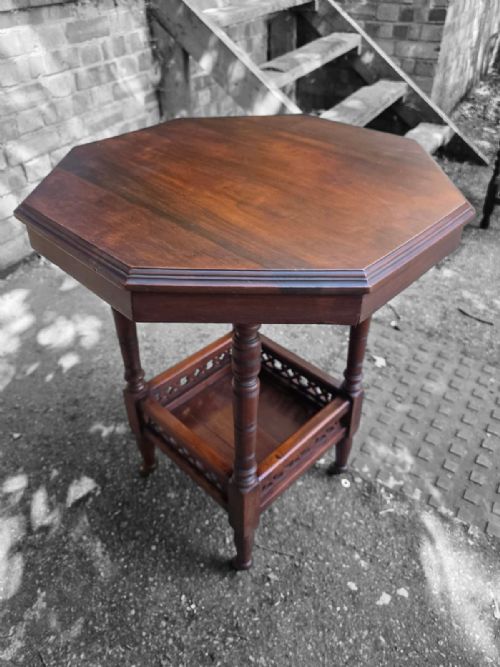
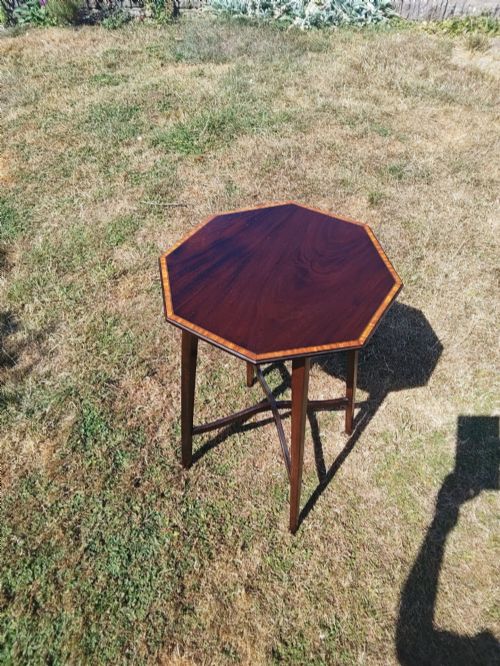
When you search for an octagonal wood table, you encounter pieces spanning from the eighteenth century through to the early twentieth century, taking the form of side tables, occasional tables, work tables, and centre tables. The selection ranges from restrained mahogany Georgian and Regency examples to highly decorative Victorian rosewood models and Anglo-Indian occasional pieces.
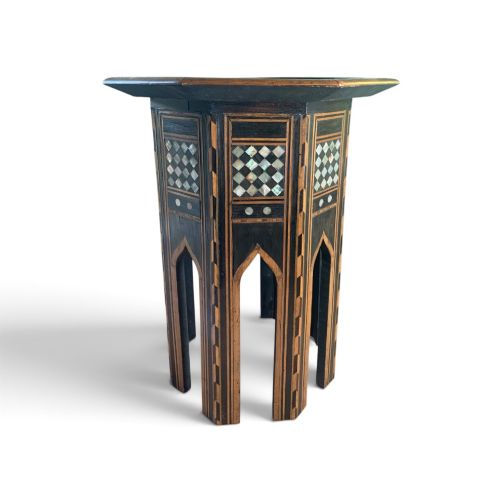
Many of the surviving items originate from the Victorian and Edwardian eras, reflecting a period when domestic spaces frequently utilised smaller, versatile tables for lamps, chess, and tea. Regional variations appear alongside British styles, notably intricately inlaid items from Hoshiarpur and Syria featuring intricate surface patterns.
The typology encompasses folding stands, pedestal wine tables, and larger centre pieces designed to anchor a room. Buyers select these items for their compact footprint and distinctive multi-sided geometry which offers an alternative to traditional circular or rectangular formats.
How an octagonal wood table was made
Cabinet makers utilised a broad spectrum of timbers, with mahogany, rosewood, walnut, and satinwood dominating British workshops, while exotic hardwoods such as padauk, shisham, and teak defined imported pieces.
Surface ornamentation relied on meticulous techniques including marquetry, parquetry, and crossbanding, alongside specialist inlay using boxwood, brass, bone, mother-of-pearl, and nacre-shell.
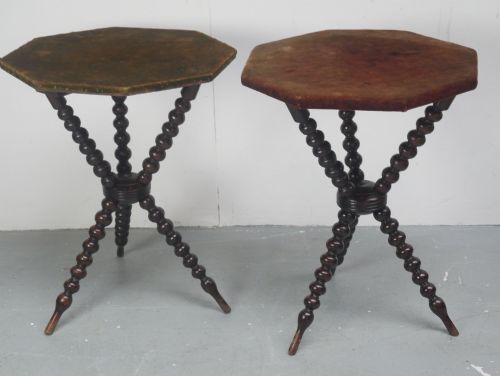
Structural forms involved solid timber construction, veneered surfaces over secondary woods, and folding frames, complemented by turned pedestals, barley twist columns, and tripod legs.
Listings feature woods including satinwood, padauk, and rosewood across Georgian, Victorian, and Edwardian periods.
What varies in quality in an octagonal wood table
The standard of timber selection and the precision of the grain alignment dictate the foundational grade of the piece, where figured veneers and closely matched cuts separate superior examples from plain utility furniture.
The execution of decorative work marks a distinct tier of craftsmanship, evident in the tightness of inlaid joints, the complexity of marquetry patterns, and the depth of hand-carving on imported hardwood structures.
Structural integrity and the retention of original elements, from turnings to surface finishes, influence the standing of a piece within its period.
Gillows·Ralph Turnbull·Liberty & Co.
The Octagonal Wood Table Glossary
- Marquetry
- The art of forming decorative patterns by fitting together small pieces of wood veneer, often incorporating contrasting timbers and shell.
- Crossbanding
- A border of veneer laid around the edge of a tabletop so that the grain runs at right angles to the central panel.
- Parquetry
- A geometric mosaic of wood pieces used for floors and tabletops, creating a repeating pattern across the surface.
- Tilt-top
- A tabletop hinged to a central pillar, allowing the surface to fold vertically when not in use to save space.
- Shisham
- An Indian rosewood timber frequently utilised in nineteenth-century Anglo-Indian furniture production and intricate carving work.
- Trays-top
- A tabletop constructed with a raised rim or edge, allowing the top to be lifted off its base for serving.
Octagonal Wood Table: Frequently Asked Questions
How do I date an octagonal wood table?
Dating relies on identifying timber choices, construction methods, and stylistic cues associated with specific periods like the Regency or Victorian eras. Secondary woods and fixing methods also provide clear indicators of age.
Cabinet-making techniques evolved over the centuries, shifting from hand-sawn joinery to mass-produced components by the early twentieth century, which helps establish a reliable timeline.
Where were inlaid octagonal tables made?
Many heavily inlaid pieces originated in workshops across Northern India, particularly Hoshiarpur, as well as Syria and regions influenced by Moorish design. British makers also adopted these styles during the Aesthetic Movement.
Local artisan traditions dictated the choice of materials, such as bone and shisham wood in Indian pieces versus satinwood and mahogany in domestic British productions.
Can I use an octagonal table as a desk?
Most antique examples function best as side, lamp, or occasional tables due to their modest proportions and central pedestal supports. Work tables with drawers offer limited surface space for writing.
Larger centre tables provide adequate clearance and stability for casual correspondence, though they lack the specialised storage found in traditional writing desks.
What is a tilt-top octagonal table used for?
Tilt-top tables served as versatile furniture that could be folded flat and stored against a wall when floor space was required for other activities. In domestic settings, they transitioned between display surfaces and stowed items.
The pivoting mechanism allowed homeowners to maximise space in smaller rooms during the Georgian and Regency periods.