

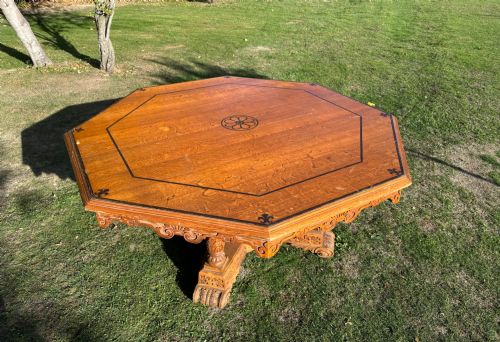
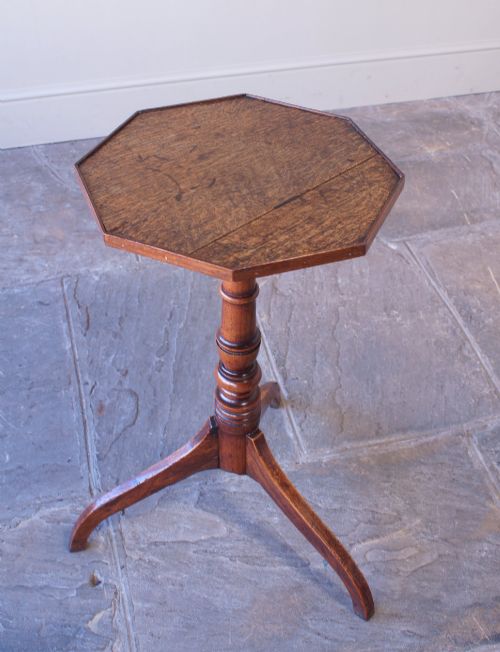
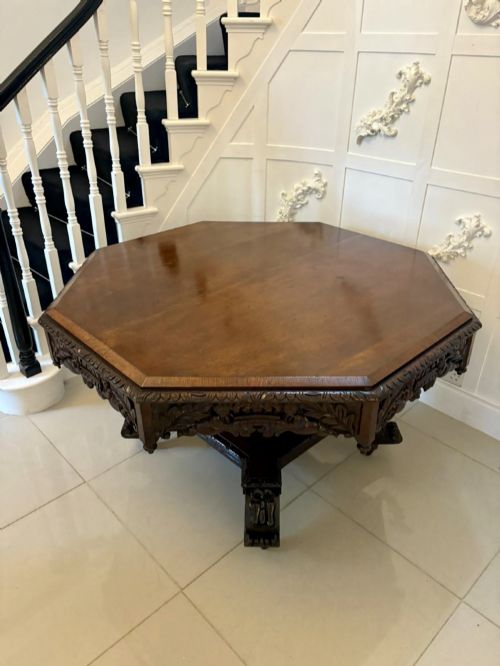
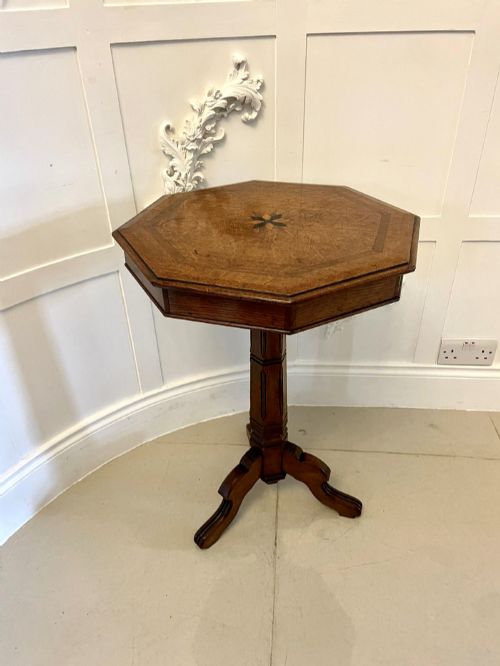




Octagonal Oak Pedestal Table
An octagonal oak pedestal table brings sturdy timber and geometric edge to a room, offering a distinct alternative to standard round or rectangular designs.
Octagonal Oak Pedestal Table
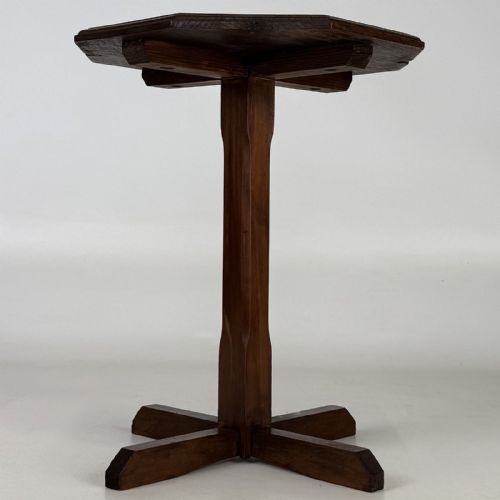
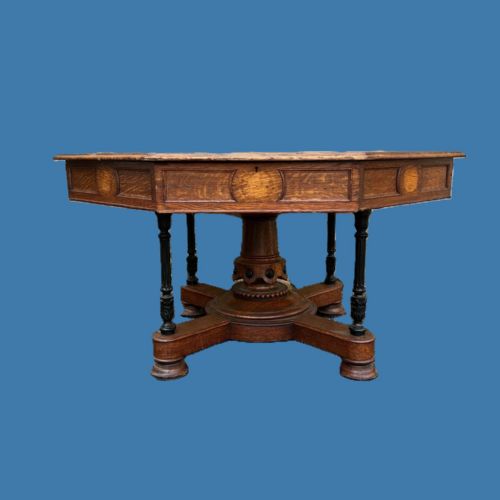
An octagonal oak pedestal table is a functional surface supported by a central column rather than standard corner legs, featuring an eight-sided top. These pieces appear in forms ranging from compact candle stands to substantial centre and library tables.
The selections span multiple historical eras, with Victorian, Edwardian, and Georgian examples forming the core of the available items. Buyers encounter regional variations influenced by Gothic Revival, Arts and Crafts, and Jacobean design principles.
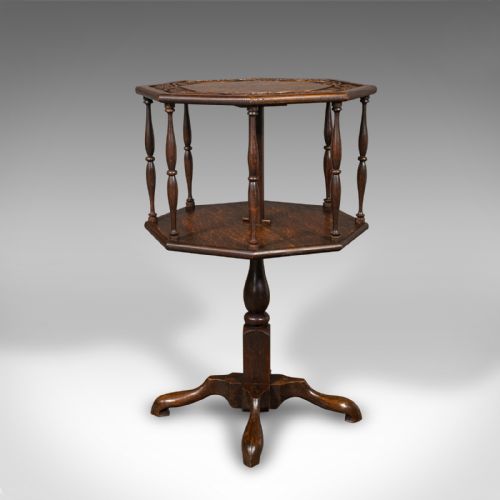
Object types include occasional, side, and dining tables alongside specialised library and lamp tables. Many feature practical additions like lower shelves or carved borders while retaining the signature multi-sided geometry.
Construction and materials
Cabinet makers relied primarily on solid oak, frequently augmented by burr oak, elm, and ebonised wood details to create tonal contrast across the surfaces. Secondary materials such as leather inserts, brass fittings, and wood inlay appear on specific library and occasional variants.
Construction techniques involve stable central pedestals designed to support weight distributed across eight distinct corners. Joinery methods range from traditional pegged joints on earlier Georgian examples to machine-assisted carving on later Victorian and Edwardian iterations.
Octagonal Oak Pedestal Table Retail Price Guide 2026
Typical asking prices for octagonal oak pedestal table among the pieces listed under this phrase on Sellingantiques today, from the lower quarter to the upper quarter. They describe what is for sale here now, not the wider market.
Materials span plain oak, burr oak, elm, and ebonised wood, complemented by brass fittings and leather inserts.
Assessing craftsmanship and proportion
The grade of an octagonal oak pedestal table depends on the selection of timber grain, particularly where burr oak or figured sections are utilised on the top surface. Superior examples demonstrate careful alignment of the eight-sided edge in relation to the central column.
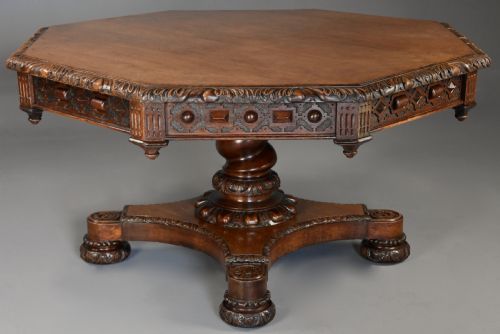
Carved ornamentation indicates the level of artisan involvement, moving from simple chamfered edges to elaborate Gothic Revival or Elizabethan motifs. The stability of the central pedestal and the proportional balance of the base determine the structural integrity.
The Octagonal Oak Pedestal Table Glossary
- Pedestal table
- A freestanding table supported by a single central column resting on a footed base. This configuration maximises legroom around the perimeter.
- Occasional table
- A small, portable piece designed for subsidiary use within a room. These items serve as surfaces for lamps, books, or decorative objects.
- Centre table
- A large piece finished on all sides intended to stand independently in the middle of a room rather than against a wall.
- Gothic Revival
- A nineteenth-century design movement drawing inspiration from medieval architecture. Pieces incorporate pointed arches, trefoils, and heavy carved details.
- Burr oak
- A specialised timber cut from tree growths displaying swirling, knotted grain patterns. Cabinet makers prized this material for decorative tabletop panels.
Octagonal Oak Pedestal Table: Frequently Asked Questions
Where should I place an octagonal table?
These tables suit placement in the middle of a room, beside a seating group, or as a lamp stand in a corner. The eight-sided top softens traffic flow compared to square corners.
Larger versions function effectively as library or centre tables, while smaller occasional variants fit easily into compact spaces.
How do I date an oak table?
Dating relies on observing construction methods, hardware, and stylistic indicators such as Gothic Revival or Arts and Crafts motifs. Georgian and eighteenth-century pieces display hand-cut joinery and simpler proportions.
Victorian and Edwardian examples often feature heavier carved ornamentation, ebonised accents, or factory-produced elements alongside traditional timber.
What is the difference between a library table and a centre table?
Library tables were traditionally built for study spaces, frequently incorporating drawers, leather writing surfaces, or substantial proportions to hold heavy volumes. Centre tables served general display purposes in main reception rooms.
Both types utilise central pedestals or multiple legs and are finished on all sides for freestanding placement.
Are these tables sturdy enough for daily use?
Solid oak construction provides natural durability and weight, making these pieces well-suited for everyday placement in a home. The central pedestal must be securely joined to the top and base to prevent wobble.
Periodic waxing helps maintain the finish against minor spills and daily wear without altering the underlying timber.