






Large Oak Centre Table
A large oak centre table commands a room with robust timber and generous proportions, serving as the functional heart of a traditional interior.
Large Oak Centre Table
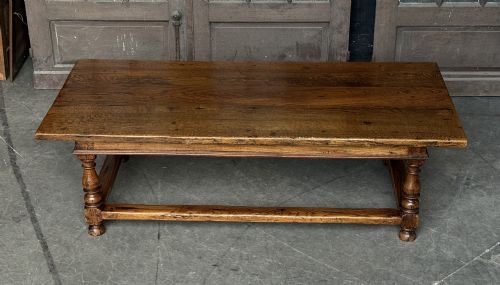
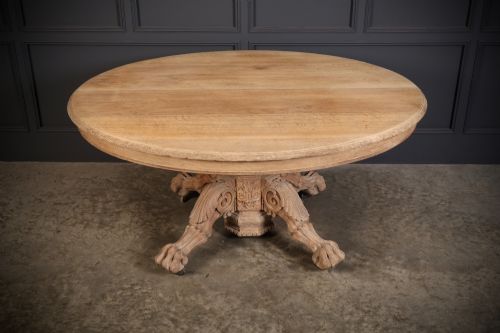
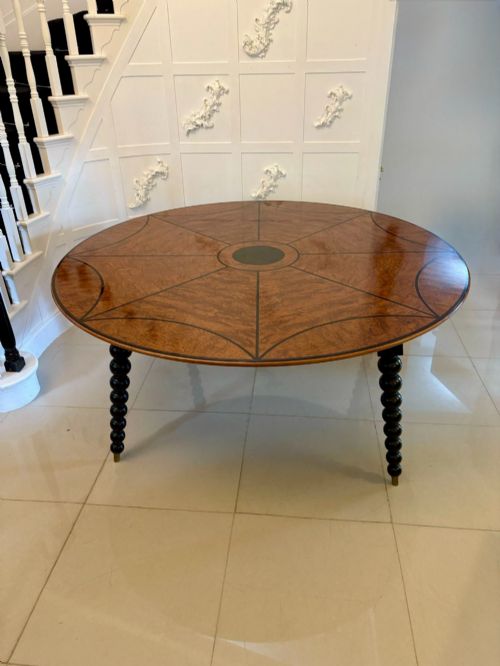
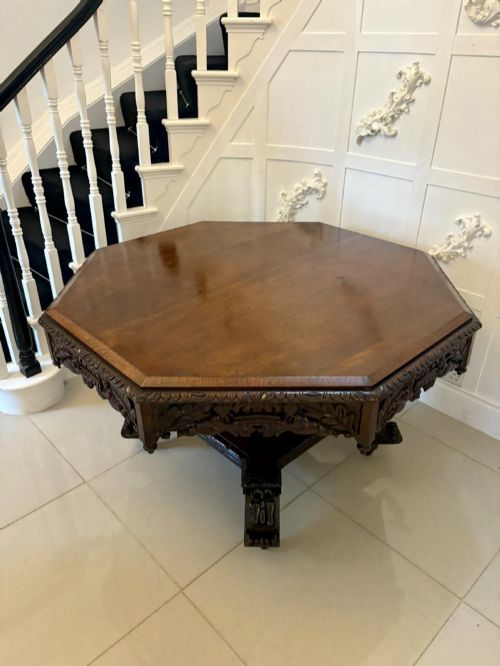
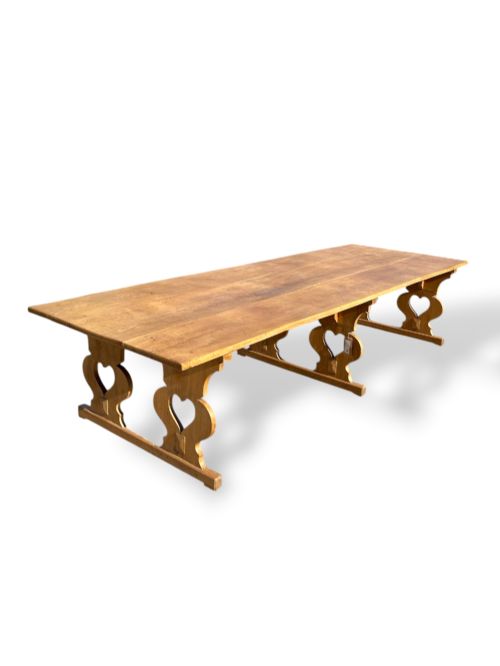
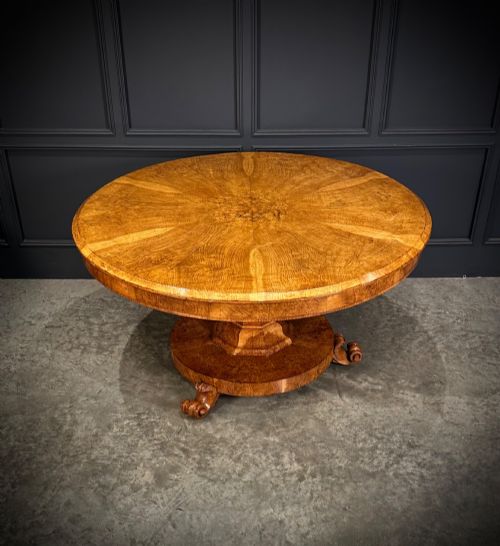
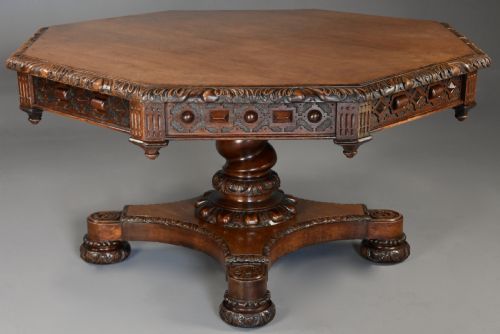
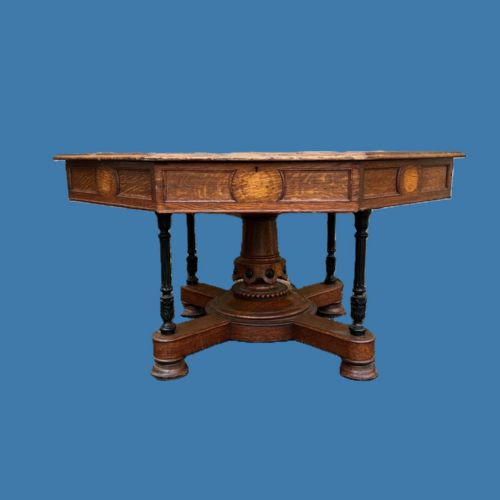
When you search for a large oak centre table, you enter a domain of sturdy nineteenth-century furniture designed to anchor grand spaces. The examples you meet here span circular dining pieces, octagonal library tables, and robust refectory forms.
Victorian and Gothic Revival pieces dominate the selection, bringing heavy carving, architectural mouldings, and substantial timber to the domestic interior. Alongside these, occasional coffee tables and centre stools demonstrate how these heavy forms adapt to modern living.
How they were made
Carpenters utilised solid oak, often selecting figured, pollard, or burr sections to create striking grain patterns across expansive tops. Iron and brass hardware provided structural reinforcement and functional detail on library and dining pieces.
Traditional joinery methods such as mortise and tenon construction ensured the stability required for heavy daily use. Surfaces received wax or French polish finishes to protect the timber while highlighting its natural colour and figure.
Large Oak Centre Table Retail Price Guide 2026
Typical asking prices for large oak centre table among the pieces listed under this phrase on Sellingantiques today, from the lower quarter to the upper quarter. They describe what is for sale here now, not the wider market.
Listings feature nineteenth-century oak furniture alongside twentieth-century centre stools, incorporating materials such as pollard oak, brass, leather, and ebonised wood.
What varies in quality
The degree of hand-carving and the choice of timber figure distinguish standard production from exceptional cabinet work. Dense, highly figured pollard oak and crisp architectural tracery indicate a higher tier of craftsmanship.
Proportion and structural integrity also separate fine examples from simpler pieces. A well-balanced frame with original timber surfaces retains a superior presence compared to altered or heavily refinished items.
E.Gomme for Heals
The Large Oak Centre Table Glossary
- Centre table
- A freestanding piece designed to be viewed from all sides rather than pushed against a wall. These tables often stand in the middle of a hall, library, or drawing room.
- Pollard oak
- Timber taken from trees that have been pruned close to the trunk to encourage dense, highly decorative branch growth. This process yields a distinctive swirling grain pattern.
- Gothic Revival
- A nineteenth-century design movement drawing inspiration from medieval architecture. Pieces in this style feature pointed arches, quatrefoils, and heavy carved mouldings.
- Refectory table
- A long, narrow dining table traditionally used in monastic refectories and large country houses. These items feature sturdy stretchers supporting substantial legs.
- Library table
- A large sturdy table designed for reading and writing, often equipped with drawers. They frequently take octagonal or rectangular forms in nineteenth-century interiors.
Large Oak Centre Table: Frequently Asked Questions
Where should I place a large oak centre table?
These pieces suit large entrance halls, spacious libraries, or open-plan living areas where they can be approached from all sides. Ensure you leave adequate clearance around the perimeter for movement and seating.
Because they occupy a dominant visual position in a room, they work best as the primary focal point rather than pushed against room boundaries.
How do I care for an antique oak table surface?
Maintain the timber by applying a quality beeswax periodically to nourish the grain and protect against moisture. Avoid placing hot items or liquids directly onto the polished wood.
Dust regularly with a soft, dry cloth to prevent accumulation in carved recesses and around joinery details.
Can I use an antique centre table for daily dining?
Many nineteenth-century examples, particularly dining and refectory formats, were built specifically for robust daily use. Ensure you use heat mats and tablecloths to protect the historical finish from spills.
Check the height clearance beneath the apron to confirm comfortable seating for your chairs.
What is the difference between a centre table and a library table?
Centre tables are generally designed for display and general placement in open spaces, featuring decorative work visible from any angle. Library tables typically offer heavier construction and may incorporate drawers for storage.
Both forms utilise durable oak timbers, but library variants often lean towards utilitarian scholarly use.