


Octagonal Library Table
An octagonal library table provides a generous writing surface designed to stand free in the middle of a room.

Octagonal Library Table
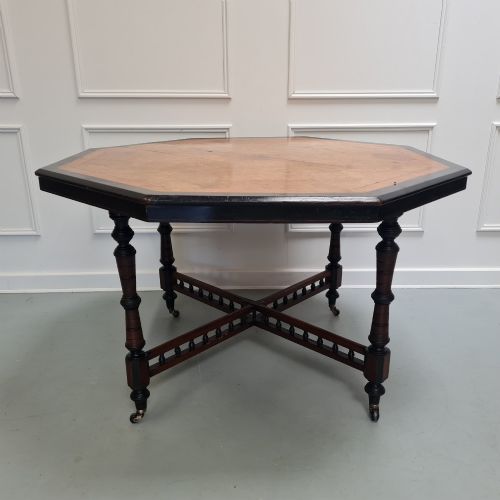
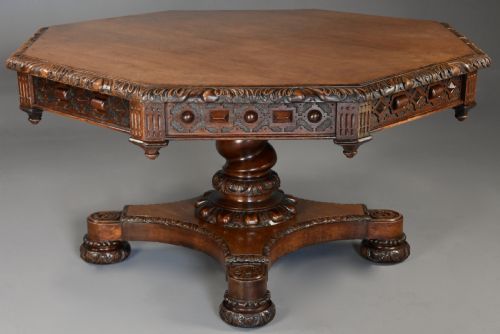
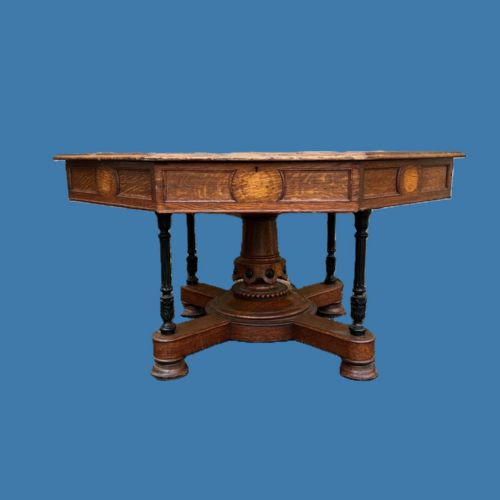
An octagonal library table is a substantial piece of furniture intended for the centre of a study or library, offering eight sides rather than the conventional rectangle or circle. The version you are most likely to meet on this page dates from the nineteenth century, with strong representation from the Victorian and Edwardian periods.
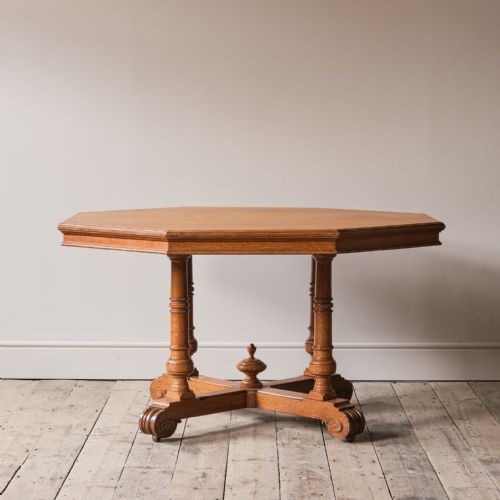
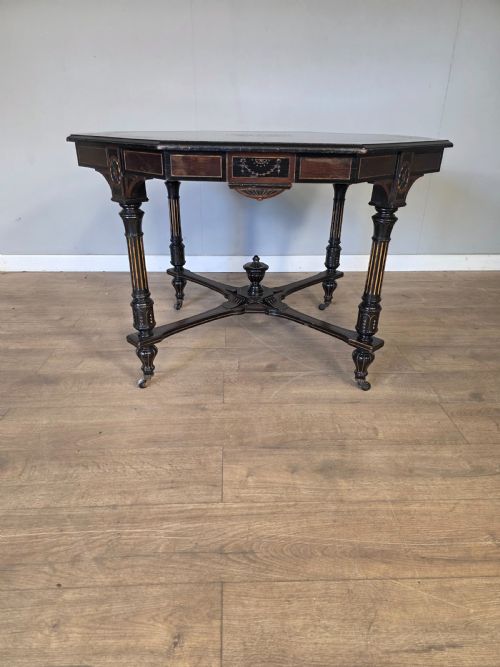
Makers built these tables in timbers such as oak, mahogany, walnut, and ebonised wood, frequently incorporating inset leather surfaces for writing. The form often overlaps with centre tables, drum tables, and rent tables, reflecting the diverse uses required in a nineteenth-century interior.
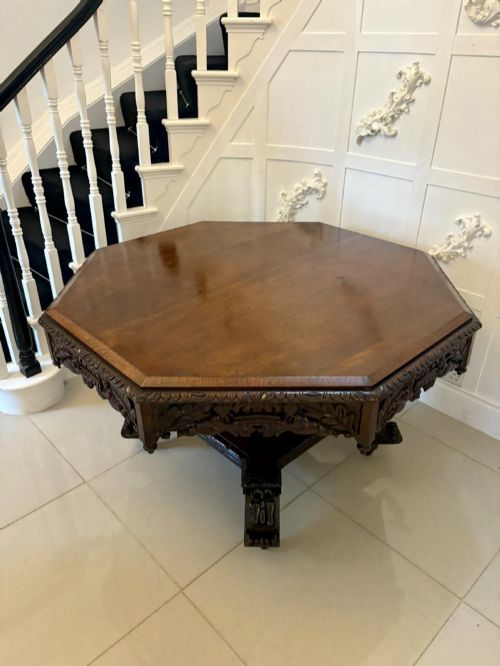
Stylistic influences range widely across the pieces, showing Victorian Gothic Revival, Aesthetic Movement, Jacobean Revival, and Reformed Gothic details. This variety means an octagonal library table can range from severe, dark oak Gothic interpretations to lighter satinwood or mahogany Edwardian designs.
How they were made
Cabinetmakers constructed these tables using solid hardwoods, notably oak and mahogany, often applying burr veneers or ebonised finishes to achieve specific visual textures. Workshops utilised traditional joinery methods to build stable frames capable of supporting heavy books and daily use.
Surface decoration frequently involved intricate wood inlay, brass fittings, and carved detailing reflecting prevailing Gothic, Elizabethan, or Aesthetic tastes. Many examples incorporate tooled leather inset tops, requiring precise leatherworking skills to match the octagonal geometry of the wooden frames.
Listings demonstrate that oak remains the dominant material for octagonal library tables, frequently appearing alongside nineteenth-century Gothic and Aesthetic Movement revival styles.
What varies in quality
The distinction between standard commercial output and superior craftsmanship rests on the selection of timber and the ambition of the carving. Tables featuring burr oak, dense mahogany, or finely figured walnut with crisp, hand-carved Gothic or Elizabethan detailing sit at the top of the range.
Integration of maker signatures or stamps, original tooled leather inserts, and sophisticated hardware such as brass locks elevate certain examples above simpler vernacular pieces. The structural integrity of the eight-sided pedestal or leg assembly also determines the overall calibre of the build.
James Shoolbred & Co·James Winter·W. Williamson & Sons·T.H. Filmer & Sons
The Octagonal Library Table Glossary
- Centre table
- A freestanding table finished on all sides to stand in the middle of a room rather than against a wall. These pieces frequently share forms with library tables.
- Drum table
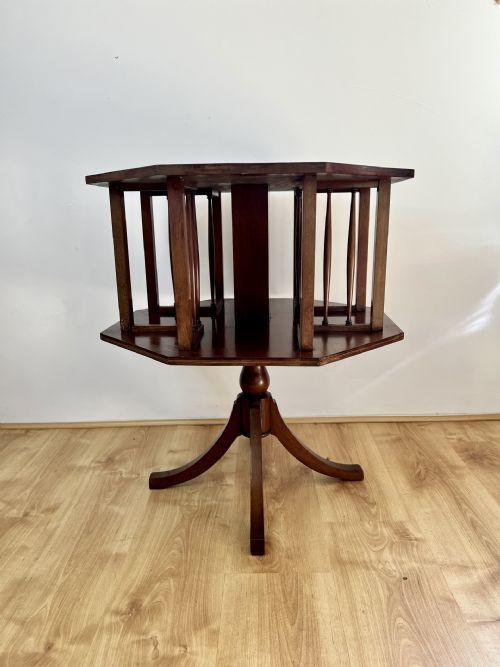
- A circular or octagonal library table with a deep top containing drawers, often mounted on a central pillar with tripod legs. They earned the name from their cylindrical proportions.
- Ebonised wood
- Timber treated with a dark stain or finish to imitate ebony. Makers utilised this technique extensively during the Victorian period for Aesthetic Movement furniture.
- Reformed Gothic
- A nineteenth-century design style that reinterpreted medieval Gothic architecture with cleaner lines and flatter, more abstract ornamentation. Pugin and his followers popularised this aesthetic.
- Inlay
- A technique where pieces of contrasting wood, metal, or other materials are inserted into depressions in the base wood to form decorative patterns. Edwardian makers applied this method frequently.
Octagonal Library Table: Frequently Asked Questions
What is an octagonal library table used for?
An octagonal library table served primarily as a large, freestanding desk or reading surface positioned in the centre of a room. Scholars and readers utilised the generous eight-sided top to spread out manuscripts, books, and writing materials.
Because these tables stood away from walls, makers finished all sides equally, allowing access from multiple angles. Many examples included drawers for storing stationery and documents.
How do I tell Victorian tables apart from Edwardian ones?
Victorian examples tend to use heavier timbers such as oak, walnut, and mahogany, often featuring dark finishes and robust Gothic, Elizabethan, or Aesthetic details. Carving is typically deeper and more prominent.
Edwardian tables generally present a lighter appearance, incorporating satinwood, lighter mahogany, and delicate inlay work. The proportions often feel more restrained compared to nineteenth-century pieces.
Where should I place an octagonal table in a room?
These tables are designed to stand free in the middle of a space rather than pushed against a perimeter wall. Their eight-sided symmetry makes them ideal focal points for studies, libraries, or large hallways.
Placing the table centrally allows full access to all sides and displays the craftsmanship of the pedestal or leg construction.