


Victorian Revolve Table
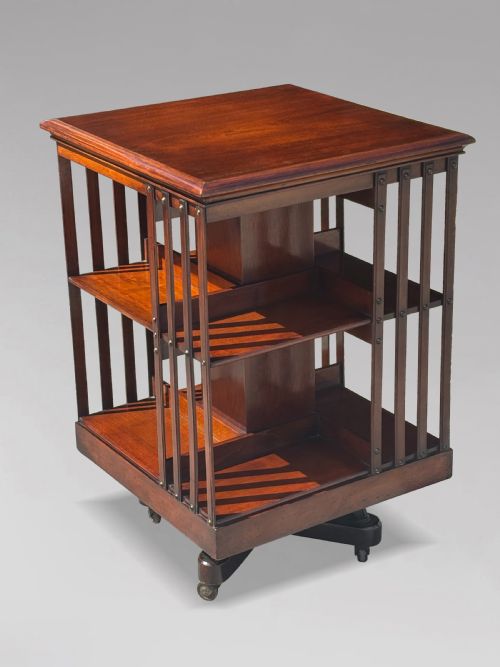
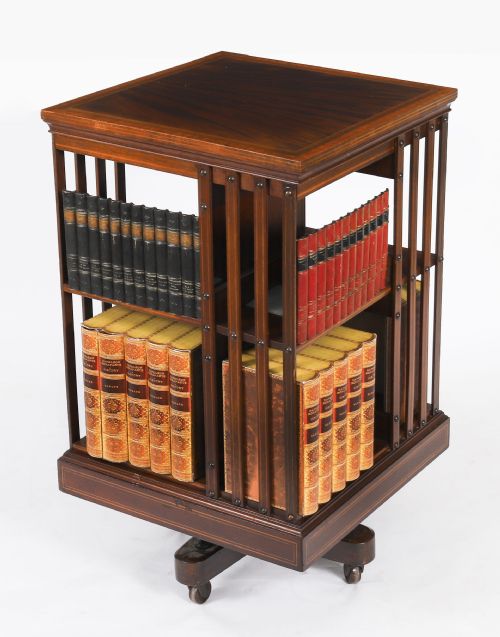
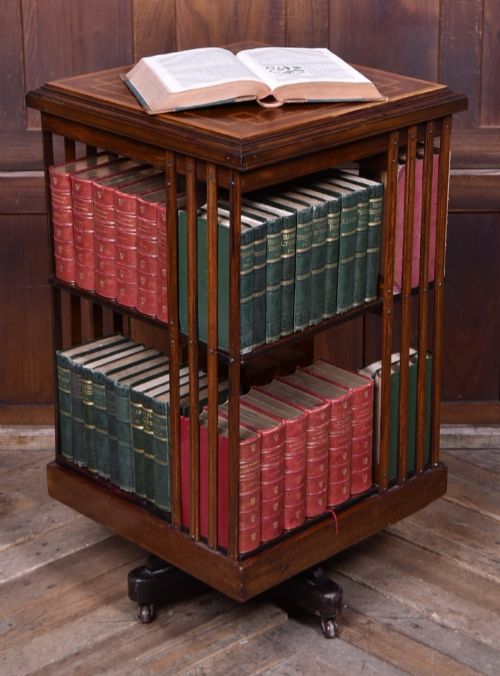
A victorian revolve table is a rotating piece designed to hold books or serve meals, offering practical access from a seated position.
Victorian Revolve Table
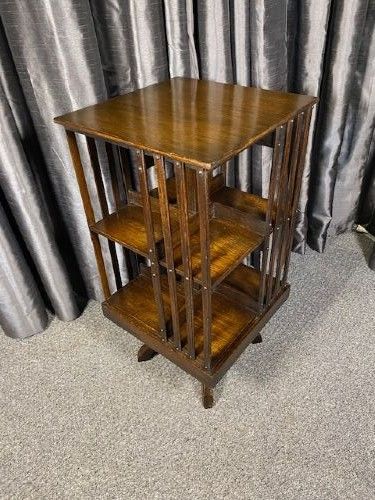
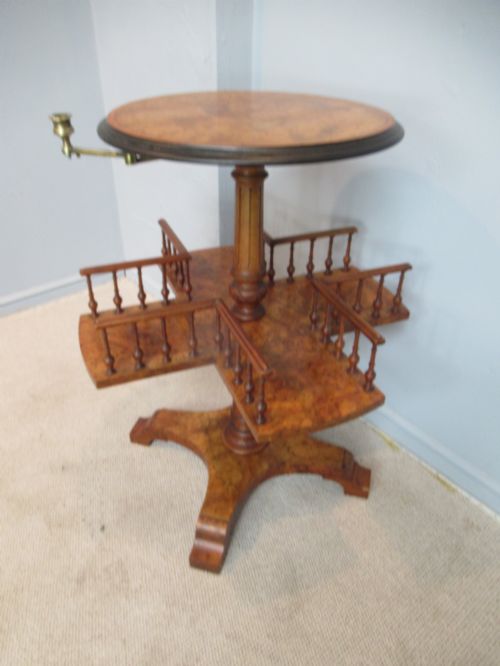
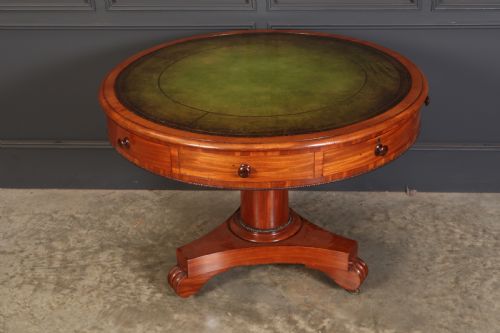
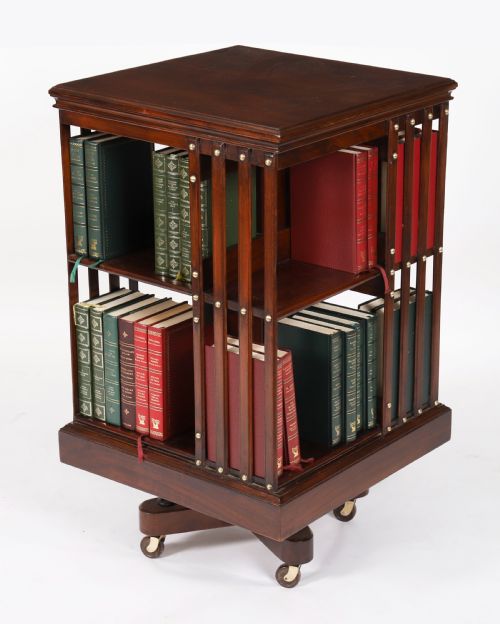
When you search for a victorian revolve table, you encounter rotating bookcases, dumb waiters, and library drum tables originating primarily from the nineteenth century and the Edwardian era. These functional items turn on a central axis, allowing users to reach items without moving the entire structure.
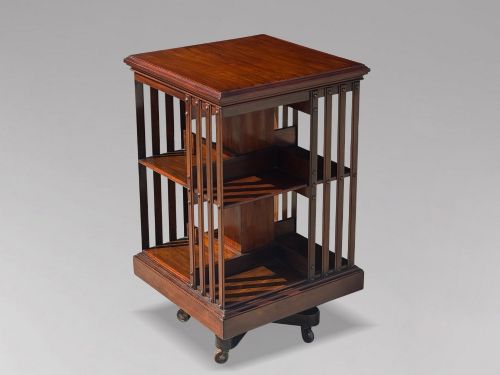
The most common forms on this page include mahogany and walnut revolving bookcases with two or three tiers, alongside occasional tables and rotating lazy susans. Pieces span from early Victorian examples through to late nineteenth-century designs, featuring tripod bases or square platform feet.
What varies in quality
The smoothness and stability of the revolving mechanism dictate much of the standard, separating robust engineering from loose or binding joints. Superior examples maintain balance and quiet rotation across multiple tiers without listing to one side.
Timber selection and secondary detailing also define the grade, with choice burr walnut or flame mahogany veneers and crisp hand-carving marking out the better workshops.
Listings feature mahogany, walnut, rosewood, and oak across Victorian, Edwardian, and nineteenth-century periods.
Maple & Co
The Victorian Revolve Table Glossary
- Dumb Waiter
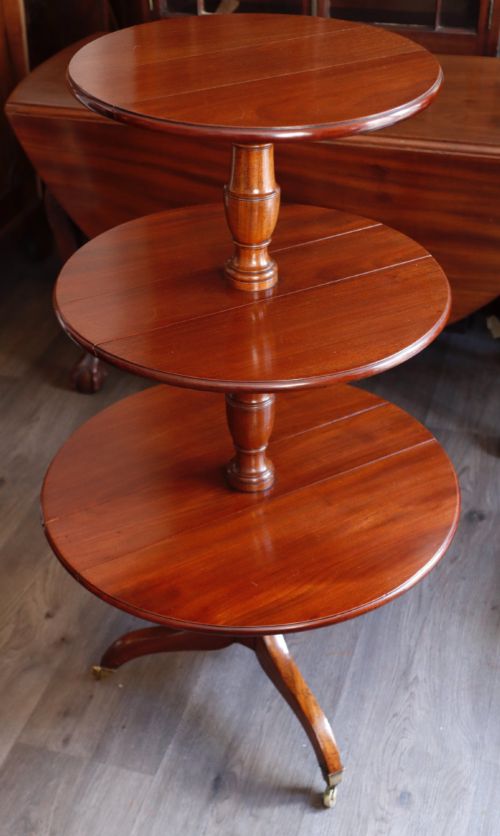
- A tiered serving table, sometimes revolving, designed to hold dishes or books near a dining table or seating area. These items remove the need for constant servant attendance during meals.
- Drum Table
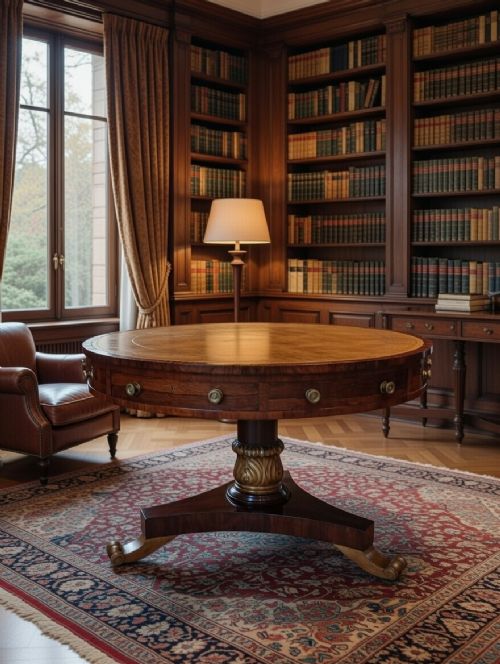
- A circular library table with a deep top resembling a drum, often fitted with drawers and mounted on a central pillar with tripod legs. Many versions feature rotating tops or leather writing surfaces.
- Lazy Susan
- A rotating tray placed on a table or integrated into a stand to share food or condiments easily among diners. The mechanism relies on a concealed central pivot.
- Flame Mahogany
- A wood veneer figure resembling flickering flames, achieved by cutting through branches where they join the main trunk. Cabinet makers prized this grain pattern for prominent table and bookcase surfaces.
Victorian Revolve Table: Frequently Asked Questions
What is a victorian revolve table used for?
These rotating items serve primarily to hold reference books, volumes, or serving dishes within arm's reach while seated at a desk or table. The revolving function permits access to multiple compartments without repositioning the heavy base.
In domestic spaces, smaller versions sit beside armchairs or pianos to manage sheet music or current reading material. Larger library examples anchor the centre of a room to organise substantial collections.
How do I date a revolving bookcase?
Dating relies on timber choices, leg styles, and construction methods visible in the frame and underneath the revolving mechanism. Early Victorian pieces often display heavier rosewood or solid mahogany framing with hand-cut joinery.
Later nineteenth-century and Edwardian examples incorporate lighter satinwood, walnut veneers, or machine-produced brass bearings. Platform bases with castors typically point towards the later decades of the period.
Are all revolving tables from the Victorian era?
While the search term specifies the Victorian period, the listings include pieces from adjacent eras such as the Edwardian period and late nineteenth-century revivals. Georgian precursors also exist in the form of stationary or rotating dumb waiters.
Examining the secondary woods, screw types, and interior linings helps distinguish original nineteenth-century manufacture from later twentieth-century reproductions.
How do I maintain the revolving mechanism?
Maintenance requires keeping the central pivot clean and occasionally applying a suitable lubricant to the metal bearing components to ensure smooth turning. Avoid overloading individual tiers beyond their structural capacity to prevent strain on the central spindle.
Protect the timber surfaces with appropriate wax polish and keep the furniture away from direct heat sources to prevent veneer shrinkage.