
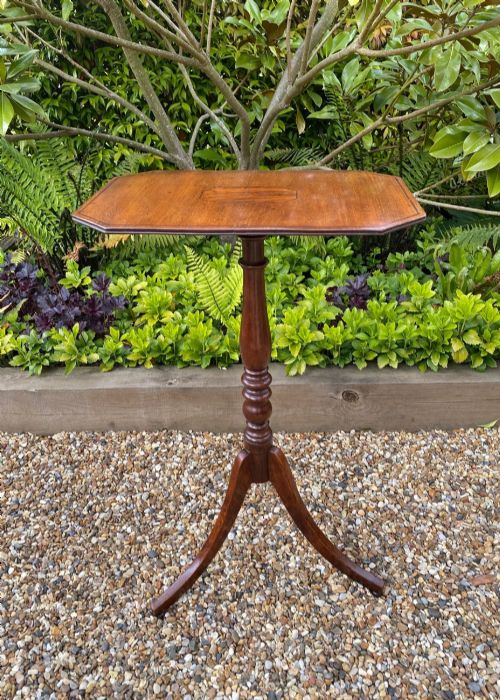
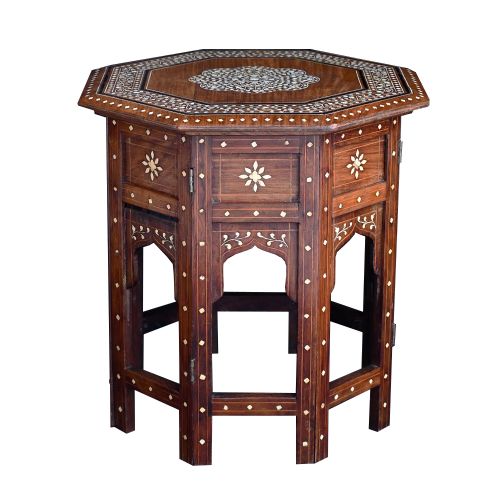
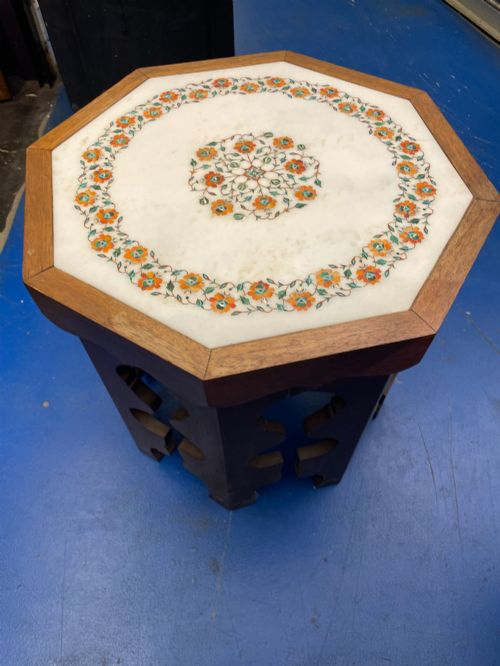
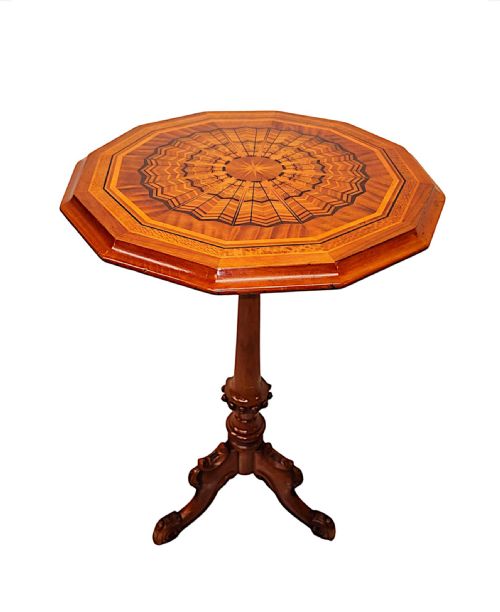
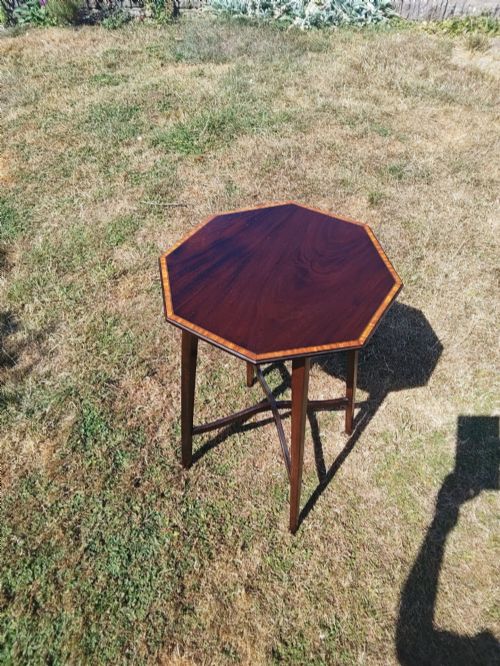
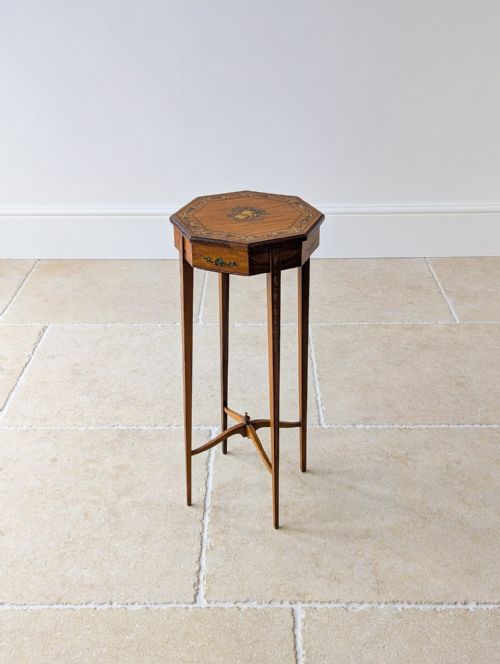
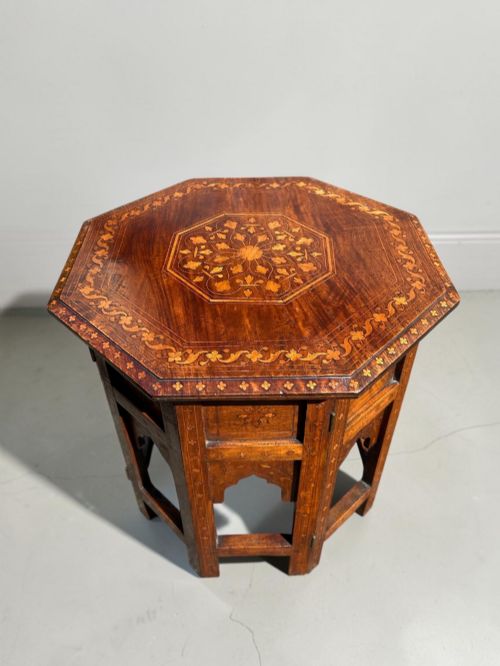
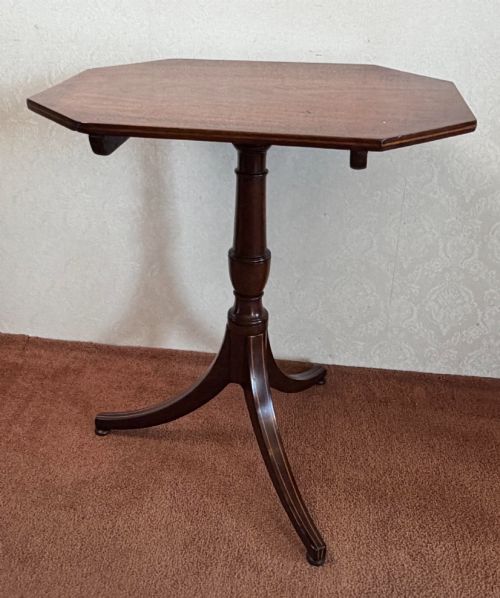
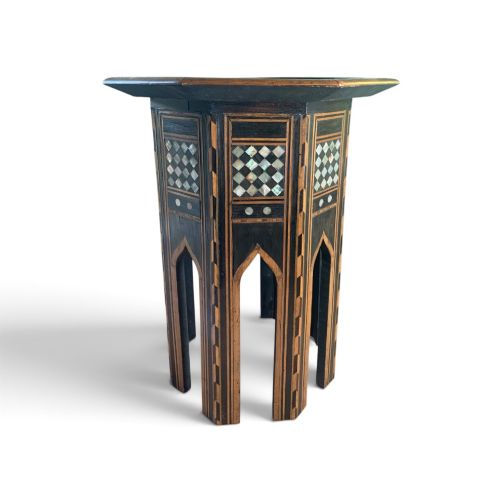
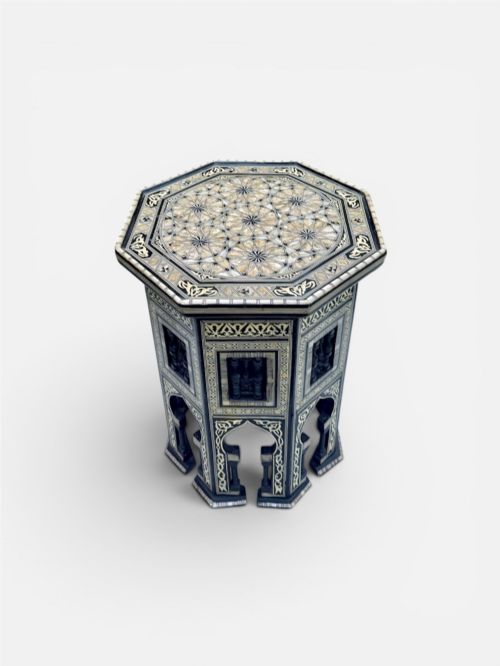
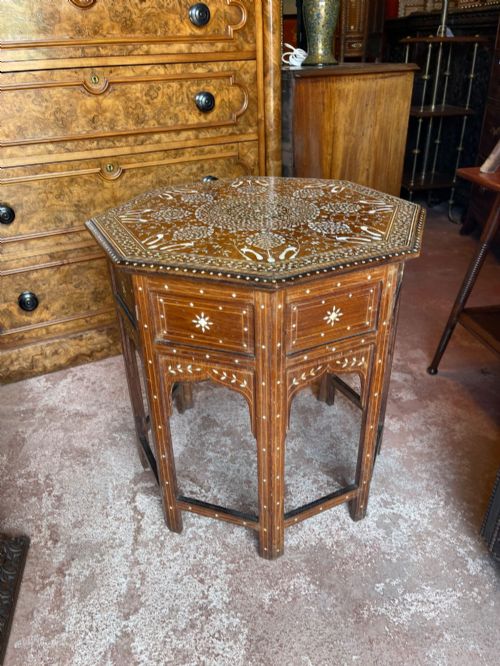
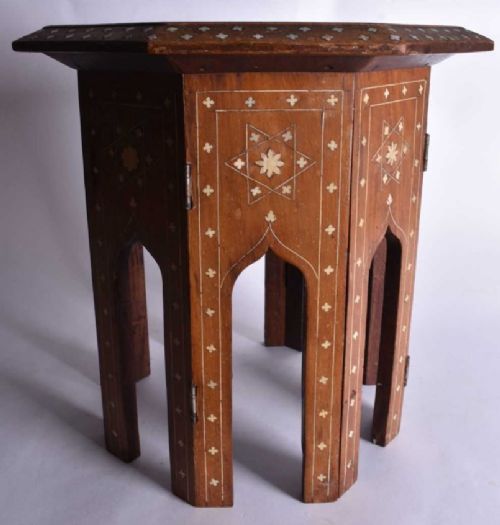
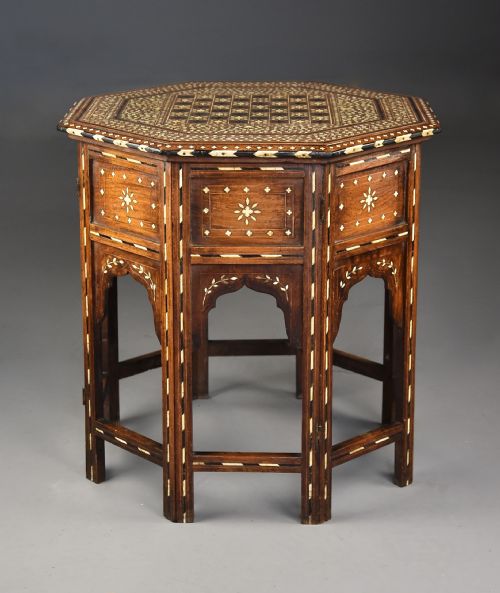

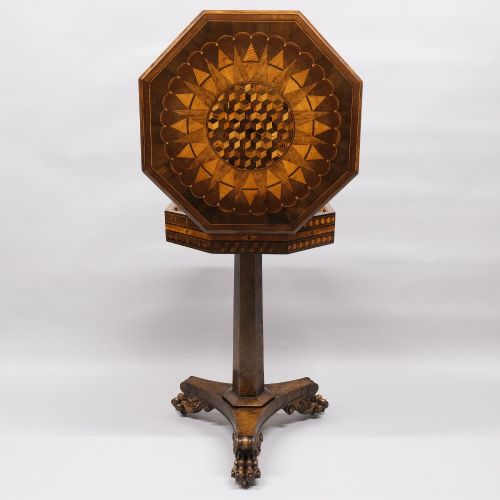
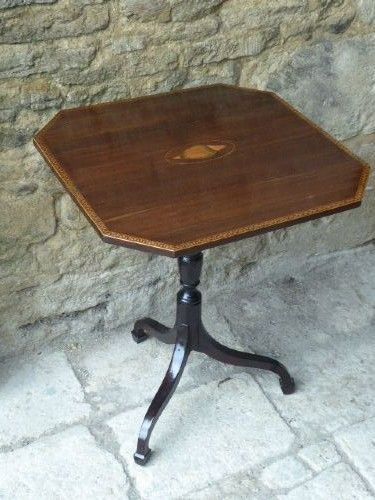
Octagonal Inlaid Side Table
An octagonal inlaid side table brings geometric form and intricate surface detail into a room, serving as a versatile spot for a lamp or books.
Octagonal Inlaid Side Table
The octagonal inlaid side table appears frequently in nineteenth-century and early twentieth-century designs, often drawing on Anglo-Indian, Moorish, and European Sheraton Revival traditions. These surfaces span forms such as occasional tables, folding Damascus tables, and lamp tables.
Makers utilised various regional aesthetics, producing folding stands from Syria and intricately patterned occasional pieces from Hoshiarpur. Mahogany, rosewood, and walnut form the structural basis for many British and European iterations.
Buyers encounter examples ranging from late Victorian burr walnut centre tables to Edwardian satinwood pieces and brass-inlaid Indian imports.
Materials and Technique
Craftsmen built these tables using dense timbers like mahogany, rosewood, walnut, and teak, frequently applying contrasting veneers and geometric surface patterns. Surface ornamentation relies on bone inlay, mother of pearl, satinwood, boxwood, and brass wire.
Many Anglo-Indian and Middle Eastern pieces employ folding bases alongside intricate marquetry and intricate wood carving. European makers favoured satinwood and mahogany structures decorated with detailed stringing and floral motifs.
Several tables include hidden folding stands, ready to pack flat for an empire's journey.
Standards of Execution
Quality rests upon the precision of the inlay work and the stability of the timber frame. Pieces featuring dense bone, mother of pearl, or fine satinwood stringing demonstrate higher levels of artisanal skill.
The integration of the folding mechanism or the solidity of the tripod base separates standard production items from finer presentation pieces. Superior examples maintain crisp geometric alignment across the octagonal top without timber shrinkage.
Gillows·Liberty And Co·Ralph Turnbull
The Octagonal Inlaid Side Table Glossary
- Marquetry
- Decorative veneer applied to a wooden structure to form pictures or geometric patterns. Craftsmen use various tinted woods to achieve tonal depth.
- Hoshiarpur
- A North Indian city renowned for intricate wood carving and geometric inlay using brass, bone, and shisham wood. Tables from this region frequently feature octagonal folding bases.
- Moorish Revival
- An architectural and decorative style incorporating Islamic design motifs into Western furnishings. These pieces often utilise complex geometric patterns and mother of pearl detail.
- Parquetry
- Geometric mosaic woodwork used for flooring and tabletops. Pieces utilise contrasting timber blocks to create repeating patterns.
Octagonal Inlaid Side Table: Frequently Asked Questions
Where were Hoshiarpur tables made?
These pieces originated in the Punjab region of India, specifically in the city of Hoshiarpur, which gained renown for intricate woodwork during the nineteenth century. Artisans carved dense timber frames and embedded detailed patterns using materials such as bone and brass.
Exporters shipped these octagonal tables across the British Empire, where they became popular in Victorian and Edwardian interiors as exotic occasional or lamp tables.
How do I identify a Moorish style table?
Moorish style tables typically feature heavily carved wooden frames paired with geometric lattice work or extensive mother of pearl inlay. Many of these pieces incorporate folding stands designed for easy relocation.
They reflect late nineteenth-century and early twentieth-century European fascination with Islamic design, frequently utilising teak or hardwood bases.
What is the difference between a centre table and a side table?
A centre table stands finished on all sides to occupy the middle of a room, while a side table usually sits against a wall or beside seating. Octagonal inlaid versions function well in either placement due to their symmetrical design.
Larger nineteenth-century examples often served as centre tables in drawing rooms, whereas smaller variations functioned as lamp or wine stands.
How should I care for an inlaid wooden table?
Inlaid surfaces require stable indoor humidity to prevent the delicate bone, brass, or wood veneers from lifting out of their channels. Gentle dusting with a dry cloth preserves the finish without harming the sensitive adhesives.
Avoid placing these tables in direct sunlight or near heat sources, which can dry out rosewood, mahogany, and walnut structures.