




Walnut Parquetry Occasional Table
These walnut parquetry occasional table pieces bring geometric surface patterns and compact utility into a room, appealing to collectors of period French and English furniture.
Walnut Parquetry Occasional Table
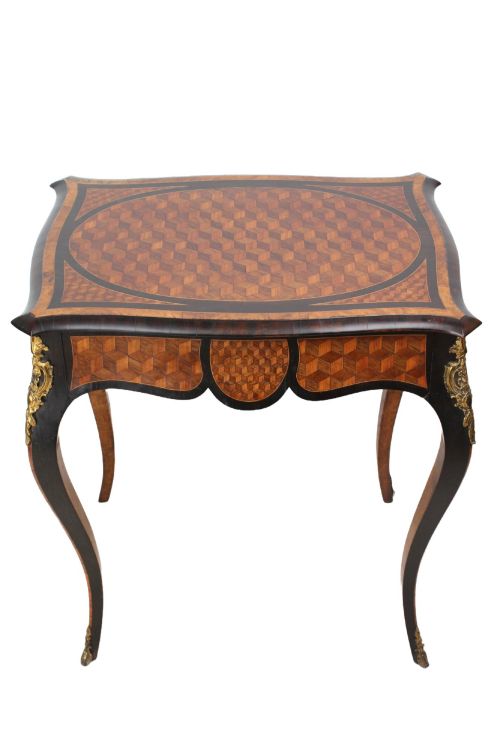
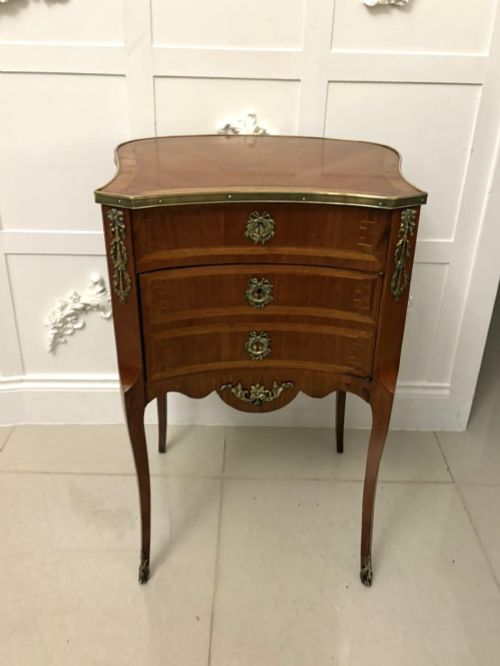
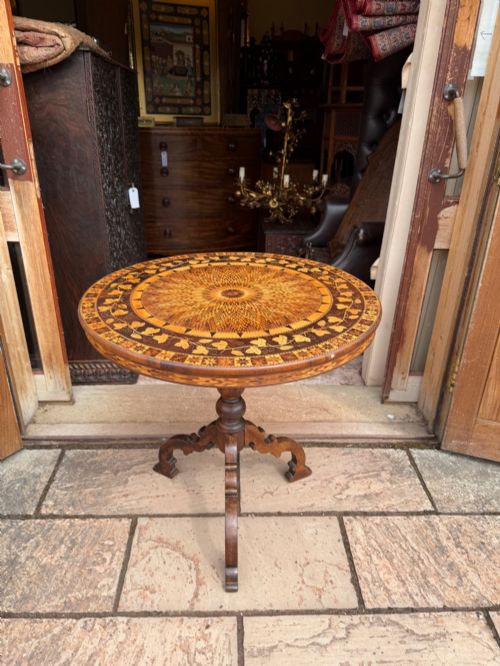
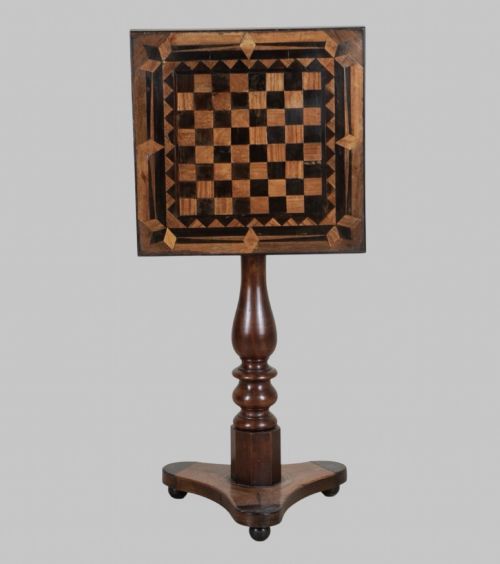
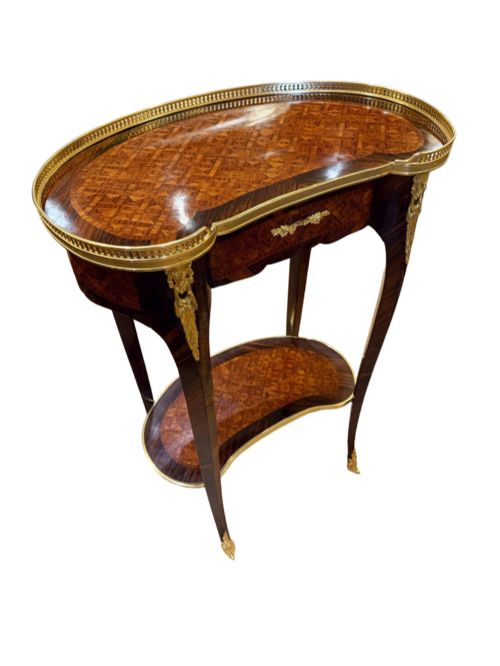
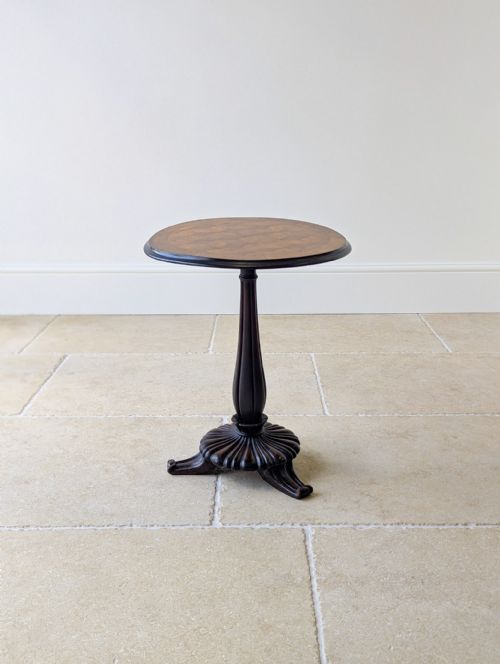
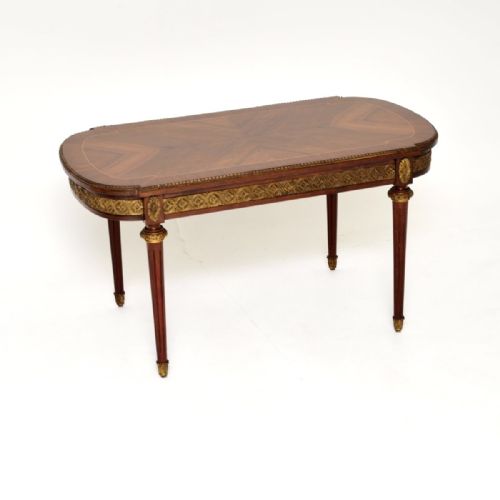
A walnut parquetry occasional table combines practical surface space with geometric timberwork, taking forms from side tables to wine tables and nest of tables. The selection ranges from Victorian examples to pieces shaped by the 18th century, 19th century, and early decades of the 20th century.
Buyers encountering this phrase meet diverse regional styles, notably French Louis XV and Louis XVI revivals alongside Georgian and Victorian English pieces. These tables serve utility roles beside seating or in hallways, using their patterned tops to draw the eye.
Materials and construction methods
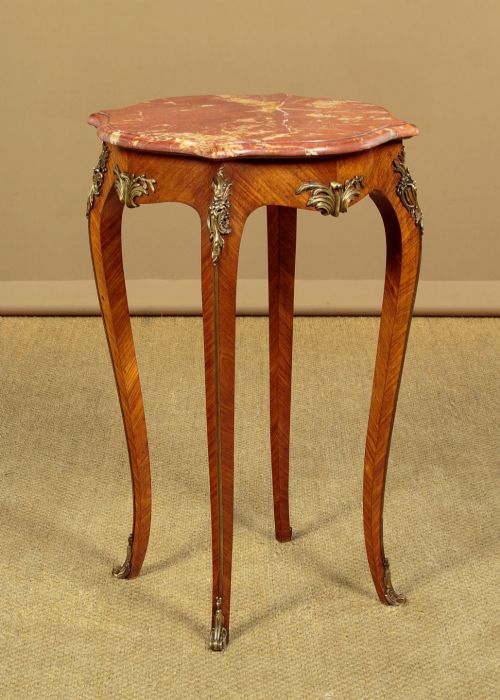
Craftsmen built these tables using walnut as a primary timber and veneer, frequently combining specimen woods, rosewood, kingwood, and mahogany to create contrasting geometric parquetry and floral inlay. Ormolu mounts, brass details, and inset marble tops appear across French and English workshops.
Joinery methods unite solid timber carcases with precise veneer work, where small triangular or diamond-shaped wooden tiles form intricate surface patterns. Tripod bases, pedestals, and four-legged frames support these inlaid tops.
Some tables double as sneaky nests of four, ready to multiply across the floor when visitors demand tea.
What separates the tiers of quality
Quality rests on the precision of the parquetry geometry and the selection of timber figures, where tight alignment of wood grain signals skilled cabinet-making. Superior pieces maintain balanced proportions between the patterned top and the supporting frame.
The integration of cast ormolu mounts and marble slabs marks higher-tier items, showing crisp detail in metalwork and secure fitting into the wooden structure. Simpler tables rely purely on timber contrast and understated turning.
JAS Shoolbred·L.Martin of Paris·Charles Topino
The Walnut Parquetry Occasional Table Glossary
- Parquetry
- Geometric wood inlay forming mosaic patterns on furniture surfaces. It utilises contrasting timbers to create visual depth.
- Marquetry
- Pictorial veneer work depicting floral, scroll, or landscape motifs rather than strictly geometric shapes. Craftsmen piece together various coloured woods within a veneer layer.
- Ormolu
- Gilt bronze mounts applied to furniture edges and legs for decorative accent. This technique became prominent in French cabinet-making.
- Specimen wood
- Timber selected for its distinct grain, colour, or exotic origin. Tables utilise multiple varieties to build multicoloured decorative surfaces.
- Bouillotte table
- A small French circular side table featuring a raised gallery edge designed to stop counters or items sliding off. They frequently incorporate marble tops and small drawers.
Walnut Parquetry Occasional Table: Frequently Asked Questions
How do I identify French styles?
French pieces often display curved cabriole legs, ormolu mounts, and elaborate floral marquetry, particularly within Louis XV and Louis XVI revival designs.
English equivalents tend to feature straight turned legs, simpler geometric parquetry, and restrained proportions associated with Georgian or Victorian periods.
Where should I place an occasional table?
These tables suit small spaces beside armchairs, beside beds as bedside units, or as central display pieces in hallways and drawing rooms.
Their compact footprints allow them to function as lamp tables, wine tables, or writing surfaces without dominating a room.
What is the difference between parquetry and marquetry?
Parquetry relies on strict geometric shapes like cubes, triangles, and squares to build repeating patterns across a wooden top.
Marquetry uses curved and organic shapes to form pictorial scenes, such as floral sprays or architectural landscapes, using different veneer species.
How do I date these tables?
Dating relies on combining the timber species, construction joints, and stylistic revival markers visible in the piece. Victorian and 19th-century examples often mix specimen woods, while earlier 18th-century or Georgian forms use heavier walnut construction and simpler turning.
Assessing the wear on the underside and the method of veneer application helps confirm the manufacturing era.