
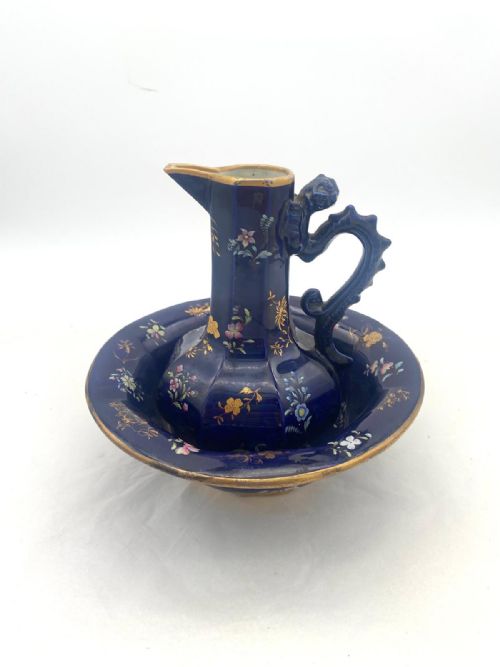
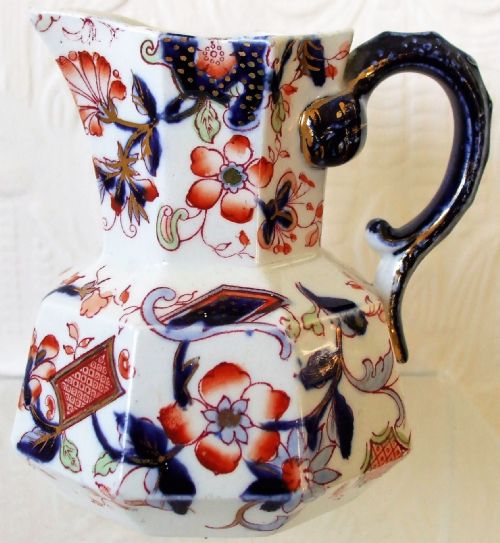
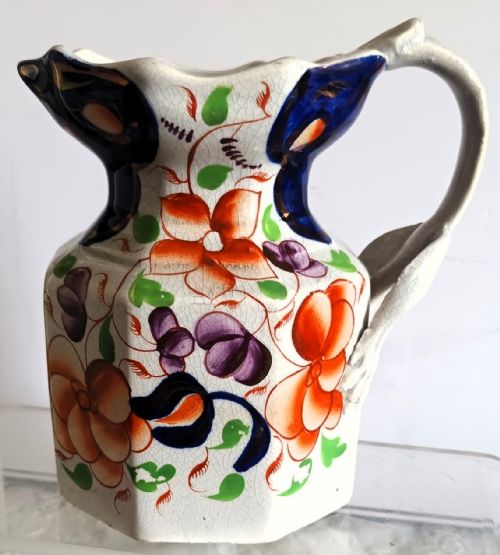


Octagonal Ceramic Pitcher
These octagonal ceramic pitcher examples combine geometric eight-sided bodies with durable earthenware and ironstone, offering collectors striking display vessels rooted in nineteenth-century history.
Octagonal Ceramic Pitcher
An octagonal ceramic pitcher brings together traditional pouring vessel forms and angular faceted geometry, appearing most frequently in nineteenth-century ironstone and earthenware productions. You encounter pieces spanning the Georgian, Regency, and Victorian eras, often taking the shape of single jugs or larger jug and basin sets.
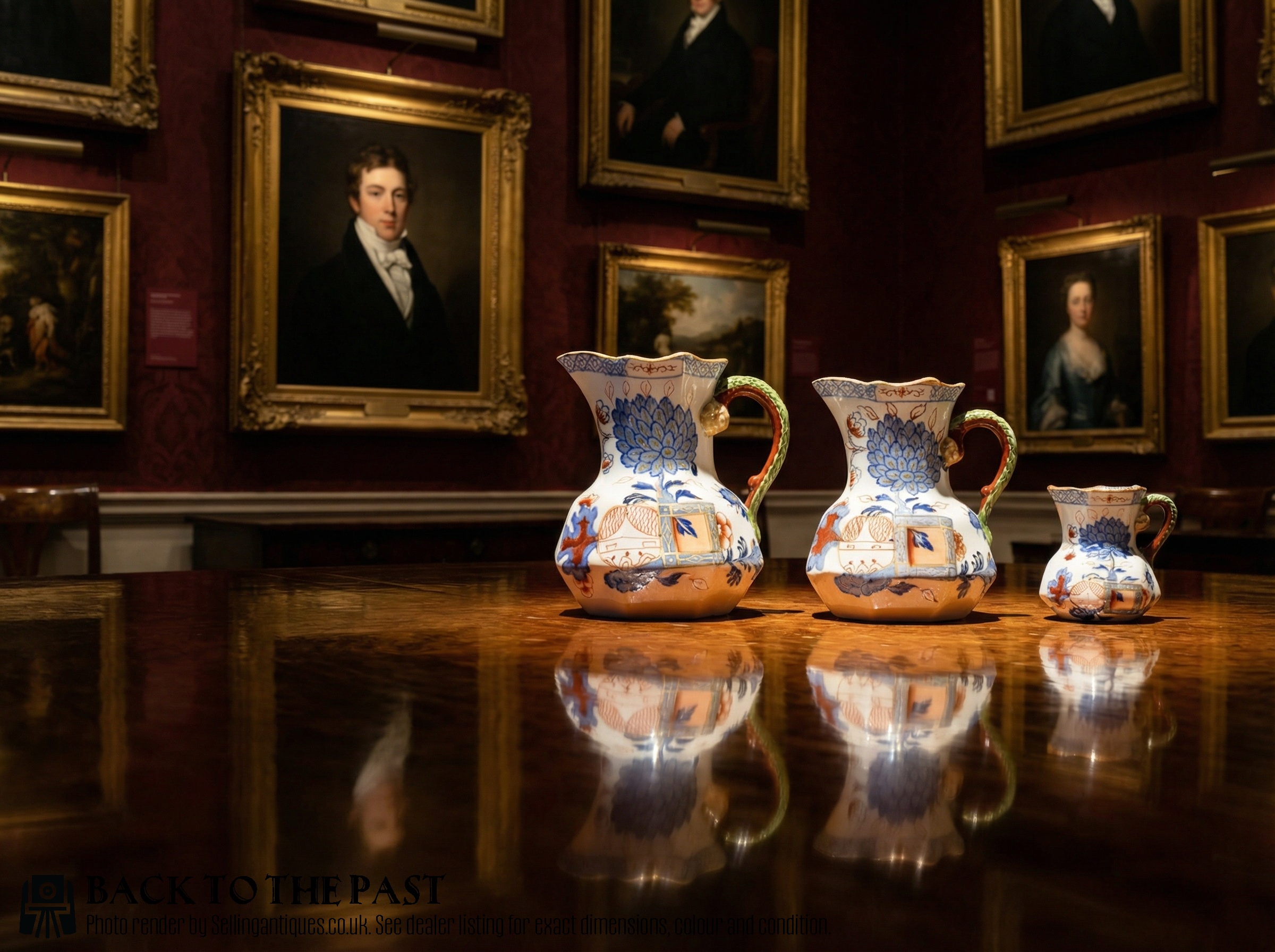
The evidence shows distinct stylistic influences across these items, notably Chinoiserie and Imari patterns applied to robust ceramic bodies. Forms range from individual decorative jugs to graduated sets of three and complete wash sets designed for nineteenth-century domestic interiors.
Makers such as Mason's, Keeling and Co., and Davenport dominate the output for an octagonal ceramic pitcher, frequently utilising ironstone to achieve heavy, durable walls. Buyers looking at this page meet both single statement vessels and coordinated sets featuring oriental-inspired motifs.
Materials and production methods
Makers relied heavily on ironstone and earthenware, dense ceramic bodies that allowed potters to mould crisp eight-sided geometry without losing structural integrity. These heavy-walled bodies were then finished with smooth glazes designed to withstand daily utility while providing a stable canvas for decoration.
Decoration on an octagonal ceramic pitcher typically involved enamel painting and applied gold leaf or gilt details to highlight the faceted panels. Potters frequently turned to Chinoiserie and Imari design schemes, applying colourful glazes and metallic accents before final firing.
Current listings demonstrate ironstone as the predominant material, spanning both Georgian and Victorian production periods.
Assessing quality across the range
Quality in these vessels rests upon the crispness of the eight-sided moulding and the precision of the glaze application across the angular facets. Sharp edges on the body and well-defined panels separate standard utility items from finer cabinet pieces.
The application of enamel and gold leaf or gilt detailing marks another clear distinction between simpler earthenware items and high-end ironstone productions. Richly coloured Imari and Chinoiserie motifs executed with fine brushwork demonstrate superior workshop standards.
Mason's Ironstone·Keeling and Co.·Davenport
The Octagonal Ceramic Pitcher Glossary
- Ironstone
- A patented ceramic body developed in the nineteenth century for its extreme durability and dense weight. It provides the strong structural base needed for sharp octagonal moulding.
- Hydra
- A specific nineteenth-century jug shape characterised by a distinctive serpent-like handle and flared rim. This form frequently appears on ironstone pitchers from major makers.
- Imari
- A decorative style inspired by Japanese export porcelain, utilising rich iron-red, cobalt blue, and gilt. Makers applied these vibrant palettes to faceted ceramic vessels.
- Chinoiserie
- European artistic interpretations of Chinese and East Asian decorative motifs. These patterns appear across numerous Victorian and Georgian pitcher listings.
- Gilt
- A thin layer of gold applied to the ceramic surface to accentuate rims, handles, and panels. It adds a reflective metallic highlight to the fired glaze.
Octagonal Ceramic Pitcher: Frequently Asked Questions
What periods do these pitchers come from?
The available pieces primarily originate from the nineteenth century, including specific dates from the Georgian and Victorian eras around eighteen-eighty.
Collectors will find that nineteenth-century examples often display maker marks associated with prominent ironstone potteries of the period.
How were these pitchers used originally?
Many served practical functions in domestic settings as part of wash sets alongside matching basins for bedroom hygiene.
Others served decorative purposes in dining rooms and parlours, showcased for their intricate enamel and gilt surface patterns.
What materials make up these items?
Makers constructed these vessels using heavy ceramic bodies such as ironstone and earthenware designed for daily durability.
Surfaces feature protective glazes finished with hand-painted enamels, Chinoiserie patterns, and applied gold leaf.
Are these pitchers found in sets?
Listings frequently include matched jug and basin sets intended for nineteenth-century washing stands.
You also encounter graduated sets of three octagonal jugs designed to nest together when not in active use.