





Ochre Wool Rug
These ochre wool rugs bring warmth and rich earthy tones into a room, offering tactile comfort and traditional woven artistry.
Ochre Wool Rug
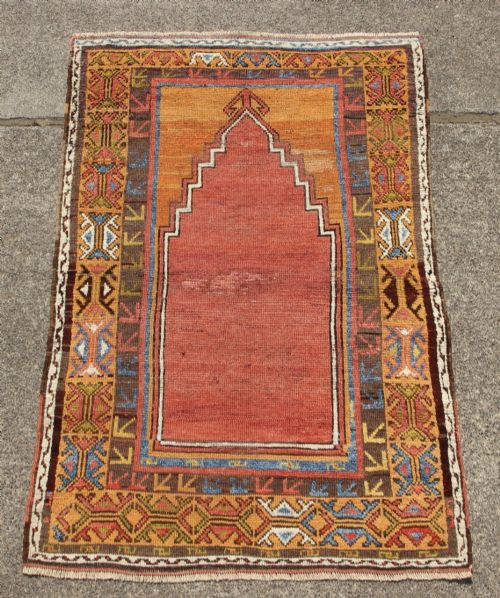
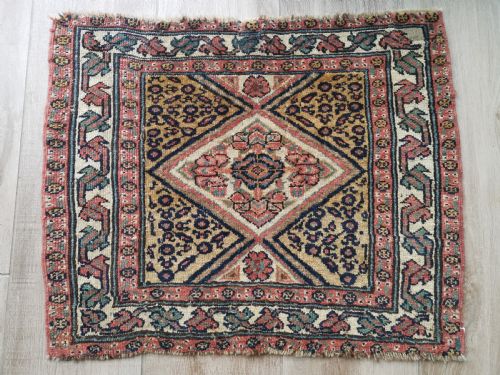
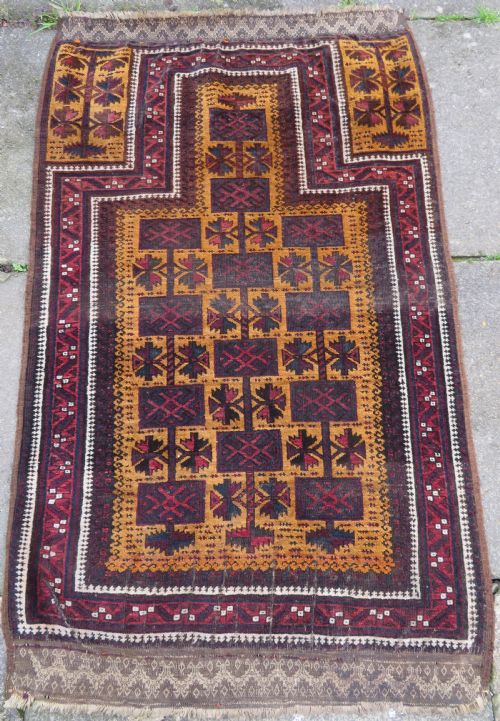
When you search for an ochre wool rug, you encounter floor coverings and textiles originating from regions such as Anatolia, Persia, and Afghanistan. These pieces span periods from the early nineteenth century through to the early twentieth century, taking forms that include area rugs, runners, prayer rugs, and cushions.
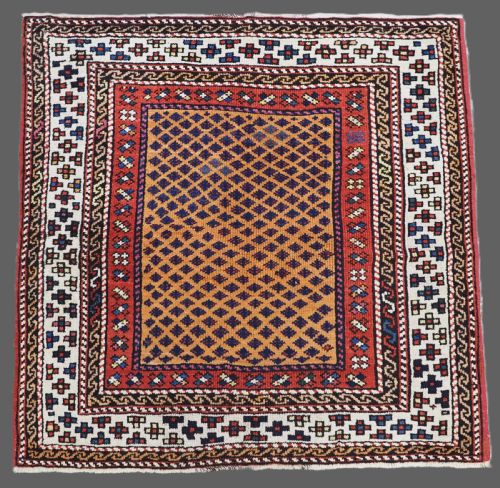
The pieces on this page are predominantly traditional tribal and village weaves, featuring geometric lattices, star medallions, and prayer niches. Hand-woven examples dominate the selection, bringing historical character and distinct regional patterns to domestic spaces.
How they were made
The foundational materials in these pieces are wool, hand-spun wool, cotton, and camel hair. Weavers utilised these natural fibres to construct durable flatweaves and pile carpets designed for daily utility.
Traditional dyeing techniques and hand-knotting or flatweaving methods produced robust structures capable of enduring generations of use. The incorporation of camel hair and hand-spun wool adds varied texture and natural tonal variation across the surface.
Ochre Wool Rug Retail Price Guide 2026
Typical asking prices for ochre wool rug among the pieces listed under this phrase on Sellingantiques today, from the lower quarter to the upper quarter. They describe what is for sale here now, not the wider market.
The listings span from the early nineteenth century to the early twentieth century, incorporating wool, cotton, and camel hair.
What varies in quality
The refinement of the weave and the complexity of the design distinguish different examples within this grouping. Finer knot counts and intricate geometric layouts demand greater skill and time from the maker.
The handling of natural materials and the preservation of the pile or flatwoven surface influence the visual depth of each textile. Greater integrity in the wool and balanced proportions elevate certain rugs above simpler utilitarian counterparts.
The Ochre Wool Rug Glossary
- Prayer rug
- A textile featuring a mihrab or niche design historically used for personal devotion. These rugs often display architectural columns or symbolic lamps within the niche.
- Runner
- A long, narrow carpet format designed for hallways, corridors, or bedside placement. Runners display repeating medallions or continuous geometric patterns along their length.
- Flatweave
- A textile produced without a knotted pile, such as a kilim. These pieces are lighter and rely on interlocking warp and weft threads to form the pattern.
- Medallion
- A central ornamental motif positioned in the middle of the field. This focal design element anchors the surrounding patterns and border arrangements.
- Camel hair
- A natural fibre utilised in foundational or pile elements for its durability and warm, un-dyed brownish tone. It appears frequently in specific tribal traditions.
Ochre Wool Rug: Frequently Asked Questions
Where should I place a rug runner?
Runners suit narrow spaces such as hallways, corridors, or entryways where a traditional carpet shape proves too wide. They protect high-traffic wooden floors while adding warmth and pattern to transitional areas.
Position them centrally with even borders of floor visible on either side to balance the room's proportions.
How do I care for an antique wool rug?
Vacuum gently using a suction-only attachment without the rotating brush bar to protect the wool pile and delicate foundation threads. Keep the textile out of direct, prolonged sunlight to prevent natural dyes from fading over time.
Rotate the rug periodically to ensure even wear across the surface from foot traffic and furniture placement.
What is a prayer rug niche?
The niche, or mihrab, is a pointed arch design element that points toward Mecca during prayer. It serves as the primary visual focus of the textile.
Weavers often fill this architectural space with lamps, floral motifs, or inscribed script.
How do I identify a tribal rug?
Tribal rugs typically feature geometric patterns, stylised animals, and bold medallions rather than court-designed floral curves. They reflect the nomadic or village traditions of the makers rather than urban workshop standards.
Irregularities in symmetry and the use of hand-spun wool point directly to these decentralised production methods.