



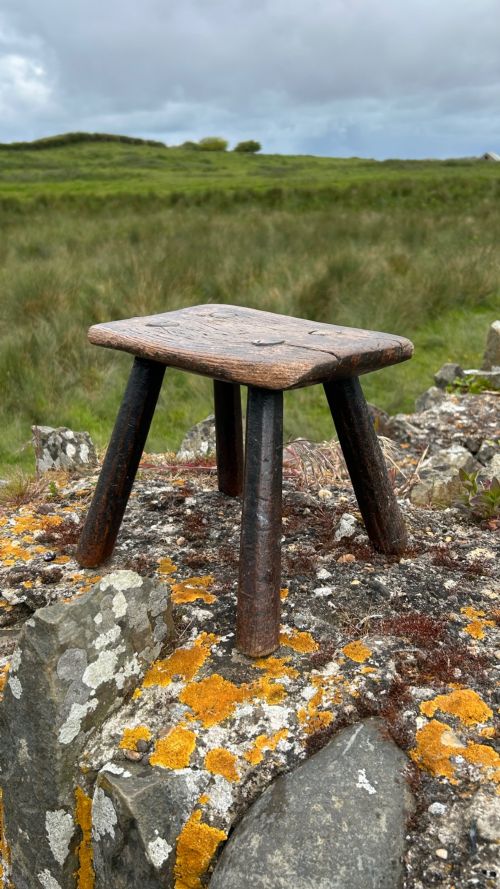
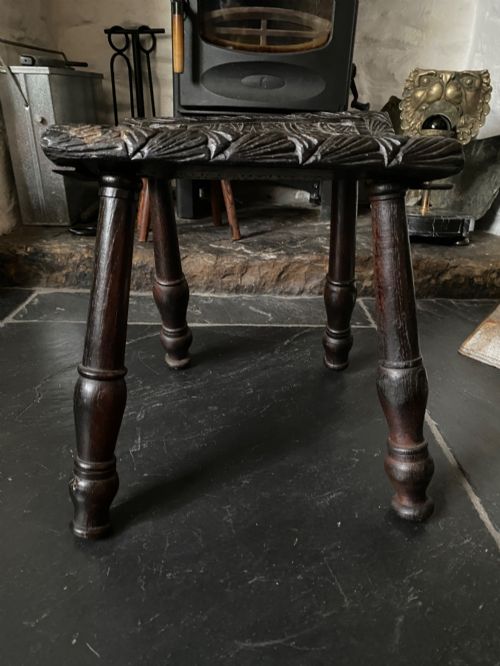
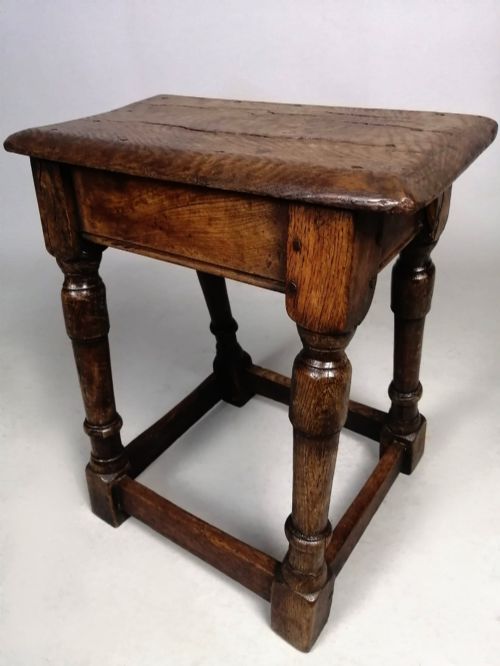
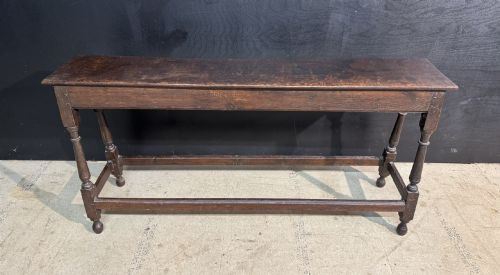
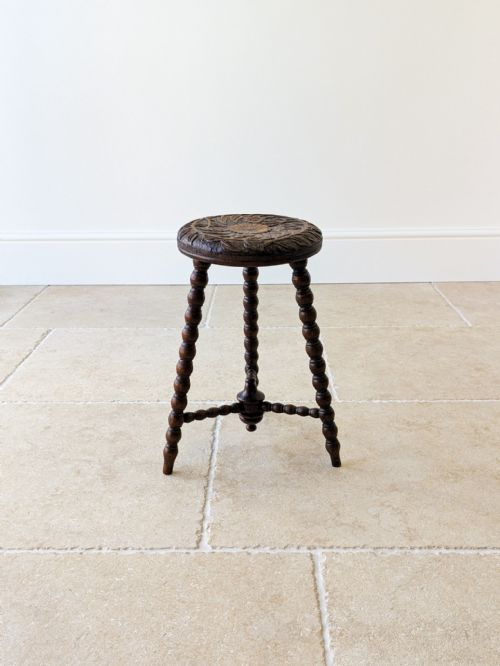

Oak Wooden Stool
An oak wooden stool brings honest timber and utility into a room, spanning centuries of straightforward seating forms.
Oak Wooden Stool
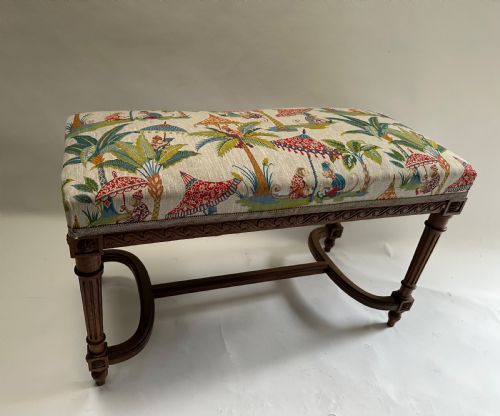
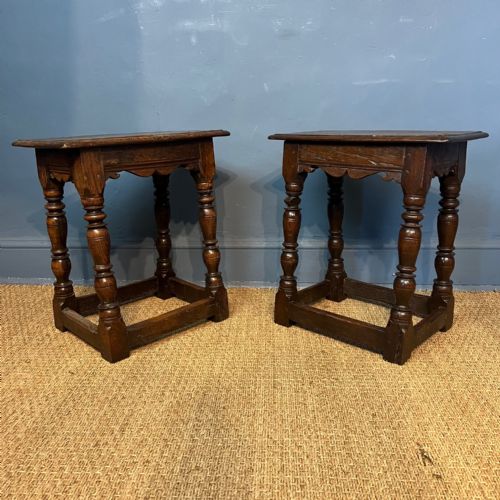
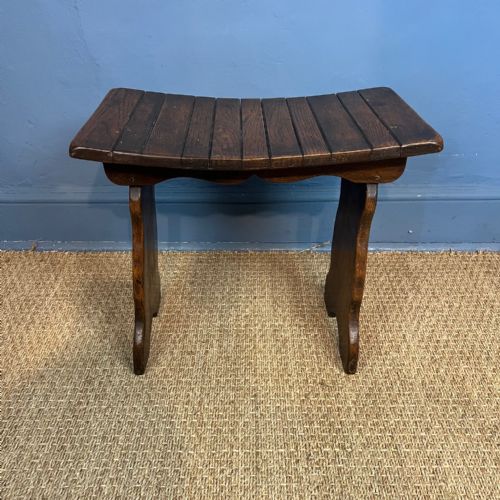
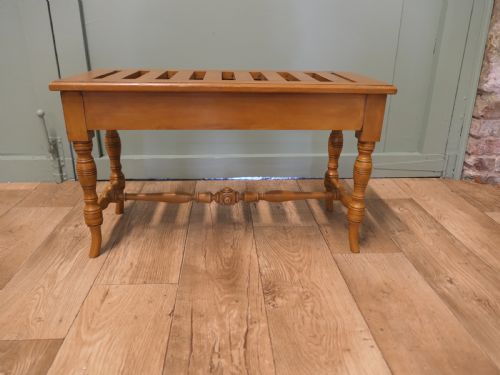
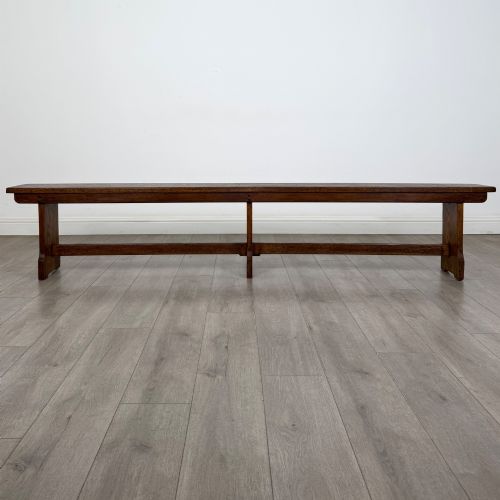
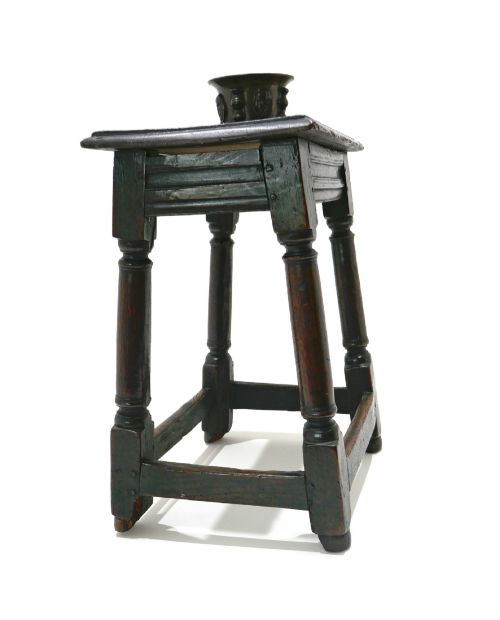
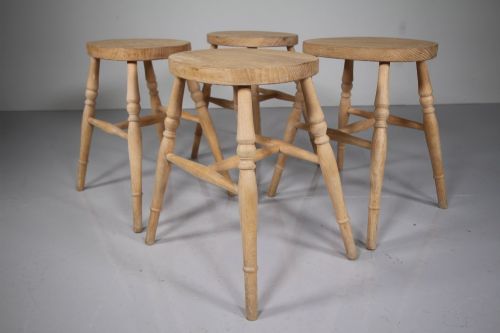
An oak wooden stool encompasses sturdy joint stools from the seventeenth century alongside vernacular tavern benches, tall bar seats, and utilitarian library steps. Pieces span the Georgian and Victorian eras into the early twentieth century, showing both country craftsmanship and formal domestic design.
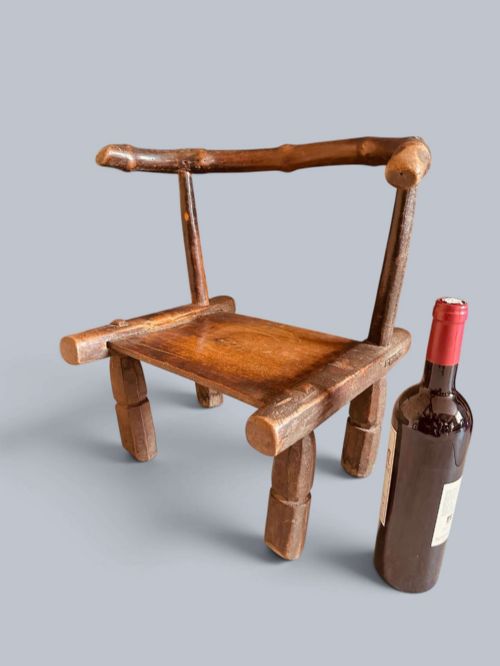
Buyers meet everything from low hearth stools with hedgerow splayed legs to high clerk and machinist seats. Secondary forms include luggage racks, footstools, and close stools, though the classic rectangular joint stool and round seat country stool remain the most common encounters.
Assessing the pieces
Quality rests in the integrity of the timber and the honesty of the construction, where surface patination and rich colour develop naturally through decades of use. Early vernacular examples show the direct hand of the provincial maker through tool marks and structural repairs.
The degree of original survival separates everyday utility from finer examples. Altered heights, replaced stretchers, or excessive modern intervention reduce the character of an old seating form, whereas untouched surfaces command greater respect.
Oak Wooden Stool Retail Price Guide 2026
Typical asking prices for oak wooden stool among the pieces listed under this phrase on Sellingantiques today, from the lower quarter to the upper quarter. They describe what is for sale here now, not the wider market.
Listings feature structural timber and secondary woods including elm, pine, and beech across periods from the seventeenth century to the 1930s.
The Oak Wooden Stool Glossary
- Joint stool
- A sturdy wooden seat constructed with pegged mortise and tenon joints rather than turned legs alone. These pieces date largely from the seventeenth and eighteenth centuries.
- Close stool
- An enclosed piece of furniture designed to house a chamber pot, often disguised as a small chest or cabinet. They date across the Georgian period and earlier.
- Metamorphic
- Furniture engineered to transform from one object into another, such as library steps that fold down into a chair. This clever design appears in Edwardian examples.
- Vernacular
- Objects made by local artisans following regional traditions rather than high-style metropolitan fashions. These pieces prioritise practical utility over ornamentation.
Oak Wooden Stool: Frequently Asked Questions
What is an oak joint stool?
A joint stool is a solidly built wooden seat held together by pegged mortise and tenon joinery. They date back to the seventeenth century and served various household tasks.
Unlike chairs, which were once reserved for heads of households, multiple people sat on joint stools or used them to reach high places.
How were old tavern stools used?
Tavern stools provided simple, robust seating around public house tables. Their sturdy construction withstood heavy daily use in busy commercial environments.
Many feature dished or oval tops designed for comfort during long evenings of gathering.
How do I care for antique oak furniture?
Keep wooden stools away from direct heat sources and sudden temperature shifts to prevent the timber from splitting. Regular dusting and occasional application of appropriate wax maintain the surface.
Avoid modern liquid polishes that build up sticky residues over the original finish.
How can I tell the age of a stool?
Age is determined by observing construction methods, tool marks, and timber shrinkage. Hand-pegged joints, adze marks, and traditional fixings indicate earlier periods.
Wear patterns on foot rails and seat edges also point to decades of physical interaction.