
Oak Wooden Settle
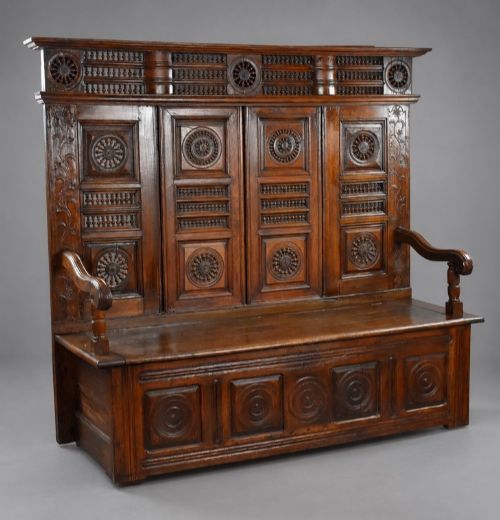
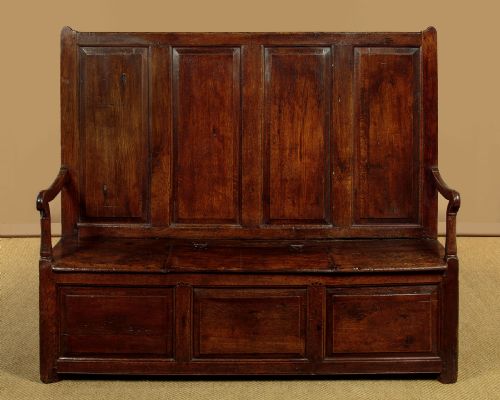
An oak wooden settle offers high panelled backs and substantial timber construction, designed to shield household occupants from cold draughts by the hearth.
Oak Wooden Settle
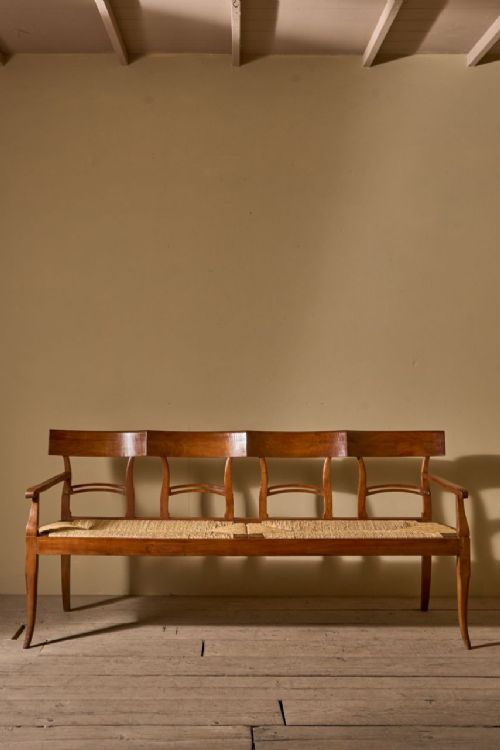
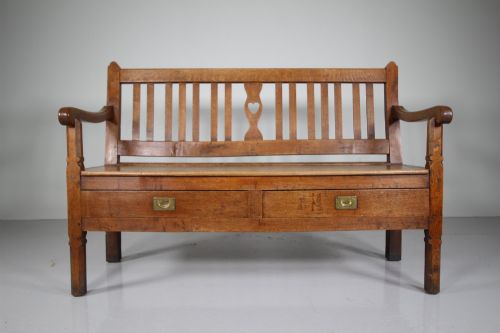
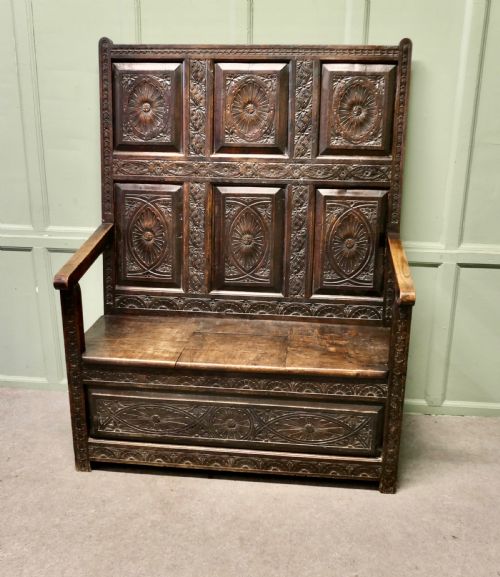
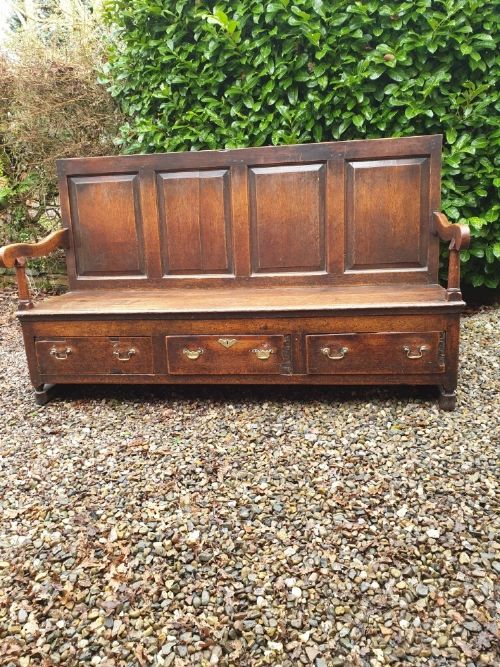
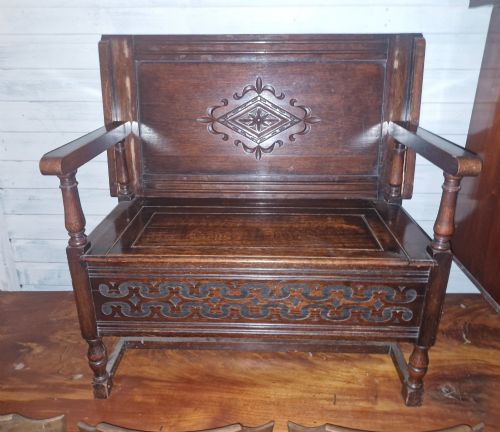
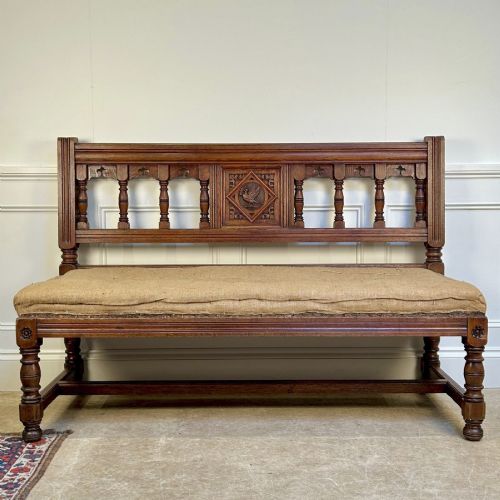
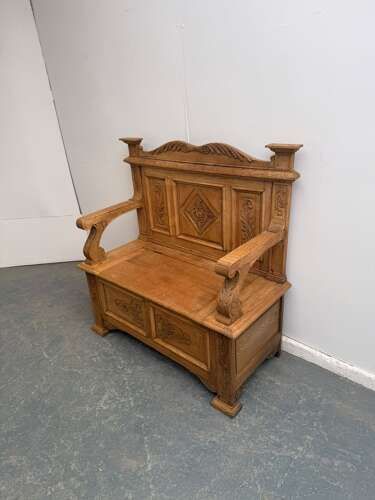
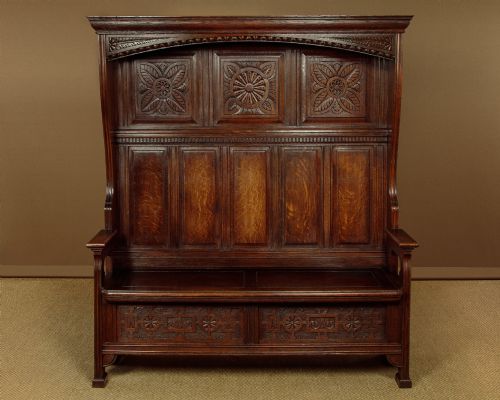
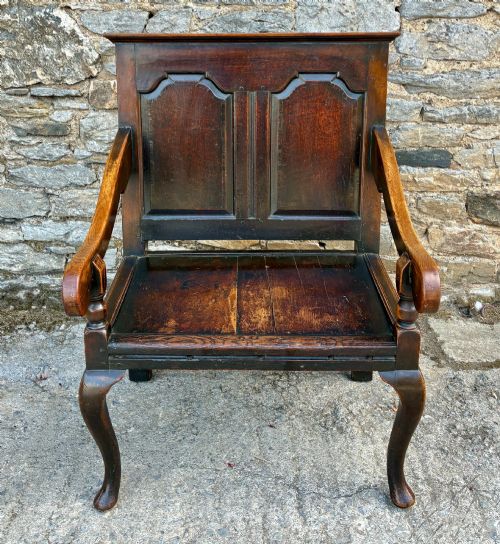
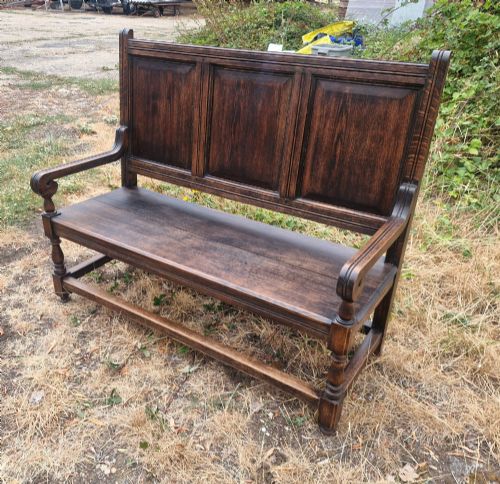
An oak wooden settle provides solid bench seating with a high protective back and often incorporates enclosed storage beneath the seat. When searching for an oak wooden settle, buyers encounter examples spanning from the seventeenth century through the Victorian era and into later revival styles.
The form ranges from simple panel-back benches to elaborate country house box settles with hinged lids and canopy tops. Many pieces double as hall benches or functional seating tailored for farmhouse kitchens and entranceways.
Regional variations appear frequently, including Welsh and North Country pieces alongside items displaying Jacobean Revival or English Country characteristics.
Materials and construction
Makers built these pieces primarily from solid oak, sometimes combining secondary timbers such as ash, elm, cherrywood or fruitwood for seats and framing. Construction relied on traditional joinery methods including pegged mortise and tenon joints to withstand heavy daily use.
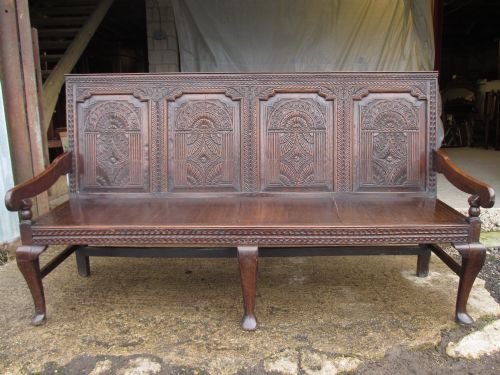
Panelling techniques varied from plain boards to deep geometric carvings, arcade motifs and tulip decorations. Surfaces were often finished with wax to protect the dense timber and develop a deep lustre over centuries of handling.
Listings span centuries of cabinetmaking, featuring seventeenth-century survivals alongside Georgian country pieces and Arts and Crafts interpretations.
Assessing quality and character
Quality rests on the integrity of the timber, the depth of carving, and whether the structural framing remains original. Pieces retaining their early box bases, original hinges and untouched patination command greater interest.
Proportion and scale dictate the visual weight of the bench, with neat or small proportions often proving desirable for modern domestic spaces. The crispness of panel mouldings and the absence of heavy timber replacement distinguish superior examples.
GIllows·Liberty
The Oak Wooden Settle Glossary
- Box settle
- A high-backed wooden bench featuring a storage compartment concealed beneath a hinged seat. This compartment kept items off cold stone floors and provided dry storage near the fire.
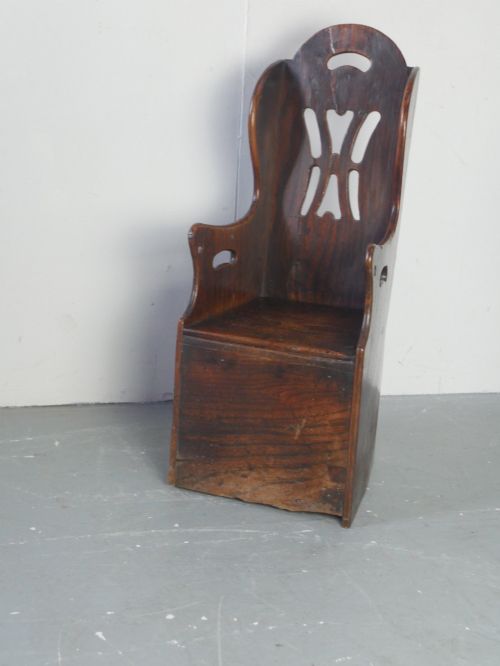
- Lambing chair
- An enclosed wooden armchair, frequently fitted with wings and a solid base to block draughts. These seats were traditionally used by shepherds or for tending to newborn livestock.
- Panel-back
- A construction method where wooden panels are fitted within a grooved frame to form a solid backrest. This technique allowed timber to expand and contract naturally with seasonal temperature changes.
- Canopy top
- An architectural overhanging wooden hood positioned above the settle back. This feature helped trap heat around the seated occupant in large, cold rooms.
- Vernacular furniture
- Objects made by local tradesmen using regional materials and traditional styles rather than following formal metropolitan designs. These pieces reflect the practical needs of rural households.
Oak Wooden Settle: Frequently Asked Questions
What is an oak wooden settle used for today?
These benches serve primarily as hallway seating, dining room benches, or statement pieces in living areas. Their built-in storage compartments offer practical space for shoes, blankets, and household items.
The high backs create architectural presence and help zone open-plan spaces while providing comfortable, upright seating.
How do I date an antique oak wooden settle?
Dating relies on examining construction methods, tool marks, timber shrinkage, and stylistic motifs such as linenfold panels or geometric mouldings. Earlier pieces from the seventeenth century often feature peg construction and heavy board panels.
Later Victorian and revival pieces tend to show machine-sawn timber elements and crisper, more uniform carving styles influenced by historical revivals.
Where should I place a settle in my home?
A settle fits well against a hallway wall, providing a practical spot for putting on shoes alongside hidden storage. They also anchor a dining table or work effectively as a standalone piece against a large wall.
Because of their high backs, they help define seating areas in larger rooms without requiring additional partition walls.
What is the difference between a settle and a pew?
Settles were traditionally made for domestic use in farmhouses and country houses, often featuring enclosed box storage beneath the seat. Pews were designed specifically for ecclesiastical use in churches and chapels.
Domestic settles generally display warmer domestic woods like oak and elm, whereas church pews often run to longer, uniform rows intended for communal congregations.