
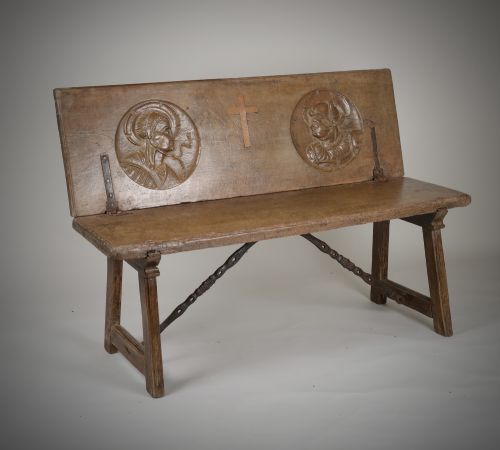
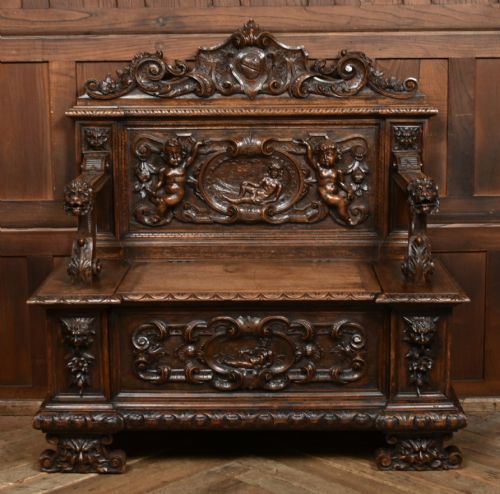


Renaissance Carved Settle
These renaissance carved settle pieces bring robust historic character into a modern hall, offering substantial seating with deep wood relief.
Renaissance Carved Settle
A renaissance carved settle is a substantial wooden seat designed for a hallway or large interior, combining structural bench seating with elaborate decorative carving. When you search for this phrase, you encounter heavy timber furniture built with high backs and solid armrests.
The versions you meet most frequently on this page date from the nineteenth century in revival styles, alongside authentic sixteenth-century examples and eighteenth-century continental pieces. These items serve as functional hall seats or benches that double as statement furniture pieces.
Makers shaped these forms in oak, walnut, pine, and fruitwood, often incorporating hinged elements or high panelled backs. They draw heavily on Italian Renaissance and Gothic revival traditions to create commanding architectural presence in domestic settings.
How they were made
Craftsmen built these settles using sturdy hardwoods like oak and walnut, supplemented occasionally by pine, fruitwood, and mixed wood inlay. They relied on traditional joinery methods to construct the heavy frames, panelled backs, and box bases.
Carvers applied deep relief work directly into the timber, utilising chisel and gouge to create scrolling foliage, figural panels, and architectural motifs. Wrought iron or iron hardware sometimes reinforced the structural joints and operational parts like monk bench mechanisms.
Listings span periods from the 16th Century to the Victorian era, utilising oak, walnut, pine, wrought iron, and fruitwood.
What varies in quality
Proportion and architectural balance also distinguish superior examples from simpler utilitarian seating. The handling of panel construction, the weight of the timber, and the subtlety of the surface patina determine the overall character of the piece.
The Renaissance Carved Settle Glossary
- Settle
- A wooden bench with a high back, solid arms, and often a closed base designed to keep out drafts. It serves as principal seating in historic hallways and large rooms.
- Cassapanca
- An Italian wooden bench or settee featuring a chest base beneath the seat, combining storage with formal seating. This form often displays elaborate carved panels and armrests.
- Monks Bench
- A convertible piece of furniture with a hinged top that folds down to transform the high back into a table surface. It provides dual utility in compact or multi-use spaces.
- Relief Carving
- A sculptural technique where figures and motifs project from a flat background of wood. This method defines the decorative surface of renaissance revival furniture.
- Renaissance Revival
- An architectural and decorative style from the nineteenth century that reinterprets sixteenth-century classical forms. It employs heavy mouldings, symmetrical panels, and ornate carving.
Renaissance Carved Settle: Frequently Asked Questions
What is a renaissance carved settle used for?
These pieces function primarily as heavy hall benches or seating furniture for large entryways and reception rooms. They provide rigid back support and substantial seating capacity.
Historically, they also offered shelter from draughts in large stone-walled rooms due to their high panelled backs and solid sides.
How do I tell sixteenth-century from nineteenth-century pieces?
Sixteenth-century examples display authentic period tool marks, oxidised timber patina, and structural wear consistent with centuries of use. The construction methods reflect early joinery traditions without modern machine intervention.
Nineteenth-century revival pieces often exhibit cleaner mechanical cuts, softer revival detailing, and stylised interpretations of earlier Italian or Gothic motifs.
Where should I place a settle in my home?
A heavy wooden settle suits large hallways, spacious landings, or living rooms where it can stand flat against a sturdy wall. Its high back provides a natural visual anchor for large open spaces.
Keep these pieces away from direct heat sources and strong sunlight to protect the dry historic timber from splitting.
What woods were used to build settles?
Oak and walnut dominate the construction of these benches, chosen for their strength, durability, and capacity to hold deep decorative carving. Pine and fruitwood also appear in specific regional continental pieces.
Some examples incorporate mixed wood inlay to add contrasting tones and geometric patterns to the panels.