
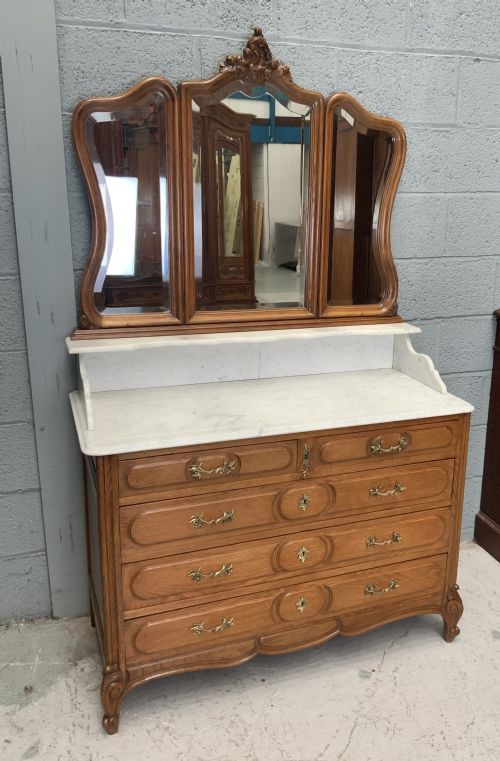


Oak Vanity Table Mirror
An oak vanity table mirror brings practical utility and solid timber character to a bedroom, offering a pivoting glass surface framed in sturdy grain.
Oak Vanity Table Mirror
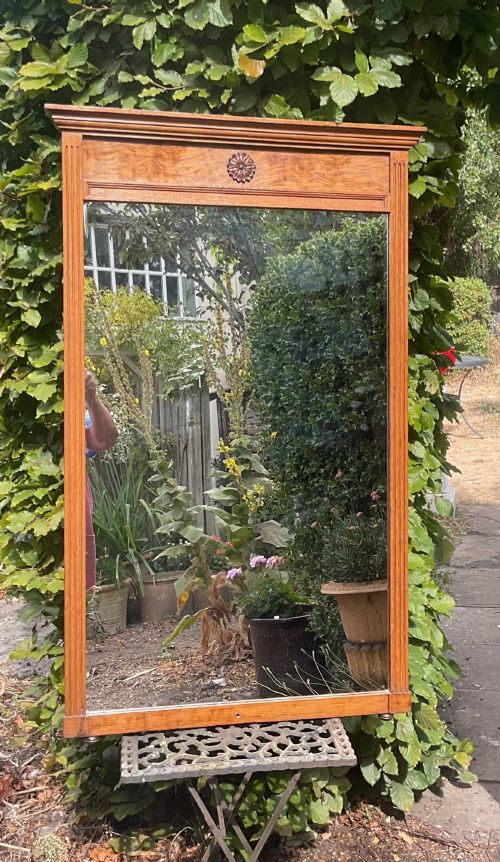
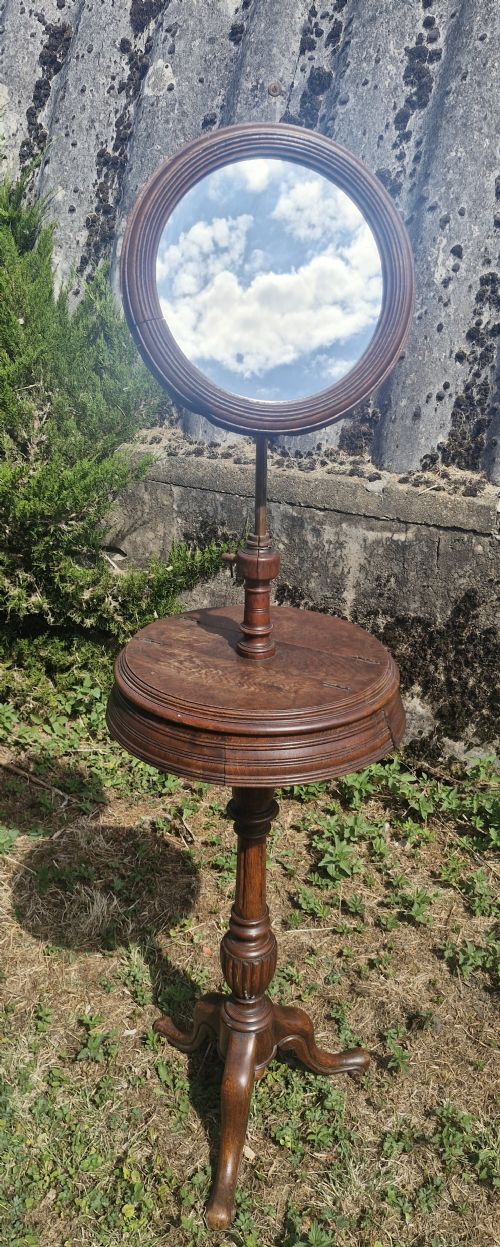
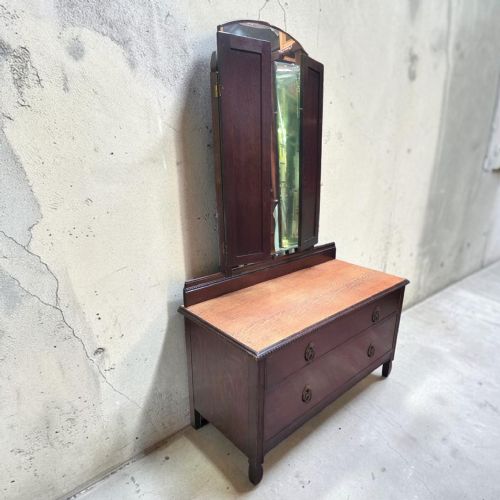
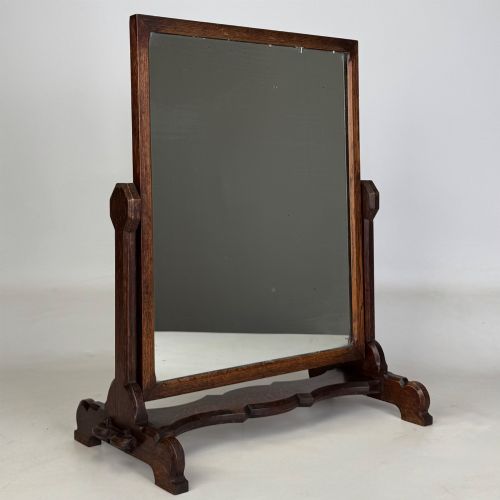
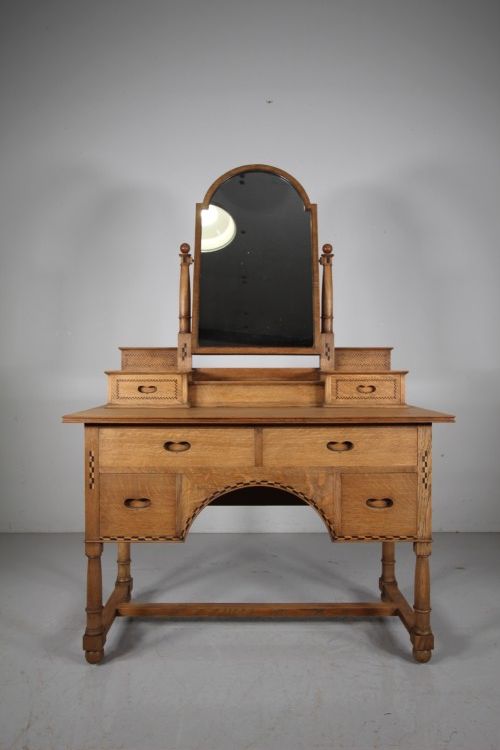
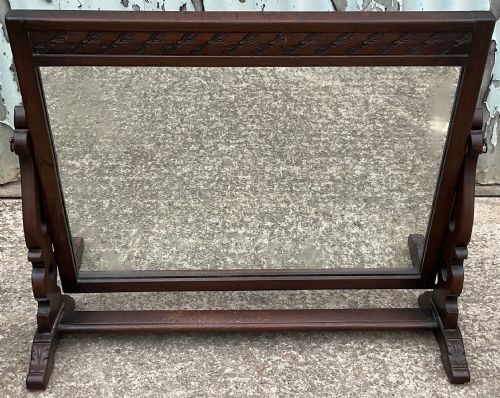
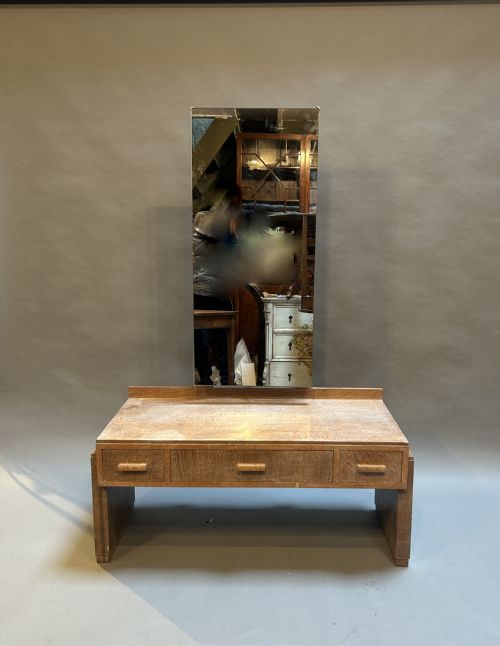
An oak vanity table mirror sits upon a dresser, chest, or washstand to provide a reflective surface for daily grooming. These pieces range from compact, adjustable toilet glasses mounted on simple stands to larger pivoting mirrors integrated into heavy dressing chests.
The pieces on this page span the Victorian era, the Edwardian period, and the twentieth century up to the 1930s. Buyers will frequently encounter Arts and Crafts models alongside Art Deco designs and revival styles.
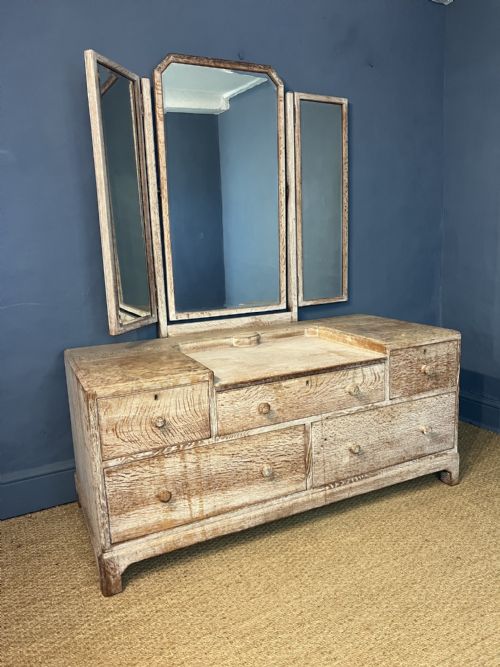
Makers utilised various timber finishes, producing blonde oak, dark polished surfaces, and limed oak treatments. Many examples incorporate clever compartments, pivoting brackets, or brass fittings to adjust the angle of the glass.
Materials and Construction Methods
Makers constructed these frames and stands using solid oak, often enhanced with wood inlay, marquetry, or carved details depending on the prevailing style. Brass and iron brackets, screws, and hinges support the pivoting mirror plates, allowing the glass to tilt.
Selected pieces feature specialist finishes such as limed oak or stencilled decoration applied to the timber surfaces. The glass itself sits securely within rebated wooden frames, sometimes accompanied by small trinket drawers or marble tops on related washstands.
Listings feature oak vanity mirrors and dressing furniture spanning the Victorian period through to Art Deco designs of the 1930s.
Judging Quality in Oak Mirrors and Dressing Pieces
Quality rests upon the crispness of the carving, the selection of figured timber, and the integrity of the joinery. Pieces displaying thoughtful proportions and balanced hardware demonstrate superior workshop practice.
Makers who incorporated original brass adjustable fittings or intricate marquetry elevated the standard of the piece beyond plain utility. The weight and stability of the supporting oak stand determine how firmly the glass holds its position during use.
Heals·Shapland and Petter·James Shoolbred·Wright and Hunter·George Walton·Harris Lebus·Arnott and Co
The Oak Vanity Table Mirror Glossary
- Limed oak
- A wood treatment that leaves a pale, whitish pigment in the open grain of the timber. This finish became popular during the Arts and Crafts and Art Deco periods.
- Shaving stand
- A specialised piece of furniture featuring an adjustable mirror combined with small shelves, drawers, or basins for grooming. These items often date from the Edwardian and Victorian eras.
- Marquetry
- Decorative patterns formed by small pieces of wood veneer fitted into the main timber surface. This technique appears on selected Art Deco and late nineteenth-century pieces.
- Arts and Crafts
- A design movement prioritising honest construction, visible joinery, and local materials. Pieces from this style often display hand-beaten metalwork and exposed tenons.
Oak Vanity Table Mirror: Frequently Asked Questions
How do I mount a vanity mirror?
Most table mirrors rest on their own integrated wooden bases or attach directly to dressing chest uprights using pivot screws. You simply place the unit on a flat surface and tighten the side brackets to secure the glass angle.
Ensure the supporting surface is level and deep enough to bear the weight of the frame. Heavier oak models require sturdy placement to prevent tipping when adjusted.
Are these mirrors original to the dressing tables?
Many dressing chests and tables retain their original pivoting mirrors, matching the oak grain and finish of the base. Surviving original hardware and matching timber patination help confirm the pairing.
Some pieces from the nineteenth and early twentieth centuries have experienced glass replacement over decades of use. Examining the backboards and screw fittings provides clues regarding original assembly.
How do I care for limed oak?
Limed oak surfaces require gentle dusting with a dry or slightly damp cloth to protect the pale pigment within the grain. Avoid harsh chemical cleaners and excessive moisture that might stain the pale timber.
Occasional application of suitable wax helps maintain the sheen of the wood without altering the lighter grain highlights characteristic of the period.
What is an adjustable shaving stand?
A shaving stand is a dedicated grooming station featuring a swivelling mirror mounted on a vertical shaft or small cabinet. Gentlemen used these items in bedrooms or dressing rooms before built-in bathroom vanities became standard.
They often include small platforms for soap, razors, or brushes, making them versatile accent pieces in modern interiors.