
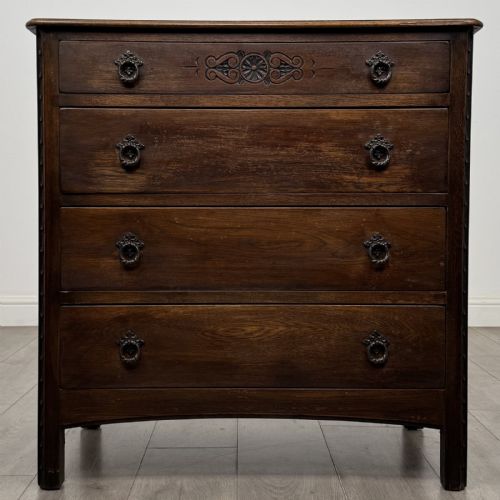
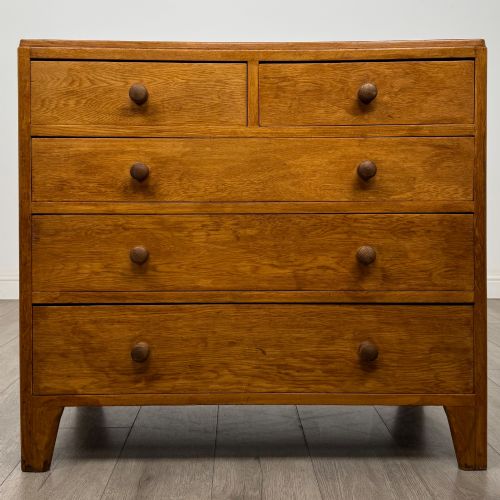
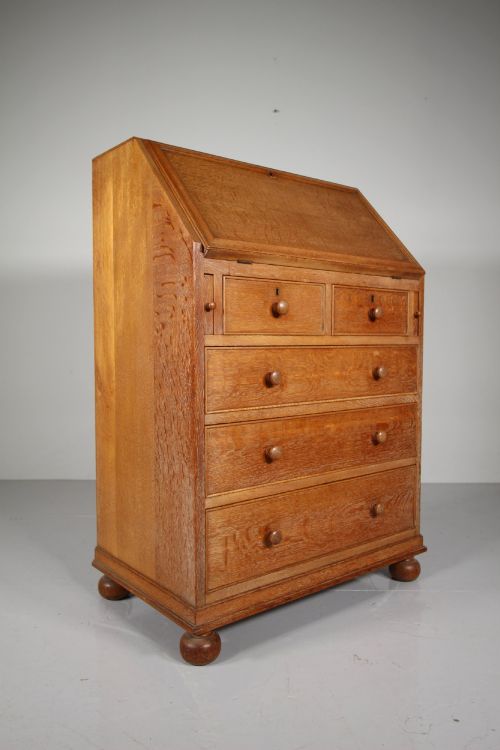
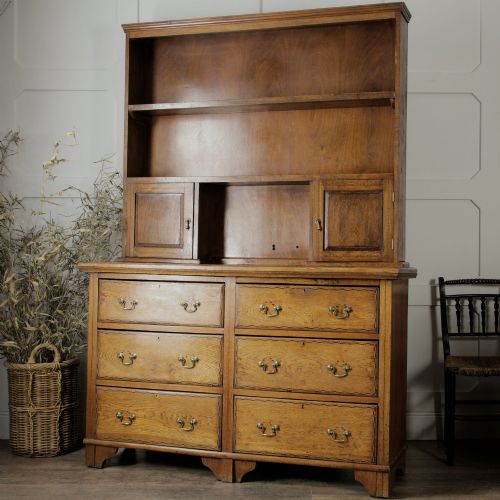
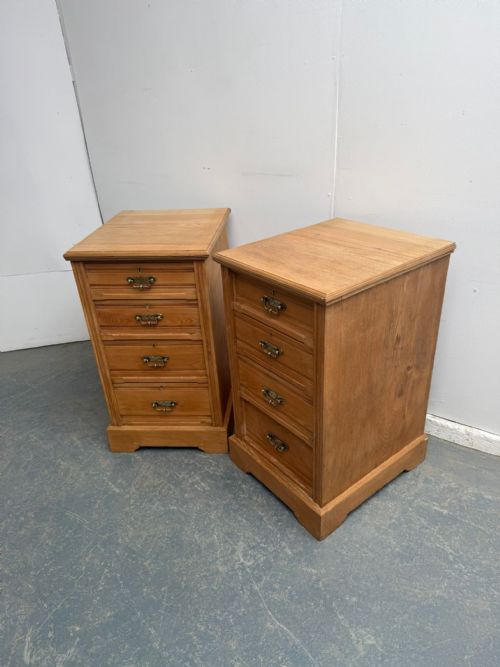
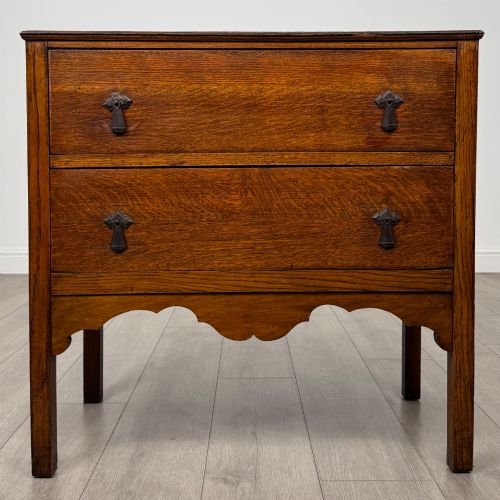
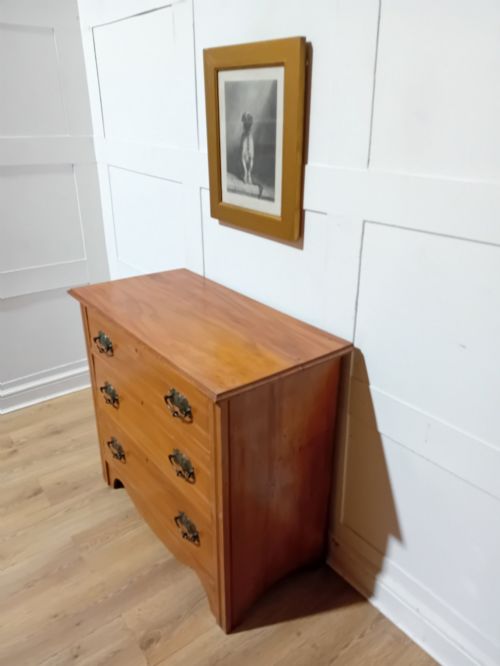
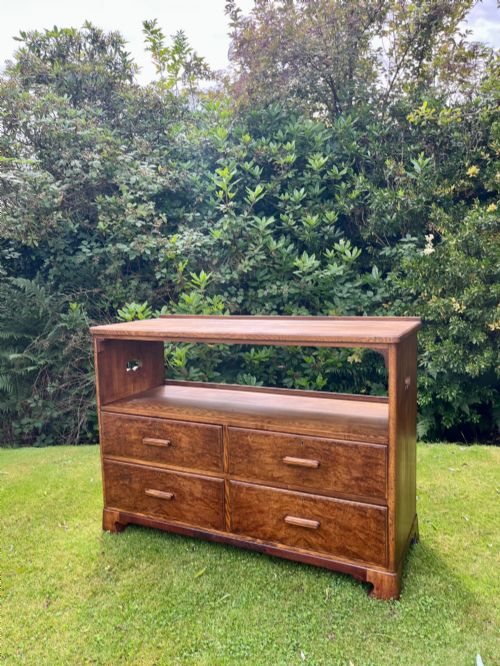
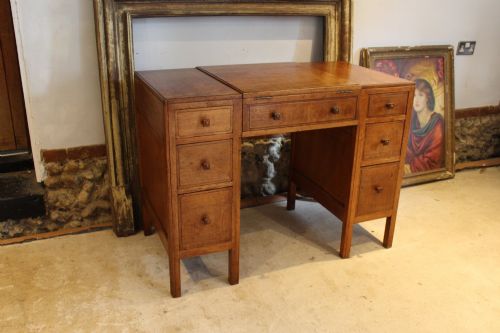

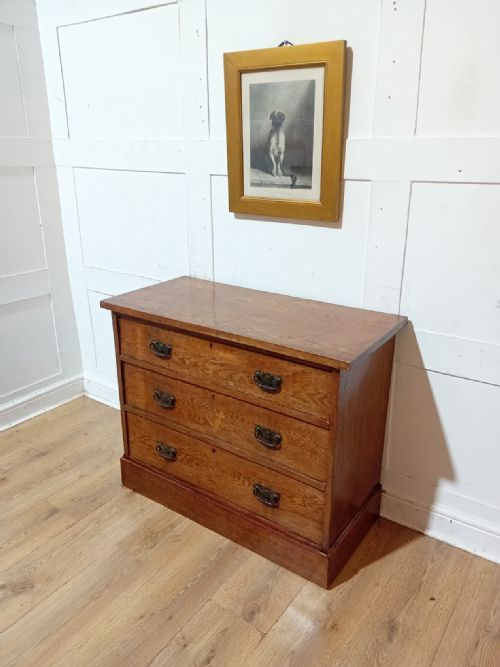

Arts and Crafts Chest Drawers
When you want an arts and crafts chest drawers, you are looking at solid timber construction and thoughtful joinery that prioritize utility alongside honest design.
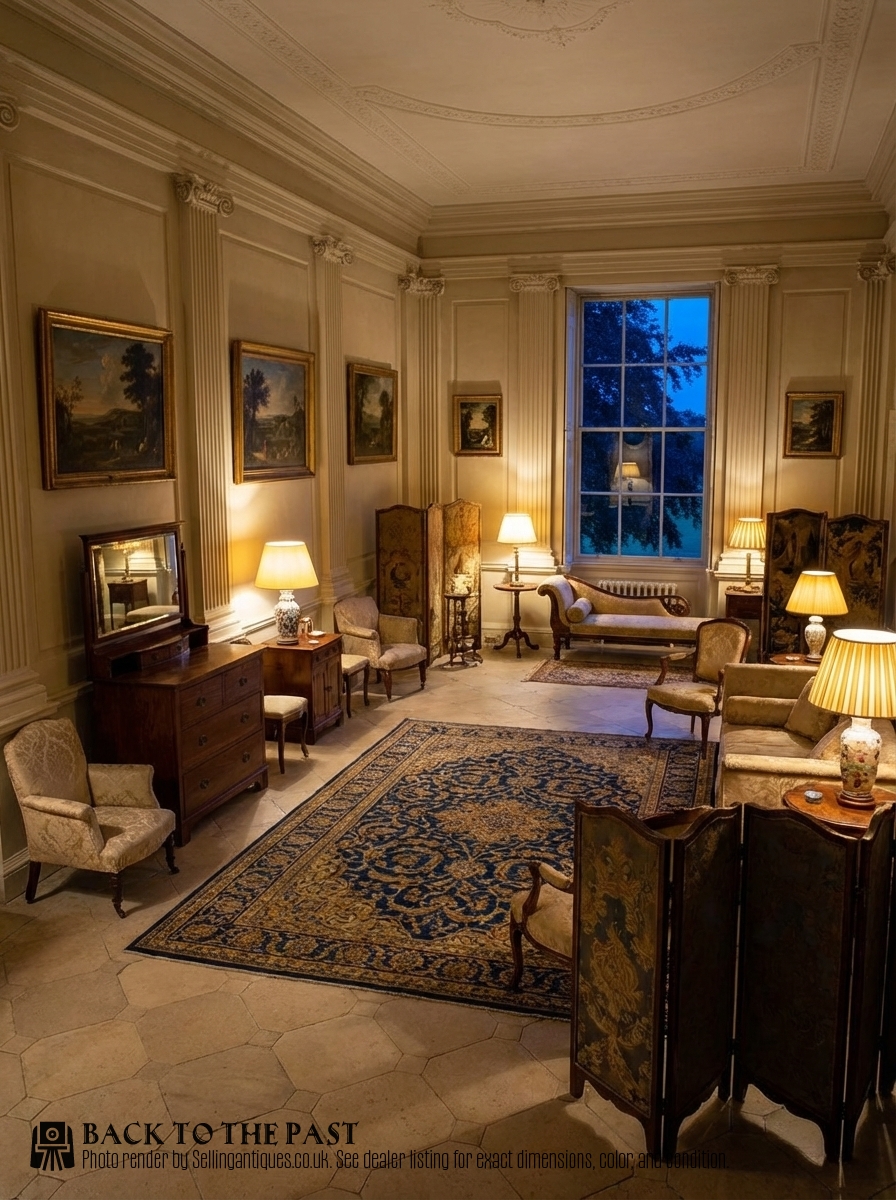
Arts and Crafts Chest Drawers
An arts and crafts chest drawers sits comfortably within domestic spaces, offering sturdy storage through upright drawer configurations. Most examples encountered here originate from the late nineteenth century into the early decades of the twentieth century, reflecting the movement's core years.
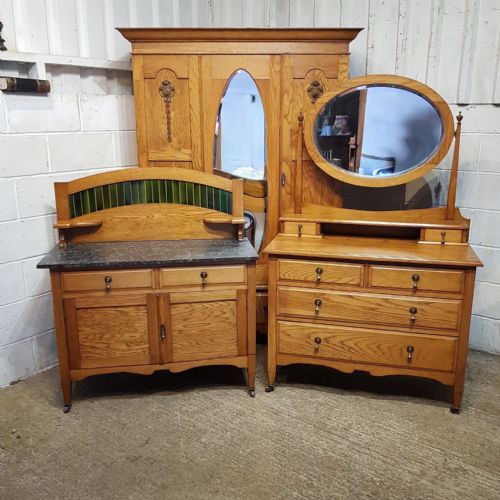
The form appears in various domestic contexts, stretching from standard bedroom chests and dressing chests to specialised collectors' cabinets and bedside lockers. Oak remains the predominant timber, accompanied by ash, satinwood, and walnut in keeping with the vernacular and workshop practices of the period.
How they were made
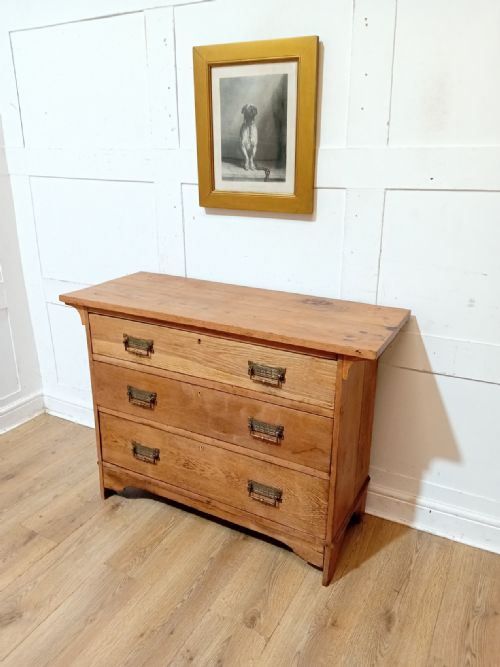
Cabinet makers utilised solid hardwoods such as oak, ash, and walnut, often selecting quartersawn boards to display prominent medullary rays in the grain. Construction relied on exposed dovetail joints for drawers and pegged mortise and tenon frames for structural stability.
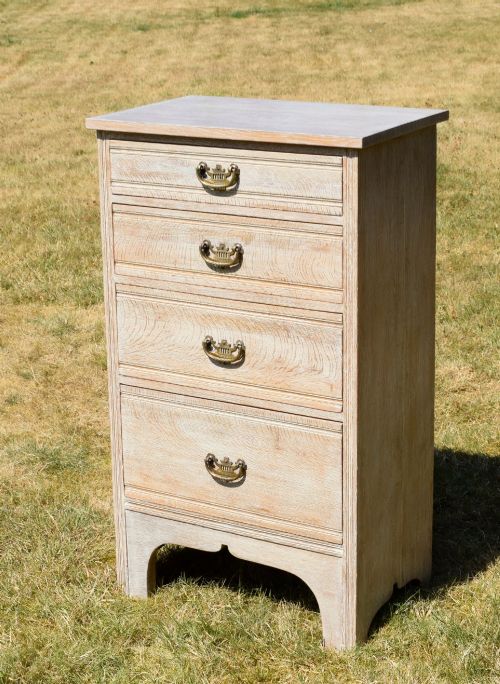
Hardware played an integral structural and decorative role, with beaten copper, brass, and iron drop handles or strap hinges secured by hand-hammered rivets. Finishes tended toward waxed surfaces, limed treatments, or green staining rather than heavy varnishes, allowing the natural texture of the wood to remain visible.
Some miniature apprentice chests allowed young cabinet makers to demonstrate their dovetailing mastery on a small scale.
What varies in quality
The division between standard commercial production and exceptional workshop output rests upon the selection of timber and the precision of hand-cut joinery. Superior pieces display carefully chosen grain matching across the drawer fronts and thoughtful integration of metalwork by named designers or progressive guilds.
Simpler factory items rely on standard machine-cut joints and simpler hardware, whereas pieces from notable makers exhibit refined proportions, specialised finishes like limed oak or green staining, and harmonious integration of brass handles.
Harris Lebus·Heal and Son·Shapland and Petter·George Walton·Whytock and Reid·Peter Waals·Gregory and Co
The Arts and Crafts Chest Drawers Glossary
- Quartersawn oak
- Timber cut radially to the tree ring, producing a distinctive flecked grain pattern highly prized by cabinet makers of this movement.
- Dovetail joint
- An interlocking wood joint utilising wedge-shaped fingers, commonly left visible on drawer construction to demonstrate structural honesty.
- Limed oak
- A wood finishing technique involving a white pigment rubbed into the open grain of oak to create a pale, softened appearance.
- Cotswold School
- A regional design grouping associated with handmade furniture traditions, emphasising vernacular forms and unadorned solid timber.
- Dressing chest
- A lower chest of drawers fitted with an attached mirror and small jewellery drawers, serving as a multifunctional bedroom piece.
Arts and Crafts Chest Drawers: Frequently Asked Questions
How do I date an arts and crafts chest?
Dating relies upon observing construction traits, timber choices, and handling hardware styles. Pieces from the peak movement years generally feature hand-beaten metalwork and quartersawn oak.
Later examples from the interwar period often display simpler machine-cut elements and lighter finishes like limed oak. Comparing handles and drawer linings against known workshop patterns helps narrow the decade.
Are these chests made of solid wood?
Most pieces utilise solid hardwoods throughout the frame, drawer fronts, and sides. Oak, ash, and walnut appear frequently in heavy board construction.
Secondary timbers such as pine sometimes appear inside drawer carcases or back panels. Construction methods prioritize structural honesty using real timber rather than veneered deal substrates.
What is a dressing chest?
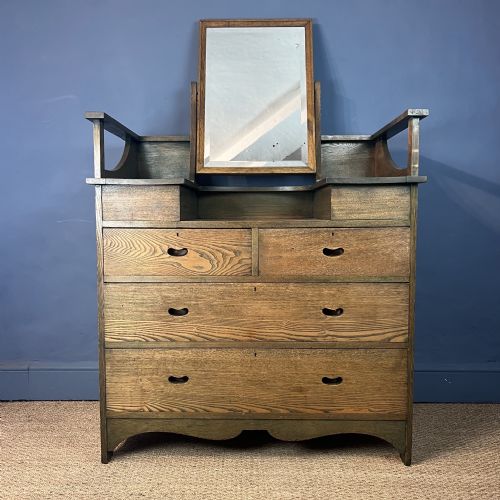
A dressing chest combines a standard storage chest with an integrated upright mirror and smaller trinket drawers. It served as a practical bedroom staple for grooming.
These pieces often include small platforms or ledges on the mirror supports for everyday accessories. They reflect the movement's focus on multifunctional domestic furniture.
How do I care for a waxed oak finish?
Waxed surfaces require occasional feeding with a traditional beeswax polish to prevent the timber from drying out. Avoid placing these chests near direct heat sources or strong sunlight.
Regular gentle dusting with a soft dry cloth maintains the sheen without stripping the original patina. Moisture should be wiped away promptly to protect the wax barrier.