


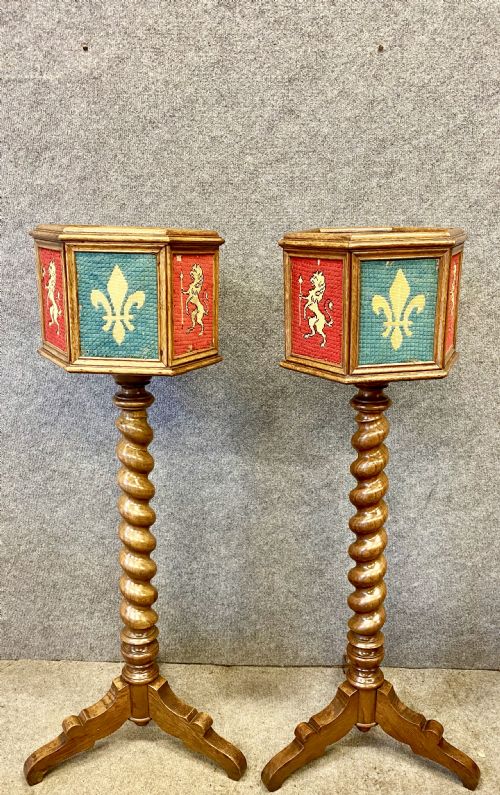

Oak Torchere Stand
An oak torchere stand is a tall, slender display piece designed to elevate a lamp, plant, or candle.
Oak Torchere Stand
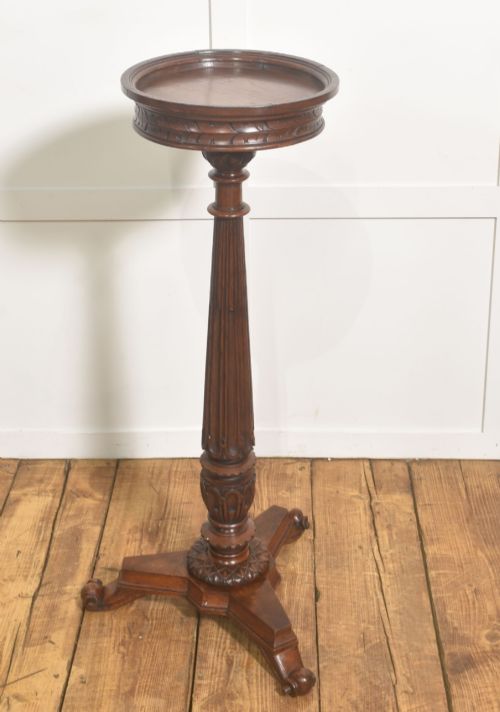
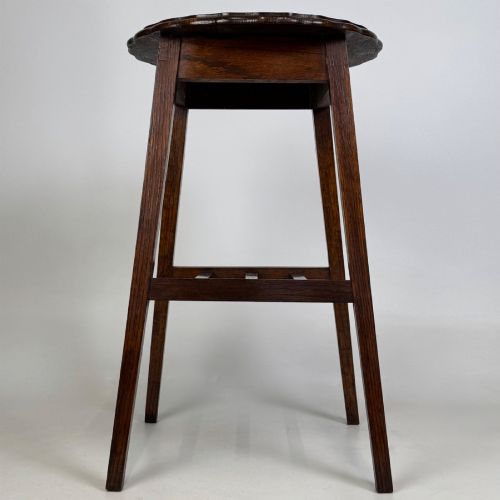
An oak torchere stand is a tall, slender furniture form designed to elevate a lamp, plant, candle, or small decorative object above the floor. When you search for an oak torchere stand, you encounter pieces that range from simple column supports to heavily carved Revival examples.
The pieces on this page span several centuries, with 18th century, 19th century, Edwardian, and Victorian periods all well represented. Alongside straightforward torchere columns, you find related forms such as plant stands, candle stands, and side tables.
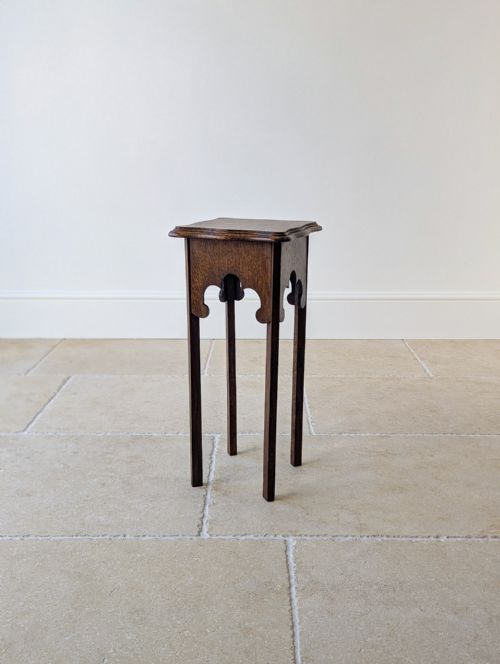
The stylistic variety stretches from Georgian and Chippendale style through to Arts and Crafts, Gothic, and Jacobean Revival. You are most likely to meet 19th century carved wood examples or Edwardian oak plant stands when browsing this selection.
How they were made
Makers utilised solid oak, burr oak, and related hardwoods to construct these tall supports, often relying on dense timbers to ensure stability on a narrow base. Grain patterns and natural figuring play a major role in the visual impact of the wood.
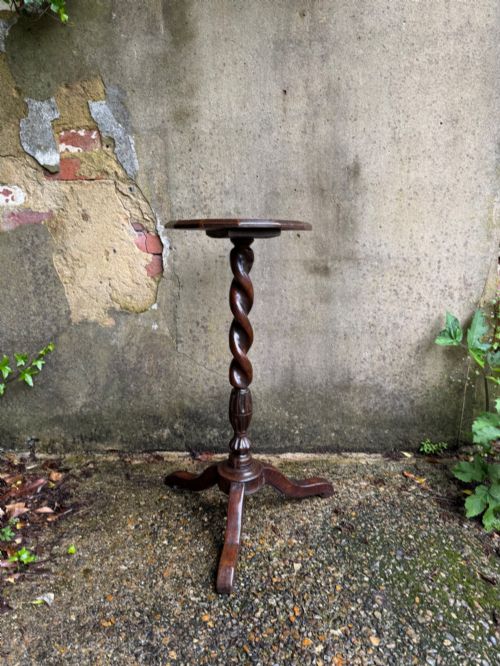
Construction techniques include turned spiral pillars, detailed hand carving, and fitted multi-tier platforms. Selected examples incorporate painted surfaces or inset needlepoint tapestry to complement the primary timber.
Several Victorian and Edwardian stands double as smokers' stands, equipped to hold pipes, ash pots, and matches beside your favourite armchair.
What varies in quality
Quality in an oak torchere stand lies in the crispness of the carving, the weight and balance of the base, and the structural integrity of the long column. Pieces with hand-carved caryatids, linenfold panels, or distinct regional movement show a higher level of workshop skill.
Proportion and stability separate standard utility pieces from finer examples designed as formal drawing room furnishings. The choice of quarter-sawn oak or figured burr timber elevates the finish significantly.
The Oak Torchere Stand Glossary
- Torchere
- A tall, freestanding stand originally intended to hold a torch or candle, later adapted for lamps and vases. They are characterised by a slender shaft and a small top platform.
- Caryatid
- A sculpted female figure serving as an architectural support instead of a column or pilaster. You encounter them carved into the stems of heavier 19th century stands.
- Burr oak
- A growth deformity in the timber that produces intricate, swirling grain patterns highly valued for decorative table tops and display surfaces. It brings rich texture to the wood.
- Arts and Crafts
- A design movement of the late 19th and early 20th centuries emphasising honest construction, plain surfaces, and visible craftsmanship. Pieces from this tradition avoid excessive ornamentation.
Oak Torchere Stand: Frequently Asked Questions
What is an oak torchere stand used for?
These stands serve to elevate items such as table lamps, potted plants, bronze figures, or flower vases above floor level to draw the eye upward.
Historically, similar tall supports held candles for illumination before electricity, but domestic interiors now utilise them primarily for display.
How do I date an oak torchere stand?
Dating relies on identifying stylistic markers such as Gothic Revival tracery, Arts and Crafts simplicity, or Georgian proportions, combined with timber characteristics.
Examining the construction methods, joint types, and tool marks on the underside of the top platform also helps establish the period.
Are these stands stable enough for heavy items?
Most stands feature weighted or wider tripod and pedestal bases designed to balance the height, but narrow columns require sensible placement.
Lighter plant stands and candle supports suit delicate items, whereas heavier hardwood stems securely hold standard table lamps.