


Brown Oak Jardiniere Stand
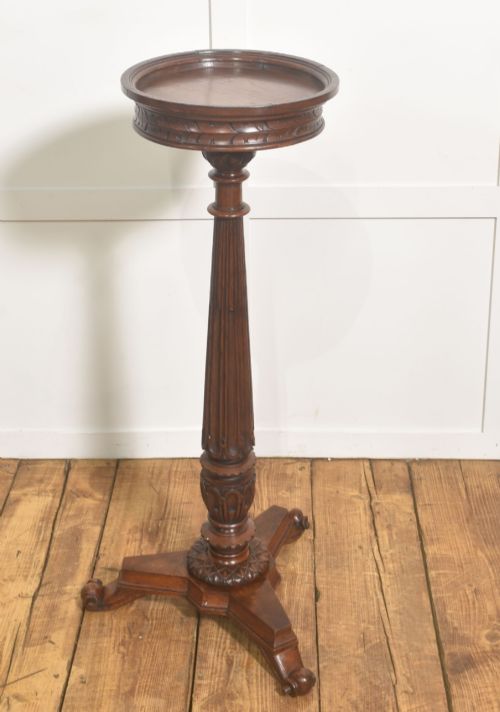
A brown oak jardiniere stand brings rich timber and upright form into a room, holding greenery or lamps with understated British presence.
Brown Oak Jardiniere Stand
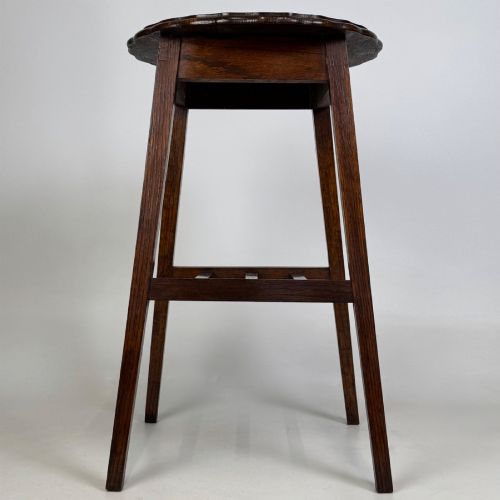
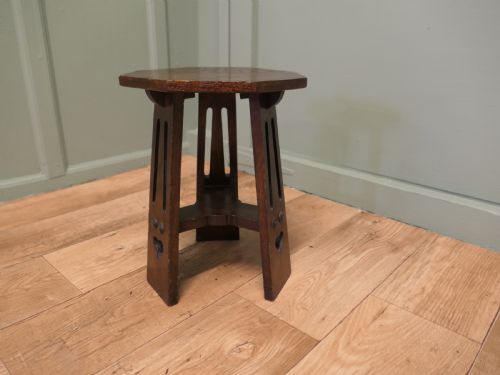
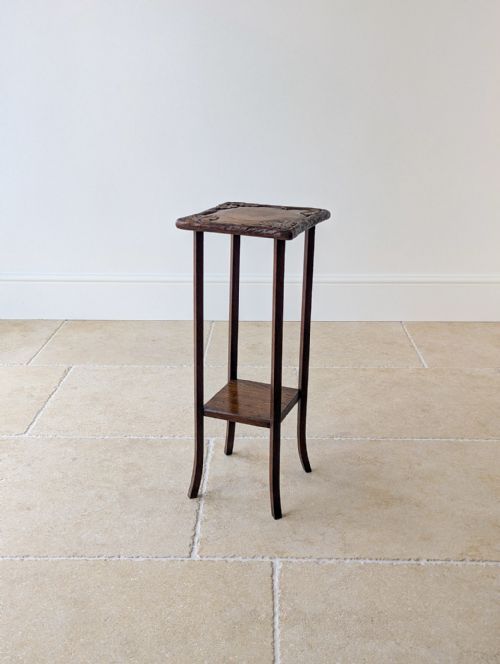
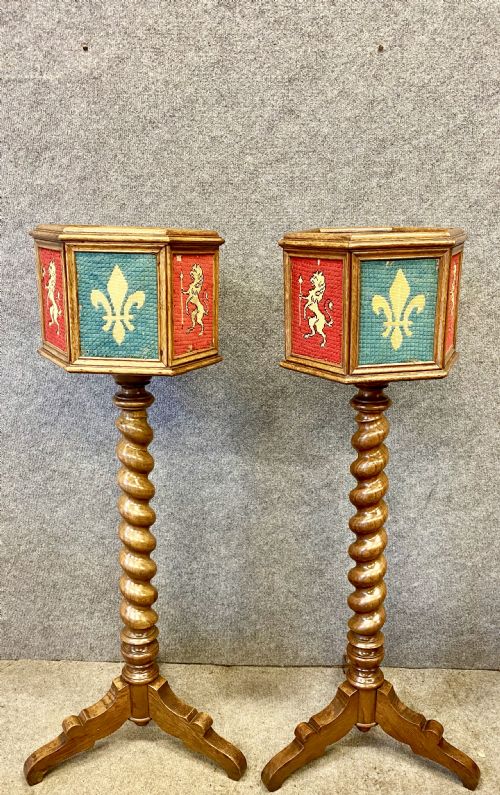
A brown oak jardiniere stand serves primarily as a sturdy pedestal for heavy plants, palms, or ceramic planters. These pieces range from simple round tops to octagonal designs and two-tier configurations.
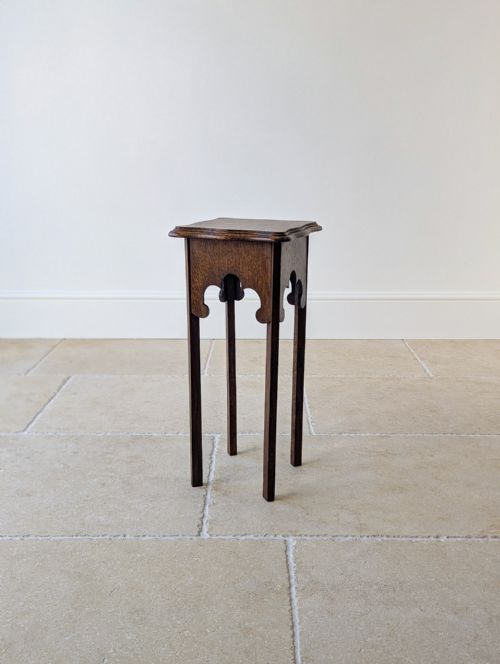
The pieces on this page span the Edwardian era, the nineteenth century, and the nineteen-twenties. Common styles include Arts and Crafts, Gothic Revival, and Jacobean Revival.
Makers utilised durable English timber, often combining the warm grain of brown oak with metalwork details such as brass banding or coopered staves.
How they were made
Carpenters constructed these stands using solid oak, shaping timber into turned barley twist legs, chamfered supports, or octagonal display surfaces. Many examples feature pegged joinery and sturdy tiers designed to bear the weight of damp soil and heavy ceramic pots.
Metal components played a structural and decorative role, particularly in coopered barrel planters and brass-bound vessels. Bands of brass secured the wooden staves, while drop handles or riveted seams finished the pieces.
Listings feature oak, brass, and needlepoint tapestry across Edwardian and nineteenth-century periods, alongside Arts and Crafts and Gothic Revival styles.
What varies in quality
Quality rests on the selection of the timber and the crispness of the woodworking. A finer brown oak jardiniere stand displays rich figuring in the grain, balanced proportions, and substantial weight rather than thin veneers.
Design ambition distinguishes standard production items from distinguished workshops. Pieces displaying hand-carved details, thoughtful brass binding, or distinctive regional forms like barley twist supports command greater attention from collectors.
Liberty and Co
The Brown Oak Jardiniere Stand Glossary
- Jardiniere stand
- A tall piece of furniture designed specifically to hold a decorative plant pot or bowl. These stands elevate greenery to eye level.
- Coopered
- A method of construction using curved wooden staves bound tightly together by metal hoops, similar to barrel-making. This technique is common in planters.
- Barley twist
- A type of turning where the wood is shaped into a continuous spiral resembling a twisted rope. It appeared frequently on table legs and plant stands during the early twentieth century.
- Arts and Crafts
- A design movement valuing hand craftsmanship, simple vernacular forms, and visible construction over industrial mass production. Pieces from this tradition often favour honest oak construction.
Brown Oak Jardiniere Stand: Frequently Asked Questions
How were these stands used originally?
Victorians and Edwardians used these stands in drawing rooms and halls to bring large ferns and potted palms into the living space.
Many designs incorporated metal linings or waterproof inserts to protect the timber from moisture damage during watering.
How do I care for oak and brass?
Protect the wood surface from standing water by using saucers beneath plant pots and wiping away spills immediately.
Feed the oak periodically with suitable wax and clean brass bands gently without harsh chemical abrasives.
Can these stands hold lamps?
Many plant stands double effectively as occasional tables or lamp stands due to their sturdy flat tops and stable tripod or four-leg bases.
Edwardian and Arts and Crafts examples often served multiple domestic purposes depending on the room's needs.