


Arts and Crafts Jardiniere Stands
These arts and crafts jardiniere stands bring structural integrity and earthy textures to any interior displaying botanical specimens.
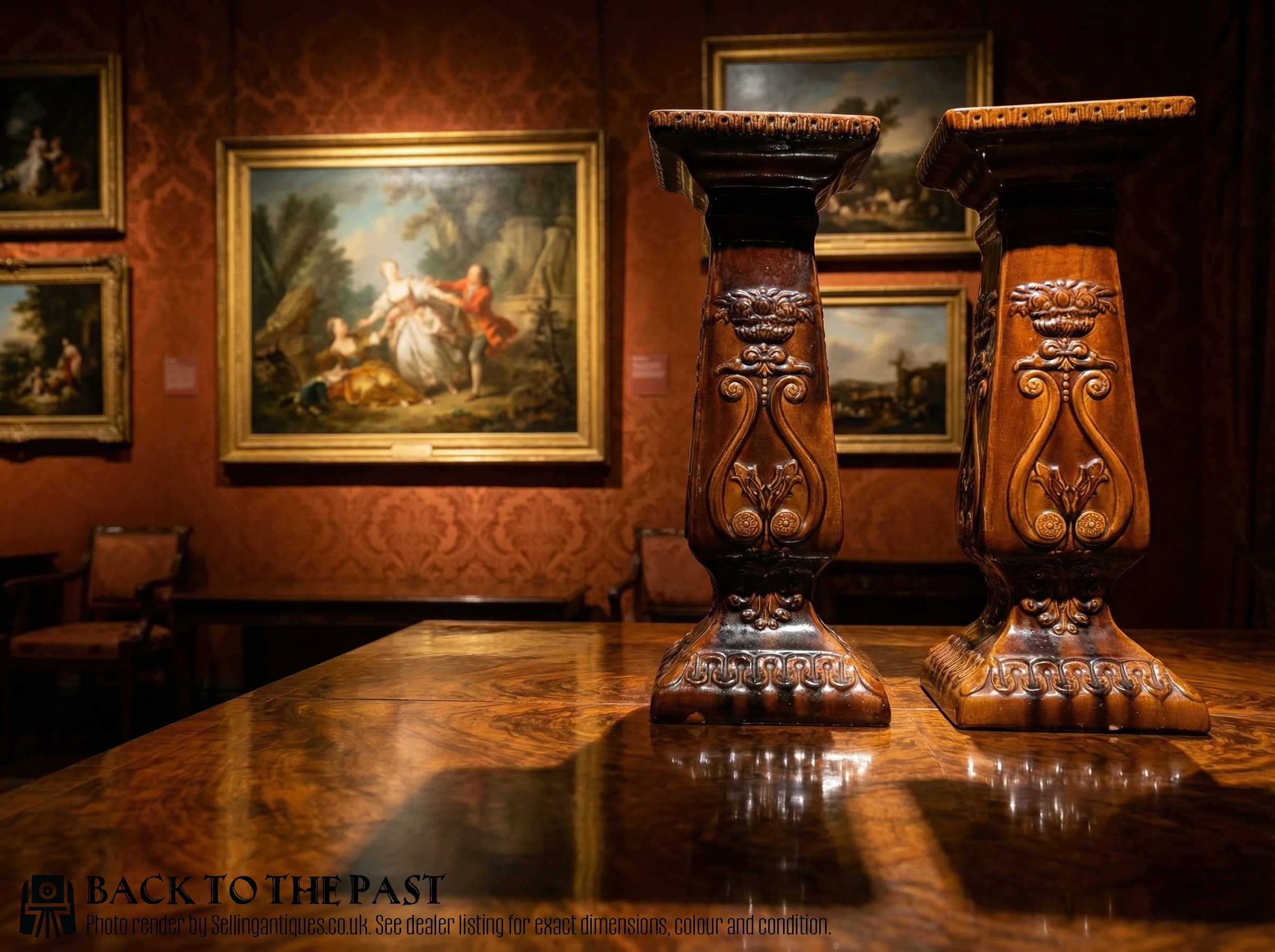
Arts and Crafts Jardiniere Stands
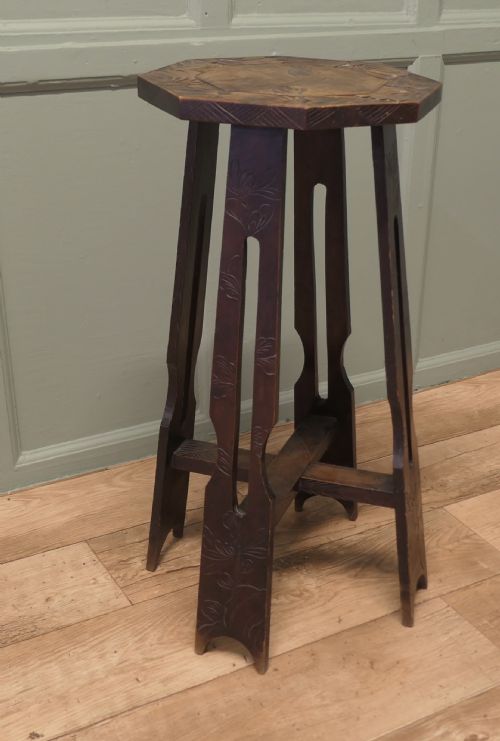
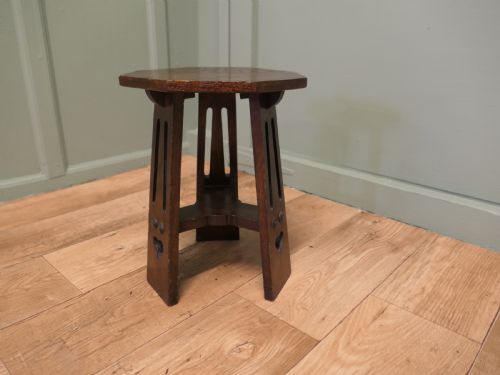
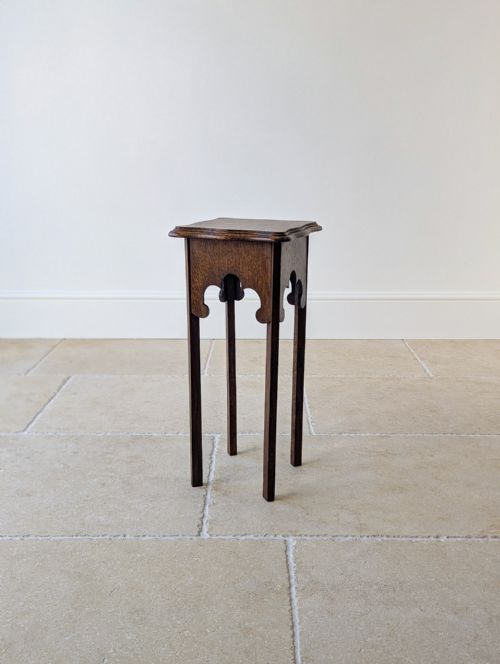
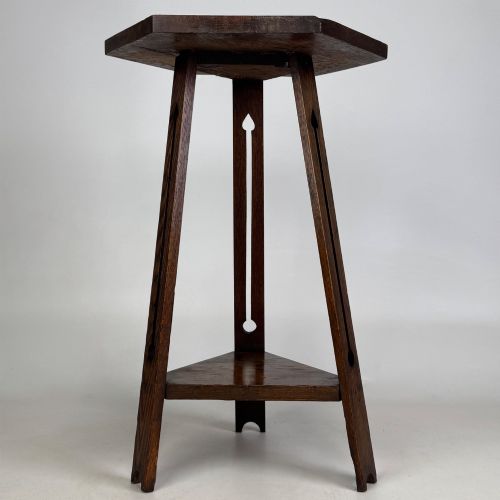
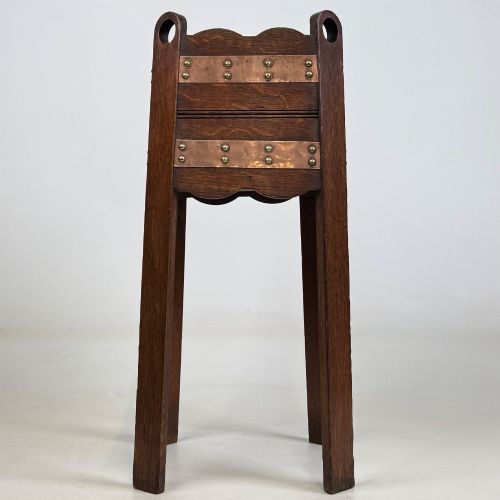
Arts and crafts jardiniere stands encompass functional plant stands, jardinieres, planters, side tables, occasional tables, and display tables designed to hold flora. The selection leans heavily towards sturdy oak structures, often augmented with metal elements.
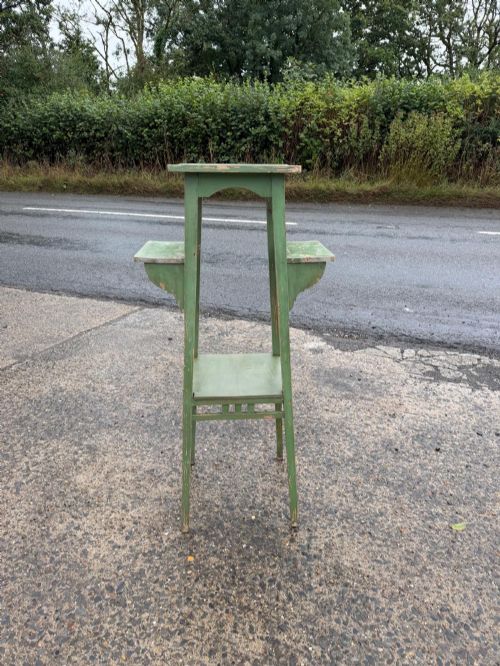
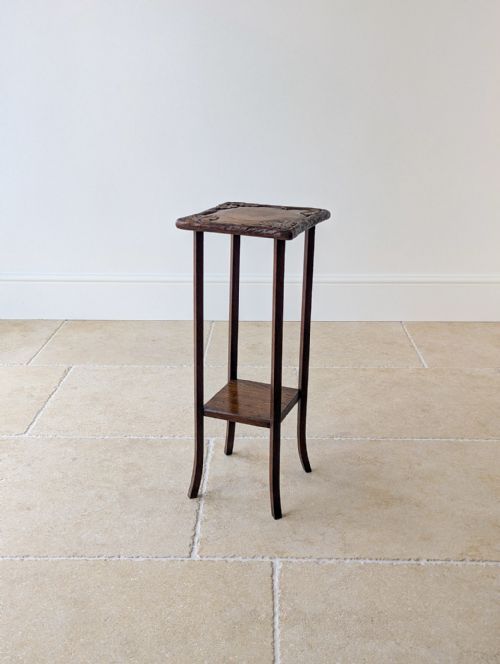
Most examples originate from the Victorian and Edwardian periods, stretching from the late nineteenth century into the early twentieth century. Buyers will encounter single tall pedestals as well as two-tier variations suited for holding pots and lamps alike.
Forms vary from octagonal and square tabletops to round pedestals, frequently featuring dedicated brass or copper liners for the plants. French interpretations and Japanese carved pieces also appear alongside domestic oak work.
Materials and Construction
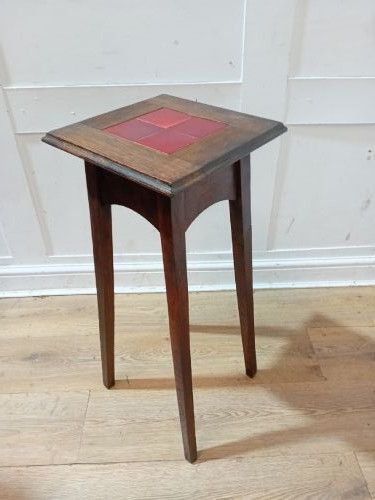
Ceramic components are represented through glazed earthenware and specialised art pottery. Metal elements are often incorporated as bindings, liners, or independent pots resting on stands.
Some stands are caught between identities, serving as a plant pedestal in daylight and a lamp table by evening.
Assessing the Pieces
Quality rests in the fidelity of the construction and the integration of mixed materials. Pieces combining heavy oak with hand-hammered copper or brass liners show particular design ambition.
The choice of finish and the preservation of original surfaces dictate the visual impact. Original paint, rich golden oak tones, and intact ceramic pottery elevate specific examples.
Liberty of London·Liberty and Co·Burmantofts Art Pottery
The Arts and Crafts Jardiniere Stands Glossary
- Jardiniere
- An ornamental pot or stand for holding plants or flowers. These vessels often sit atop dedicated pedestals or form an integrated unit with a supporting table.
- Planter
- A receptacle designed to hold growing plants. In this context, they frequently feature metal linings to protect the surrounding woodwork from moisture.
- Pedestal
- A tall, freestanding support structure for a vase, sculpture, or plant. They provide height and focus within a room.
- Two-tier
- A furniture design incorporating a main surface and a secondary lower shelf. This provides additional stability and display space.
Arts and Crafts Jardiniere Stands: Frequently Asked Questions
What is a jardiniere stand?
A jardiniere stand is a piece of furniture specifically designed to elevate potted plants and floral arrangements within a room.
These stands provide both a stable platform and a decorative element, often incorporating materials like oak, brass, and copper.
How do I use these stands at home?
They serve primarily to hold potted plants, ferns, or floral bowls in living spaces and hallways.
Certain variations double as occasional tables or lamp tables, offering surface space for household items alongside botanical displays.
How do I date an Edwardian plant stand?
Edwardian pieces generally date from the early twentieth century, spanning roughly from 1901 to 1910. They often share stylistic traits with late Victorian work but lean towards lighter oak construction.
Examining the construction methods, joinery, and accompanying materials helps anchor the piece to this period.
What materials are common in these stands?
Oak is the predominant wood used across the majority of these pieces. Brass and copper also feature heavily as bindings, pots, or liners.
Additional materials include wrought iron, pine, glazed earthenware, and ceramic art pottery.