


Ceramic Column Stands
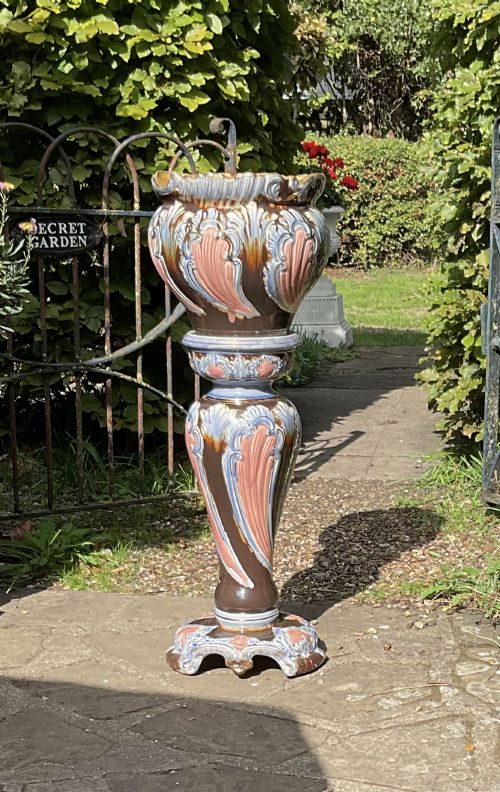
Ceramic column stands are striking architectural supports for plants and urns, bringing height and sculptural form to a room.
Ceramic Column Stands
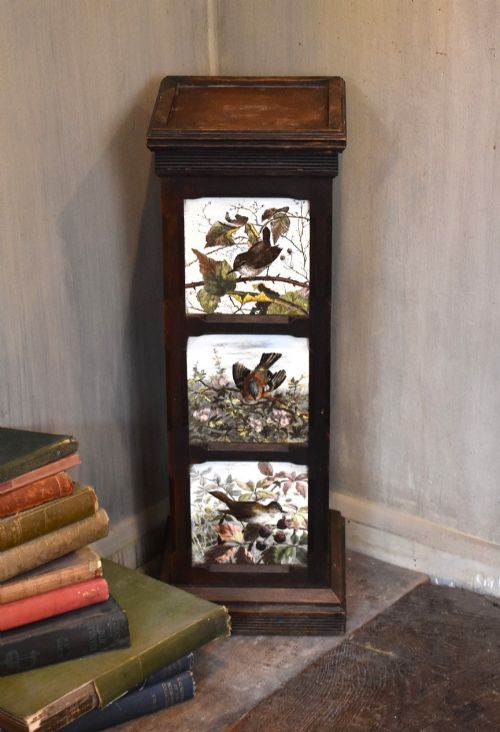
Ceramic column stands take the form of tall pedestals, plant stands and jardinière supports designed to elevate heavy pots and decorative vessels. You will most frequently encounter Victorian and Edwardian examples spanning the late nineteenth century, created to hold indoor palms or floral displays.
These vertical pieces draw on Neoclassical, Aesthetic Movement and Arts & Crafts design, ranging from clean geometric columns to rustic naturalistic forms. Alongside standalone pedestals, the selection includes matched pairs of jardinieres on stands and specialised umbrella holders.
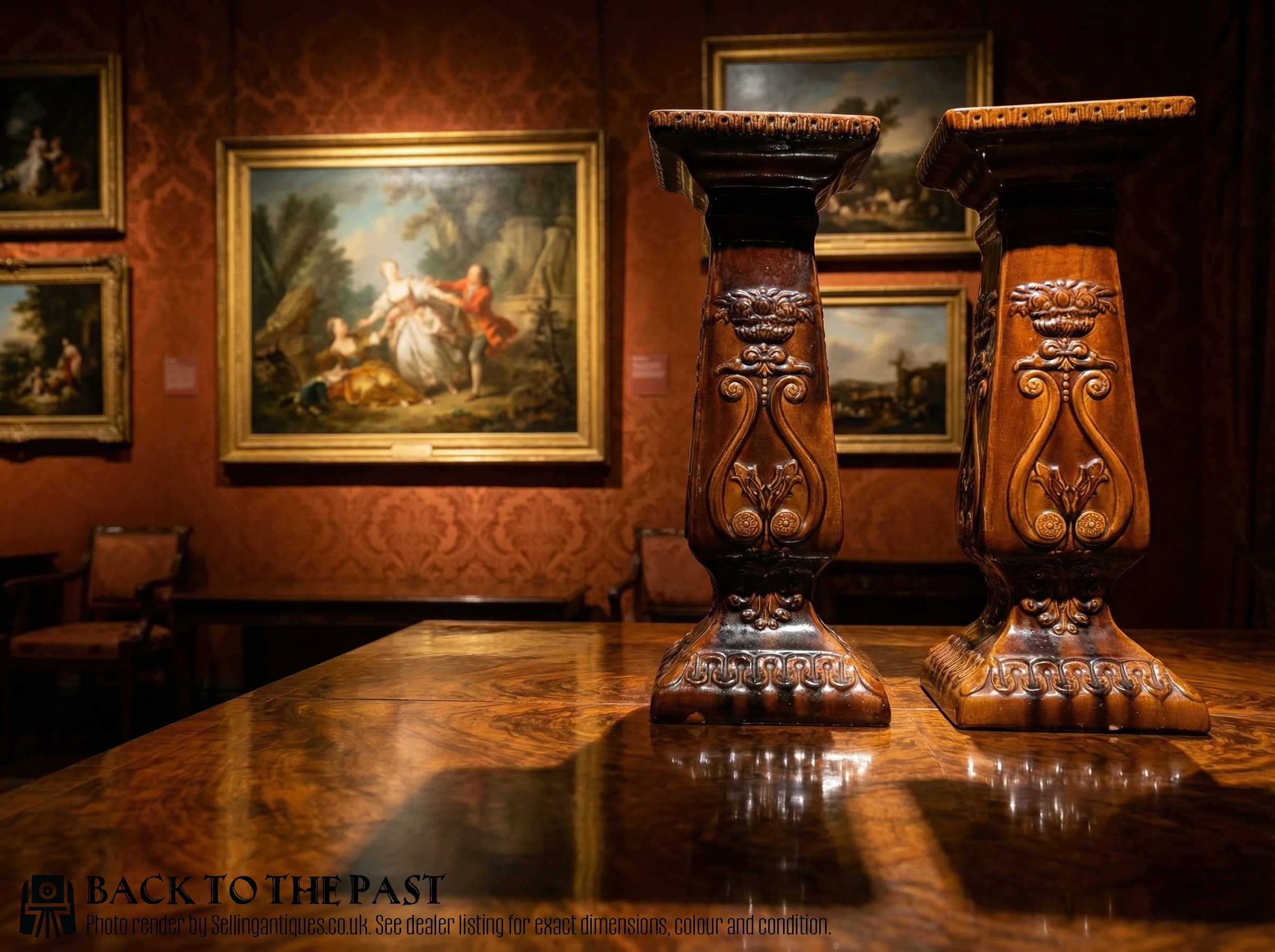
Makers utilised sturdy earthenware bodies capable of supporting heavy weights while providing a smooth canvas for rich decorative glazes. Their presence in a hallway or conservatory immediately establishes a sense of period weight and architectural structure.
How they were made
Potters shaped these tall forms in sections using durable earthenware clays, throwing or moulding the thick columns to ensure structural stability under load. The heavy bodies required careful drying and firing to prevent warping across their considerable height.
Makers applied specialised majolica, faience and jasperware glazes over the ceramic body before a final high-temperature kiln firing. This process produced deep colour saturation and protective glossy surfaces ranging from mottled greens to vivid yellows.
Victorian households expected decorative ceramics to hold everything from parlor palms to rain-soaked umbrellas.
What varies in quality
Quality rests in the crispness of the moulded detail and the ambition of the glaze work, distinguishing mass production from ambitious studio output. Sophisticated multi-coloured majolica and intricate Aesthetic Movement tiling demand greater technical mastery from the pottery.
Proportion and weight distribution also separate fine columns from simpler utility pieces, ensuring the stand remains balanced when supporting a heavy ceramic bowl.
Burmantofts Art Pottery·Woodlesford Art Pottery·Wedgwood
The Ceramic Column Stands Glossary
- Majolica
- A type of earthenware coated with an opaque tin glaze and painted with metallic oxide colours. This technique produces vibrant, glossy surfaces found on many nineteenth-century pedestals.
- Faience
- A term for tin-glazed earthenware, often associated with decorative pottery and architectural ceramics from Victorian art potteries. It provides a smooth base for rich surface decoration.
- Jasperware
- A fine-grained, unglazed stoneware developed with distinct contrasting coloured reliefs. Wedgwood utilised this ceramic body for decorative candlesticks and classical motifs.
- Jardinière
- A large ornamental pot or stand designed to hold live plants or floral arrangements. They frequently form the upper portion of a matching ceramic column stand.
Ceramic Column Stands: Frequently Asked Questions
What were ceramic column stands used for?
These tall ceramic supports held heavy indoor plants, ferns and ornamental jardinieres in Victorian and Edwardian reception rooms and conservatories.
By raising greenery off the floor, they created vertical interest and protected wooden floorboards from moisture.
How do I date a ceramic pedestal?
Dating relies on stylistic clues such as Aesthetic Movement geometric tiles or Arts & Crafts motifs combined with the type of glaze.
Nineteenth-century examples often display deep majolica finishes, while Edwardian pieces lean towards lighter or more naturalistic forms.
Are these stands sturdy enough for heavy pots?
Potters designed these thick earthenware columns specifically to bear substantial weight without tipping or buckling under pressure.
Their wide bases provide the necessary centre of gravity for heavy glazed planters.
How do I style a column stand at home?
Place a standalone pedestal in an empty corner or hallway to introduce architectural height and structural interest.
They work best paired with trailing plants or large ceramic bowls that echo the era of the stand.