
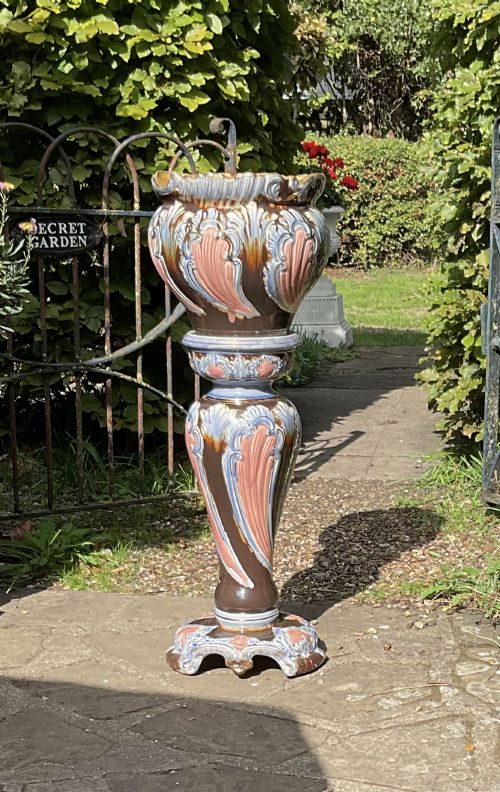


Pottery Jardiniere Pedestals
Pottery jardiniere pedestals bring height and sculptural presence to interior planting, offering sturdy ceramic foundations designed to elevate botanical displays.
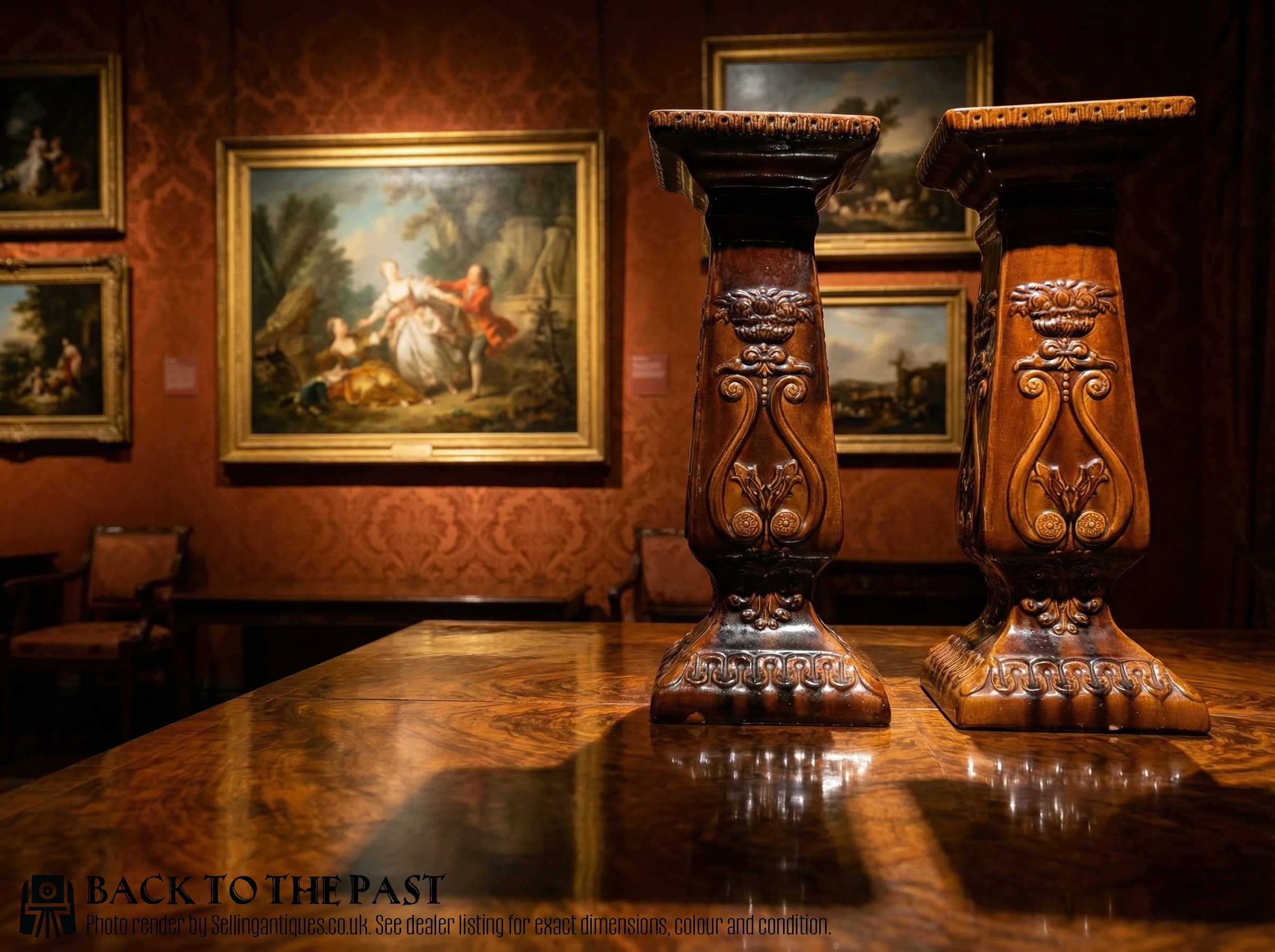
Pottery Jardiniere Pedestals
When you search for pottery jardiniere pedestals, you find matched or associated pairs and single columns designed to support heavy plant vessels. These objects combine architectural height with decorative ceramic surfaces, serving as substantial indoor plant stands.
The pieces on this page span the late nineteenth century into the twentieth century, encompassing Victorian, Edwardian, and Art Deco eras. You encounter forms ranging from rustic naturalistic tree trunks to sleek geometric columns.
Most examples function as two-part assemblies consisting of a base pedestal and a matching bowl or jardiniere top. Forms cross over with plant stands and side tables depending on the specific maker's design intent.
How they were made
Potters shaped these large vertical forms using earthenware, stoneware, and faience bodies capable of supporting significant weight. Thick walls and weighted bases provided the necessary stability for tall columns.
Surface decoration relies heavily on coloured glazes, majolica techniques, and specialised lustre finishes applied before firing. Enamel details and textured clay create the naturalistic bark, leaf, and mythological motifs seen across the pieces.
Listings feature earthenware, stoneware, and faience materials spanning Victorian and Art Deco stylistic periods.
What varies in quality
The ambition of the modelling and the complexity of the glaze determine the calibre of a pedestal. Intricate hand-sculpted details and rich, multi-toned majolica or lustre finishes separate standard production from exceptional studio output.
The survival of the original matching pair or the complete two-part assembly dictates the integrity of the piece. Crispness in the earthenware moulding and depth in the ceramic glazes indicate superior kiln work.
Burmantofts Art Pottery·Clement Massier·Julius Dressler
The Pottery Jardiniere Pedestals Glossary
- Jardiniere
- A large ornamental pot or bowl used for holding plants or flowers. These vessels sit atop pedestals or directly on the floor.
- Majolica
- A type of earthenware coated with an opaque white tin glaze and painted with metallic oxide colours. This technique produces vibrant, glossy surfaces.
- Faience
- Tin-glazed earthenware produced in Europe, often featuring hand-painted botanical or figurative designs. The method creates a smooth, absorbent ceramic base.
- Lustre glaze
- A metallic film applied to pottery to create an iridescent, shimmering surface effect. This finish catches light differently depending on the viewing angle.
- Slaterware
- A ceramic texturing technique involving lace or fabric pressed into damp clay before firing. The resulting rough surface mimics natural textures.
Pottery Jardiniere Pedestals: Frequently Asked Questions
Are jardiniere pedestals waterproof?
Most glazed earthenware and stoneware bowls hold water adequately for potted plants inside protective liners. However, porous historic clays can seep moisture over time.
Using a modern plastic liner inside the ceramic jardiniere protects the antique interior from standing water and mineral deposits.
How do I match a jardiniere to a pedestal?
Matching relies on corresponding glaze colours, clay bodies, and proportional diameters at the contact point. Associated pairs often share decorative motifs like naturalistic foliage or geometric mouldings.
Checking the footprint and weight capacity ensures the bowl sits securely on the column without wobbling.
Can these stand outdoors?
Historic earthenware and faience pieces generally cannot withstand freezing winter temperatures outdoors. Frost causes trapped moisture within the ceramic body to expand and crack the glaze.
Keep these pedestals inside sheltered indoor spaces or conservatories to preserve the historic glazes and structural clay.
How do I clean glazed ceramic pedestals?
Dusting with a soft, dry cloth removes everyday debris from moulded crevices and textured surfaces. Avoid abrasive scourers that scratch historic glazes.
For stubborn grime, use a damp cloth with mild soap, drying the ceramic thoroughly immediately afterward.