


Glazed Pottery Pedestals
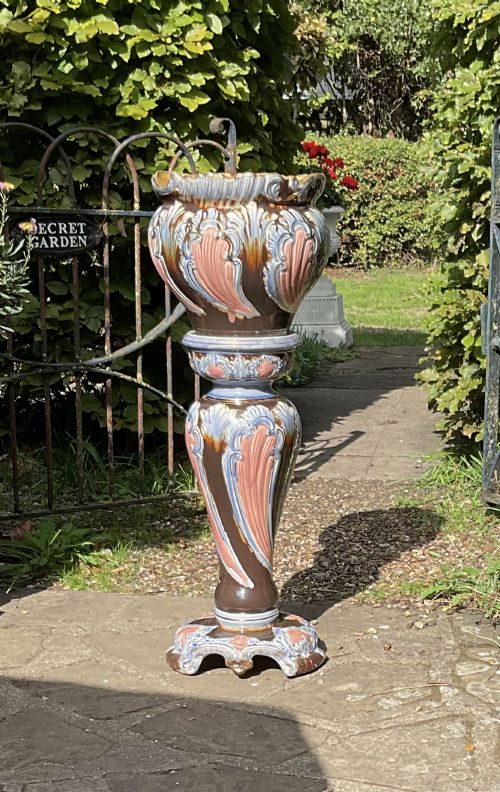
These glazed pottery pedestals elevate plants and sculpture, bringing rich colour and historic presence to a room.
Glazed Pottery Pedestals
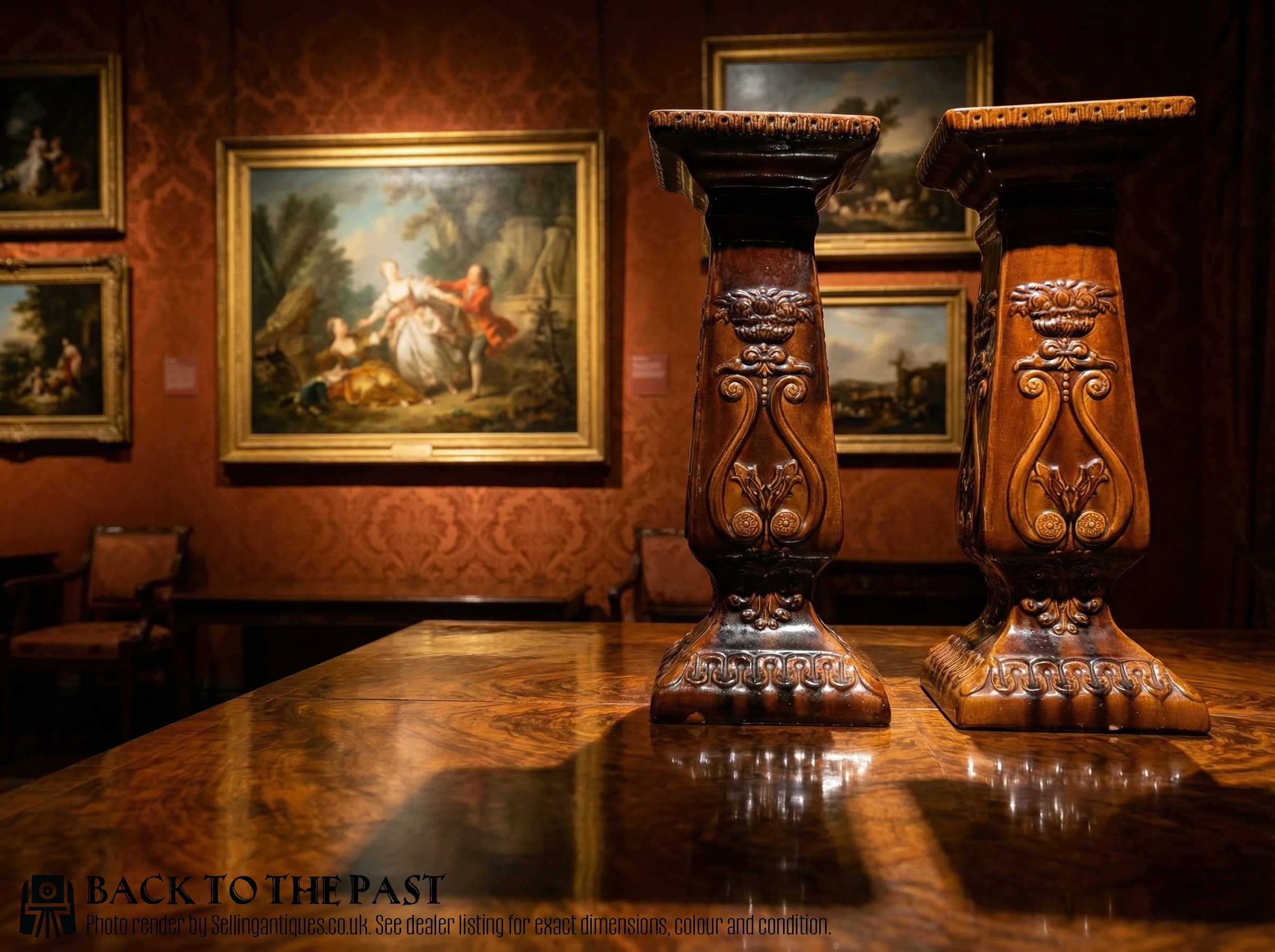
Glazed pottery pedestals encompass architectural stands, garden seats and paired column bases designed to elevate jardinieres and heavy plants. You will most frequently meet tall majolica stands and earthenware columns dating from the Victorian and Edwardian periods.
The selections span distinct stylistic movements from Renaissance Revival and Victorian rustic designs to Art Nouveau curves and Art Deco geometry. Many examples survive as combined sets featuring a matching jardiniere top and cylindrical or panelled column base.
Origins stretch across British potteries like Burmantofts and Minton alongside continental European workshops in France, Italy and Bohemia. The forms serve both structural utility and decorative display within domestic interiors and conservatories.
How they were made
Potters shaped these substantial columns and stands from heavy earthenware and ceramic bodies, often utilising moulds for complex relief decoration. The structural mass required careful firing to support the weight of heavy plants and upper display bowls.
Surfaces received rich tin glaze, cobalt glaze or glossy majolica finishes that imparted vibrant colour and waterproof qualities. Lustre techniques and specialised firing added metallic sheens and complex tonal variations across the moulded relief.
Some nineteenth-century makers concealed fierce terracotta griffins beneath smooth majolica plant stands just to watch visitors jump.
What varies in quality
Superior examples display crisp moulding in relief details and sophisticated application of majolica or lustre glazes that catch the light evenly. The depth of colour and precision in botanical or figurative modeling separate standard production pieces from ambitious works.
Scale and structural ambition also define the upper tier, particularly monumental matched sets and pieces bearing clear factory marks from renowned potteries. The integrity of the glaze surface across large vertical planes determines the overall visual weight.
Burmantofts Art Pottery·Ulisse Cantagalli·Clement Massier·Minton·Julius Dressler·Mougin·Eichwald·Albert Carrier
The Glazed Pottery Pedestals Glossary
- Majolica
- A type of pottery glazed with an opaque tin-opacified glaze, famous for brilliant colours and popular during the Victorian era. It provides the glossy finish seen on many nineteenth-century stands.
- Jardiniere
- A large ornamental pot or receptacle for holding plants or flowers, frequently paired directly with a matching pedestal base. These vessels form the upper display portion of architectural stands.
- Earthenware
- Porous pottery fired at lower temperatures, serving as the heavy foundational body for most glazed pedestals. It requires complete glazing to ensure durability and moisture resistance.
- Lustre glaze
- A metallic film applied to ceramics to produce an iridescent sheen that reflects light in changing colours. This technique creates a luminous surface effect on certain late nineteenth-century pieces.
- Faience
- Tin-glazed earthenware decorated with opaque colours over a white enamel background. The technique appears on various continental European vases and plant stands.
Glazed Pottery Pedestals: Frequently Asked Questions
How do I date a glazed pottery pedestal?
Dating relies upon stylistic markers such as Victorian rustic moulding, Art Nouveau organic lines or Art Deco geometry, alongside registered design numbers or factory stamps on the underside.
The materials and glaze types, particularly nineteenth-century majolica and tin-glazed earthenware, further narrow the period of manufacture.
Are jardiniere stands and pedestals always sold together?
Many surviving examples include both the upper planter bowl and the matching column base as an integrated set, originating from the same pottery workshop.
However, individual columns and upper vessels frequently separate over time, leading collectors to assemble matched pairs independently.
Where should I place a heavy ceramic pedestal?
These substantial earthenware stands suit conservatories, hallways and corner spaces where their vertical presence and decorative glazes anchor the room.
Stability on even flooring is essential due to the combined weight of the ceramic column and any heavy plant or jardiniere placed on top.
What is slaterware?
Slaterware refers to pottery finished with textured body surfaces that mimic natural materials, often enhanced with metallic highlights and slip decoration.
Developed by Royal Doulton in the nineteenth century, this technique offers a contrasting matte finish compared to glossy majolica glazes.