


Earthenware Plant Pedestal
These earthenware plant pedestal pieces elevate greenery in conservatories and parlours, bringing sculptural form and brilliant glaze to interiors.
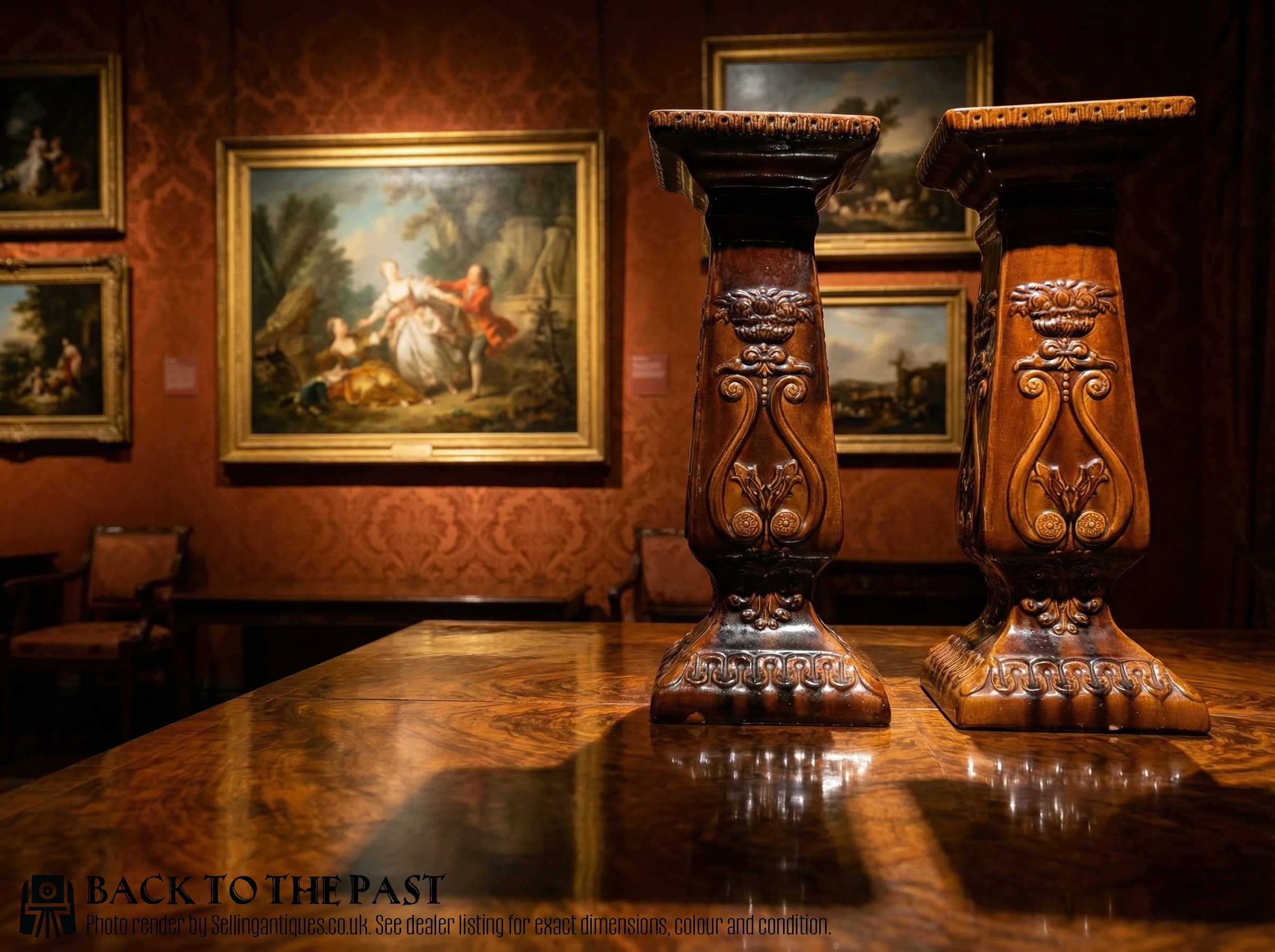
Earthenware Plant Pedestal
An earthenware plant pedestal provides a sturdy column or stand designed to elevate a jardiniere or planter, often forming a matched set with the vessel it supports. These pieces emerge predominantly from the nineteenth century and the Edwardian era, spanning Victorian, Art Nouveau, and Arts & Crafts styles.
The objects listed on this page encompass tall decorative columns alongside combined jardiniere and stand configurations. Makers shaped these items from terracotta, faience, and majolica, creating functional garden seats and plant stands for domestic display.
Materials and manufacture
Potters shaped these earthenware bodies using traditional clay techniques before applying thick, lustrous glazes or specialised metallic lustres. The surfaces frequently feature majolica or faience finishes that provide deep colour and protective waterproofing for indoor plants.
Makers utilised sculptural moulding to achieve naturalistic forms, incorporating detailed botanical motifs, mythical creatures like griffins, and organic contours characteristic of the Art Nouveau period.
Materials represented across these items include majolica, faience, terracotta, and specialised lustre glazes.
Judging quality and execution
Quality rests in the crispness of the moulded detail and the richness of the glaze application. Finer examples display even colour distribution without pooling or dull patches across the relief decoration.
The structural integrity of the column and the precision of the fit between the pedestal and its jardiniere separate standard production pieces from ambitious studio pottery works.
Burmantofts Art Pottery·Clement Massier·Julius Dressler·Minton Secessionist·Woodlesford Art Pottery
The Earthenware Plant Pedestal Glossary
- Majolica
- A type of earthenware covered with an opaque tin glaze and painted with metallic oxide colours. This technique yields vibrant greens, blues, and browns typical of Victorian ceramics.
- Faience
- Tin-glazed earthenware produced in imitation of Italian majolica wares. The term often describes decorative architectural and ornamental pottery of the nineteenth century.
- Jardiniere
- An ornamental pot or stand designed to hold a plant or floral arrangement. These vessels frequently pair directly with matching columns.
- Lustre glaze
- A ceramic finish containing metallic elements that produce an iridescent sheen when fired. Clement Massier utilised this technique on late nineteenth-century pieces.
- Terracotta
- Unglazed or glazed fired clay possessing a brownish-red colour. It forms the structural body for many garden seats and plant stands.
Earthenware Plant Pedestal: Frequently Asked Questions
How do I clean an antique earthenware plant pedestal?
Dust the surface regularly with a soft, dry cloth to protect the glazed finish from abrasion. Avoid harsh chemical cleaners that can damage historic majolica or lustre surfaces.
For stubborn marks, use a damp cloth with mild soap, drying the ceramic thoroughly immediately afterward to prevent moisture penetration.
Can these plant pedestals be used outdoors?
Most antique earthenware plant pedestals are designed for indoor or conservatory use. Frost can easily crack nineteenth-century glazed earthenware and terracotta if left outside during winter.
Keep these pieces inside protected spaces to preserve the integrity of the original glazes and structural clay body.
How do I match a jardiniere to a pedestal?
Examine the base dimensions and weight distribution to ensure the jardiniere sits securely on the pedestal platform. Matching glaze tones and period styles, such as Victorian naturalism, help confirm compatibility.
Many original sets were produced together by potteries like Burmantofts, so matching the maker's palette and clay type is essential.
How do I date an earthenware plant pedestal?
Look for impressed factory marks, registration numbers, and stylistic clues on the underside or base of the column. Aesthetic markers like Art Nouveau whiplash lines or Victorian majolica palettes narrow down the decade.
Consulting known potteries and their recorded production periods assists in placing the item within the nineteenth or early twentieth century.