
Oak Standing Lamp
An oak standing lamp delivers solid timber construction and practical height, bringing character and warmth to a room.
Oak Standing Lamp
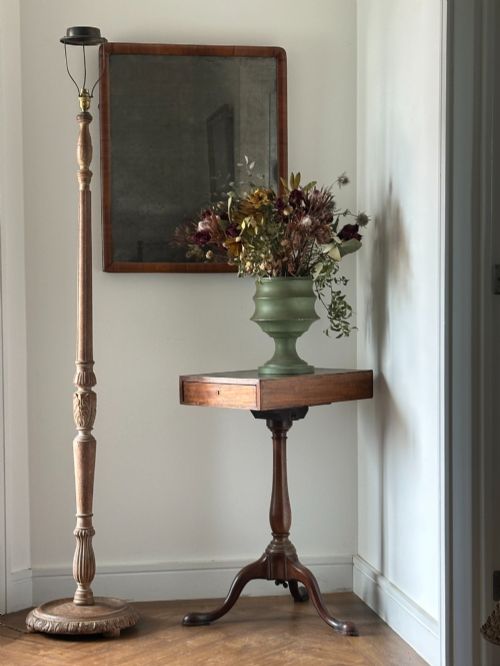
An oak standing lamp provides vertical lighting with a sturdy timber base, drawing on designs from the Edwardian period, the 1930s, and the Arts and Crafts movement. These tall floor lamps frequently appear alongside related timber forms such as standard lamps and torcheres.
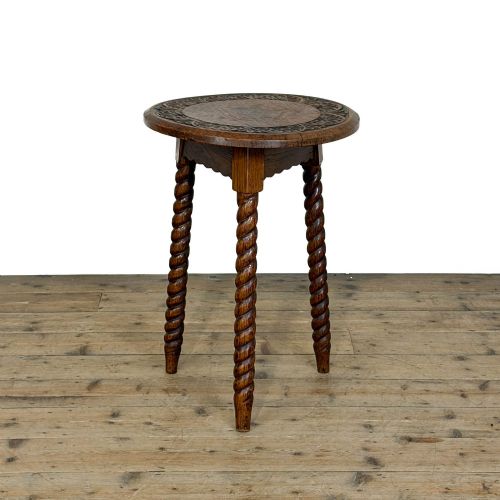
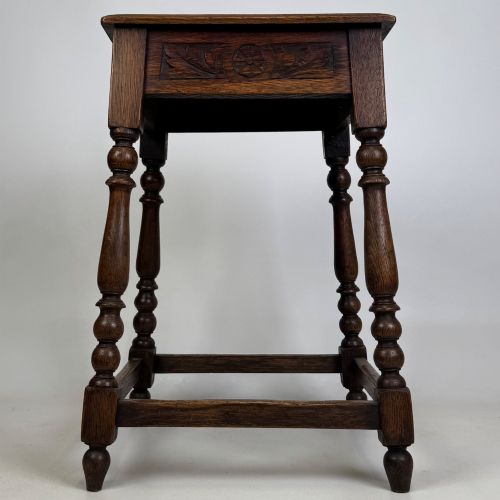
Makers and makers' circles often utilised turned columns, barley twist stems, and carved details rooted in Jacobean Revival and Gothic styles. Buyers also encounter standard lamps paired with fabric shades and occasional tables designed to support lighting.
The selection ranges from early twentieth-century floor standing pieces to refined Art Deco and Cotswold School interpretations. Solid oak and burr oak dominate the construction, often enhanced by turning and structural carving.
Materials and technique
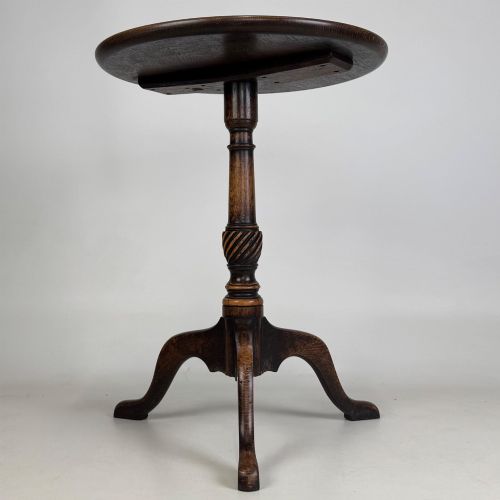
Joiners built these standing lamps using solid oak and burr oak, frequently turning shafts on a lathe to create barley twist and column profiles. Carving and joinery techniques reflect Arts and Crafts traditions alongside period revival movements.
Makers incorporated brass fittings and wired components into the timber structures to hold lamp holders securely. Surfaces received wax or limed finishes to protect the wood grain while highlighting natural figuring.
The archive records frequent examples of barley twist floor standing lamps paired with carved torcheres.
Judging quality
Superior examples display crisp carving, balanced proportions, and substantial solid timber weights that prevent tipping. Lesser pieces rely on simpler turned stems with thin sections and minimal detailing.
The integration of the column into the base separates standard production from workshop pieces attributed to specific design movements. Original surfaces and patination elevate the standing lamp above items with modern refinishing.
Liberty & Co.·William Birch·Baillie Scott·Hubert Simpson of Kendal
The Oak Standing Lamp Glossary
- Torchere
- A tall wooden stand originally designed to hold a candle or torch, frequently adapted as a floor standing lamp. These slender supports often feature carved columns and tripod bases.
- Barley Twist
- A spiral turning technique cut into furniture legs and lamp stems. This decorative profile gained popularity during the seventeenth century and saw revivals in Victorian and Edwardian joinery.
- Burr Oak
- A specialised timber cut from tree growths showing distorted grain patterns. Cabinet makers prized this figured wood for table tops and decorative panels.
- Arts and Crafts
- A design movement valuing hand craftsmanship, simple construction, and vernacular materials. Pieces from this tradition avoid excessive machine ornamentation in favour of honest joinery.
- Limed Oak
- A wood finishing method where a white pigment is rubbed into open timber pores. This technique lightened the appearance of oak during the Art Deco and mid-century periods.
Oak Standing Lamp: Frequently Asked Questions
How do I date an oak floor lamp?
Dating relies on examining the turning styles, base construction, and wiring methods. Edwardian and Arts and Crafts examples often feature hand-carved details or barley twist stems.
Earlier pieces show heavy Gothic influences, while 1930s versions incorporate streamlined Art Deco lines and limed finishes.
How were barley twist lamps made?
Makers shaped barley twist lamp stems by hand-chiselling or lathe-turning solid oak beams into a continuous spiral. This technique demanded considerable skill to maintain uniform depth and spacing along the shaft.
Turners then smoothed and polished the timber to highlight the grain running through the twist.
Where should I place a standing lamp?
An oak standing lamp suits corners, reading areas, and beside low seating where it provides ambient or task lighting. Its vertical timber shaft adds height and texture to room layouts.
Keep the lamp away from direct heat sources to prevent the solid oak from drying out and splitting.