




Oak Slope Front Box
These oak slope front box pieces are practical writing desks and storage chests built to endure, offering timeless utility and rich timber grain.
Oak Slope Front Box
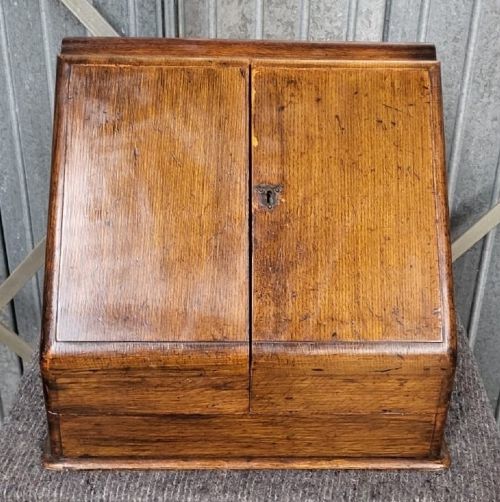
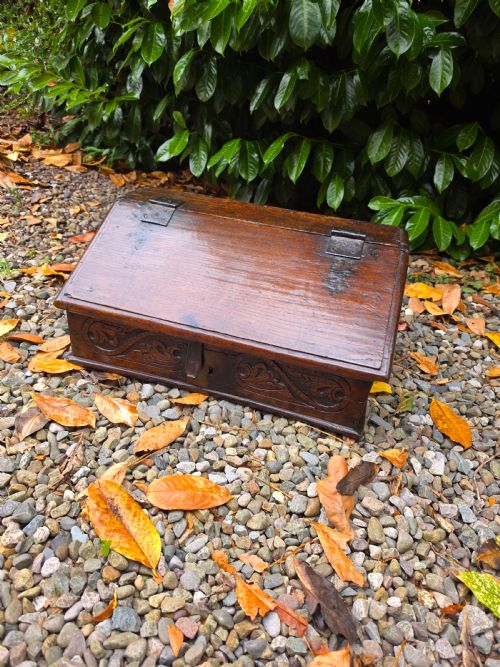
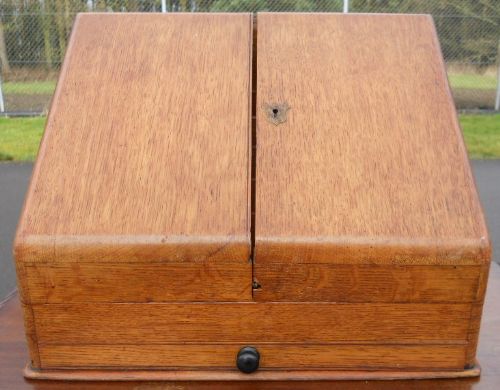
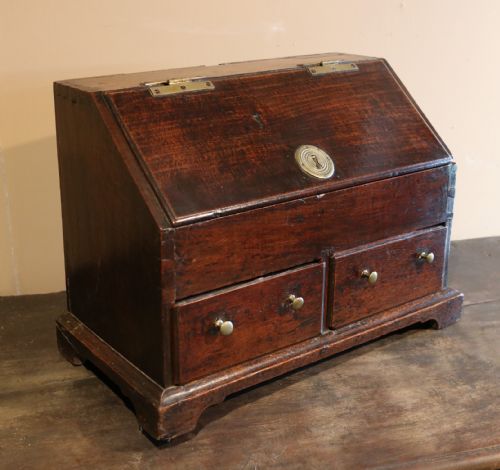
When you search for an oak slope front box, you encounter compact writing desks, slant front Bible boxes, and table top bureaux spanning multiple centuries. These forms serve as functional writing surfaces while concealing internal compartments and drawers for papers and valuables.
The pieces on this page appear in various regional styles and proportions, ranging from early seventeenth-century Bible boxes to Georgian miniatures and Victorian stationery cabinets. Many rest on stands or tables, while others function independently as portable writing desks.
Makers constructed these items primarily for domestic, ecclesiastical, or administrative use, resulting in diverse configurations like fall-front tidies and slope-front log bunkers. Each piece reflects the specific writing and storage needs of its period, from simple elm child desks to elaborate carved bureaux.
Factors influencing quality
The standard of a piece depends on the crispness of its hand-carving, the retention of original brass or iron hardware, and the integrity of the timber. Finer examples maintain their original stands and internal drawer configurations without extensive replacement wood.
Proportion and execution distinguish standard vernacular items from exceptional cabinet work, particularly in miniature bureaux and early table top desks. Patina developed through centuries of handling also separates well-preserved surfaces from heavily restored ones.
Oak Slope Front Box Retail Price Guide 2026
Typical asking prices for oak slope front box among the pieces listed under this phrase on Sellingantiques today, from the lower quarter to the upper quarter. They describe what is for sale here now, not the wider market.
Listings feature oak predominantly, supported by elm, brass, iron, and leather across periods from the seventeenth century to the Edwardian era.
The Oak Slope Front Box Glossary
- Bible box
- A portable desk or container originally built to hold a large family Bible and writing materials. These early pieces often feature sloping lids and internal compartments.
- Slope front
- An angled writing surface hinged at the top or bottom to allow access to storage underneath. This ergonomic design provides a comfortable angle for handwriting.
- Bureau
- A desk fitted with a sloping lid that opens to reveal pigeonholes and small drawers. It often sits upon a dedicated frame, table, or stand.
- Frieze
- A decorative horizontal band along the upper portion of a box or desk. Craftsmen frequently embellished this area with carved geometric patterns or initials.
- Stationery cabinet
- An upright desk accessory designed to organise paper, envelopes, and writing implements. These Victorian and Edwardian pieces feature fall fronts or cabinet doors.
Oak Slope Front Box: Frequently Asked Questions
What is an oak slope front box?
It is a compact desk or storage container featuring an angled lid designed for reading or writing. Internal drawers and compartments sit beneath the slope to hold papers and small valuables.
These pieces range from early seventeenth-century Bible boxes to later stationery cabinets and miniature bureaux. Their practical design made them essential household and ecclesiastical items across multiple centuries.
How were these boxes used?
People used them as portable or stationary writing desks for correspondence, record-keeping, and storing important documents. The angled lid provided a comfortable surface for handwriting before flat-topped desks became common.
Certain variants also served specialised roles, such as holding family Bibles in a household or organising stationery in a Victorian study. Some larger iterations doubled as coal bunkers or fireside storage.
How do I date an oak box?
Dating relies on examining construction techniques, joinery methods, hardware, and decorative styles such as carving or mouldings. Early pieces from the seventeenth century often display heavy oak framing and geometric carving.
Later Victorian and Edwardian examples show different wood preparation, lighter proportions, and refined stationery fittings. Comparing the construction details to known period pieces helps establish an approximate age.
Where should I place one at home?
These boxes suit placement on sturdy tables, sideboards, or dedicated desk stands where their sloping lids remain visible. Their compact footprints allow them to function effectively in studies, living rooms, or hallways.
Keep them away from direct heat sources and strong sunlight to protect the aged oak timber and prevent the wood from drying out or cracking.