

Writing Slope Drawers
Writing slope drawers bring together practical storage and a slanted writing surface, offering a compact desk format found across Georgian and Victorian periods.
Materials and construction methods
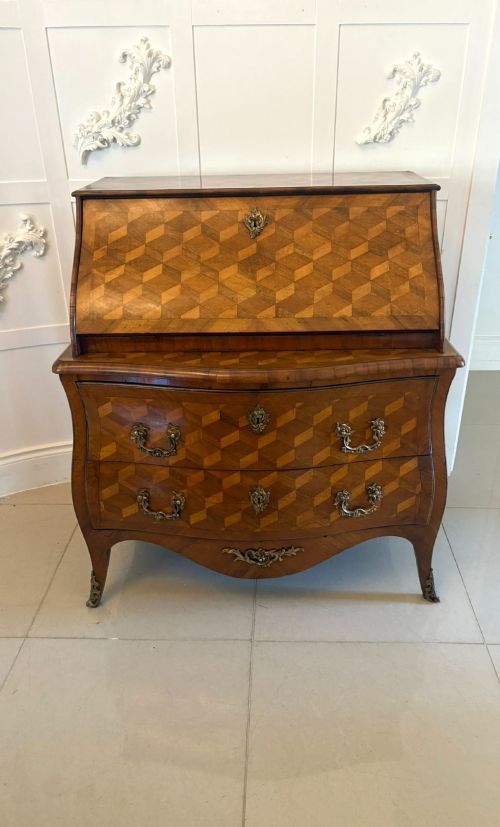
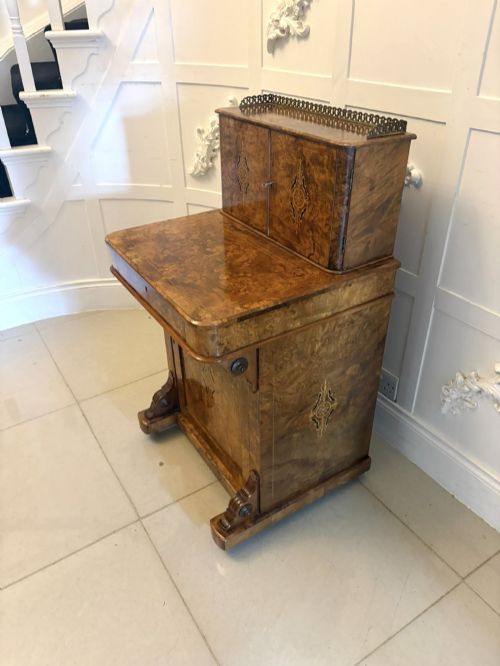
Cabinet makers utilised dense hardwoods such as mahogany, walnut, rosewood, and oak as the structural basis for these slope desks and drawer units. Veneers in burr walnut and figured mahogany provided decorative surfaces on better pieces, applied over solid secondary timbers.
Brass featured heavily as functional reinforcement and decoration, taking the form of corner bindings, flush carrying handles, and escutcheons on campaign and portable boxes. Interior fittings relied on precise joinery to create hidden compartments, stationery dividers, and small tier drawers within confined spaces.
Distinctions in craftsmanship
Quality reveals itself in the selection of timbers, where symmetrical grain patterns and figured veneers mark out superior examples from plain ones. The precision of the interior joinery, particularly in the fit of secret drawers and stationery compartments, demonstrates the maker's hand.
Hardware and locking mechanisms also separate tiers of production, with heavy brass binding and branded locks indicating careful execution. Secondary woods chosen for drawer linings and internal divisions show whether a piece was built with economy or uncompromising standards.
Listings span the 18th, 19th, and early 20th centuries, uniting portable mahogany writing slopes with oak and walnut bureaux.
Heals of London·Gillow and Co·Gillows
The Writing Slope Drawers Glossary
- Bureau
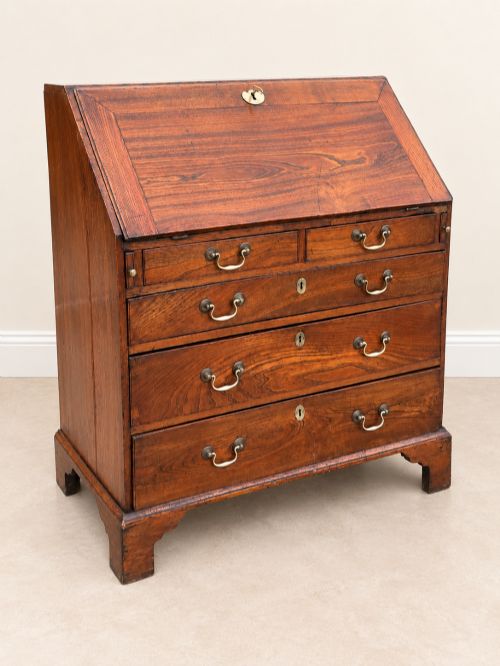
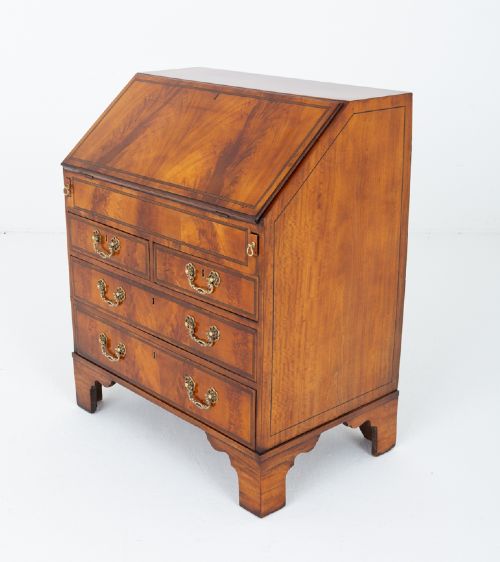
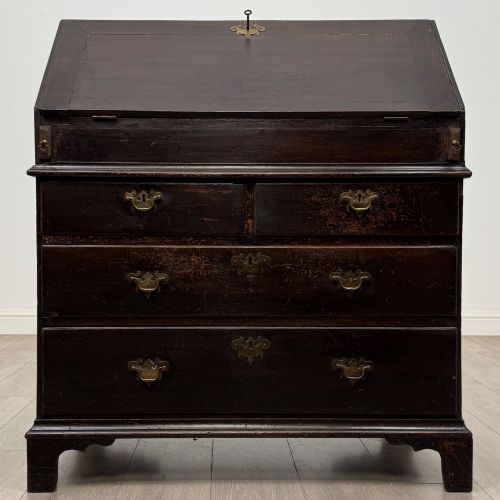
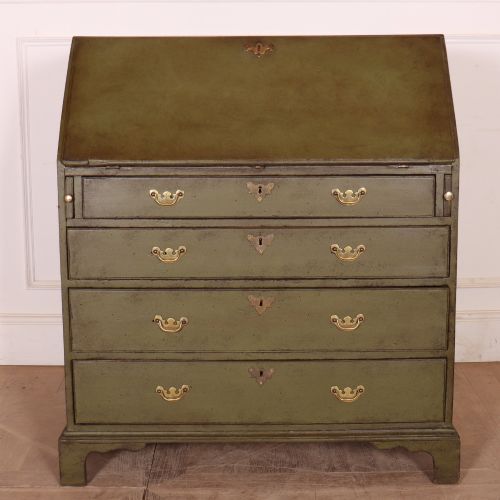
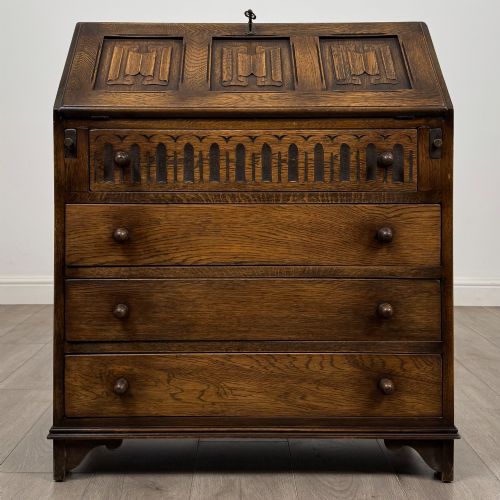
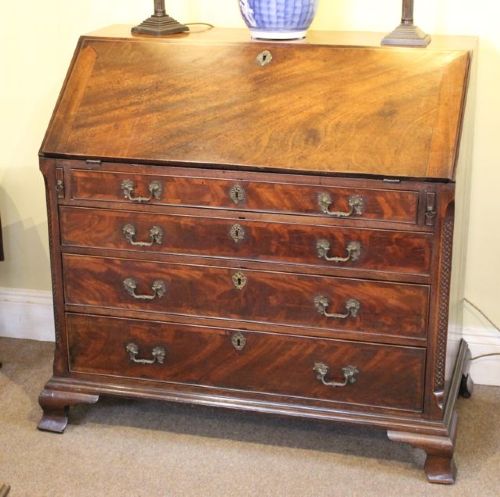
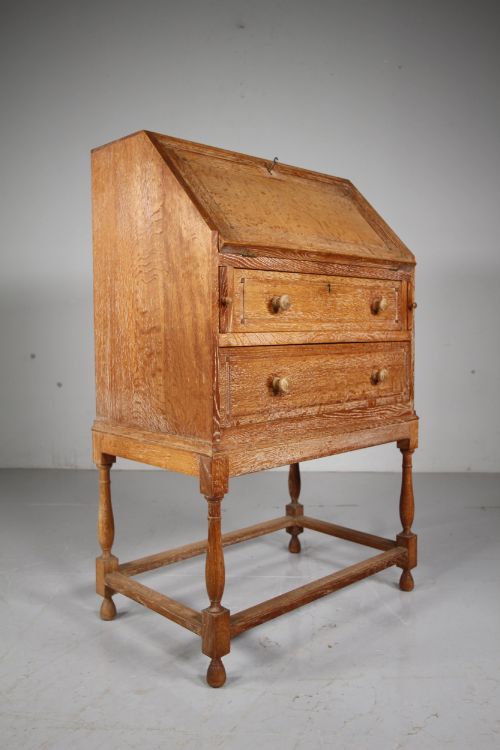
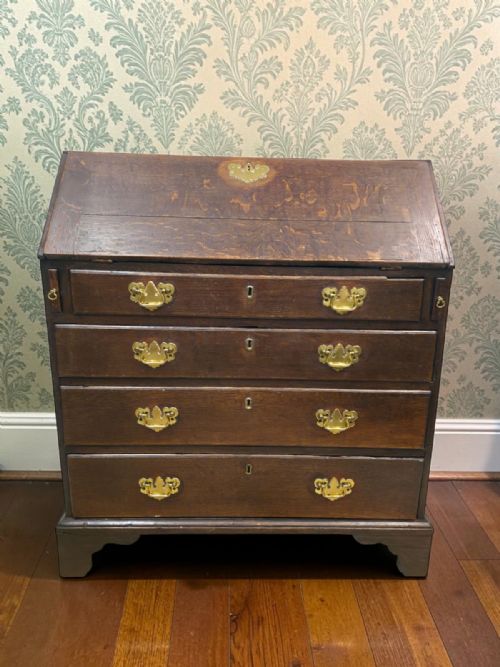
- A desk with a sloping hinged writing flap that covers internal pigeonholes and small drawers. Most examples sit atop a chest of drawer units.
- Davenport desk
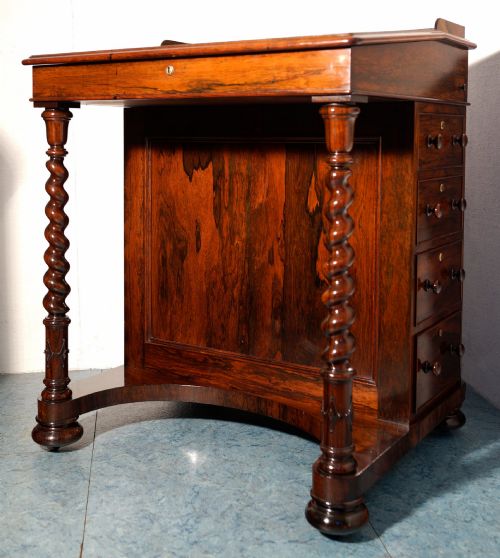
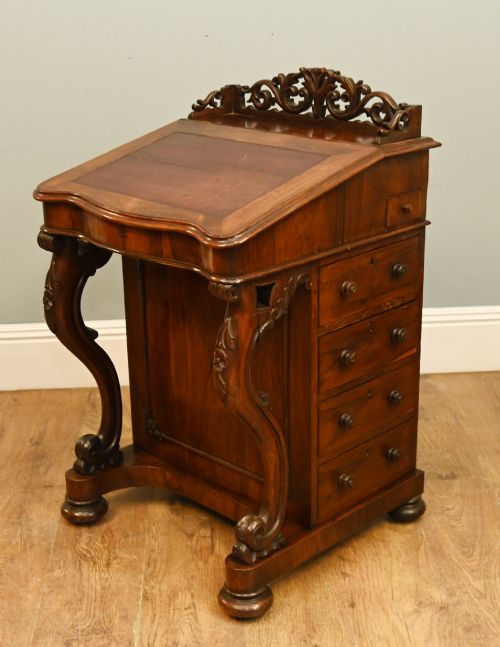
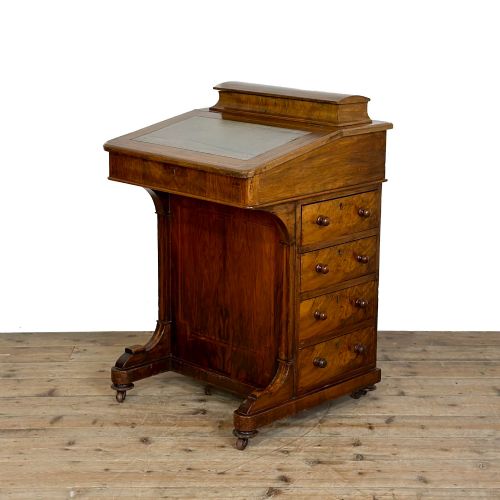
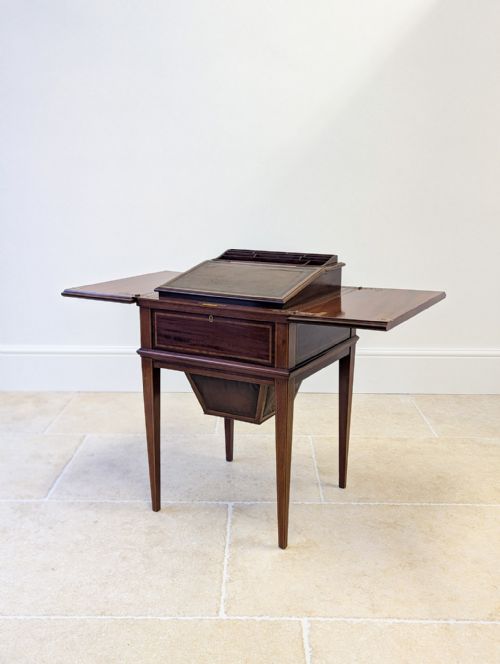
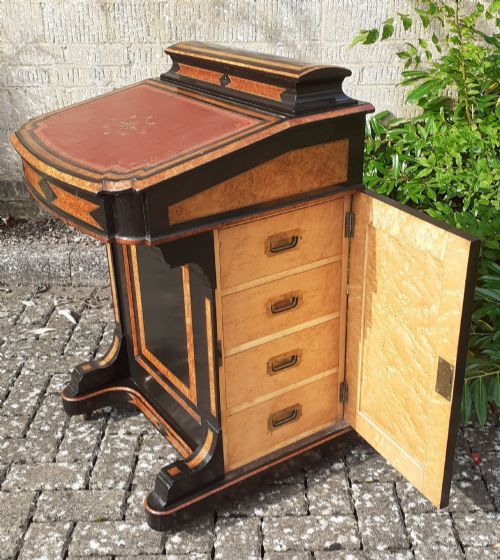
- A compact Victorian writing desk featuring a sloped top, side drawers, and a pedestal base. The form combines a traditional writing slope with internal drawer storage.
- Fall front
- A hinged panel that drops forward to create a horizontal writing surface. It conceals compartments and small drawers when closed.
- Secret drawers
- Concealed compartments built into writing slopes and bureaux accessed by removing false panels or releasing spring catches. They stored valuables and private papers.
- Campaign box
- A portable wooden chest or slope built for travel with recessed brass handles and corner brackets. These items dismantled or folded for military transport.
Writing Slope Drawers: Frequently Asked Questions
What is a secret drawer?
A secret drawer is a concealed compartment hidden behind removable panels, sliding dividers, or dummy drawer fronts within a writing slope or bureau.
Cabinet makers designed these hidden spaces to secure valuables, jewellery, and confidential documents away from casual observation.
How do I use a Davenport desk?
A Davenport desk provides a compact workstation where you sit facing the sloped top while the working surface lifts or opens for paper storage.
Drawers positioned on the side of the pedestal offer immediate access to stationery without requiring you to stand.
What is the difference between a slope and a bureau?
A writing slope is a portable box placed on a table for writing, whereas a bureau is a larger piece of furniture standing on its own legs or drawers.
Both items feature slanted lids, but bureaux provide permanent floor-standing storage capacity beneath the writing surface.
How are campaign slopes different?
Campaign slopes are built for travel with flush brass handles, reinforced corners, and robust timber construction designed to withstand transit.
These portable boxes often incorporate folding stands or internal storage compartments specifically arranged for military use in the field.