

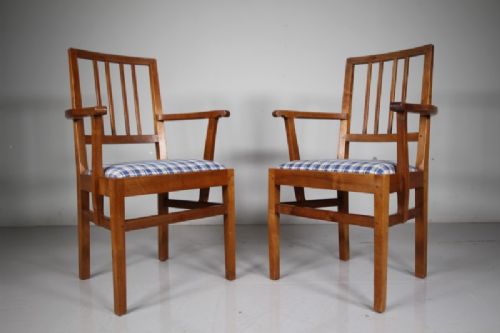


Oak Slatted Back Chair
An oak slatted back chair brings honest construction and tactile timber into a room, offering sturdy utility shaped by generations of practical design.
Oak Slatted Back Chair
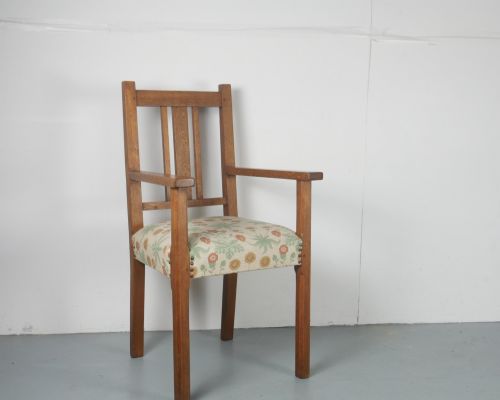
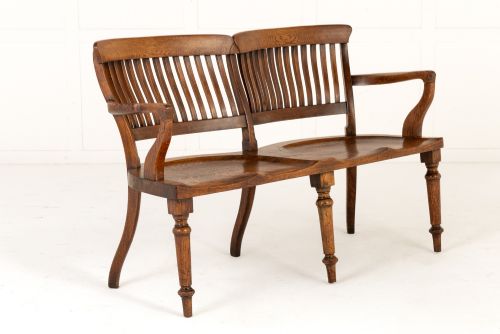
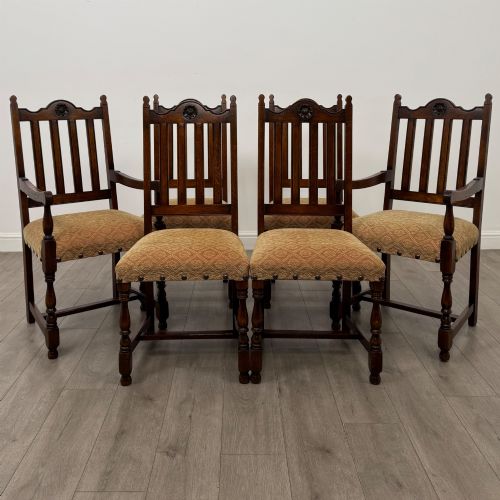
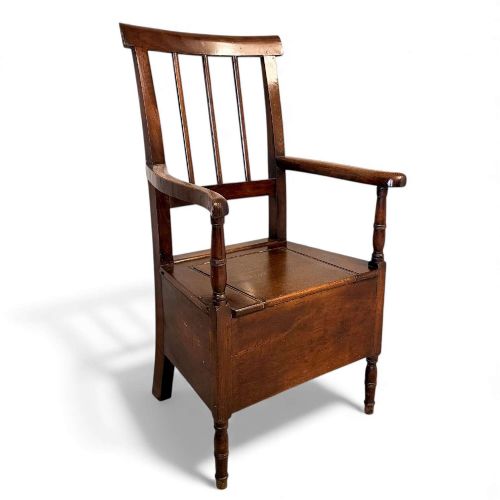
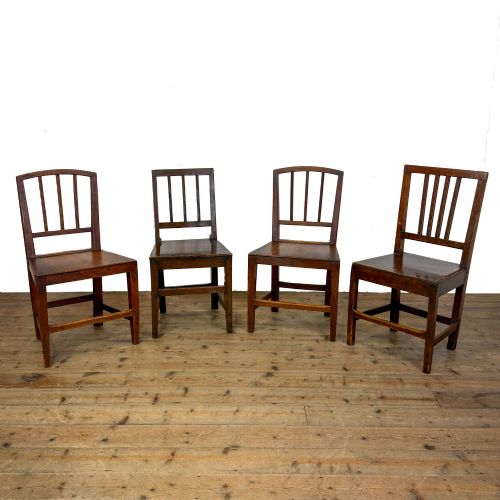
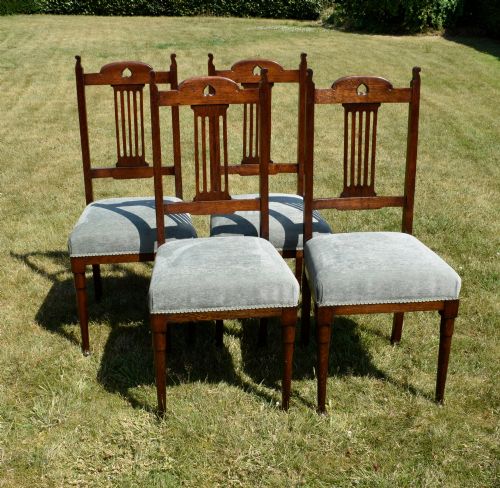
The oak slatted back chair encompasses a broad family of seating forms built for daily domestic and commercial use, stretching from vernacular country kitchen chairs to formal dining sets. Buyers searching this phrase encounter sturdy timber frames designed to endure heavy usage, appearing in variations like ladderbacks, lathbacks, and spindle configurations.
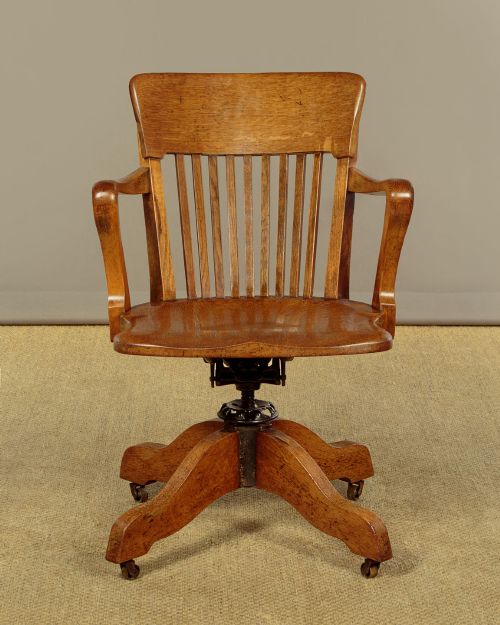
The selection here draws heavily from the nineteenth and early twentieth centuries, alongside distinct vernacular pieces from the eighteenth century and revival periods. Dining chairs, office swivel chairs, armchairs, and sets of matching or harlequin seating dominate the offerings.
Makers ranged from Cotswold Arts and Crafts workshops to regional country joiners, producing everything from simple rush-seated ladderbacks to refined Edwardian office seating. This variety ensures that whether a buyer seeks a single fireside armchair or a set of six dining seats, the timber grain and straightforward joinery remain central.
Materials and construction methods
Oak serves as the primary structural material, often paired with secondary woods like elm, beech, or walnut for seats and spindles. Joinery relied on traditional techniques such as mortise and tenon joints, dowels, and steam-bending for curved components like lathbacks and Windsor bows.
Surface details incorporate functional elements including rush seating, cane panels, upholstered pads in fabric or velvet, and turned or barley-twist legs. Metal components appear selectively in swivel desk mechanisms, castors, and structural brackets.
Oak Slatted Back Chair Retail Price Guide 2026
Typical asking prices for oak slatted back chair among the pieces listed under this phrase on Sellingantiques today, from the lower quarter to the upper quarter. They describe what is for sale here now, not the wider market.
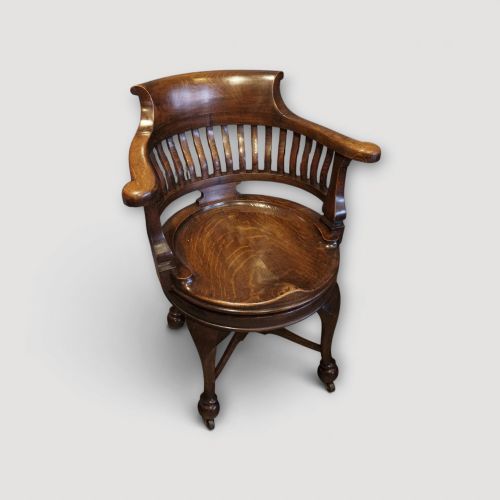
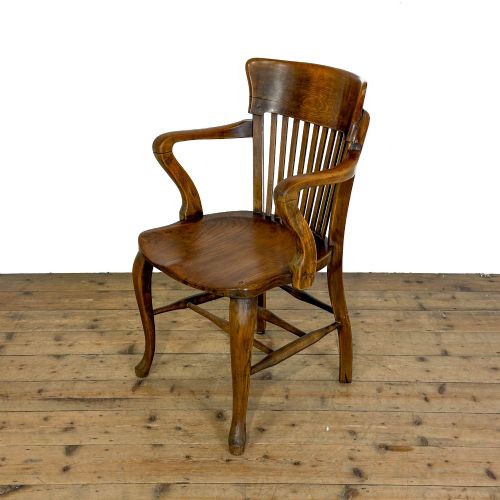
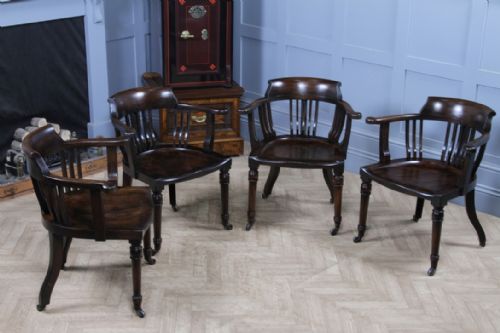
Smoker's bow desk armchairs provided comfortable seating for nineteenth-century gentlemen enjoying an after-dinner pipe.
Factors of quality and distinction
Quality rests upon the integrity of the timber selection, the tightness of the joinery, and the retention of original components rather than later replacements. Pieces displaying well-figured oak grain, hand-turned spindles, and maker stamps or attribution demonstrate higher workshop ambition.
The balance between structural rigidity and visual proportion separates standard utilitarian seating from finer examples of period craftsmanship. Original surface patination and untouched finish depth further elevate a piece above later restored alternatives.
Edward Barnsley·Shapland and Petter
The Oak Slatted Back Chair Glossary
- Lathback
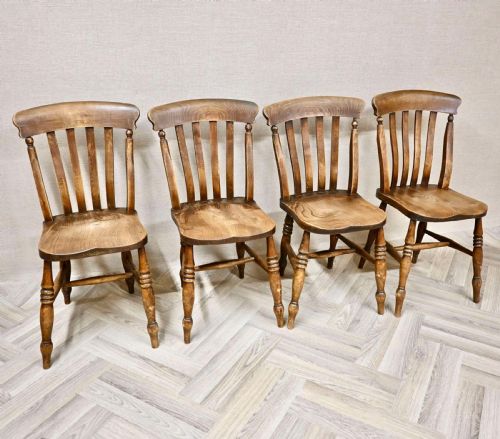
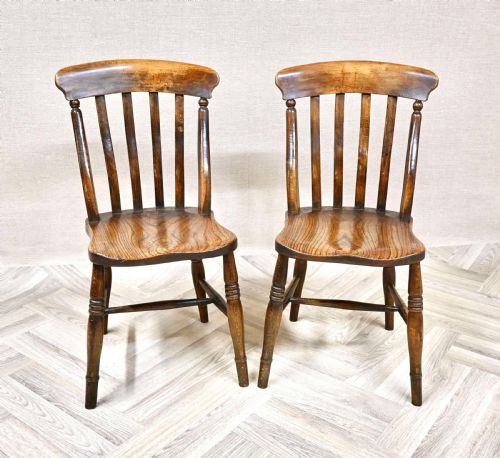
- A chair back constructed from flat, vertical wooden slats rather than turned spindles. This form appears frequently in country kitchen and Windsor seating.
- Ladderback
- A chair featuring multiple horizontal wooden rails or slats set between the rear upright posts. These are commonly fitted with rush or woven seats.
- Harlequin set
- A group of dining chairs sharing a similar style, period, or material but assembled from slightly different individual pieces rather than a factory-matched batch.
- Barley twist
- A decorative turning technique resembling a twisted rope, carved into chair legs and stretchers during revival periods and earlier centuries.
- Carver
- An armchair designed to match a set of smaller side chairs, traditionally placed at the head of a dining table.
Oak Slatted Back Chair: Frequently Asked Questions
What is an oak slatted back chair?
An oak slatted back chair is a wooden seat featuring vertical or horizontal slats across the backrest, constructed primarily from oak.
These pieces range from vernacular country ladderbacks to Arts and Crafts dining chairs and office swivel seats.
How do I date an antique oak chair?
Dating relies on observing construction methods, tool marks, joinery techniques, and stylistic cues associated with periods like the 18th century, Victorian era, or Arts and Crafts movement.
Hardware, timber oxidation, and secondary woods also provide reliable clues to a chair's age.
Are these chairs suitable for daily use?
Most antique oak chairs are robustly built from dense hardwoods and designed for practical everyday seating.
Checking joint stability and seat webbing ensures the piece can comfortably handle modern domestic life.
What is the difference between a side chair and a carver?
A side chair is a standard dining chair without arms, built to fit compactly around a table.
A carver is an armchair matching the design of the side chairs, traditionally used at the ends of the table.