



Oak Secretary Bookcase
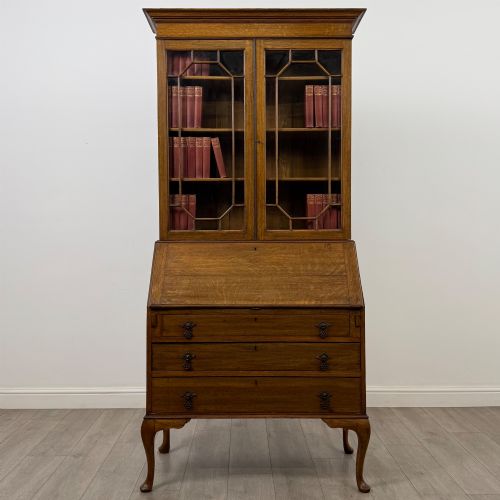
An oak secretary bookcase combines a fitted writing desk and a shelved upper cabinet, giving you workspace and display in one heavy piece.
Oak Secretary Bookcase
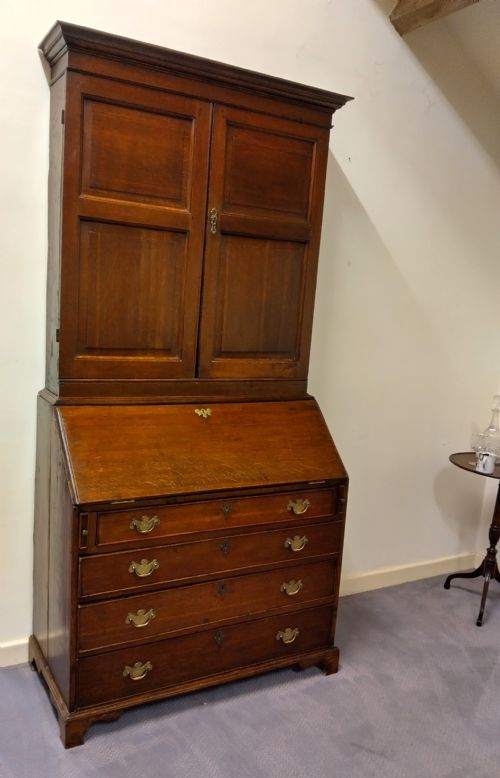
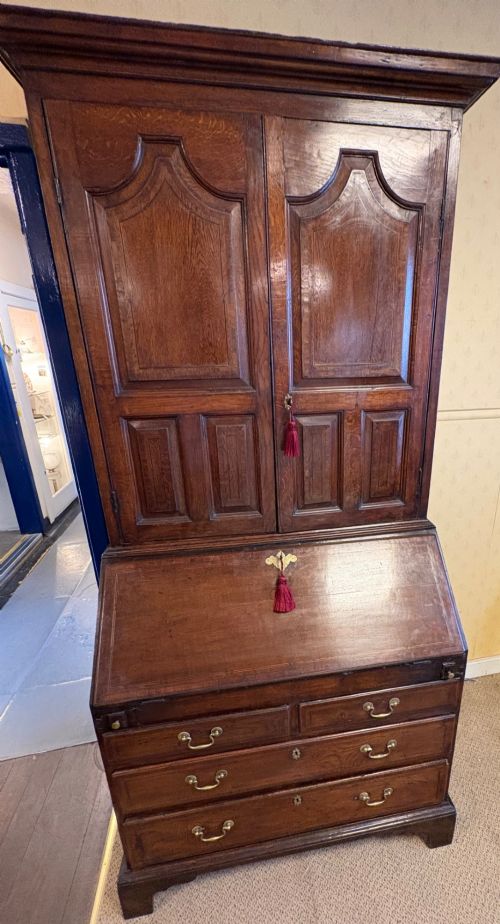
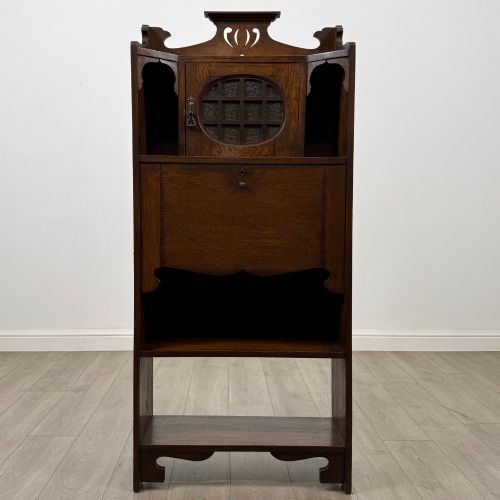
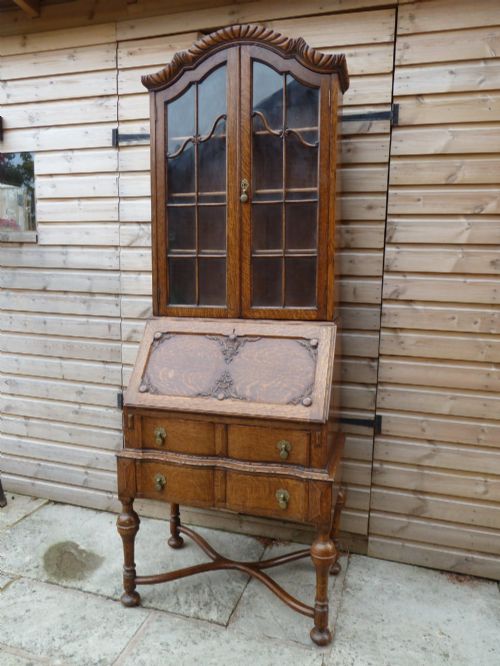
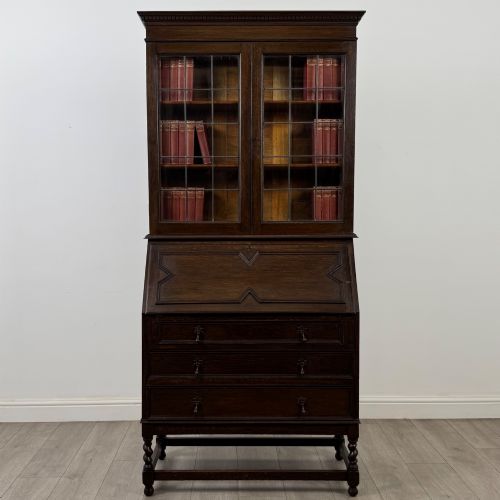
An oak secretary bookcase brings together a lower storage base with a drop-front writing surface and an upper glazed or panelled cabinet for books. These multi-purpose items span centuries of domestic design, from early vernacular workshop builds to later revival editions.
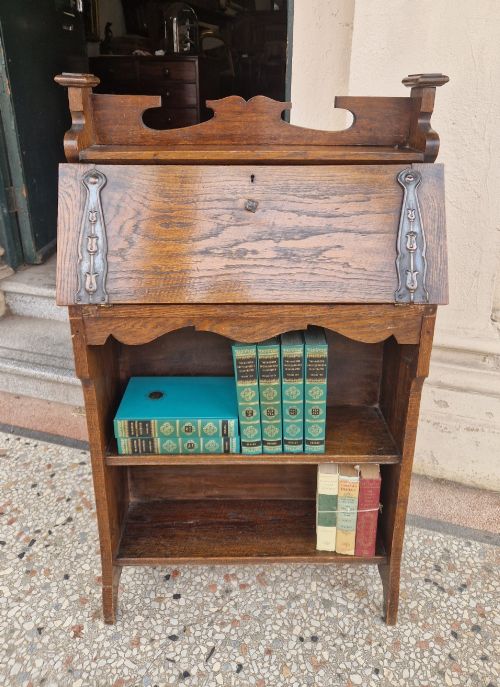
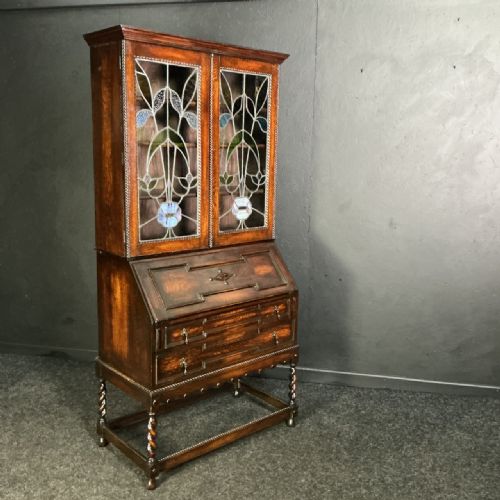
You will encounter pieces originating across the Georgian, Edwardian, and twentieth-century eras. The selection includes vernacular Welsh items, formal George I and George II models, and distinct Arts and Crafts interpretations.
How they were made
Cabinetmakers built these tall items primarily in solid oak, often incorporating wood inlay for decorative contrast on the exterior panels. Upper sections relied on fitted glass panes, sometimes held with lead cames, while interiors used small timber drawers and pigeonholes.
Hardware played a functional and visual role, featuring brass handles and escutcheons alongside iron hinges. Specialised iterations integrated copper and fabric elements, particularly within the later Arts and Crafts movement.
Materials appearing across the inventory include solid oak, brass, glass, lead, copper, fabric, iron, and wood inlay.
What varies in quality
The refinement of the internal joinery dictates much of the standard, separating simple utility builds from master cabinetwork. Drawer construction, the tightness of the bureau writing flap fit, and the crispness of any carved detailing mark the divergence.
Proportion and timber selection also divide the range, as well-figured grain and balanced door framing elevate the presence of the piece. Adaptations and alterations from different centuries change the integrity of the original form.
Morris & Co·George W Jack·Harris Lebus·Liberty & Co
The Oak Secretary Bookcase Glossary
- Bureau
- A desk featuring a sloping front flap that drops down to create a writing surface over a bank of drawers. Inside lie small compartments for stationery.
- Secretaire
- A cabinet or desk containing a disguised pull-out or drop-down writing drawer with fitted compartments. It serves the same function as a bureau within a larger case.
- Glazed bookcase
- The upper section of a cabinet enclosed by glass doors to protect and display volumes. These doors use timber framing or lead cames to hold the panes.
- Jacobean style
- A heavy, dark furniture aesthetic referencing seventeenth-century design details. It reappears frequently in later revival pieces.
- Bun feet
- Rounded, flattened wooden feet shaped like buns that support the base of heavy cabinets. They raise the carcass slightly off the floor.
Oak Secretary Bookcase: Frequently Asked Questions
What is an oak secretary bookcase?
It is a tall combination furniture item uniting a writing desk with a shelved book cabinet above. The lower portion typically includes a fold-down flap or internal drawer for writing.
Such double-duty items saved floor space in historical homes by consolidating a library and a study area into a single vertical carcass.
How do I date an oak secretary bookcase?
Dating relies on examining construction methods, hardware types, timber choice, and stylistic details such as bracket feet or cornice mouldings. Georgian pieces show different proportions and internal drawer configurations compared to Edwardian or Arts and Crafts editions.
Secondary woods used inside drawers and the cut of the oak boards further clarify the period of manufacture.
How were these bookcases used?
Owners stored reference books and ledgers in the upper glazed or panelled cabinet while writing correspondence at the fold-down desk. The interior compartments kept inkwells, quills, and letters organised out of sight when the flap was closed.
They served as the primary administrative hub for a household before standalone desks became common.
Will an oak secretary bookcase fit in a modern room?
These tall items require adequate wall space and ceiling clearance due to their substantial height and depth. Measuring the clearance needed to drop the writing flap is essential for placement.
Their heavy timber presence anchors a room, making them suitable for studies, living areas, or large hallways.