

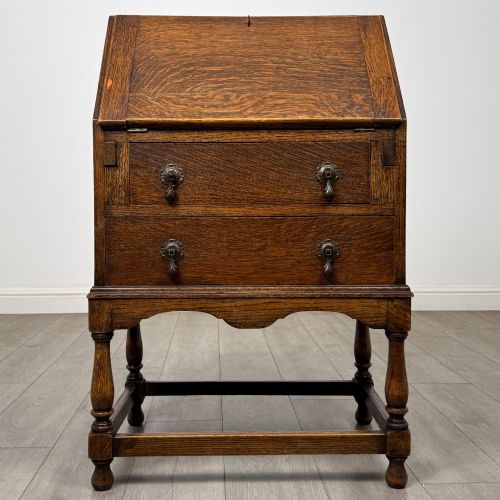
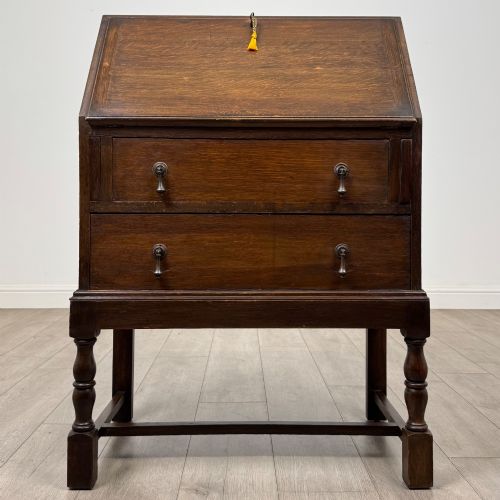
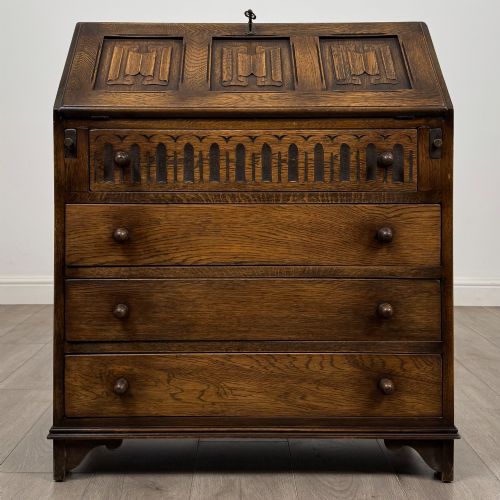

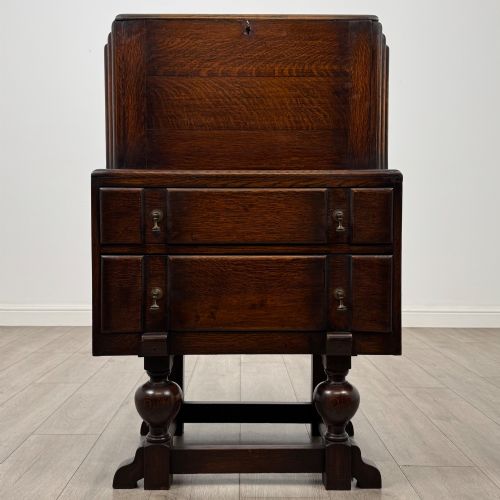
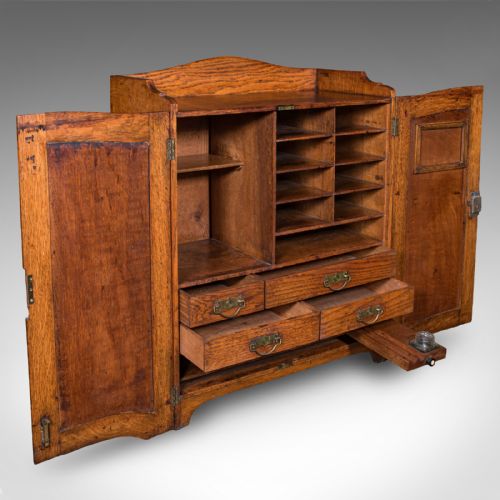

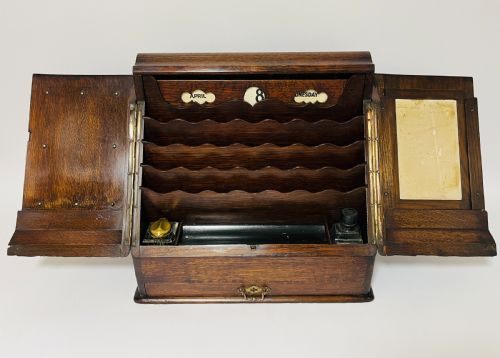


Fitted Oak Desk Cabinet
These fitted oak desk cabinets unite practical interior compartments with sturdy timber construction, offering a handsome workspace solution for any traditional study.
Fitted Oak Desk Cabinet
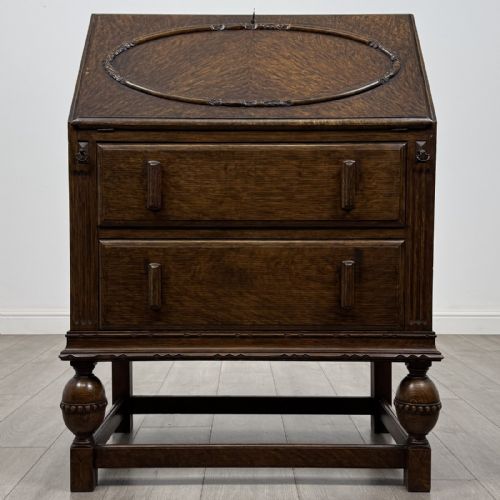
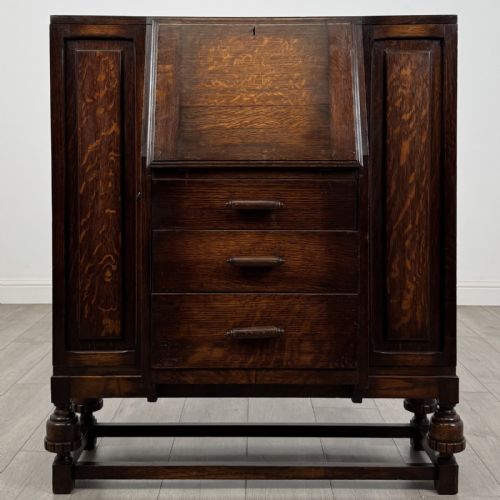
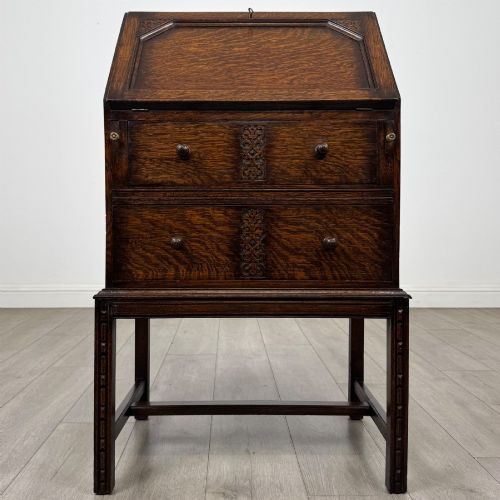
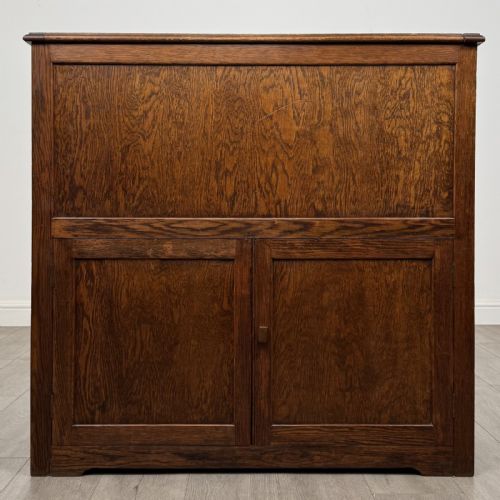
A fitted oak desk cabinet brings together compact writing surfaces and dedicated pigeonholes, drawers, or letter slots within a single wooden enclosure. When searching for a fitted oak desk cabinet, buyers encounter forms ranging from table-top stationery boxes and clerk cupboards to substantial bureau bookcases and secretaire presses.
The selections span numerous periods, with Victorian and Edwardian examples appearing frequently alongside Georgian styles and Arts and Crafts interpretations. These pieces originate from domestic vernacular workshops as well as notable cabinet makers, utilising solid timber alongside occasional oak veneers.
Buyers often select these cabinets to organise correspondence and writing materials while adding period character to a room. The interior configurations provide specialised spaces for pens, ink bottles, and papers, keeping desks clear of clutter.
What varies in quality
The distinction between standard utility items and superior examples lies in the selection of the timber and the complexity of the interior joinery. Finely figured grain, such as pollard oak, combined with intricate moving interiors or panelled doors, elevates a piece above simpler vernacular boxes.
Hardware integration and original working keys also influence the overall standard of the construction. Superior pieces demonstrate careful attention to internal compartmentalisation, ensuring that drawers slide smoothly and doors close flush.
Fitted Oak Desk Cabinet Retail Price Guide 2026
Typical asking prices for fitted oak desk cabinet among the pieces listed under this phrase on Sellingantiques today, from the lower quarter to the upper quarter. They describe what is for sale here now, not the wider market.
The listings span multiple eras, including 16th Century, Georgian, Victorian, Edwardian, and the 1900s, using materials such as oak, brass, leather, and glass.
James Shoolbred and Co·Gillows
The Fitted Oak Desk Cabinet Glossary
- Secretaire
- A piece of furniture containing a pull-down desk flap that conceals a fitted interior of small drawers and pigeonholes. This form allows a chest or bookcase to double as a writing desk.
- Pigeonhole
- A small, open compartment within a desk cabinet designed for sorting letters and documents. These compartments form the core of the fitted interior.
- Fall-front
- A writing flap hinged at the bottom that drops down to form a horizontal desk surface. It often conceals internal stationery compartments when closed.
- Veneer
- A thin layer of decorative wood applied to a secondary timber base. Pollard oak veneer provides distinctive circular grain patterns on drawer fronts.
- Baize
- A coarse woollen fabric, traditionally green, used to line writing surfaces and desk interiors. It protects paper and provides a soft cushion for writing.
Fitted Oak Desk Cabinet: Frequently Asked Questions
What is a fitted oak desk cabinet?
A fitted oak desk cabinet is a storage piece designed for writing materials, featuring internal compartments such as pigeonholes, drawers, and letter slots.
These units range from small desktop stationery boxes to large bureau bookcases and secretaire cupboards.
How were these cabinets used historically?
Owners utilised them to store correspondence, account books, and writing implements securely in home studies and estate offices.
The drop-down flaps or pull-out drawers provided an immediate writing surface without requiring a separate full-sized table.
How do I identify the period of an oak cabinet?
Period identification relies on observing construction techniques, hardware styles, and overall design motifs such as Arts and Crafts lines or Georgian proportions.
Details like bun handles, brass key escutcheons, and the use of solid oak or oak veneer help narrow down the date of manufacture.
How do I care for antique oak furniture?
Maintain oak surfaces by keeping them away from direct heat sources and sudden humidity changes to prevent the timber from splitting.
Regular polishing with appropriate wax preserves the lustre of the wood and protects the finish.