


Vintage Bureau Chest
These vintage bureau chest pieces combine drawer storage with a writing surface, bringing period timber craftsmanship into modern rooms.
Vintage Bureau Chest
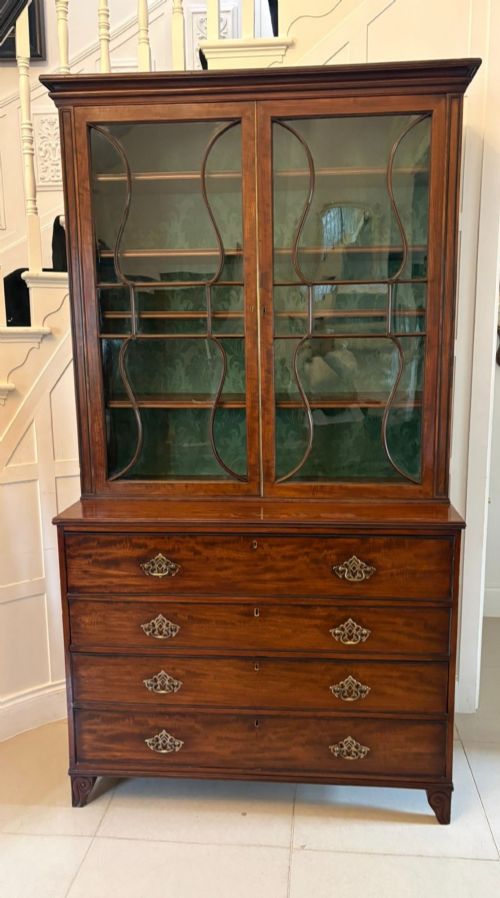
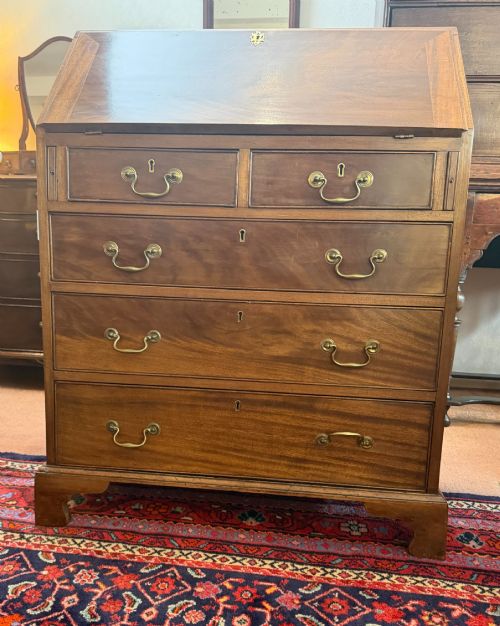
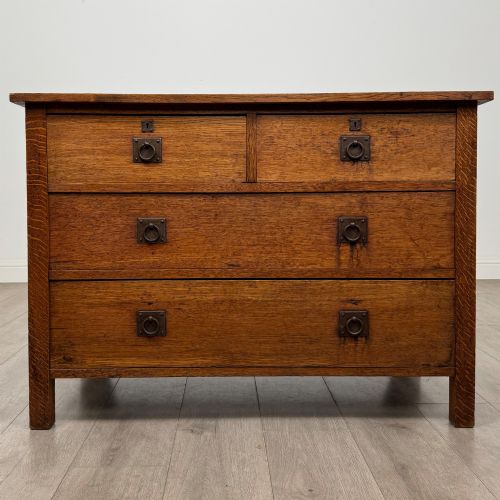
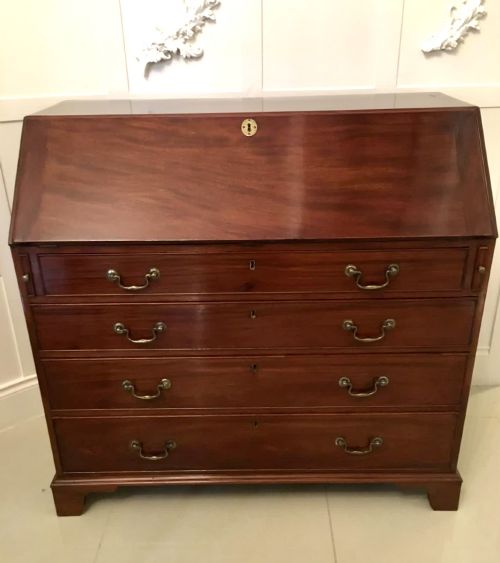
A vintage bureau chest merges the traditional form of a chest of drawers with a writing surface, frequently appearing as a fall front desk or secretaire. The listings show a strong presence of Georgian, Regency, and Victorian iterations alongside Edwardian oak examples.
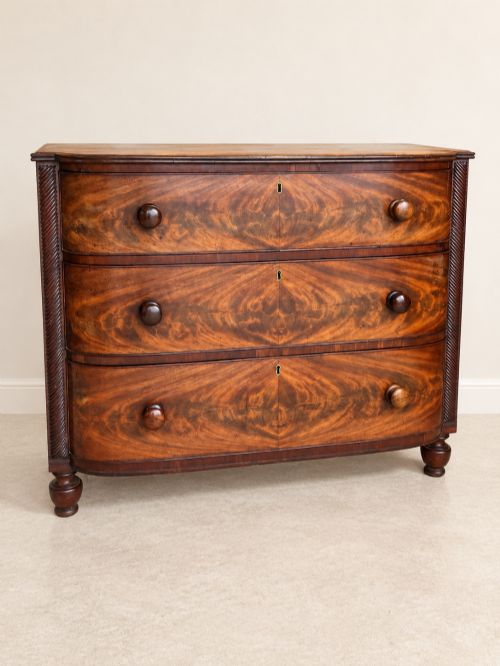
Most pieces encountered on this page originate from the eighteenth, nineteenth, and early twentieth centuries. These encompass straightforward oak formats, mahogany bow fronts, and elaborate walnut pieces fitted with internal compartments.
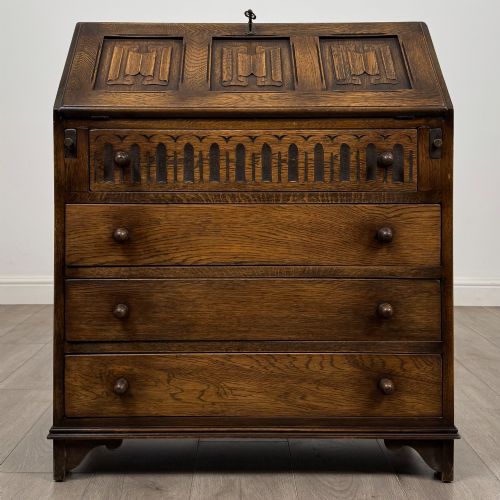
Buyers also meet specialised variants such as secretaire bookcases and carved linenfold desks. Each configuration offers practical storage combined with a dedicated writing space.
Materials and construction methods
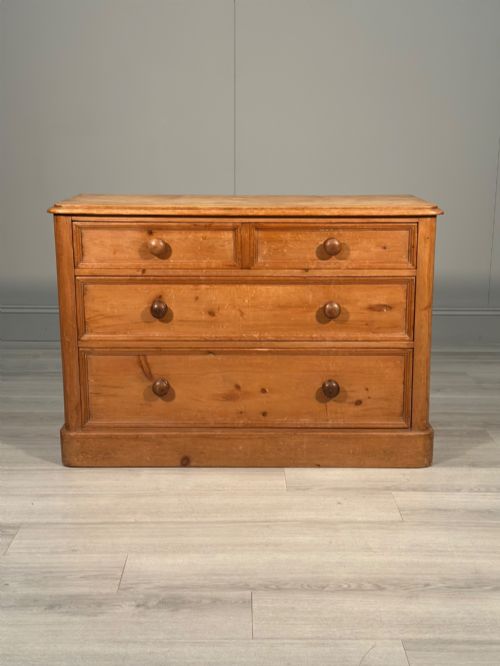
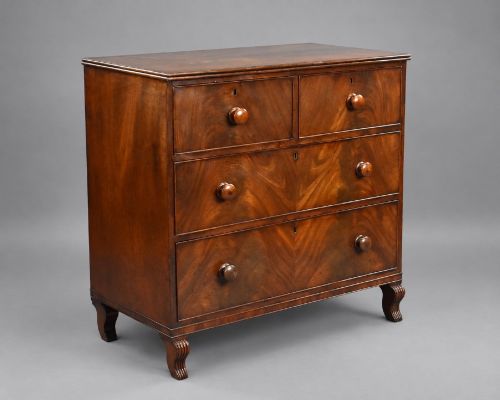
Cabinet makers relied predominantly on solid hardwoods like mahogany, oak, and walnut, frequently applying flame mahogany veneer or burr walnut to prominent surfaces. Pine also appears widely in regional pieces and drawer linings.
Structural integrity relied on traditional joinery methods such as dovetailing for drawer construction. Brass handles and escutcheons provided functional hardware that complemented the darker tones of the timber.
Secondary timbers such as pine or oak were utilised for internal framing and drawer bottoms. Surface finishes ranged from polished French polish to waxed oak, highlighting the natural grain of the wood.
Some Edwardian desks feature secret compartments hidden behind dummy book spines within the fitted interior.
Assessing quality in construction and finish
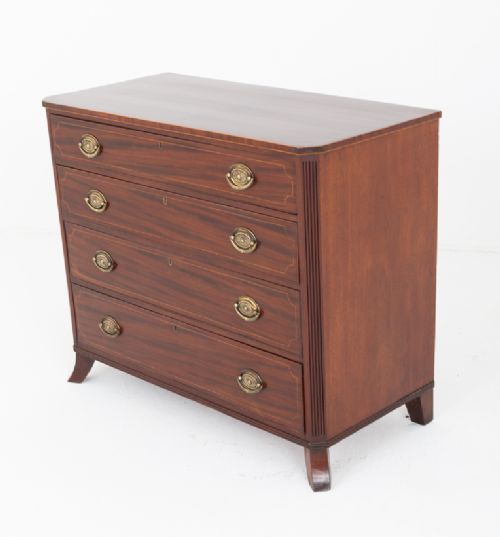
The distinction between standard items and superior examples lies in the selection of timber veneers and the precision of the joinery. Figured mahogany and burr walnut require expert matching across the front of the drawers.
Interior fittings reveal much about the original maker, particularly in bureaus with pigeonholes, small drawers, and secret compartments. Fine brass handles that remain original to the piece elevate the integrity of the design.
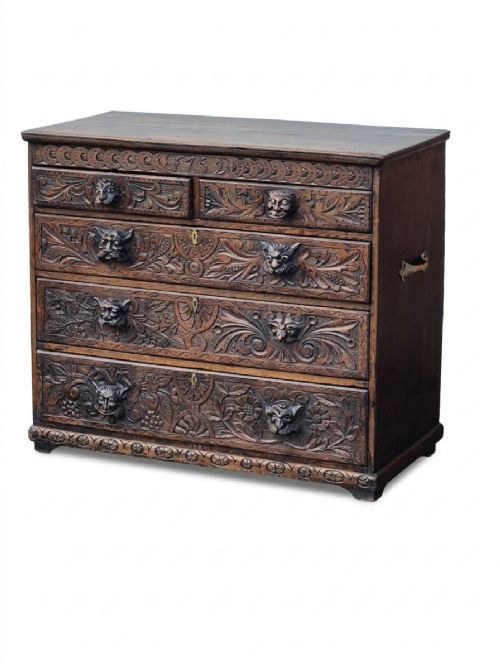
Proportion and decorative carving, such as the detailed woodwork found on George III or Jacobean style pieces, demonstrate the skill invested in the manufacture. Crisp mouldings and smooth drawer action indicate superior workshop standards.
Sir Clough Williams-Ellis
The Vintage Bureau Chest Glossary
- Bureau
- A desk featuring a sloping flap that opens to reveal a fitted interior of small drawers and pigeonholes. It frequently sits atop a chest of drawers.
- Secretaire
- A cabinet or chest containing a pull-out drawer with a fitted writing desk inside. This clever design conceals the writing surface behind a drawer front.
- Brushing slide
- A pull-out wooden shelf positioned above the top drawers. It provided a temporary surface for writing or brushing clothes.
- Dovetail
- A joint formed by interlocking wedge-shaped fingers, used extensively in period drawer construction. Hand-cut dovetails indicate earlier craftsmanship.
- Flame mahogany
- Timber cut from the fork of the mahogany tree to produce a distinctive flickering flame pattern. Cabinet makers reserved this veneer for principal drawer fronts.
Vintage Bureau Chest: Frequently Asked Questions
How do I use a bureau chest today?
A vintage bureau chest serves as a compact desk and a practical set of drawers for domestic storage. The drop-down flap creates an immediate writing surface that closes away paperwork when not in use.
Lower drawers hold everyday items while upper compartments organise stationery and small objects. This dual functionality makes the form particularly useful in bedrooms and living spaces with limited floor area.
How do I date a mahogany bureau chest?
Dating relies on examining construction methods, timber selection, and hardware styles across the piece. Georgian examples often feature fine hand-cut dovetails and bracket feet.
Later Victorian and Edwardian iterations incorporate machine-sawn elements and different brass handle designs. Secondary woods inside the drawers also offer clues to the period of manufacture.
Where should I place a bureau chest at home?
These pieces suit living rooms, studies, or bedrooms where you need surface space combined with concealed storage. Ensure you leave enough floor clearance for the drop-down flap or pull-out drawer to open fully.
Keep wooden items away from direct sunlight and heat sources to prevent the mahogany or walnut veneer from drying out or splitting.