
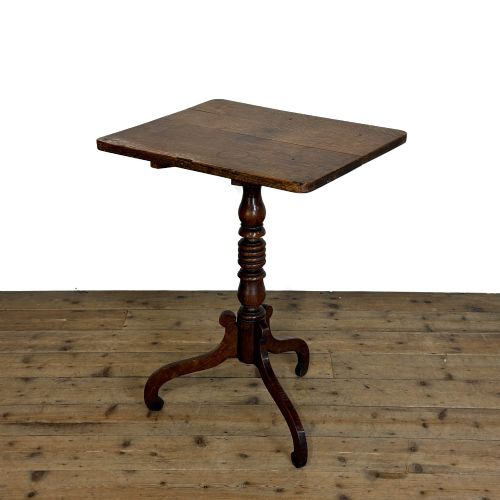
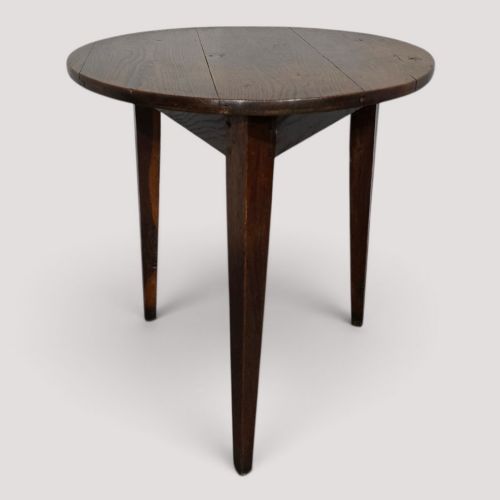
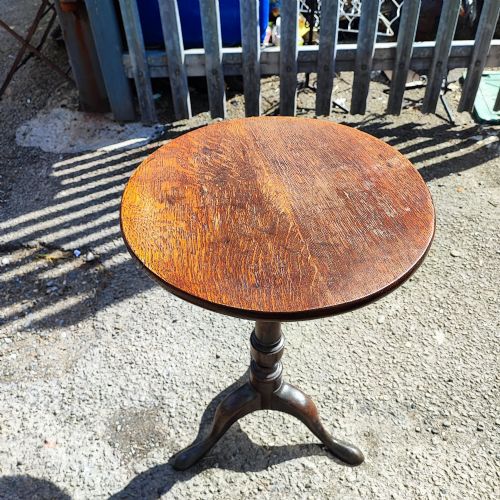
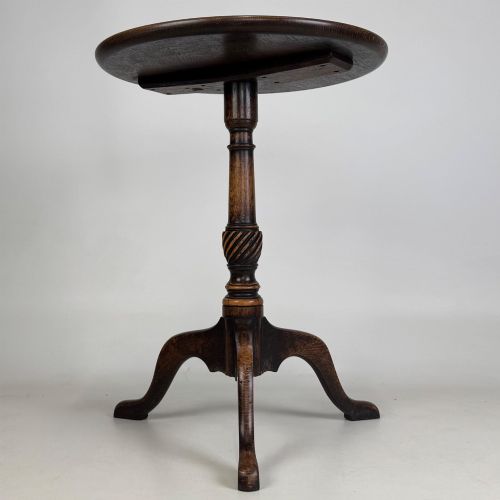


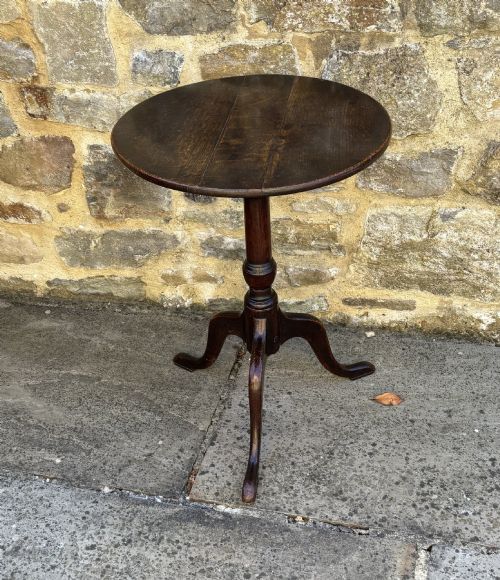
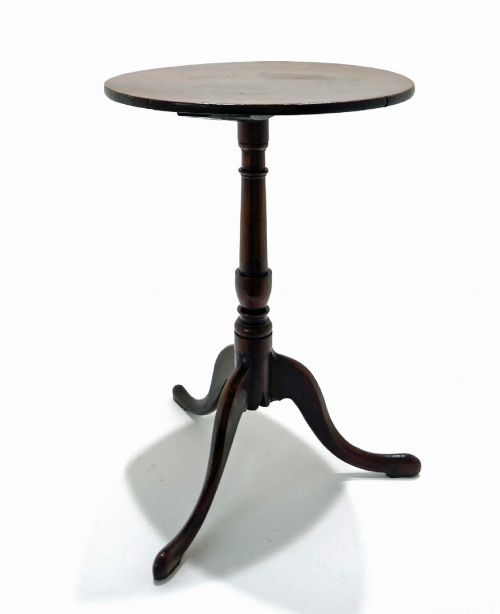
Oak Occasional Tripod Table
An oak occasional tripod table brings sturdy country craftsmanship and compact utility to a room.
Oak Occasional Tripod Table
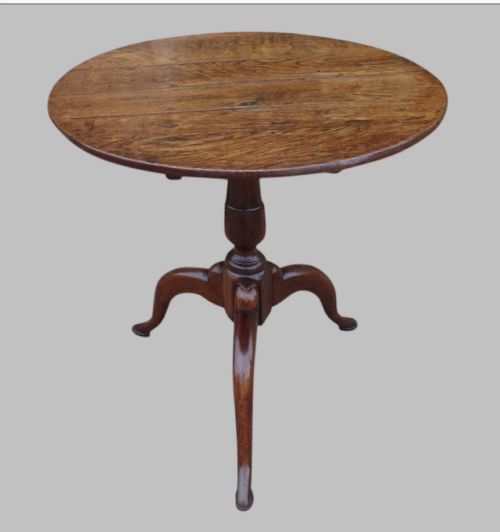
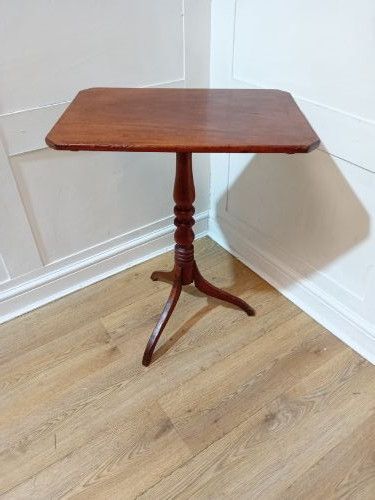
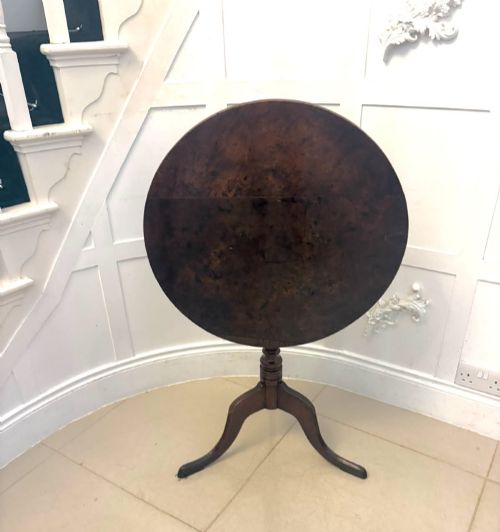
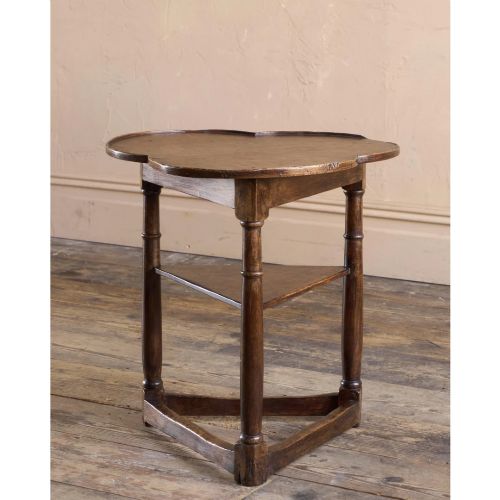
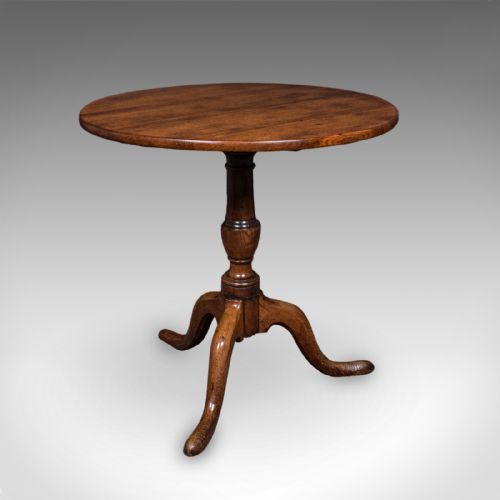
An oak occasional tripod table is a compact, mobile stand supported by a central pillar and three legs, designed for general use around a domestic interior. These pieces frequently appear in Georgian and Victorian guises, spanning wine tables, tilt-top variants, and sturdy cricket tables.
Buyers will encounter numerous examples originating from the eighteenth and nineteenth centuries, often constructed with round plank tops or segmented tops. Vernacular pieces from Welsh and English country workshops sit alongside more formal Georgian and Regency interpretations.
The form adapts easily to narrow spaces, functioning historically as a lamp table, supper table, or drinking table. The three-legged design ensures stability on uneven floorboards common in older properties.
How they were made
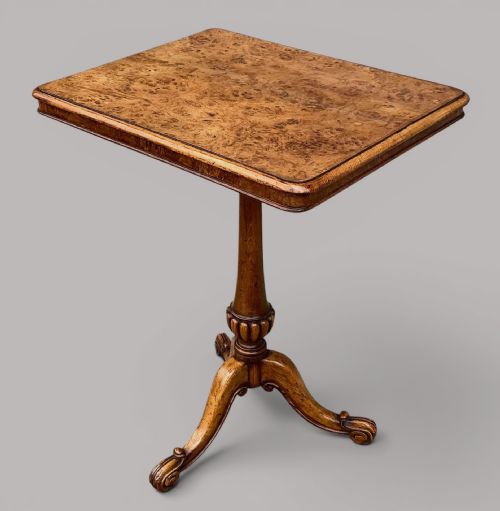
Joiners relied heavily on native timber, pairing solid oak tops with secondary woods such as pine, elm, beech, and fruitwood for legs and structural supports. Burr oak and pollard oak veneers appear on more ambitious pieces, adding dramatic grain patterns to circular tops.
Construction techniques include pegged mortise and tenon joints for the undercarriage and turned central columns joined to three splayed legs. Many variants incorporate a birdcage mechanism or a tilt-top pivot allowing the surface to fold vertical when not in use.
Some tilt-top tables were folded flat and tucked behind doors during busy evenings to reclaim precious floor space.
What varies in quality
The distinction between ordinary and superior pieces rests on the choice of timber and the crispness of the turning on the central column. Highly figured burr or pollard oak elevation raises the stature of a table far above plain plank examples.
Proportion and stability dictate the balance of the tripod base, where slender columns and well-raked legs demonstrate superior joinery. Subtle details such as dish tops, carved tripod bases, and original tilt mechanisms elevate the piece.
The Oak Occasional Tripod Table Glossary
- Tilt-top
- A mechanism allowing the circular table top to pivot into a vertical position for storage against a wall.
- Cricket table
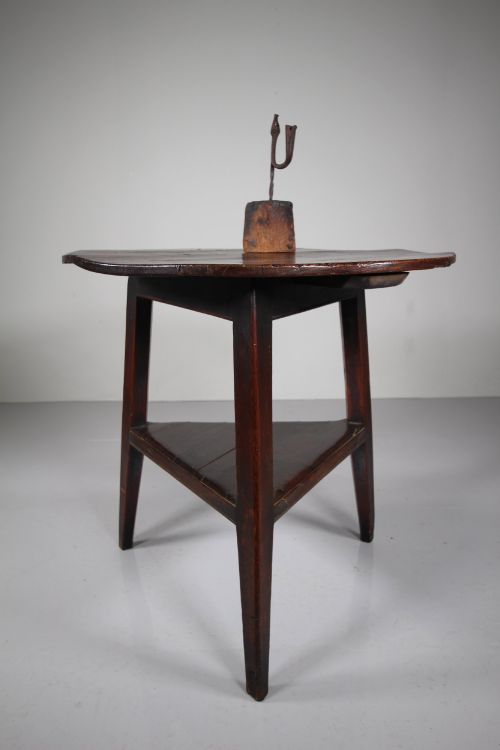
- A small round table featuring three legs, typically braced by a lower shelf or stretchers, historically associated with vernacular country use.
- Birdcage
- A rotating wooden frame beneath the table top that allows the surface to both tilt and revolve independently.
- Dish top
- A table top with a raised circular rim turned directly from the solid timber to prevent items from sliding off.
- Pollard oak
- Timber harvested from trees that were cut back to encourage dense, highly decorative branching and mottled grain.
Oak Occasional Tripod Table: Frequently Asked Questions
What is a tripod table used for?
These pieces served historically for holding candles, serving wine, or supporting small lamps in a parlour or drawing room. Their portable nature allowed them to move easily about the house as needed.
Modern interiors utilise them as bedside stands, lamp tables, or independent display surfaces beside seating.
How do I identify a Georgian tripod table?
Georgian examples often display slender turned columns, pad feet or snake feet, and dark patinated oak surfaces dating from the eighteenth century. Construction relies on pegged joints and hand-turned components.
Tilt-top mechanisms from this era use simple wooden catches rather than modern metal brackets.
How should I care for an antique oak table?
Keep wooden furniture away from direct heat sources and sudden temperature shifts to prevent the solid oak top from splitting. Regular application of suitable beeswax preserves the natural lustre of the finish.
Avoid placing damp items directly onto antique surfaces without protective coasters.