


Oak Monks Table
An oak monks table combines the utility of a seat and a table, offering solid timber construction passed down through centuries.
Oak Monks Table
When you search for an oak monks table, you encounter versatile multi-functional furniture designed to transform from a chair, bench, or settle into a flat surface. These pieces span from the seventeenth century through the Victorian era up to the 1930s.
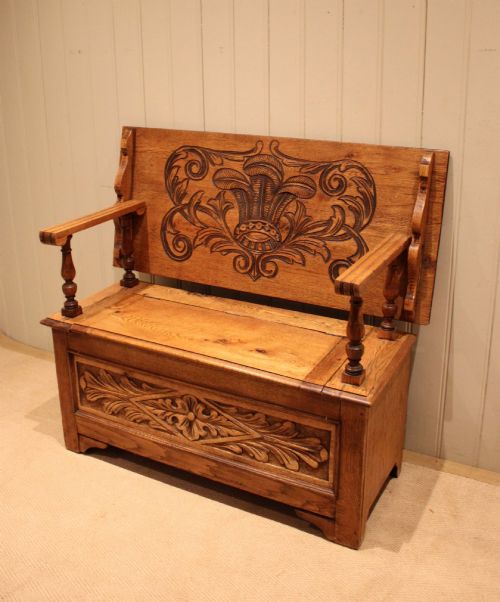
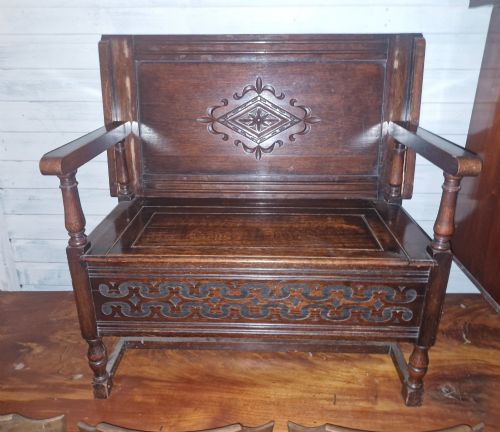
The version most commonly met on this page is the 20th-century revival piece, particularly from the 1910s and 1920s, often featuring carved panels and a hinged top that folds over.
Earlier examples, dating back to the 17th century, appear as chair tables or settle benches built from solid timber with sturdy frame construction.
Assessing quality in construction and age
Quality separates through the integrity of the timber and the depth of the carving, distinguishing pieces built from solid oak from lighter alternatives.
The smoothness of the mechanism that allows the top to fold over or adjust dictates the standard of craftsmanship in conversion tables.
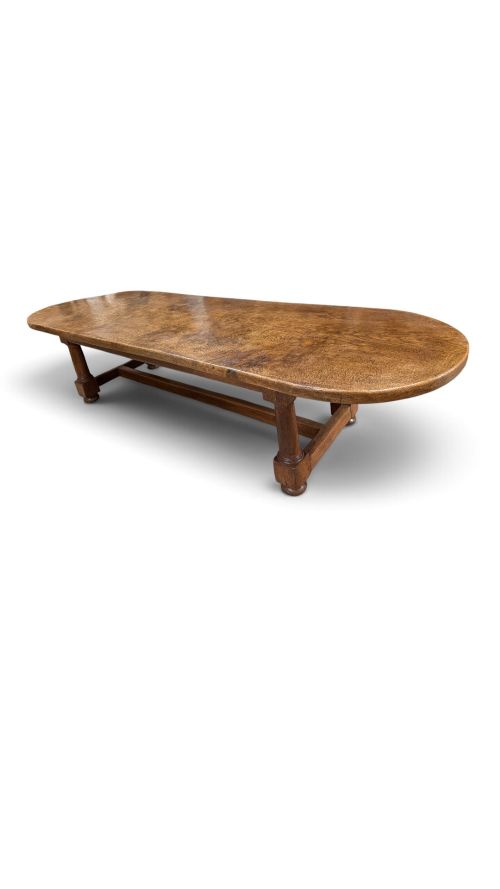
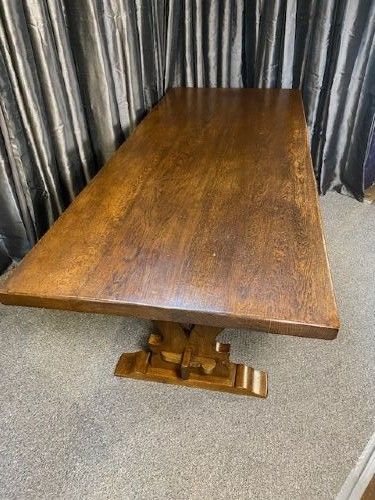
Object types vary from dining tables and refectory tables to convertible hall seats, benches, and chair tables.
The Oak Monks Table Glossary
- Monks Bench
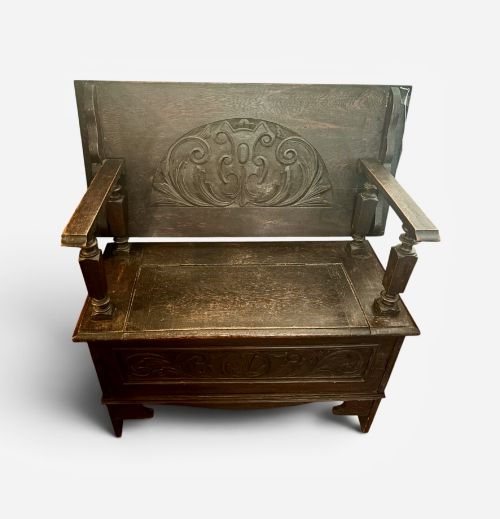
- A dual-purpose seat featuring a backrest that folds down to form a table top. This form served domestic spaces where floor space was limited.
- Chair Table
- An early seating form with a broad table top attached to the backrest. It functions as a chair when upright and a table when tilted.
- Refectory Table
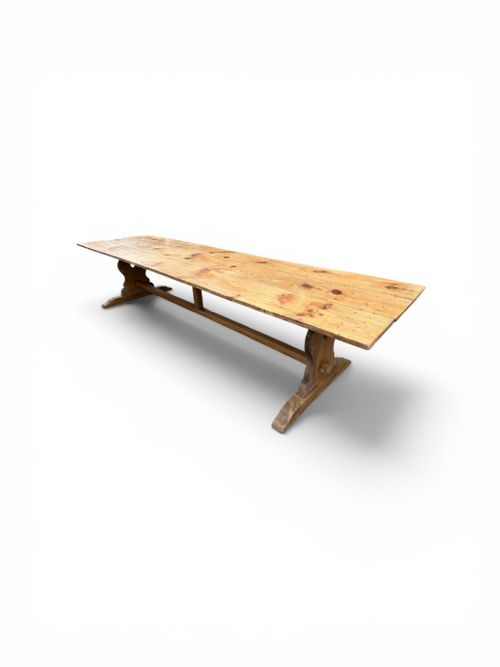
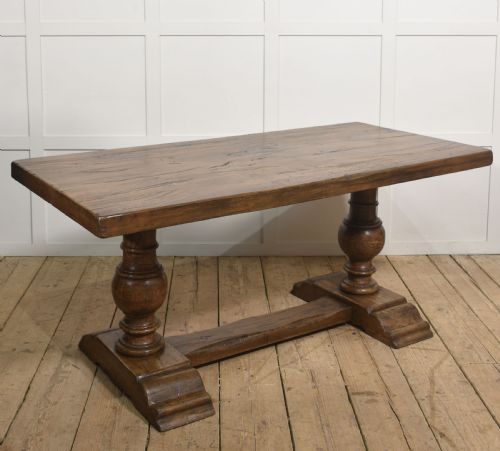
- A long dining table constructed from solid timber, commonly oak. These pieces originated in monastic dining halls.
- Settle
- A wooden bench with high backrests, solid arms, and enclosed under-seat storage. It kept draughts away from people sitting near fires.
Oak Monks Table: Frequently Asked Questions
What is an oak monks table?
An oak monks table is a multifunctional piece of furniture that converts from a seat, armchair, or settle into a flat table surface by tilting or folding the backrest.
These pieces were historically used in smaller homes and halls to save space, functioning as everyday seating during the day and a dining or work surface when needed.
How do I use a monks table?
You use a monks table by lifting and tilting the backrest forward over the arms to create a flat horizontal surface. When you finish using it as a table, you simply tilt the backrest back to use the piece as a chair, bench, or settle.
Many examples also include a lift-up seat or a drawer underneath for storage, allowing you to store household items while using the furniture in living spaces or hallways.
How old are these tables?
These tables and benches span a broad historical range, with surviving examples dating from the 17th century through the Victorian period and into the 1920s and 1930s. The majority of pieces you encounter on the market belong to revival periods in the late 19th and early 20th centuries.
Earlier examples from the 1600s and 1700s exhibit simpler or more robust vernacular construction, whereas 20th-century pieces often incorporate decorative carving influenced by Jacobean and Arts and Crafts styles.
How do I tell periods apart?
You can distinguish periods by examining the style of the carving, the construction of the joints, and the colour of the oak. 17th-century examples feature simpler framing and signs of early hand-working, while Victorian and Edwardian revival pieces often display heavy machine-cut or detailed carved panels.
Arts and Crafts pieces from around 1900 emphasise the natural grain of solid oak with minimal ornamentation, whereas 1920s and 1930s versions frequently lean towards darker finishes and decorative Jacobean revival motifs.