



Oak Mirrored Dresser
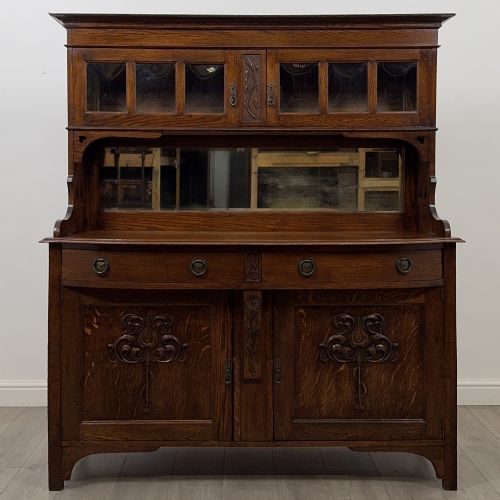
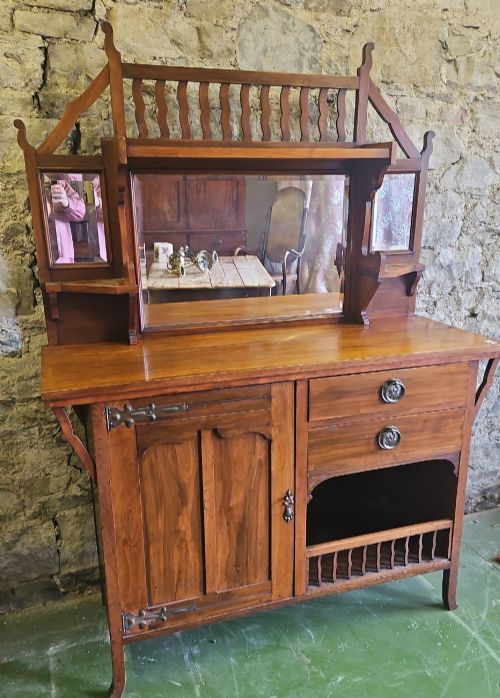
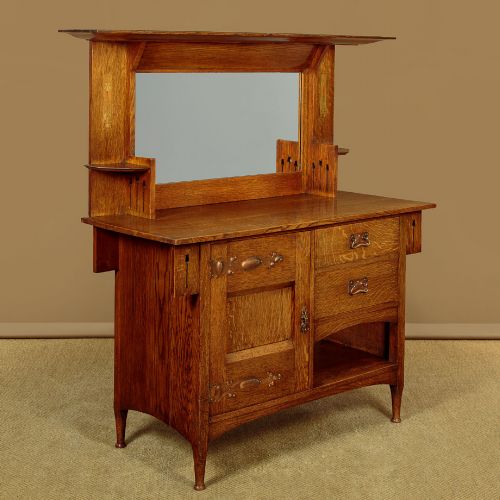
An oak mirrored dresser brings together solid timber and reflecting glass, offering practical storage alongside a generous looking-glass for the interior.
Oak Mirrored Dresser
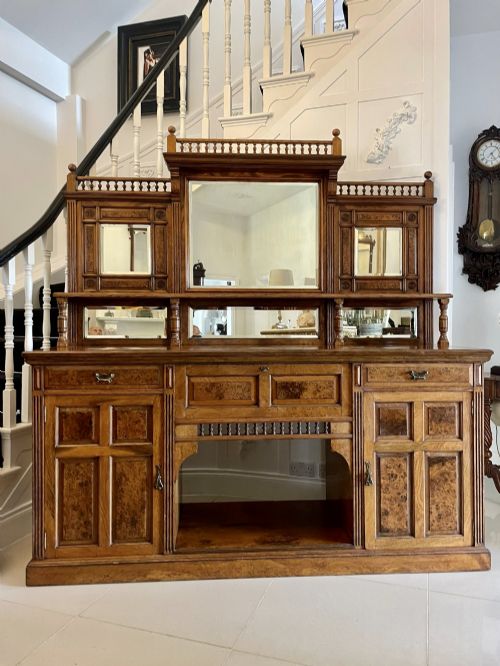
An oak mirrored dresser is a substantial piece of furniture designed for storage and display, frequently appearing on this page as a mirror-backed sideboard or dressing table from the Victorian and Edwardian eras. These items combine timber framework with integrated glass plates, spanning styles from Arts and Crafts to Victorian Renaissance Revival.
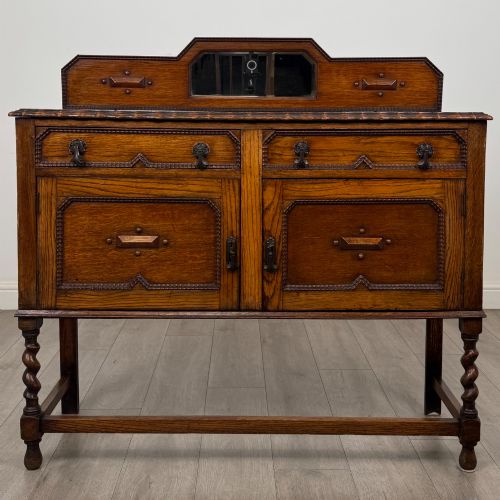
The selections here range from robust nineteenth-century sideboards with carved details to lighter twentieth-century golden oak pieces and dressing tables featuring oval or plate mirrors. Buyers encounter forms that serve dining rooms, halls, and bedrooms alike.
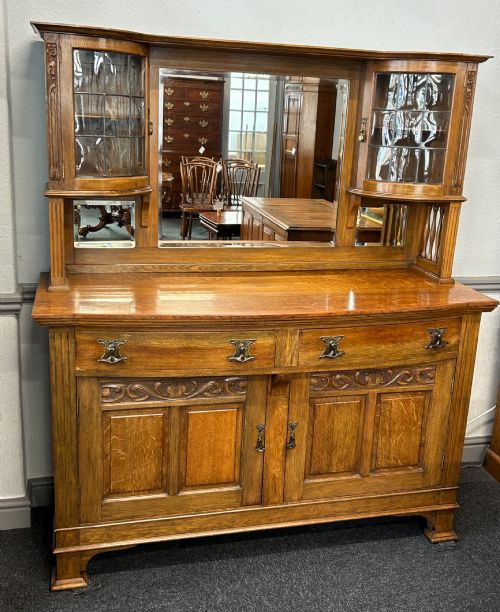
Makers and designers of the period utilised oak to create durable furniture that often incorporates brass hardware, copper accents, and leaded glass doors. The integration of a mirror plate transforms a standard storage cabinet into a focal point that reflects light around a room.
Materials and construction
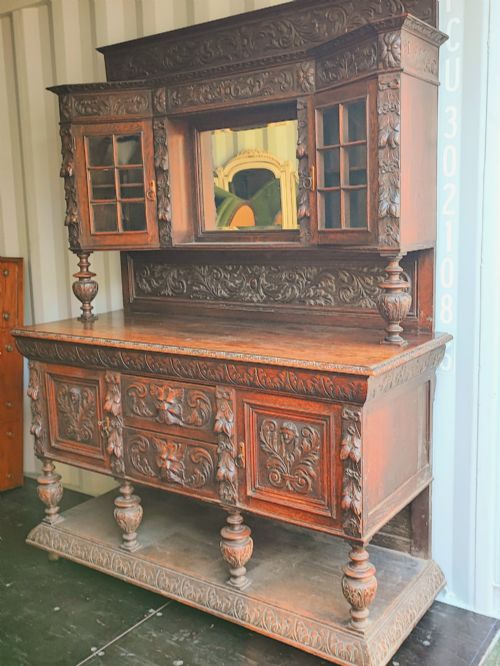
Makers constructed these pieces primarily using solid oak and pollard oak, often accented with pine, brass, iron, and copper hardware. Timber was frequently carved by hand to produce decorative motifs, foliage, and figural details such as Green Man masks.
Mirror glass was set securely into timber frames atop sideboards or dressing tables, sometimes backed with specimen wood inlays or leaded glass panels. Joints were constructed to bear the weight of heavy timber sideboards and large upright mirror assemblies.
A grinning Green Man occasionally peers out from the carved oak foliage, keeping watch over the dining room.
Indicators of quality
The standard of carving and the selection of timber dictate the distinction between simpler utility furniture and exceptional workshop pieces. Pollard oak, figural carvings, and specialist inlay work elevate the presence of a sideboard significantly beyond plain stock.
The integration of the mirror back and the choice of secondary woods such as pine show the care taken during construction. Superior examples demonstrate harmony between the timber frame, the weight of the mirror glass, and the original brass or copper hardware.
T Simpson and Son
The Oak Mirrored Dresser Glossary
- Pollard oak
- A timber taken from trees that have been pollarded, producing a richly figured, mottled grain pattern. This decorative wood was frequently utilised on high-end Victorian sideboards.
- Mirror back
- An upright wooden superstructure fitted with a glass plate, attached to the rear of a sideboard or cabinet. It serves to reflect light and display decorative objects placed on the surface below.
- Arts and Crafts
- A design movement valuing handcraftsmanship, simple forms, and honest construction over mass production. Pieces from this style often feature exposed joinery and minimal, nature-inspired decoration.
- Green Man
- A sculptural architectural ornament depicting a human face entwined with leaves, vines, or branches. It appears frequently in carved oak details on nineteenth-century furniture.
- Pedestal sideboard
- A large dining room storage unit featuring cupboards or drawers flanking a central recess. These heavy oak forms often support large mirrored superstructures.
Oak Mirrored Dresser: Frequently Asked Questions
Where should I place an oak mirrored dresser?
These large pieces suit dining rooms, grand hallways, or spacious living areas where their reflective glass can bounce light across the room. Ensure the wall and floor space can accommodate both the depth of the base cabinet and the height of the mirror back.
Positioning the furniture away from direct, harsh sunlight protects the timber finish and prevents the mirror glass from experiencing extreme thermal shifts. A balanced placement allows the carved details and hardware to be viewed clearly.
How do I care for the mirror glass?
Clean the glass plate using a soft cloth and a gentle, ammonia-free solution sprayed onto the cloth rather than directly onto the mirror. This prevents moisture from seeping behind the silvering or damaging the surrounding oak frame.
Inspect the fixings periodically to ensure the mirror plate remains securely seated within its wooden rebate. Gentle dusting of the carved wooden frame will prevent grit accumulation without abrading the polish.
How do I distinguish Victorian from Edwardian pieces?
Victorian examples tend to feature heavier proportions, darker finishes, and elaborate hand-carvings including foliage, panels, and figural motifs. The construction is typically robust, designed to anchor formal nineteenth-century dining spaces.
Edwardian pieces often display lighter golden oak tones, simpler lines, and influences from the Arts and Crafts movement or Art Nouveau. Dressers and sideboards from this later period prioritise understated grain patterns and functional grace.
What is pollard oak?
Pollard oak is harvested from trees that were cut back close to the trunk to encourage dense, knotty branch growth. This pruning method produces a highly decorative, swirling grain pattern sought after by cabinet makers.
Because of its distinct appearance, pollard oak was reserved for the most prominent surfaces of fine sideboards and cabinets. It offers a striking contrast to plain quarter-sawn oak framing.