

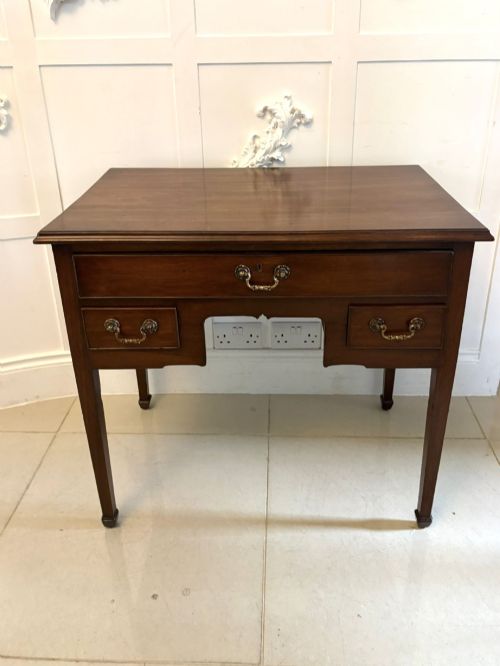
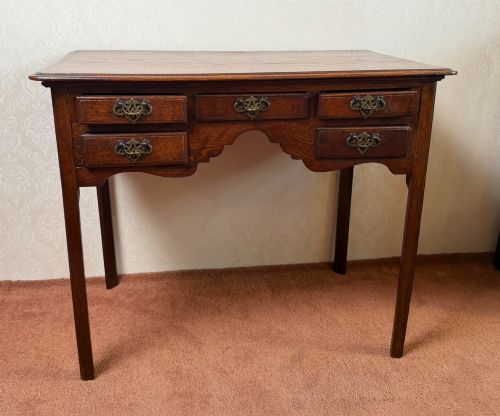
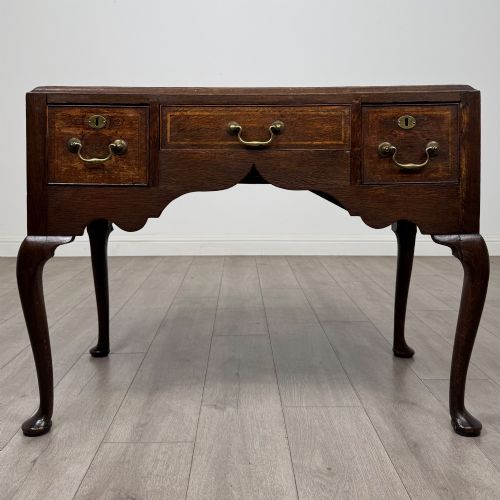
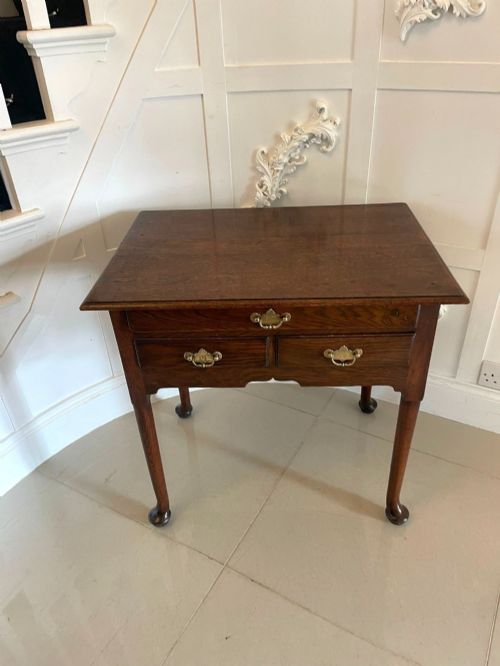
Oak Lowboy Console
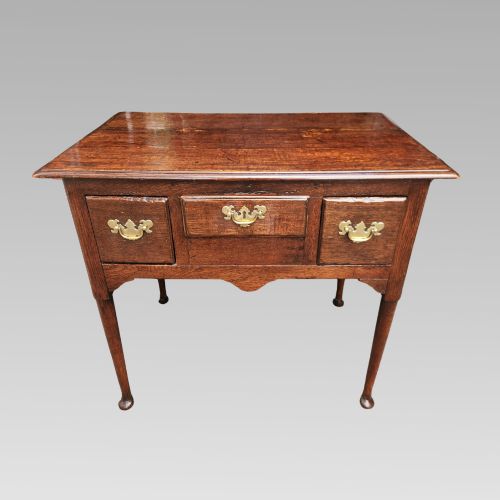
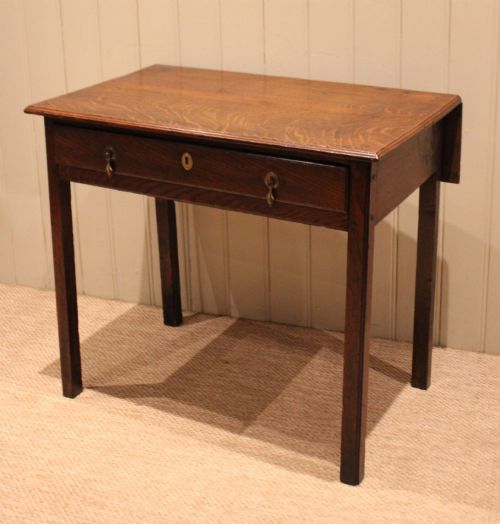
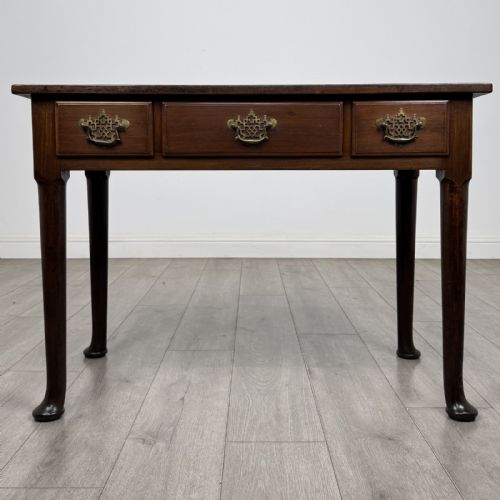
An oak lowboy console is a low table with drawers, built from solid timber to stand against a wall in a hall or parlour.
Oak Lowboy Console
When searching for an oak lowboy console, a buyer examines side tables and dresser bases originating primarily from the eighteenth century, alongside later revivals. These pieces function as compact serving tables or dressing surfaces, typically fitted with one or more drawers beneath the top board.
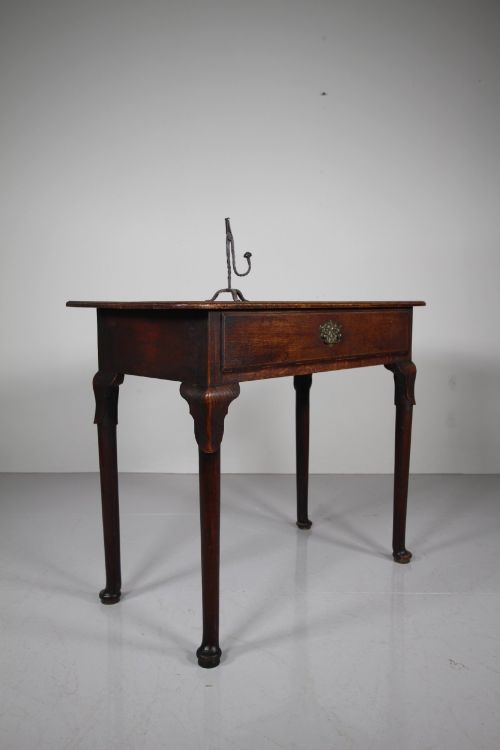
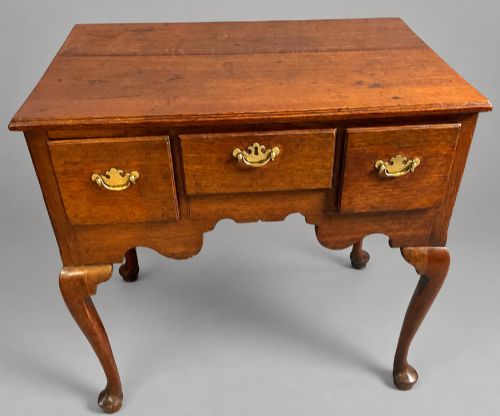
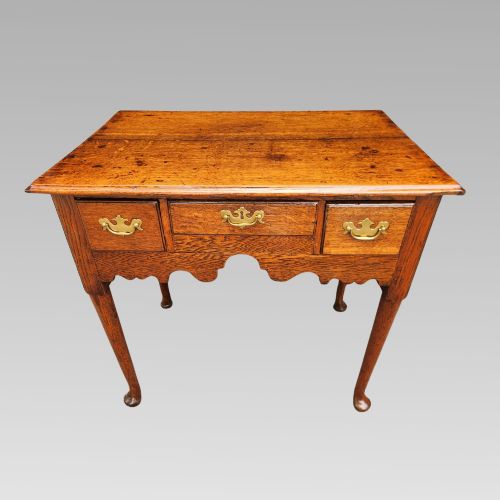
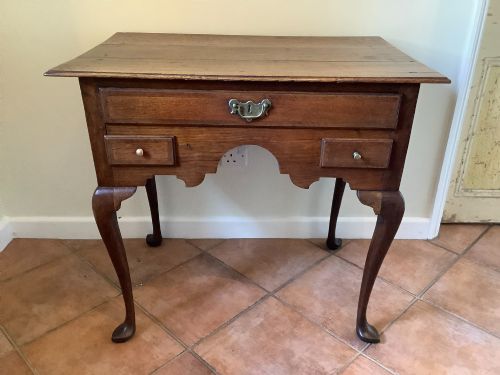
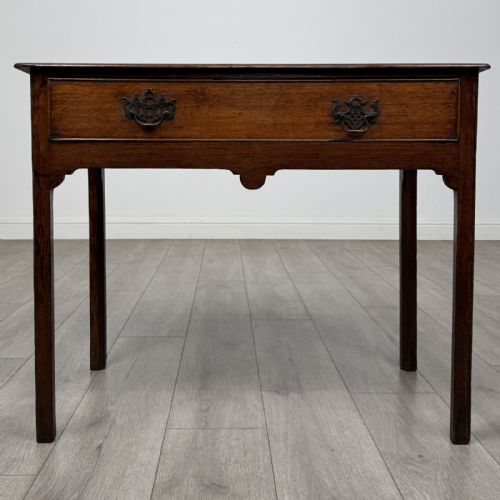
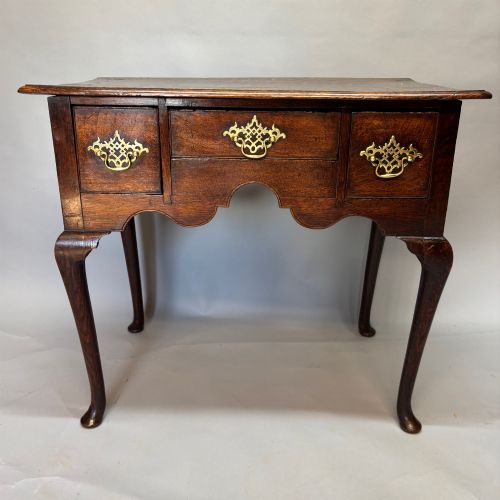
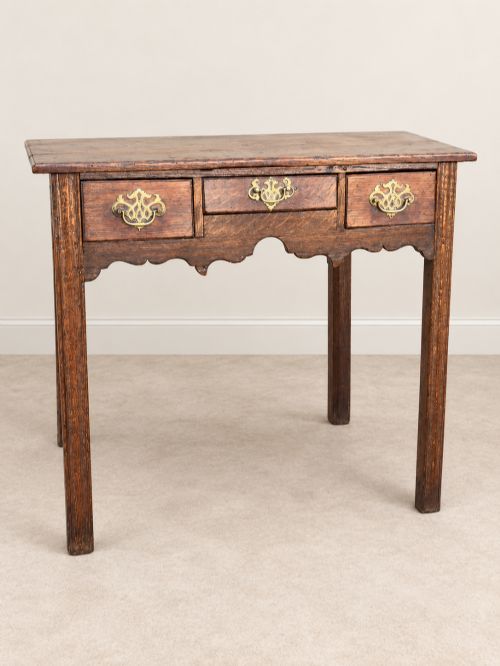
The version most commonly met on this page is the Georgian oak lowboy or side table, often resting on cabriole legs or straight supports. Regional examples span English and Welsh country workshops, showing straightforward construction built for domestic use.
Makers occasionally utilised secondary timbers like elm and yew alongside primary oak, while later twentieth-century interpretations emulate the eighteenth-century aesthetic. These low tables suit narrow spaces such as hallways or living rooms where deep furniture fails to fit.
What varies in quality
Quality in an oak lowboy console rests upon the integrity of the timber selection and the crispness of the joinery. Superior examples display tightly figured oak boards on the top surface that have aged uniformly without excessive patching.
The proportion and balance of the legs dictate the visual success of the piece, particularly where cabriole legs meet the apron. Refined pieces maintain original brass hardware and cleanly cut drawer dovetails that demonstrate skilled hand construction rather than hurried assembly.
Oak Lowboy Console Retail Price Guide 2026
Typical asking prices for oak lowboy console among the pieces listed under this phrase on Sellingantiques today, from the lower quarter to the upper quarter. They describe what is for sale here now, not the wider market.
Regional variations include Welsh country furniture alongside English Georgian and Queen Anne interpretations of the lowboy form.
The Oak Lowboy Console Glossary
- Lowboy
- A small oak or walnut table with drawers, standing on four legs, historically used as a dressing table or side table.
- Cabriole leg
- A furniture leg that curves outward and then tapers inward, finishing in a pad or foot, common in Queen Anne and Georgian design.
- Dresser base
- The lower section of a Welsh or English dresser, functioning as a sideboard or console with multiple drawers and cupboards.
- Pad foot
- A simple foot shape where the base of the leg rests on a circular pad, frequent on early eighteenth-century tables.
- Feather banding
- An inlay technique using thin strips of veneer laid in a herringbone pattern around drawer edges, seen on walnut and oak pieces.
Oak Lowboy Console: Frequently Asked Questions
What is an oak lowboy console used for today?
These tables function well as narrow hallway consoles, lamp tables, or writing desks in compact studies. Their shallow depth allows them to sit against walls without obstructing pathways.
Drawers provide storage for keys, stationery, or small household items, keeping surfaces tidy while adding period character to a room.
How do I tell an 18th century lowboy from a later revival?
Eighteenth-century pieces display hand-cut dovetails within the drawer construction, along with natural timber shrinkage and patination earned through decades of use. Tool marks left by hand planes remain visible on unexposed undersides.
Later revival pieces from the twentieth century often utilise machine-cut joints, more uniform timber colouring, and modern adhesives or fixings inside the drawer structure.
Did lowboys always have drawers?
Most lowboys feature either a single long drawer or a configuration of three drawers beneath the top surface. The arrangement provided secure storage for personal items when the form served as a dressing table.
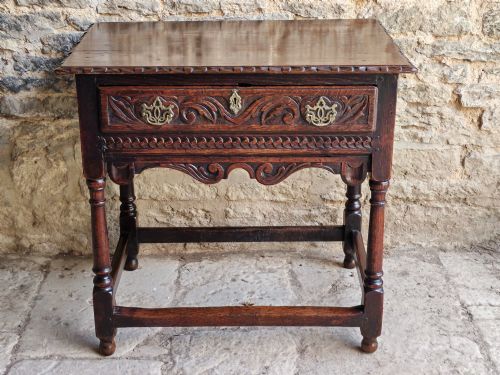
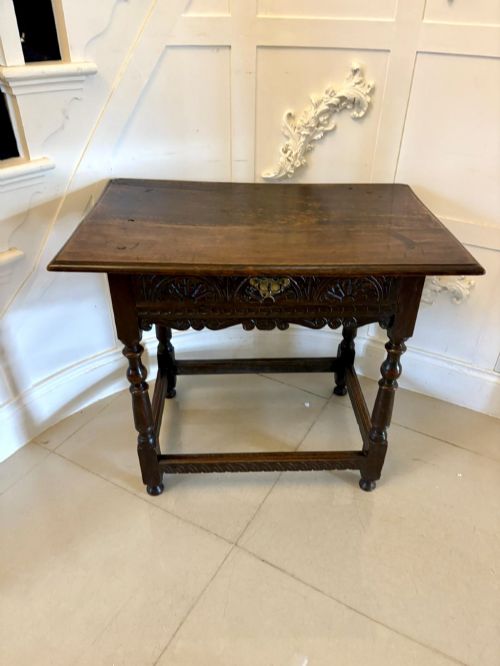
Some related side tables omit drawers entirely, relying on an open frieze beneath the top board supported by four legs and stretchers.
Where were oak lowboys originally placed in a home?
In eighteenth-century houses, lowboys served multiple rooms including bedrooms as dressing tables and parlours as side tables for serving tea or displaying objects. Their portable size meant they moved easily between rooms as needed.
Today, their versatile proportions make them equally suited to dining rooms, landings, and entrance halls.